


Gilt Brass Fire Dogs
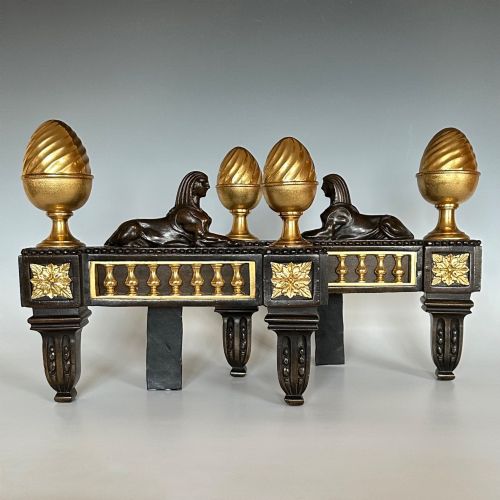
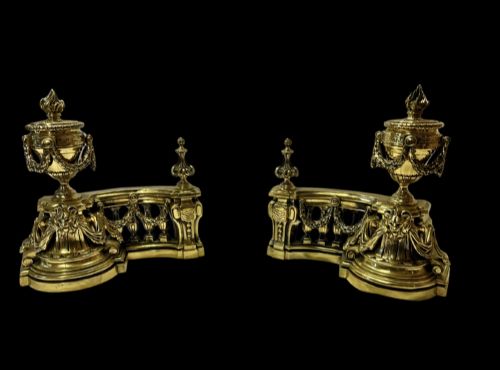
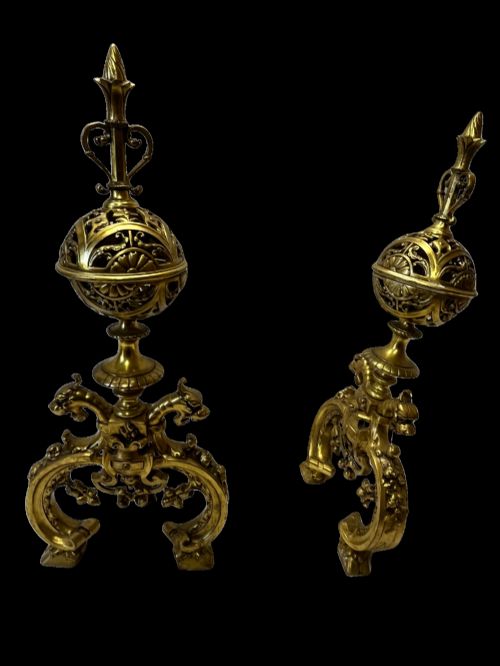
These gilt brass fire dogs anchor the hearth with bright metalwork and sculptural form, bringing warmth and period character to any fireplace.
Gilt Brass Fire Dogs
The pieces listed on this page showcase a variety of forms, from monumental gilt brass designs to compact adjustable fenders and chenets fitted with fire tool rests. Makers drew heavily on historical French chateau styles, producing ornate items that combine iron or bronze framing with gilded surface decoration.
Buyers seeking these items will find works spanning the 1800s through the late 19th century, reflecting persistent Victorian and continental interest in elaborate hearth ornamentation. Each pair demonstrates the practical duty of keeping firewood elevated above the hearth floor alongside sculptural ambitions.
How they were made
Craftsmen utilised casting techniques to shape the brass, bronze, and iron bodies of these hearth accessories, ensuring structural strength for heavy timber. Cast brass and cast iron formed the sturdy foundations, while secondary elements provided the weight necessary to hold wood securely within the fireplace.
Surface ornamentation relied heavily on ormolu and gilt bronze applications, which imparted a rich golden sheen across the cast metal forms. Artisans gilded the brass surfaces to catch the flickering light of the hearth fire, combining metal-working skill with decorative casting.
A bronze cherub occasionally oversees your firewood, keeping watch from the middle of a 19th century grate.
What varies in quality
The standard of modeling across the cast figures and scrollwork dictates the visual success of each piece, distinguishing ambitious sculptural interpretations from simpler commercial work. Crisp detail in the cast ormolu and bronze elements reveals the artisan's control over the metal.
The durability of the underlying iron and brass framework determines how well the andirons handle intense hearth heat over decades of use. Superior pairs maintain structural stability alongside well-preserved gilding on the decorative mounts.
The Gilt Brass Fire Dogs Glossary
- Chenet
- A French term for an andiron used to support logs in an open fireplace. These ornamental firedogs often feature elaborate front standards.
- Ormolu
- Finely ground high-carat gold applied in a mercury amalgam to bronze or brass. This technique creates a durable, luminous golden finish characteristic of fine 19th century metalwork.
- Andiron
- A horizontal iron bar supported by legs with an ornamental front, designed to hold firewood. Pairs of these items sit within the hearth to promote airflow beneath the logs.
- Rococo
- A decorative style originating in 18th century France and revived in the 19th century, characterised by asymmetrical scrollwork, C-scrolls, and naturalistic motifs. This aesthetic heavily influences the appearance of many fireplace accessories on this page.
- Fender
- A low metal guard placed around the hearth to contain sparks and ash. Some pieces combine fender frames directly with adjustable chenet forms.
Gilt Brass Fire Dogs: Frequently Asked Questions
How do I use fire dogs?
These pieces stand inside the fireplace on the hearth floor to hold logs off the bottom bricks. This positioning allows air to circulate underneath the burning wood for a better fire.
Pairs are placed facing forward with the vertical decorative standards visible at the front of the fireplace opening.
What periods do these pieces come from?
The items seen here date primarily from the 19th century, spanning the Regency era through to the late 1800s. Many examples reflect earlier French design movements such as Louis XV and Rococo Revival.
Dates recorded in the listings include specific decades like 1800, 1850, 1860, 1880, and 1890 alongside broader century designations.
How do I clean gilt brass?
Maintenance requires gentle dusting with a soft cloth to protect the delicate gilded surface and underlying ormolu layers. Avoid harsh chemical cleaners and abrasive polishes that can strip the gold finish from the bronze or brass.
Keeping the metal free from heavy soot buildup preserves the bright appearance intended by the original makers.
Are andirons and chenets different?
The two terms describe the same fundamental hearth accessory used to support logs during a fire. Chenet is simply the French term frequently applied to continental examples.
Both items serve the same dual purpose of holding timber and providing decorative character to the fireplace.