


Gold Brass Candelabrum
A gold brass candelabrum brings warmth and period character to a room through heavy metalwork and multiple candle arms.
Gold Brass Candelabrum
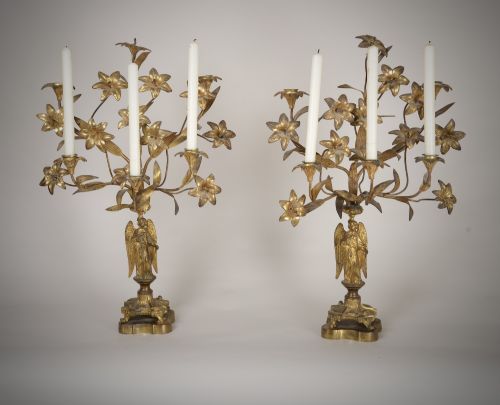
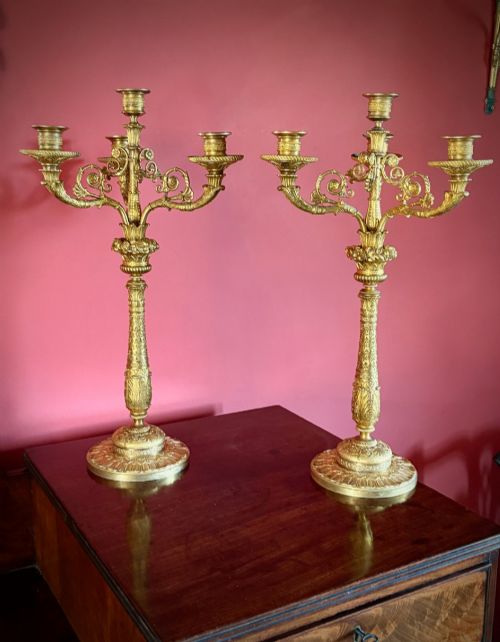
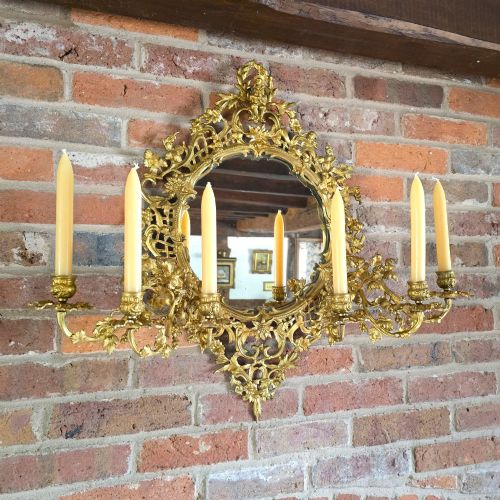
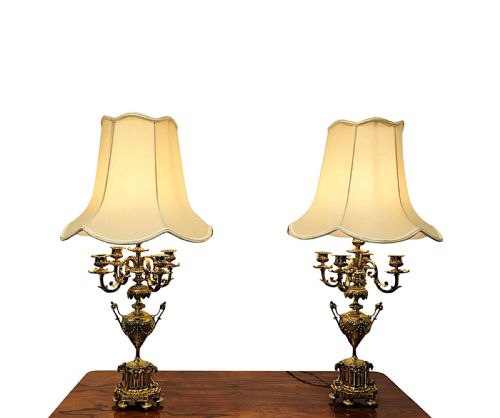
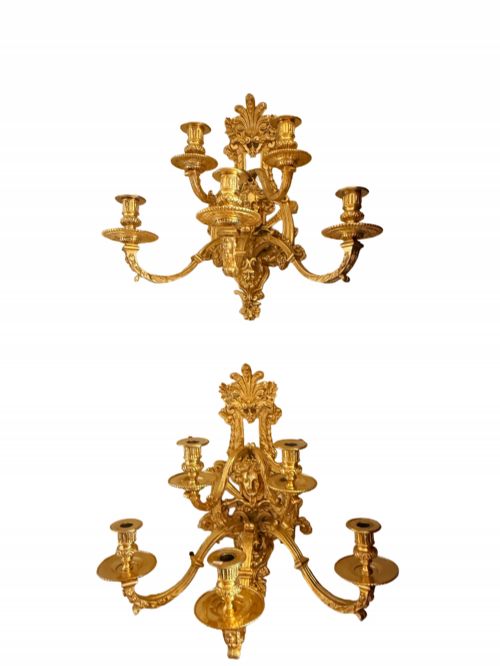
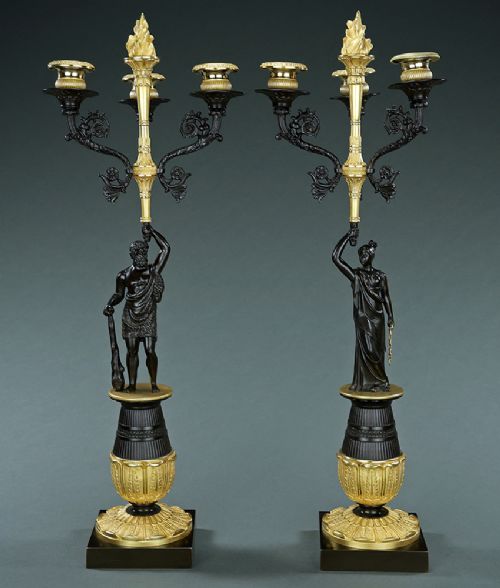
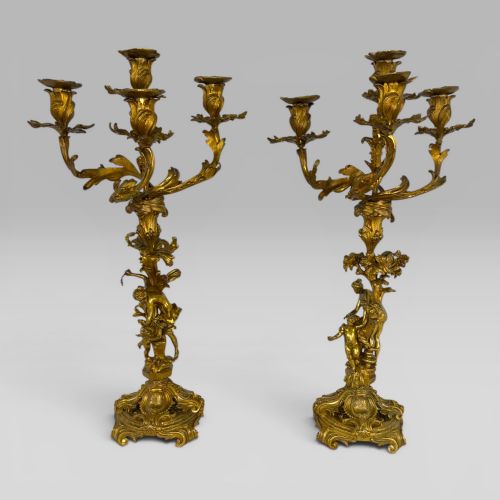
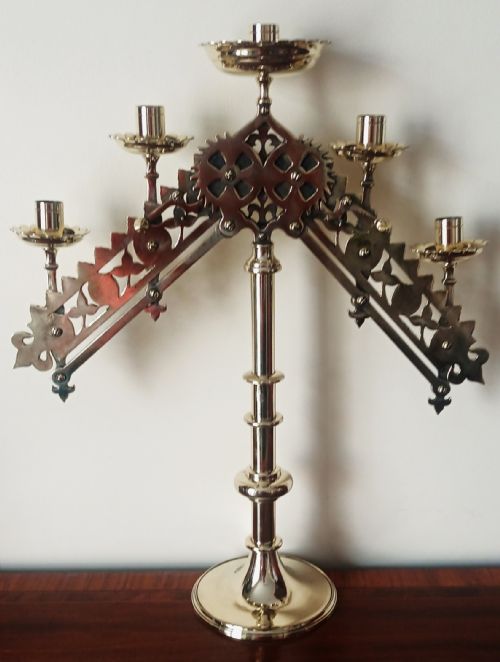
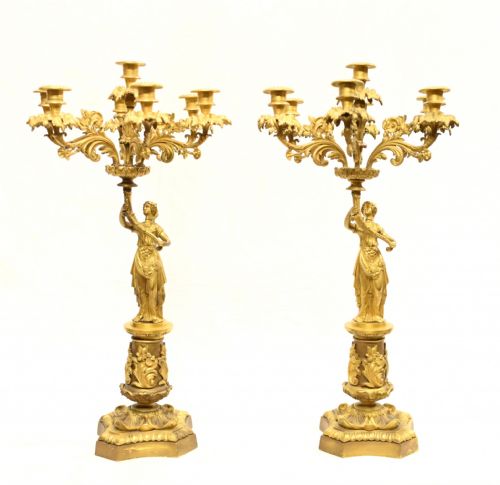
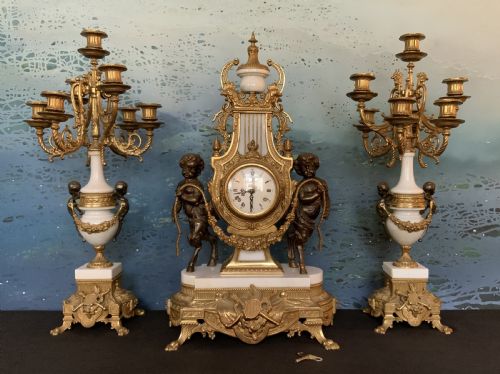
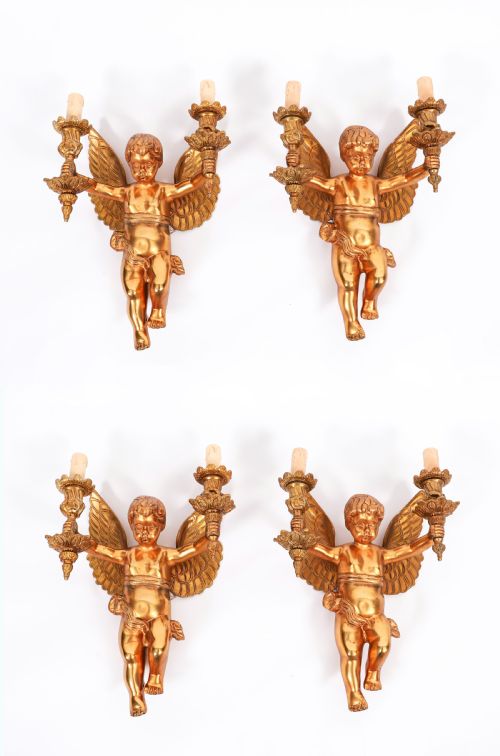
A gold brass candelabrum provides multiple branches for holding candles, often found in pairs dating from the nineteenth century. These pieces encompass table models, wall sconces, and garniture sets incorporating marble or bronze.
The selection ranges from French Rococo revival and Empire designs to Victorian Gothic pieces and English brasswork. Many examples utilise gilt bronze, ormolu, and patinated metal to achieve a rich metallic surface.
How they were made
Makers cast brass, bronze, and ormolu in sections before chasing the metal surface by hand to sharpen details like acanthus leaves and figural motifs. Gilding was applied using mercury amalgamation or fire-gilding techniques to create a durable, deep lustre on the bronze.
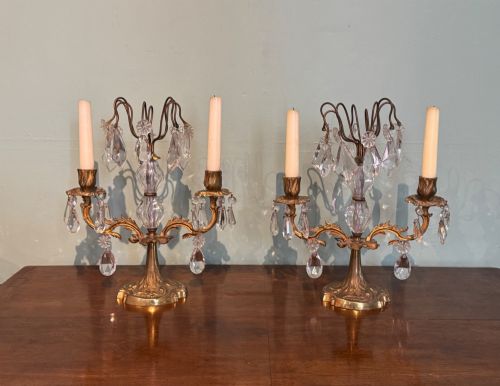
Many items combine metalwork with other materials such as carved marble bases, cut glass pendants, and enamel details. Joints are often threaded or pinned together securely, allowing multi-branch candelabra to be dismantled for cleaning or conversion.
Listings feature 19th-century gilt bronze, ormolu, and brass candelabra alongside marble-based garniture sets and wall sconces.
What varies in quality
The crispness of the casting and the depth of the hand-chasing separate standard production from superior work. Finer examples retain heavier, more solid metal components and crisper definition in sculptural elements like cherubs and drapery.
The quality of the mercury gilding or ormolu surface determines how the metal ages and reflects light. Superior pieces show careful finishing on concealed sections and integrated construction rather than superficial assembly.
Liberty
The Gold Brass Candelabrum Glossary
- Ormolu
- Gilt bronze produced by applying a mixture of gold and mercury to a bronze object before heating. This historical technique creates a rich golden finish that resists tarnishing.
- Garniture
- A set of matching ornamental objects for a mantelpiece, typically consisting of a central clock flanked by a pair of candelabra or vases.
- Candelabra
- A branched candlestick designed to hold multiple candles simultaneously across several arms extending from a central stem.
- Gilt Bronze
- Bronze metal that has been coated with a layer of gold leaf or gold wash. It provides a bright metallic sheen similar to solid gold.
- Wall Sconce
- A light fixture or candelabrum fixed directly to a wall surface with a decorative backplate.
Gold Brass Candelabrum: Frequently Asked Questions
Were these candelabra converted to electricity?
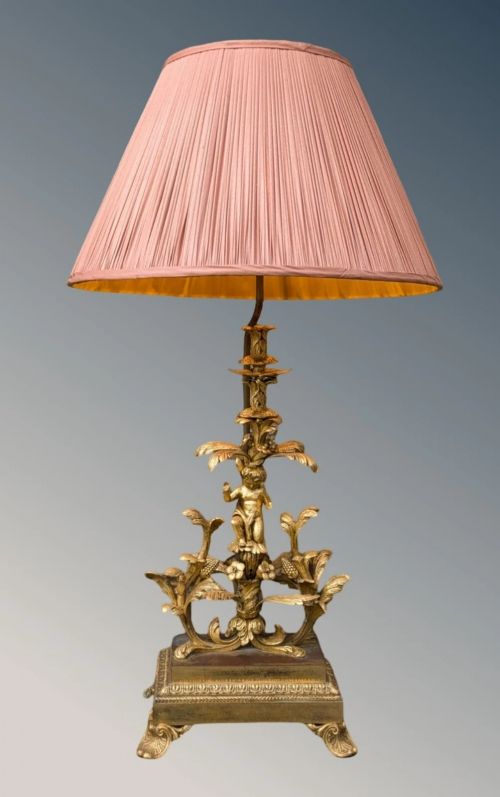
Some historical examples are adapted into table lamps by running wiring through the central column. This conversion was often carried out later in the twentieth century to suit modern domestic lighting needs.
Checking the base or underside reveals whether the original threading or candle sockets remain unaltered. Unconverted pieces retain their original configuration for holding wax candles.
How do I date a nineteenth-century piece?
Examine the weight, casting method, and decorative style to narrow down the decade of production. Nineteenth-century items often display characteristics of specific revivals such as Louis XVI, Rococo, or Gothic styles.
Look for assembly marks, screw types, and wear patterns on the underside of the base. Hand-cut threads and heavy bronze casting generally point towards earlier Victorian or French manufacture.
What is the difference between brass and ormolu?
Brass is an alloy of copper and zinc, possessing a natural yellowish metallic tone throughout its structure. It forms the solid structural base for many utilitarian and decorative objects.
Ormolu refers specifically to gilt bronze where a gold mixture is bonded to the surface of the bronze metal. This creates a deeper, more lustrous golden appearance distinct from standard polished brass.