



Cast Brass Candelabra
Cast brass candelabra bring weight and enduring metalwork into a room, offering multiple branching arms designed for heavy candle illumination.
Cast Brass Candelabra
When you search for cast brass candelabra, you find heavy metal branched lighting fixtures dating primarily through the nineteenth century. These pieces range from polished table versions to large multi-arm designs meant for grand interiors.
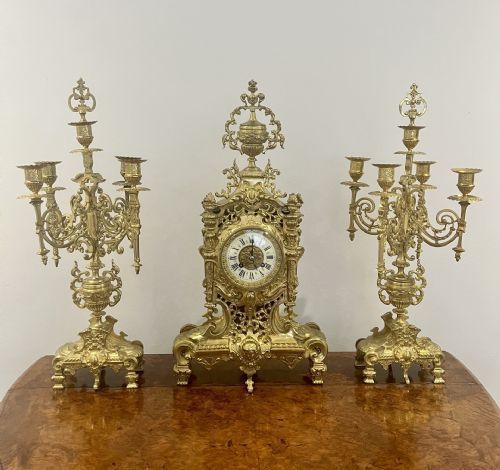
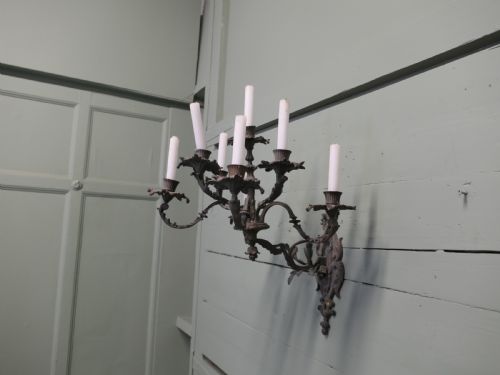
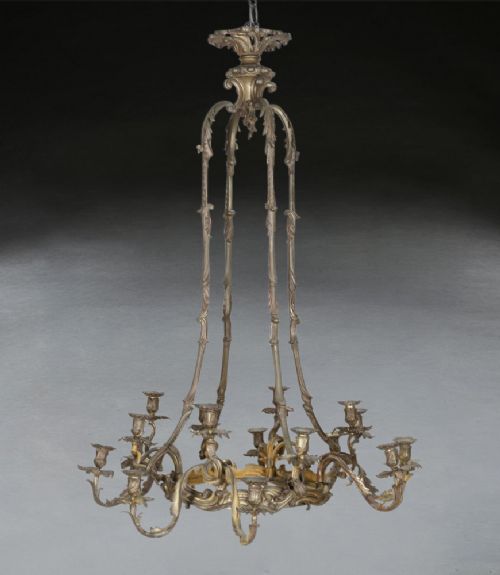
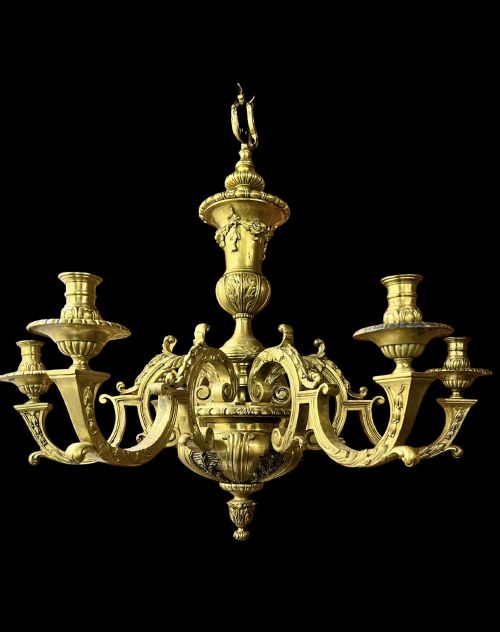
The selections available here include pairs of twin-arm and three-branch table candelabra, alongside heavier French examples with multiple stems. You also encounter related forms such as wall sconces, chandeliers, and clock garnitures sharing the same metalworking heritage.
Stylistically, these objects span several distinct design movements including French Rococo, Gothic Revival, Neoclassical, and Art Nouveau. Victorian interpretations appear frequently, often combining cast brass with bronze or gilt elements.
How they were made
The foundation of these pieces lies in molten metal poured into moulds to create solid components with high structural integrity. Founders utilised brass, bronze, and iron, often finishing surfaces through polishing or applying gilt layers.
Many complex items combined cast sections with wrought elements, enamel inlays, or steel components to achieve intricate decorative profiles. Individual branches and sconces were then joined mechanically or threaded together.
Materials recorded across the inventory include brass, bronze, gilt brass, iron, steel, and enamel.
What varies in quality
Quality in these metal objects depends on the crispness of the casting and the depth of the finishing work. Finer examples show sharp detail in decorative motifs without the blurring often found in secondary production runs.
Heavier metal weight and thoughtful articulation across multiple arms indicate superior construction. The integrity of the joins and the quality of the brass alloy itself separate standard production from exceptional pieces.
Wm. Tonks & Sons
The Cast Brass Candelabra Glossary
- Cast brass
- Molten alloy poured into a mould to form solid decorative objects. This technique allows for complex, ornate surface details.
- Gilt brass
- Base brass treated with a thin layer of gold or gold-coloured wash. It provides a bright, reflective surface finish.
- Clock garniture
- A set comprising a central clock flanked by matching decorative objects such as candelabra or vases. These sets formed coordinated mantelpiece displays.
- Candelabra
- A branched candlestick holder designed to support multiple candles simultaneously. They range in size from small table ornaments to monumental floor pieces.
Cast Brass Candelabra: Frequently Asked Questions
What is a cast brass candelabra?
A cast brass candelabra is a branched metal candleholder produced by pouring molten alloy into a mould. These objects provide multiple light sources from a single heavy base.
They appear in various historic styles, incorporating decorative arms and detailed metalwork suited for formal dining tables or mantelpieces.
How do I clean antique brass?
Cleaning antique brass requires gentle methods to preserve the underlying metal and historic surface tone. Harsh chemical polishes can strip away desirable age patination.
Most pieces simply need careful dusting with a soft cloth and occasional mild soapy water if grime has accumulated.
Are all these items Victorian?
The selection spans several periods alongside the Victorian era, including Neoclassical and Art Nouveau movements. Dates range across the nineteenth and early twentieth centuries.
Stylistic markers help distinguish between earlier Rococo revival pieces and later twentieth-century interpretations.
Can I use real candles in them?
These pieces were originally designed for traditional wax candles and retain their functional socket cups. Care must be taken to ensure candles fit securely in the branches.
Protecting the surrounding metal from dripping wax helps maintain the condition of the brass surface.