

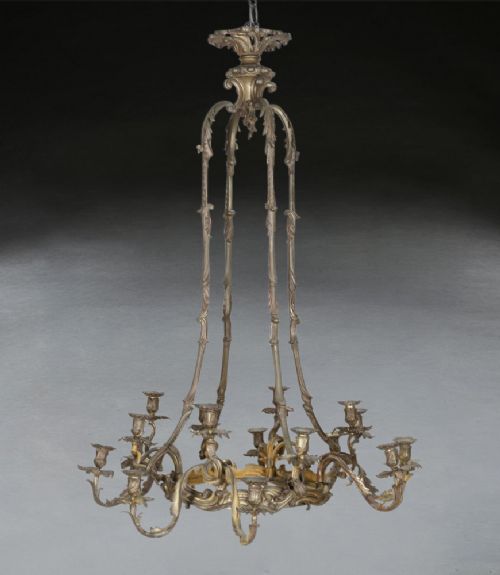


19th Century Brass Candelabra
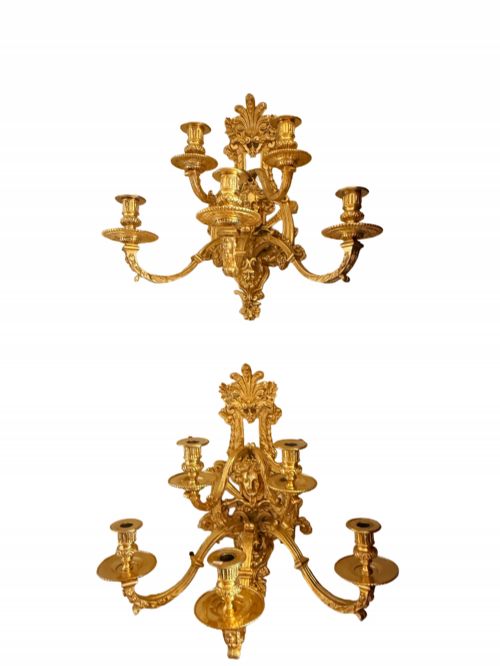
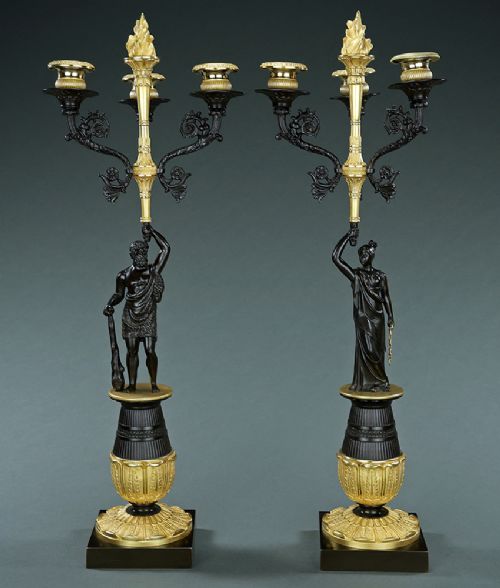
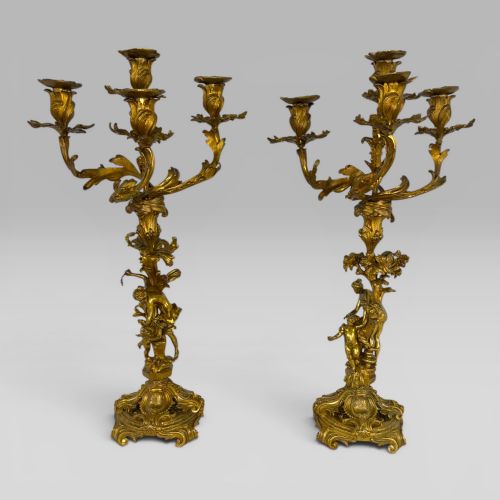
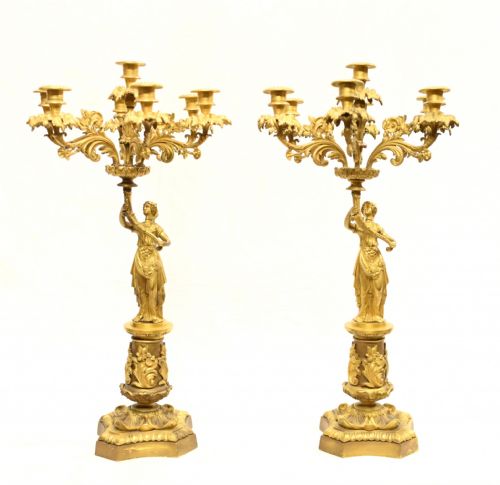
These 19th century brass candelabra bring glowing period light and sculptural presence to an interior through ornate cast metalwork and multiple branched holders.
19th Century Brass Candelabra
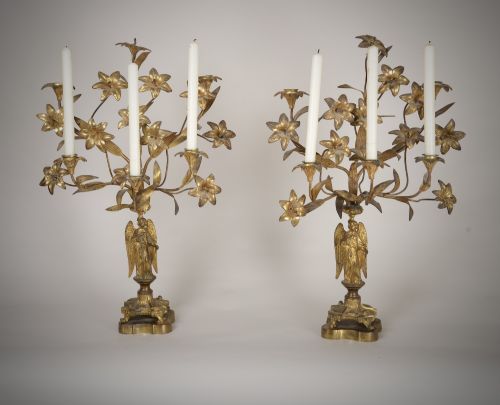
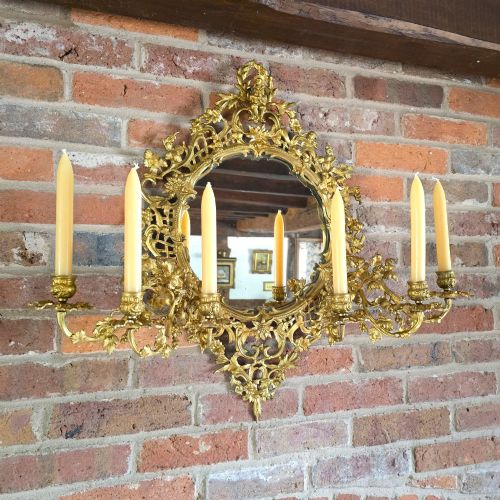
When searching for 19th century brass candelabra, a buyer encounters multi-branched lighting fixtures designed for tables, mantelpieces, and walls during the Victorian and preceding decades. The pieces appearing most frequently on this page originate from French workshops adhering to Rococo, Empire, and Louis XVI revival styles, often cast in brass, ormolu, and gilt bronze.
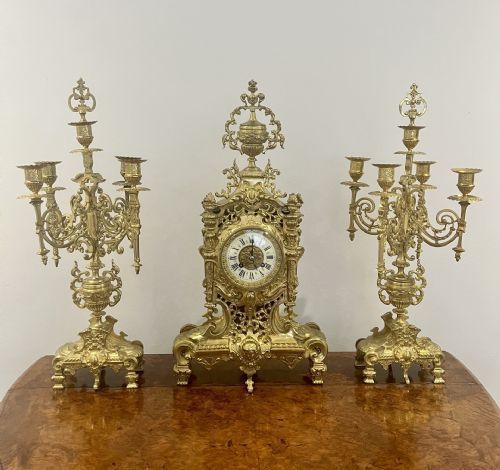
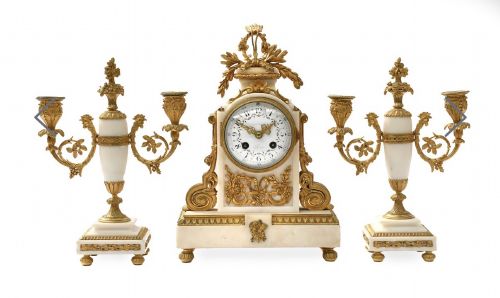
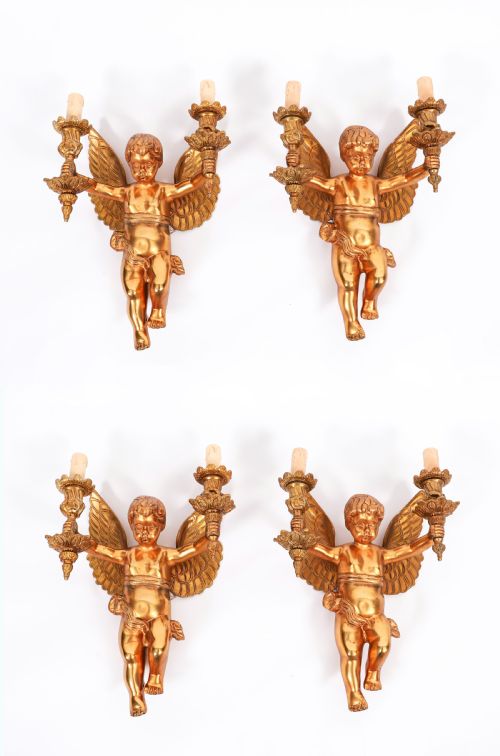
Beyond standard candelabra, the inventory includes related domestic forms such as clock garnitures, wall sconces, and chandeliers that share the same period metalwork and branch configurations. Many examples incorporate contrasting materials like white or coloured marble bases, enamel detailing, and porcelain elements alongside the primary metal structure.
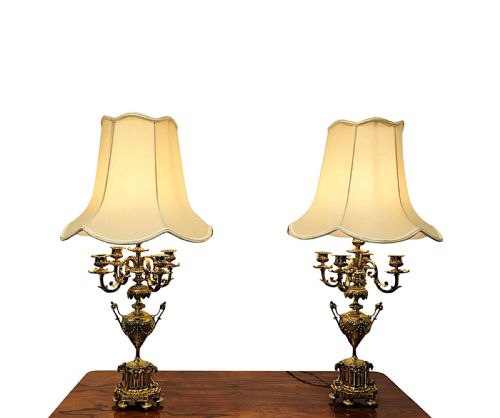
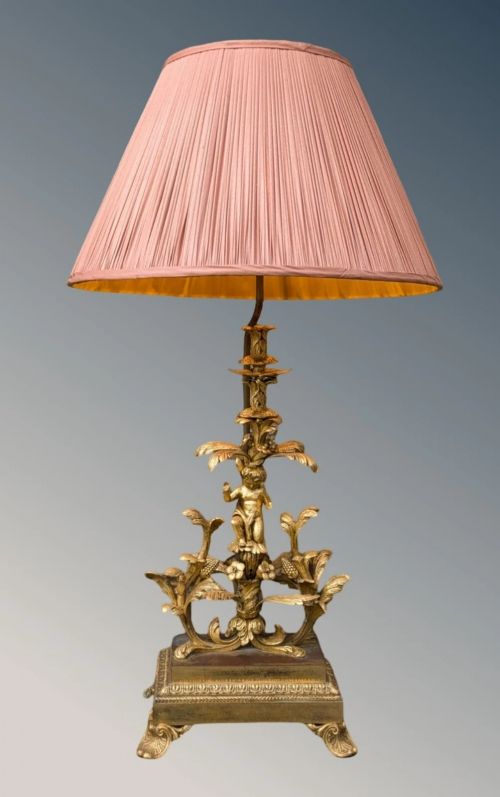
Pairs dominate the selection, designed to sit symmetrically on either side of a mantel clock or at opposite ends of a sideboard. Some surviving examples show later adaptations, having been converted professionally into table lamps while retaining their original nineteenth-century metal branches and figural stems.
How they were made
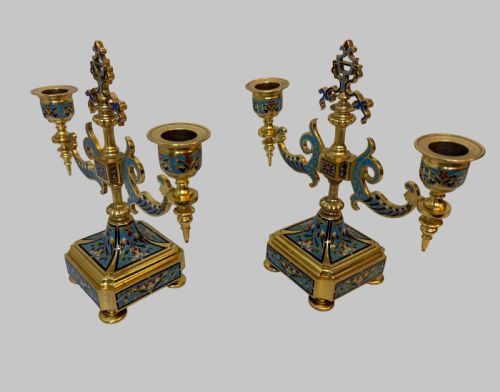
Gilt bronze and ormolu pieces received a layer of gold amalgam fired onto the bronze base, creating a durable golden finish that required meticulous mercury application and subsequent burnishing. Combinations of polished brass, patinated dark bronze, and champlevé enamel provide textural contrast across the better-executed workshop pieces.
Listings feature pieces spanning the 1850s to the turn of the twentieth century, executed in brass, gilt bronze, ormolu, marble, and enamel.
What varies in quality
The crispness of the hand-chasing on the metal surface separates superior examples from mass-produced output, as skilled artisans spent hours defining every feather, acanthus leaf, and facial expression after casting. Softer, blurred details indicate a worn mould or minimal hand-finishing.
The structural integration of the components dictates overall stability, with finer pieces employing solid threaded brass rods and heavy marble bases to support the weight of multiple branches securely. Lighter, flimsier construction suggests economical manufacturing for lower-tier markets.
The 19th Century Brass Candelabra Glossary
- Ormolu
- Gilded bronze produced by applying a mercury-gold amalgam to a bronze base and firing it until the mercury vaporised. This technique creates a rich, matte golden surface characteristic of fine French decorative arts.
- Garniture
- A set of matching ornamental objects designed to be displayed together, most commonly a mantel clock flanked by a pair of candelabra or vases. These matched arrangements formed the focal point of nineteenth-century reception rooms.
- Champlevé
- An enamelling technique where troughs or cells are hollowed out of the metal surface and filled with coloured glass paste before firing. The piece is then ground smooth and polished flush with the metal partitions.
- Sconce
- A wall-mounted lighting fixture with branches designed to hold candles or lamps. Nineteenth-century versions often featured reflective brass or mirrored backs to amplify the ambient light.
- Drip pan
- The small saucer-like plate positioned beneath the nozzle of a candelabra arm to catch melting wax. These components screw or drop onto the barm and help protect the decorative metalwork below.
19th Century Brass Candelabra: Frequently Asked Questions
How do I clean antique brass candelabra safely?
Dust the metal gently with a soft, dry microfibre cloth to remove surface particles without disturbing the protective patina or wearing down thin gilding layers.
Avoid commercial liquid brass polishes entirely, as aggressive chemical abrasives strip away original ormolu and historical surface finishes permanently.
Can converted candelabra be restored to candles?
Many converted table lamps retain their original socket arrangements and threaded central columns, making professional restoration back to candle use physically possible.
A qualified lighting conservator must assess whether the internal wiring channels altered the original brass components during the initial conversion process.
Were these pieces meant for daily use?
Middle and upper-class households placed these elaborate gilt fixtures in formal reception rooms primarily for evening entertaining and social display.
Servants trimmed the wicks and lit the candles for specific gatherings rather than relying on them as everyday domestic illumination.