

Pair of Brass Candelabra
When choosing a pair of brass candelabra, you bring home multi-branch lighting shaped by Victorian, Gothic Revival, and French design traditions.
Pair of Brass Candelabra
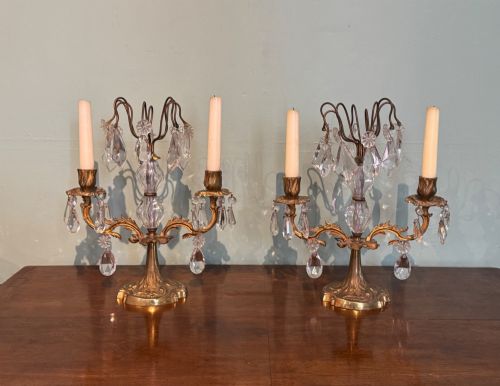
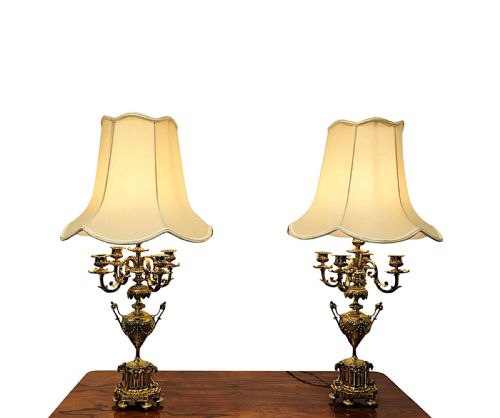
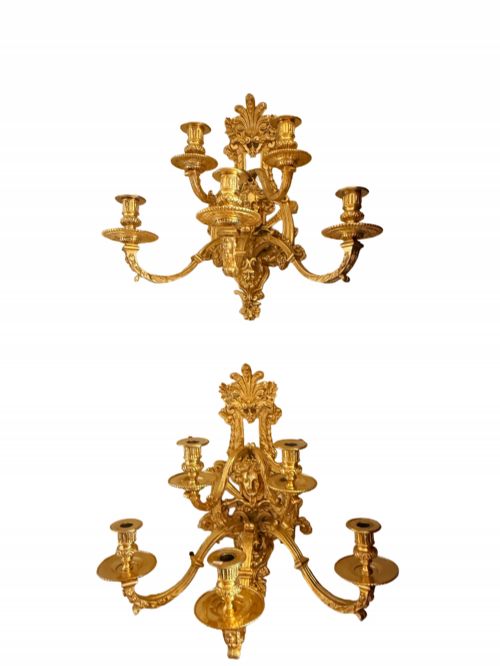
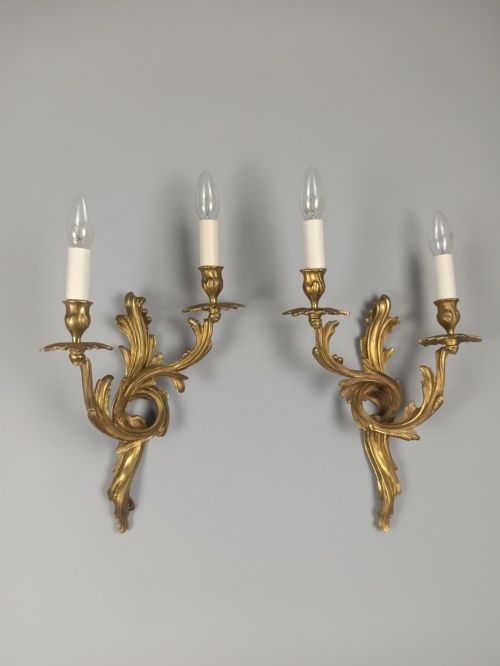
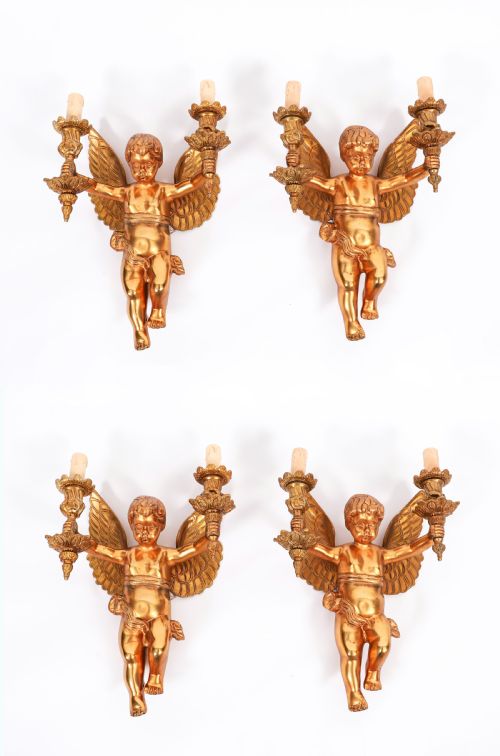
A pair of brass candelabra serves as matched table lighting or wall-mounted illumination, frequently featuring multiple arms branching from a central stem. These items appear across nineteenth-century and early twentieth-century periods, spanning English, French, and Italian workshops.
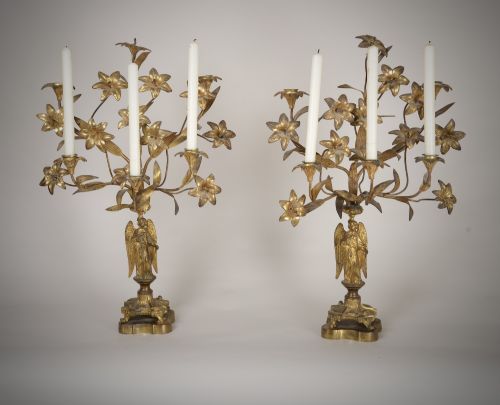
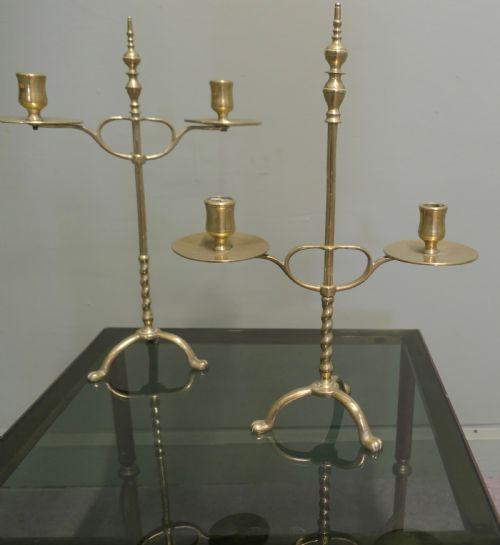
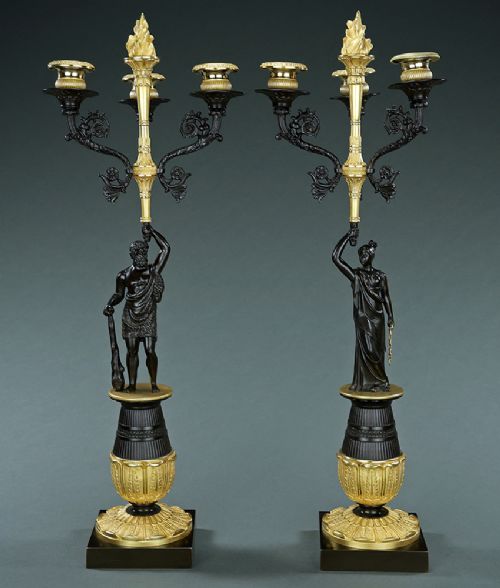
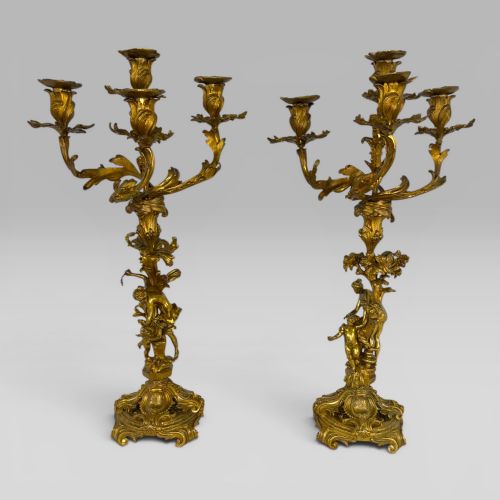
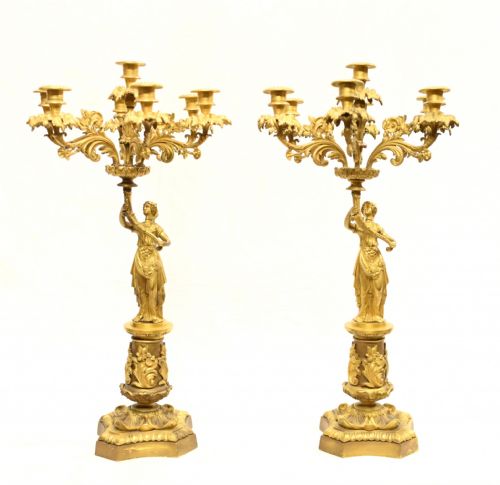
The selection on this page ranges from heavy Victorian cast brass and Gothic Revival church designs to gilded ormolu and patinated bronze examples made for drawing rooms. Many pieces incorporate adjustable student lights, rise and fall mechanisms, or glass lustres alongside standard multi-branch forms.
Buyers frequently encounter French Rococo and Empire revival models alongside utilitarian Arts and Crafts brass designs. Table lamps and wall sconces also share space with traditional freestanding candelabra and candlesticks.
Materials and construction methods
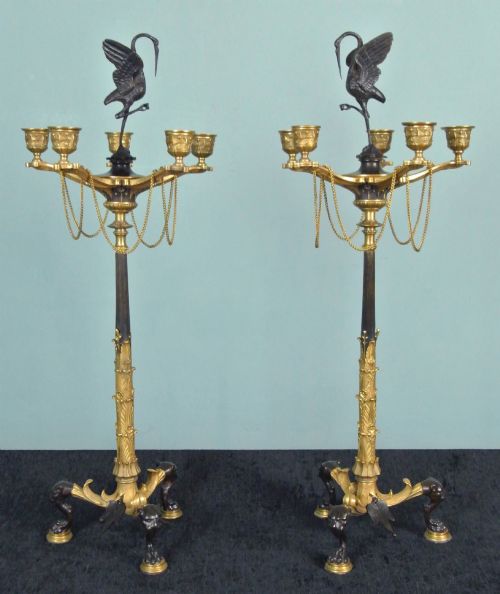
Foundry work relied on casting brass, bronze, and gilt bronze into ornate arms, bases, and figural components. Artisans finished these metal surfaces through polishing, patination, or the application of gold-coloured ormolu.
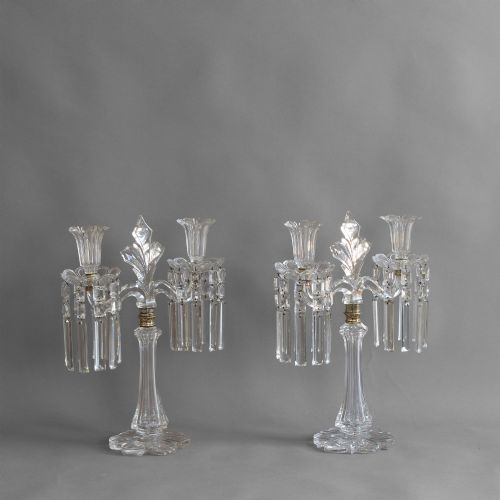
Combinations of brass with white or veined marble plinths added weight and visual contrast to nineteenth-century table pieces. Cut glass and crystal drops, known as lustres, hung from bobeches to refract candlelight in formal rooms.
Construction techniques included threaded assemblies, pegged joints, and riveted branch configurations. Later adaptations sometimes converted these metal light fittings for electricity by running internal wiring through the central columns.
Merman and Hercules occasionally keep watch from the base.
Distinctions in manufacture and finish
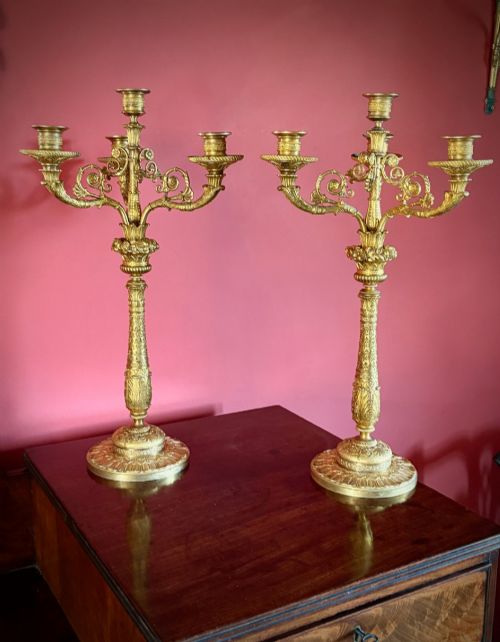
Quality rests in the crispness of the cast ornamentation, where finely chased foliate scrolls, figural details, and crisp mouldings separate superior pieces from softer commercial production. Heavy gauge brass and solid bronze components provide stability and substance compared to thinner, lighter pressings.
The execution of the gilt or patinated finish dictates overall refinement, with well-preserved fire-gilding or deep bronze patination retaining tonal depth over time. Integrated components like balanced adjustable arms, original marble bases, and matched crystal lustres indicate higher workshop standards.
Barbedienne·Wm. Tonks & Sons·Liberty·Elkington & Co
The Pair of Brass Candelabra Glossary
- Ormolu
- Gilt bronze created by applying a mercury-gilding mixture to cast bronze. This technique produced a durable golden surface seen on French Empire and Rococo revival pieces.
- Lustre
- A glass pendant or hanging prism suspended from a candelabra to catch and reflect light. These drops often accompanied nineteenth-century table candelabra and wall sconces.
- Bobeche
- A removable drip pan fitted beneath the candle nozzle to catch melting wax. It protected the arms and decorative branches below.
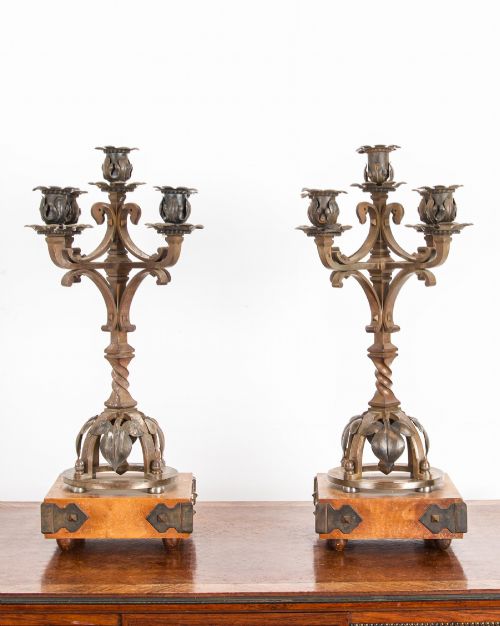
- Patinated bronze
- Metal treated with chemical solutions to darken the surface and create rich brown or greenish tones. This finish highlighted sculptural details on figural bases.
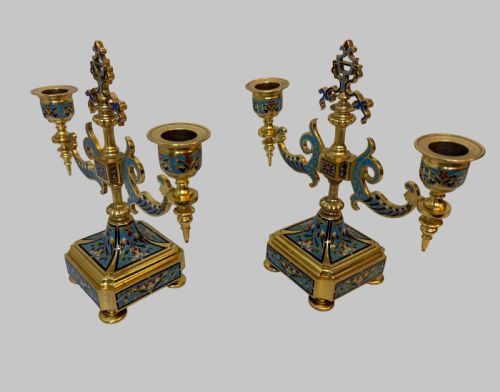
- Champleve
- An enamelling technique where troughs are dug into a metal surface and filled with coloured glass paste before firing. It decorated nineteenth-century candlesticks and decorative fittings.
Pair of Brass Candelabra: Frequently Asked Questions
Were these candelabra converted to electricity?
Many nineteenth-century and early twentieth-century examples on the market have undergone conversion for modern electrical use. Wiring is typically routed through the hollow central stem to accommodate candle-style bulb fittings.
Unconverted pieces retain their original solid sockets intended strictly for wax candles. Buyers can choose between pristine mechanical setups or professionally rewired table lamps.
How do I date a brass candelabra?
Examine the casting method, style markers, and assembly screws to determine the manufacturing period. Heavy sand-cast bases, neoclassical motifs, and Gothic Revival tracery point firmly to nineteenth-century workshop production.
Maker marks stamped onto the underside of bases provide definitive attribution when present. Later twentieth-century reproductions often feature machine-tooled threading and lighter gauge metals.
Where were candelabra placed in historic homes?
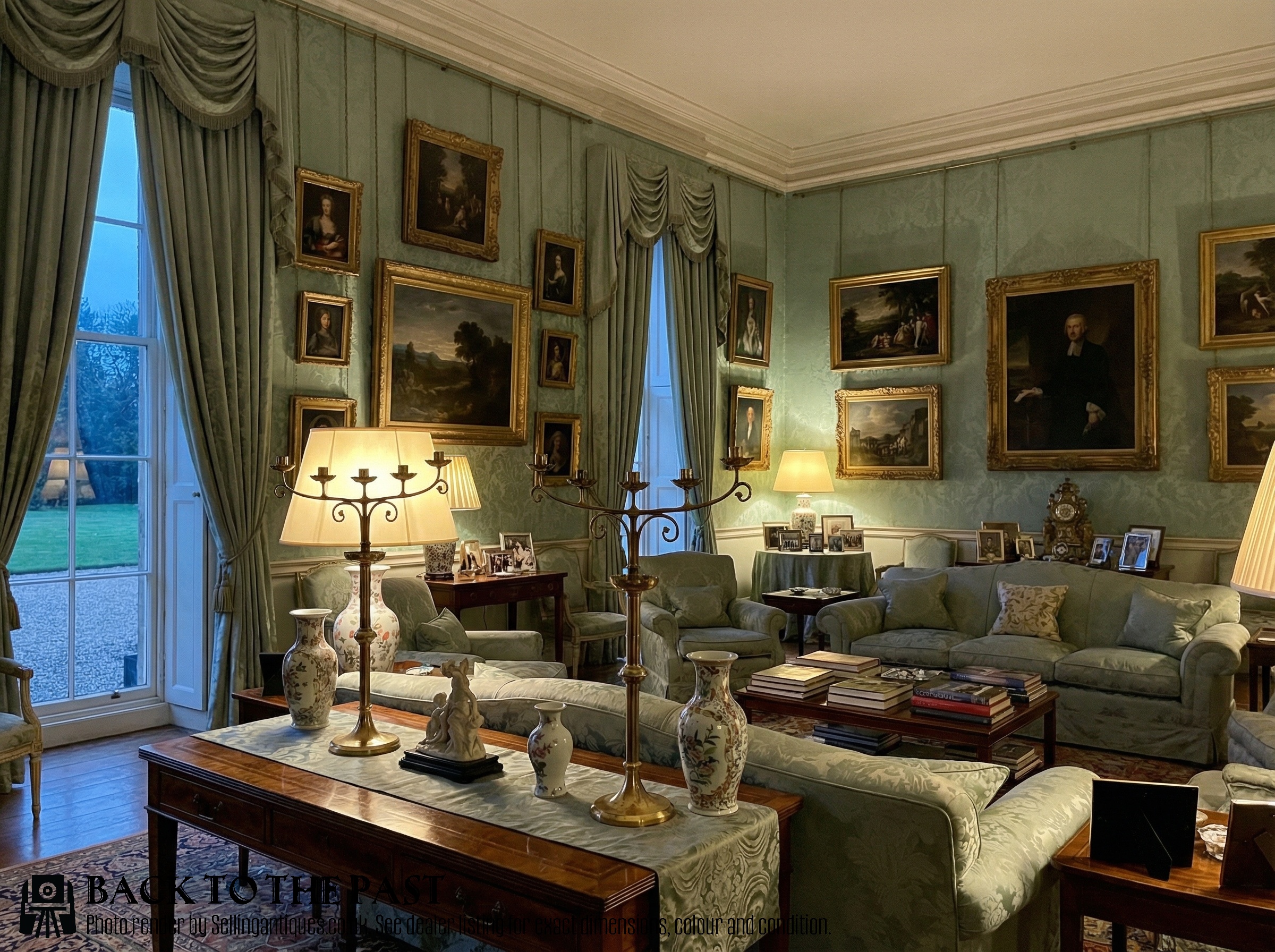
Multi-branch candelabra stood centrally on dining tables, mantelpieces, and sideboards to illuminate evening gatherings. Wall-mounted sconces flanked mirrors and doorways to distribute ambient light across reception rooms.
Adjustable student lights and rise-and-fall mechanisms provided focused illumination for reading desks and writing tables. Church candelabra served ecclesiastical spaces before entering the domestic antique market.