


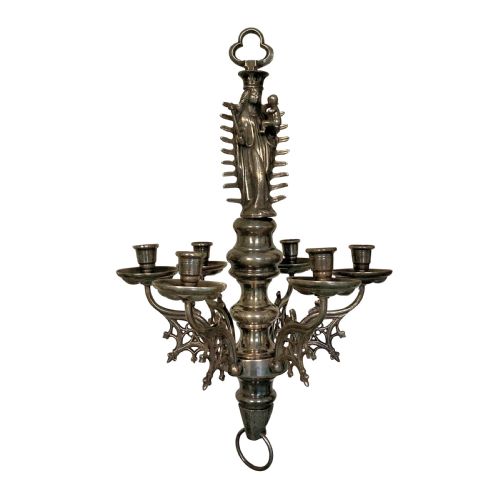


Gothic Brass Candelabra
These gothic brass candelabra bring pointed arches, heavy metalwork and medieval presence straight into a modern room.
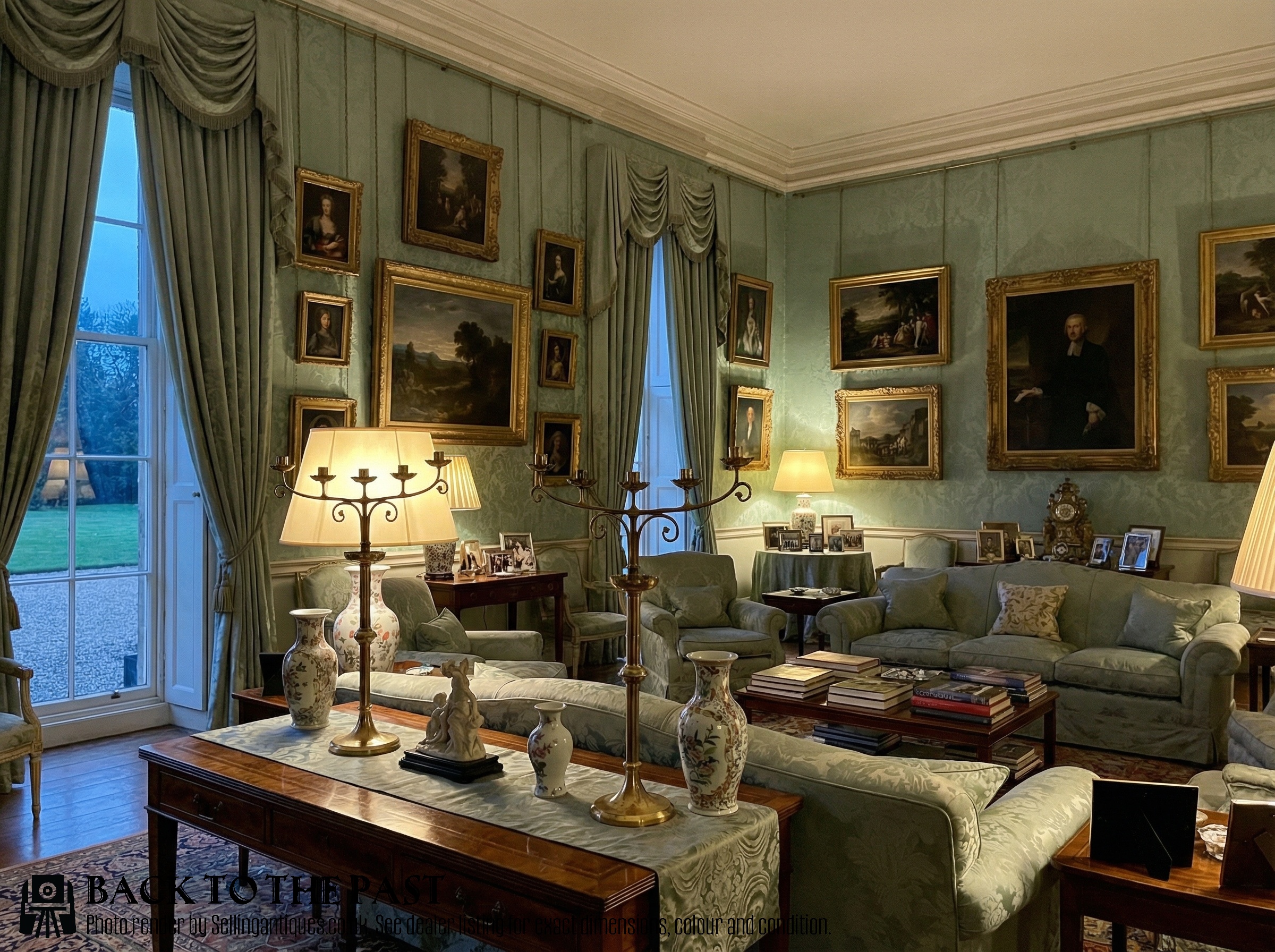
Gothic Brass Candelabra
When you search for gothic brass candelabra, you are looking at heavy metal lighting designed to evoke medieval architecture and ecclesiastical interiors. Most pieces encountered on this page stem from the nineteenth century or the early decades of the twentieth century, carrying the stylistic weight of the Gothic Revival and Arts and Crafts movements.
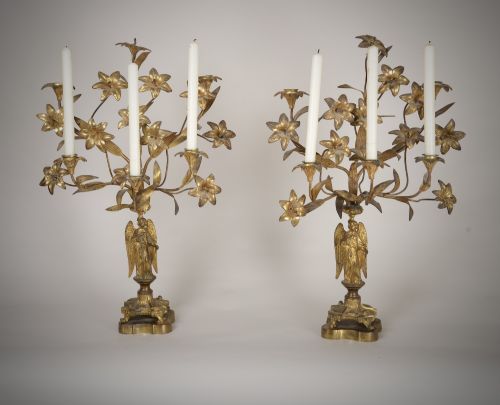
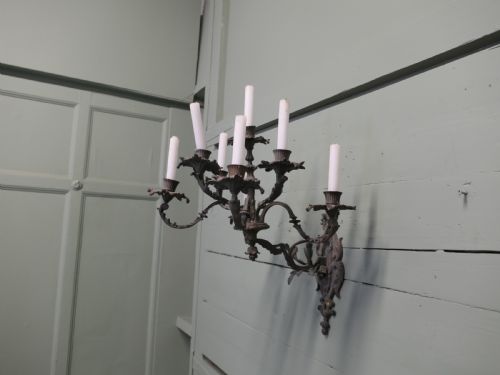
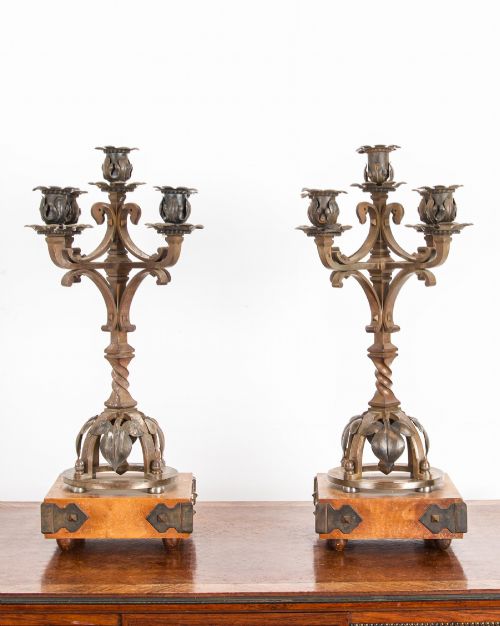
The forms range from branched table candelabra and articulated wall sconces to large altar pieces and hanging chandeliers. You will frequently find pairs designed for symmetrical placement on a mantelpiece, sideboard or altar.
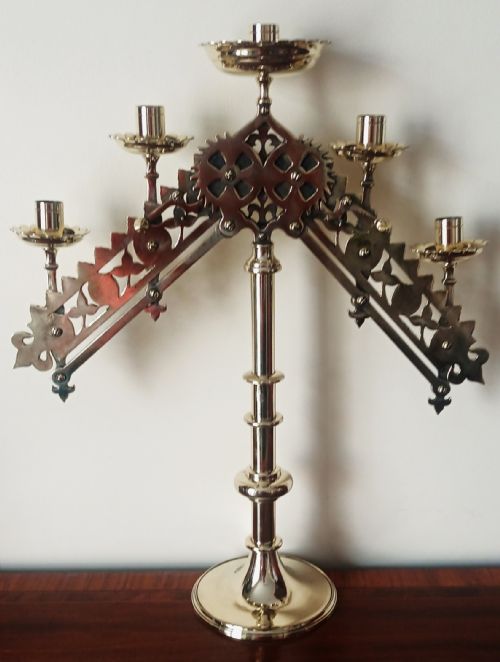
Makers drew heavily on architectural motifs, incorporating trefoils, quatrefoils and candle branches that mimic flying buttresses or heavy sanctuary fittings. These lighting fixtures combine practical utility with the solemn drama of medieval design.
How they were made
Makers relied primarily on cast brass, often complemented by gilt brass, ormolu and bronze to achieve varied surface textures and tones. Some examples integrate wrought iron, wood or silver plate into the construction to add structural contrast and weight.
Casting allowed workshops to produce intricate tracery, socket drip pans modelled on candle stub receptacles and articulated arms that could swing outward. Hand-chasing and finishing brought sharp detail to the foliage, figures and geometric patterns cast into the metal.
Some articulated brass arms were designed to swing outward so households could reach candles tucked deep into dark sanctuary corners.
What varies in quality
Quality shows in the crispness of the casting and the depth of the chased detail across the brass and bronze surfaces. Superior examples retain complex multi-branched structures, solid joints in articulated arms and well-preserved gilding or original patination.
Lesser pieces feature softer casting where fine architectural tracery is blurred or simplified. The choice of materials also marks the tier, with solid gilt brass and heavy bronze assemblies standing apart from lighter plated alternatives.
Wm. Tonks & Sons
The Gothic Brass Candelabra Glossary
- Gothic Revival
- A nineteenth-century architectural and decorative movement that revived medieval gothic forms, pointed arches and structural motifs in domestic and ecclesiastical objects.
- Ormolu
- Finely ground high-carat gold applied to a bronze or brass base through a mercury amalgamation process, creating a rich golden finish.
- Articulated
- Designed with movable joints or hinges that allow the arms of a candelabrum or sconce to swing into different positions.
- Ecclesiastical
- Relating to the Christian church or clergy, describing items originally made for use in chapels, churches or altars rather than domestic settings.
Gothic Brass Candelabra: Frequently Asked Questions
How do I clean a brass candelabrum?
Dust the piece gently with a soft dry cloth to prevent accumulation in the intricate recesses of the casting. Avoid harsh commercial dips that strip away the aged patination collected over decades.
If the metal requires more attention, warm soapy water and a very soft brush will lift surface grime without harming the original finish. Dry the metal thoroughly afterwards to prevent spotting.
How do I tell Victorian Gothic from Arts and Crafts?
Victorian Gothic pieces lean heavily into architectural replication, featuring sharp pointed arches, crockets and elaborate ecclesiastical detailing derived directly from medieval stonework. The decoration tends to be dense and highly ornate.
Arts and Crafts examples simplify the silhouette, focusing on honest construction, visible hand-working marks and simplified plant or geometric motifs. The aesthetic values utility and straightforward material expression over complex historical revival.
Where should I place a large candelabrum?
Large multi-branched pieces look best anchored on heavy furniture such as oak sideboards, dining tables or deep mantelpieces where their physical weight feels balanced. Their height and scale require a stable surface with adequate clearance from overhead shelving.
Wall-mounted sconces and hanging chandeliers need secure fixings into wall studs or ceiling joists to support the heavy brass and bronze structures safely. Position them away from heavy foot traffic where passing sleeves might catch the arms.