

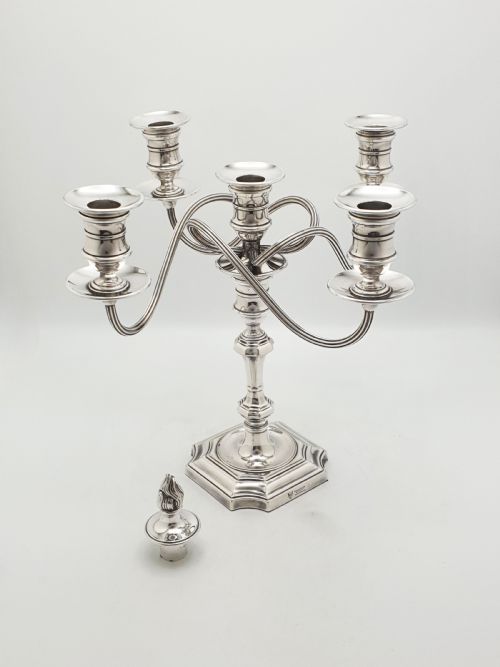


Multi Branch Candelabrum
These multi branch candelabrum pieces bring structural height and branching candle light to a dining table or mantelpiece.
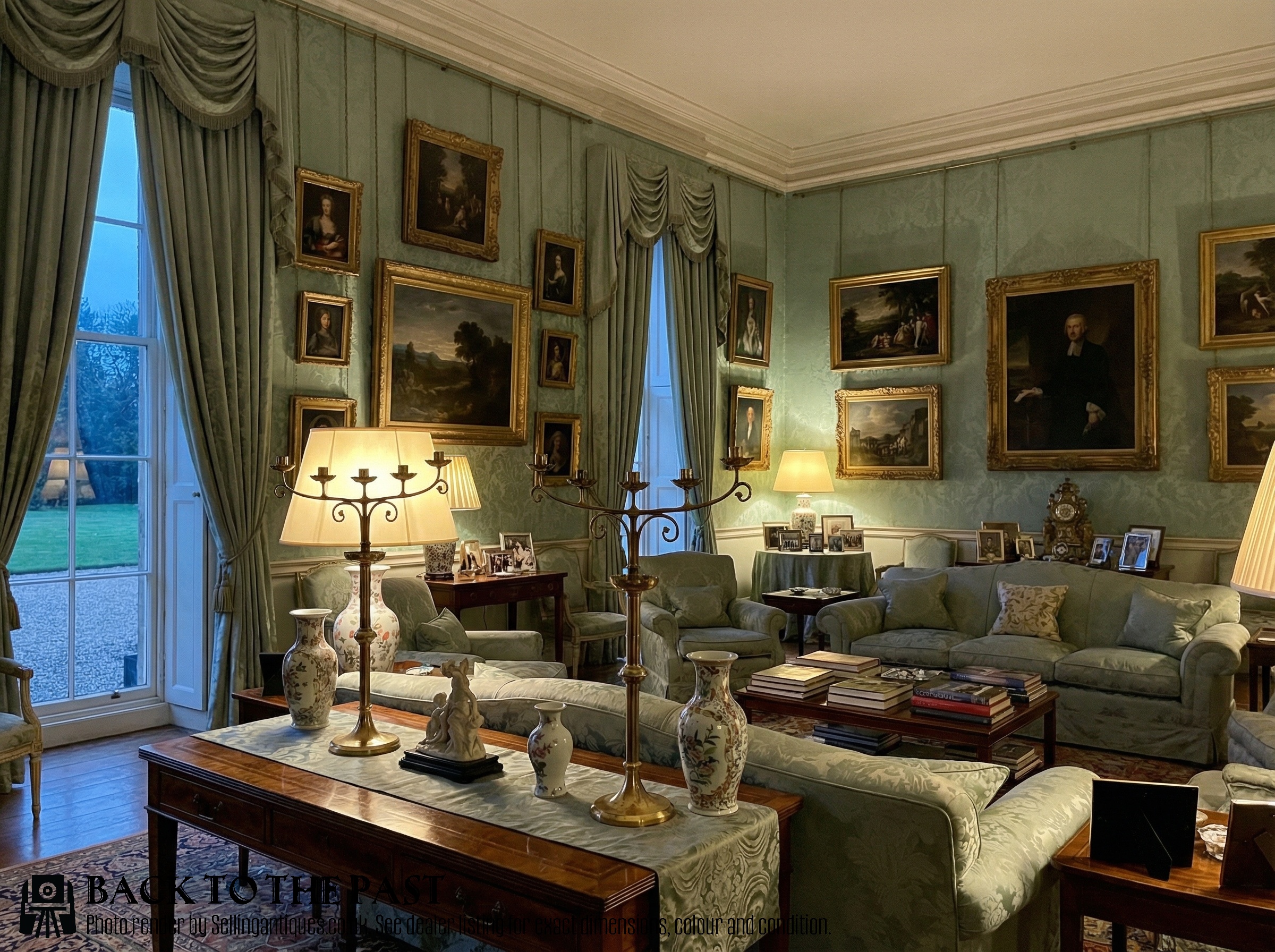
Multi Branch Candelabrum
A multi branch candelabrum provides multiple candle holders branching from a single central stem, designed for domestic illumination across dining rooms and drawing rooms. The examples found here span from the nineteenth century through the mid twentieth century, covering periods such as Victorian, Regency, Edwardian, and Art Deco.
The forms on this page include both single multi branch candelabra and balanced pairs, taking various branching shapes from simple arms to elaborate lyre configurations. Materials range widely across silver plate, sterling silver, brass, bronze, carved wood, oak, and porcelain, reflecting diverse domestic interiors.
Stylistic expressions vary considerably, drawing upon Rococo Revival, Gothic Revival, French Empire, Classical Revival, and Neoclassical vocabularies. Buyers encountering these pieces will find both heavy metal castings and carved wooden forms suited to traditional table settings.
How they were made
Makers utilised metals such as brass, bronze, sterling silver, and silver plate over base metals like EPNS, employing casting and plating techniques to achieve substantial structural forms. Bronze components were frequently paired with marble bases to provide weight and stability for the branching arms.
Carved wood and oak examples demonstrate traditional woodworking skills, utilising hand carving to shape timber candle holders and stems. Porcelain production, such as German Saxony pieces, involved meticulous moulding and firing before decorative finishing.
Multi Branch Candelabrum Retail Price Guide 2026
Typical asking prices for multi branch candelabrum among the pieces listed under this phrase on Sellingantiques today, from the lower quarter to the upper quarter. They describe what is for sale here now, not the wider market.
Some nineteenth century brass candle holders carry the quiet mystery of unknown French workshops, perhaps lit once for a Parisian dinner party long forgotten.
What varies in quality
Quality in a multi branch candelabrum rests upon the crispness of casting detail in the arms and drip pans, alongside the structural integrity of the joints where branches meet the central column. Heavier gauges of silver plate or solid sterling silver and bronze demonstrate superior material commitment compared to lighter plated alternatives.
The articulation of historical style, whether Rococo Revival scrolls or Gothic Revival tracery, distinguishes finer artistic execution from simpler commercial production. Proportional balance between the branching upper works and the supporting base ultimately determines the visual success of the piece.
The Multi Branch Candelabrum Glossary
- Candelabrum
- A large branching candle holder designed to support multiple candles from a single base. This is the singular form of candelabra.
- Silver Plate
- A thin layer of silver fused or electroplated onto a base metal such as copper or nickel brass. It offers the appearance of solid silver at a different material cost.
- EPNS
- Electroplated Nickel Silver, a common base metal alloy used beneath a silver coating in nineteenth and twentieth century metalwork. It provides a durable foundation for plated tableware.
- Lyre
- A symmetrical musical instrument shape frequently utilised as the central column design in decorative arts and lighting during the nineteenth century. It adds a classical architectural motif to the branching frame.
- Rococo Revival
- A nineteenth century decorative style marked by asymmetrical scrolls, naturalistic shell motifs, and exuberant ornamentation. It appears frequently on Victorian silver plated and bronze candelabra.
Multi Branch Candelabrum: Frequently Asked Questions
How do I clean tarnished silver plated candelabra?
Silver plated pieces require a soft cloth and a dedicated silver polish applied gently to avoid wearing through the thin plating over the base metal. Regular dusting helps prevent heavy tarnish accumulation in the detailed recesses of Rococo or Neoclassical casting.
Avoid harsh abrasive dips that can strip the protective finish or damage underlying copper and nickel alloys. Storing pieces away from damp environments preserves both the metal surfaces and any internal weighting materials.
How are different periods identified?
Stylistic ornament provides the primary clue to dating, with Regency and French Empire pieces showing classical restraint and bronze mounts, while Victorian and Edwardian examples often embrace exuberant revivalism. Material stamps, hallmarks on silver, and manufacturing techniques such as early electroplating help narrow down the decade of production.
Heavier cast brass and bronze are typical of nineteenth century work, whereas mid twentieth century Italian pieces often display cleaner, simplified lines. Comparing the form to documented design pattern books clarifies the historical context.
Can antique candelabra hold standard modern candles?
Most antique candle holders accommodate standard taper candles, though slight variations in nineteenth century nozzle diameters may require minor trimming at the base. Drip pans catch melted wax and protect the branching arms from accumulation during use.
When burning candles, stability is paramount, so ensure the candelabrum rests on a level surface away from drafts. Snuffing candles rather than blowing them out prevents hot wax splatters across the metal or wood surface.