
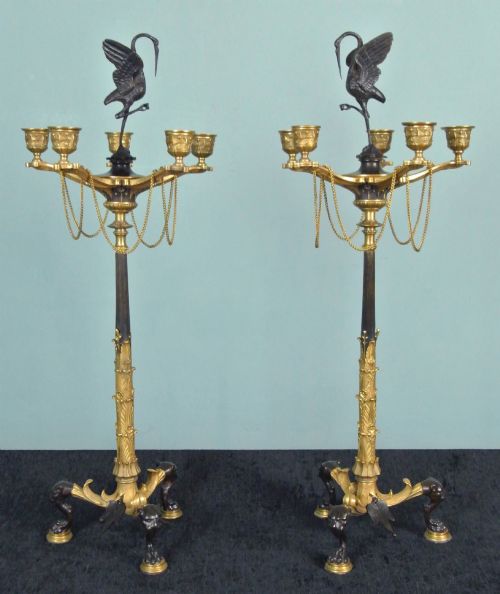
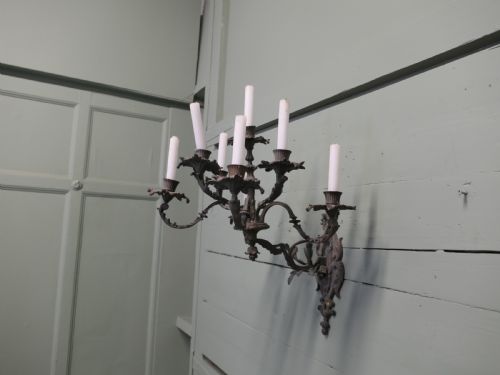
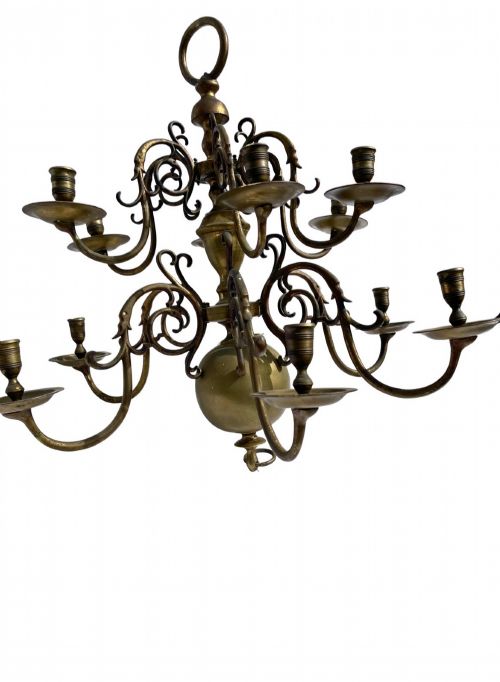
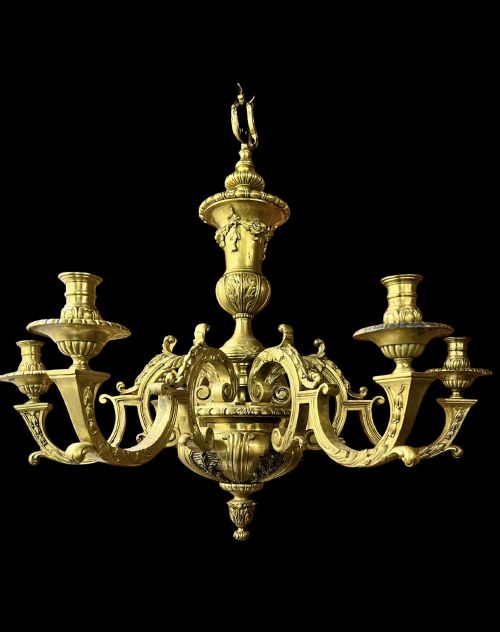


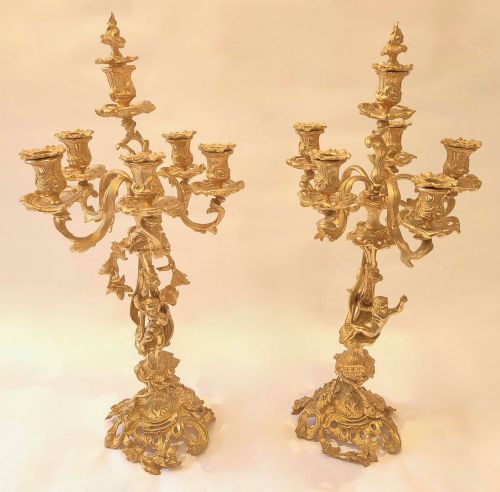

Multi Light Brass Candelabra
These multi light brass candelabra bring weight and warm metal tones to a room, offering the branching splendour found in nineteenth-century homes.
Multi Light Brass Candelabra
When you search for multi light brass candelabra, you look at branched lighting fixtures designed to hold multiple candles or adapted as lamps. The examples on this page span the nineteenth century and the early twentieth century, taking forms such as table candelabra, wall sconces, and chandeliers.
You meet objects shaped by distinct historical revivals, including French Empire, Gothic, Rococo, and Arts and Crafts styles. Many pieces originate from French workshops, showing classical motifs, cherubs, or ornate scrollwork in cast brass, ormolu, and gilt bronze.
Pairs appear frequently among these listings, offering symmetry for a mantelpiece or a dining table. Some items incorporate cut glass drops or fabric elements, adding texture and reflected light to the metallic structures.
Materials and construction methods
Foundry work relies heavily on cast brass, bronze, and ormolu, where molten metal takes the form of intricate floral patterns, figures, and structural arms. Artisans chased and finished the metal surfaces by hand to sharpen details before applying gilding.
Gilt bronze and ormolu finishes provide a rich, golden lustre that catches ambient room light. Cut glass drops hang from certain designs, secured by small brass pins to refract light from the candles.
Some heavy bronze cherubs have spent over a century holding up candle sockets without dropping a single glass pendant.
Assessing quality in multi light brass candelabra
Weight and stability indicate the density of the metal used in the stem and base. Solid construction ensures that branching arms remain secure and balanced when supporting multiple candle sockets.
Barbedienne
The Multi Light Brass Candelabra Glossary
- Ormolu
- Gilded bronze, where a layer of gold amalgam is applied to a bronze base through a mercury process or electroplating. This technique creates a durable, luminous golden surface popular in French decorative arts.
- Gilt Bronze
- Bronze metal treated with a gold leaf or gold wash finish to give the appearance of solid gold. It provides rich coloration and resists tarnishing over time.
- Candelabrum
- A branched candlestick holding multiple candles on separate arms. The plural form is candelabra, though singular items also appear.
- Wall Sconce
- A decorative lighting fixture fixed to a wall holding multiple candles or bulbs. These pieces project outwards to cast light across a room.
- Table Lustre
- A candelabrum or candlestick adorned with cut glass pendants or drops. The glass prisms hang from the arms to sparkle when lit.
Multi Light Brass Candelabra: Frequently Asked Questions
What is a multi light brass candelabra?
A multi light brass candelabra is a branched candlestick designed to hold several candles at once, usually constructed from brass, bronze, or ormolu. These pieces often feature decorative scrolling arms and cast ornamentation.
Originating largely from nineteenth-century European workshops, they served both functional lighting purposes and ornamental display in formal rooms.
How were multi light brass candelabra used?
Historically, these candelabra stood on dining tables, sideboards, or mantelpieces to illuminate evening gatherings. Multiple candle branches maximised the amount of light cast into the space.
Many surviving pieces have since been wired for electricity to function as table lamps while retaining their original branched metal frames.
How do I style a multi light brass candelabra at home?
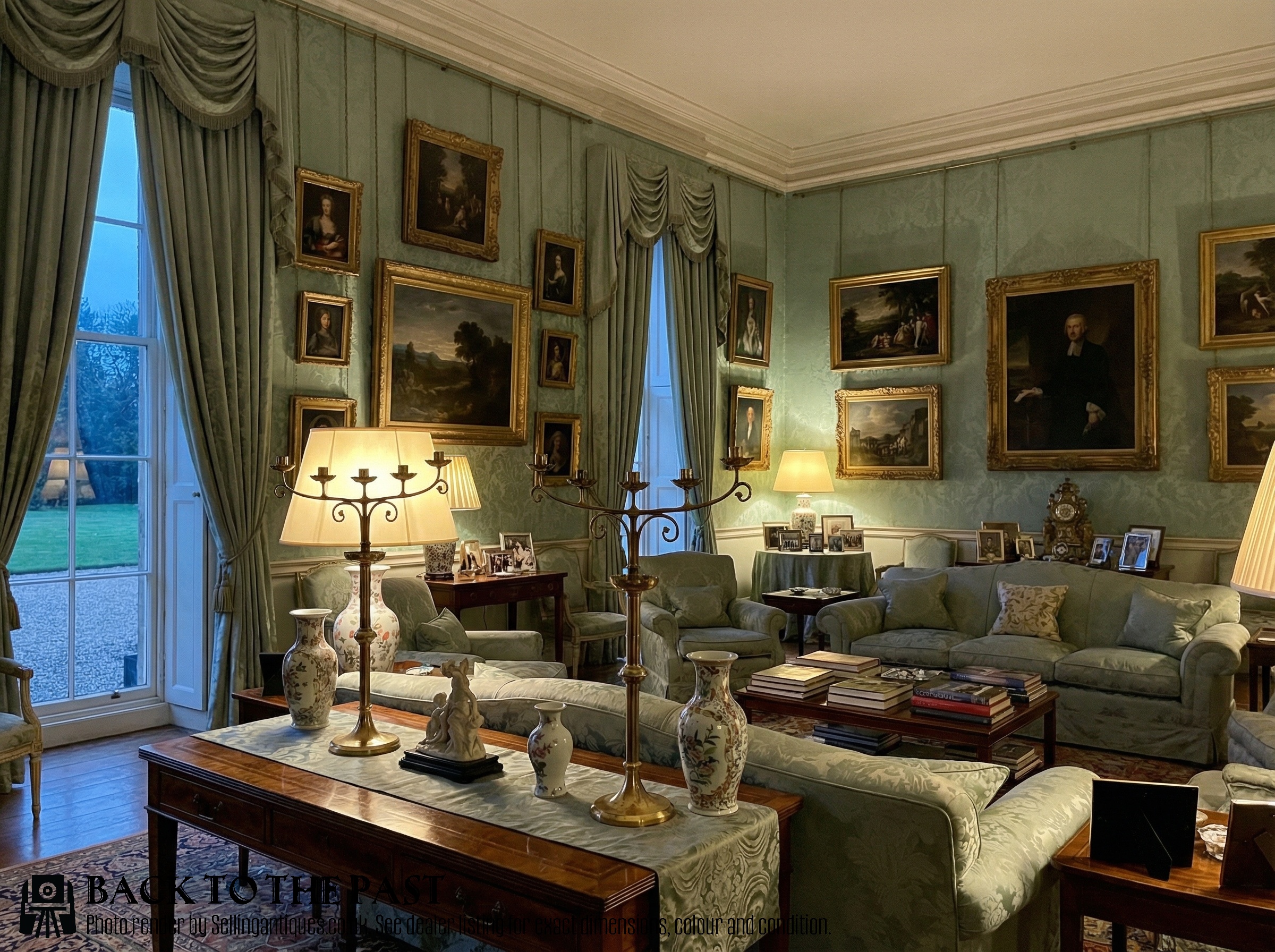
Place a pair of candelabra symmetrically on a large dining table, a sideboard, or a mantlepiece to create a formal focal point. The warm metal tones complement wood furniture and traditional interior palettes.
Keep surrounding decor simple to let the intricate casting work and branching structure stand out in the room.
How do I identify the period of a candelabra?
Examine the decorative style, such as Gothic revival arches, Empire classical motifs, or Rococo asymmetrical scrolls, which reflect nineteenth-century design trends. The weight of the metal and the method of casting also point towards specific manufacturing eras.
Makers' marks or signatures stamped into the metal base can sometimes pinpoint the exact foundry and date of creation.