
Gold Vases
Gold antique vases encompass gilded porcelain, rich earthenware, and cast bronze vessels from the Georgian, Regency, and Victorian periods.
Gold Vases
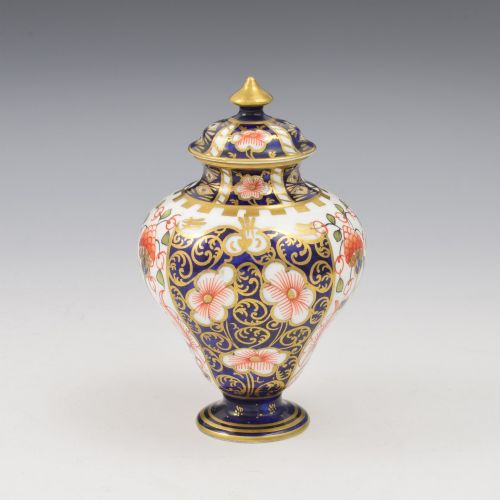
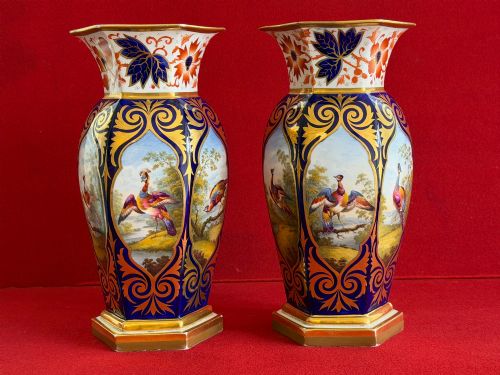
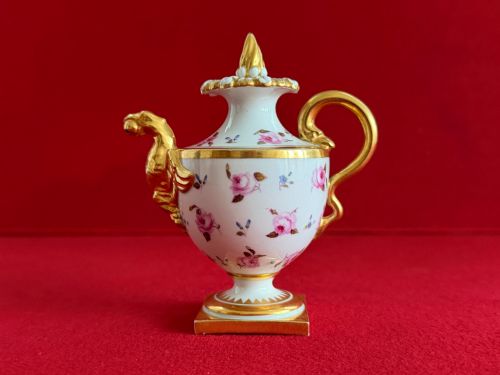
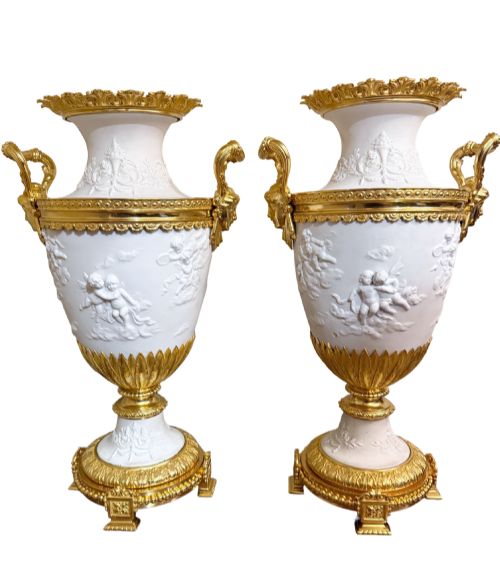
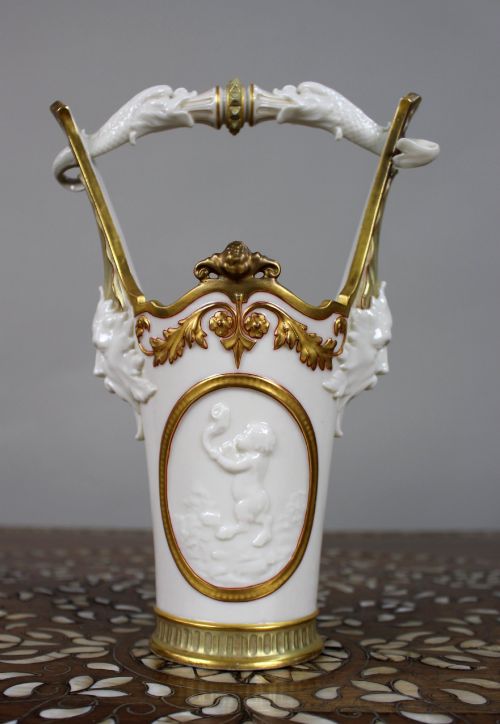
Gold antique vases comprise decorative ceramic and metal vessels decorated with gilding, gold leaf, or ormolu mounts, originating predominantly from the nineteenth century alongside Georgian and Edwardian examples. You will frequently encounter pairs of porcelain urns from English factories such as Worcester and Spode, adorned with hand-painted motifs and gilded handles.
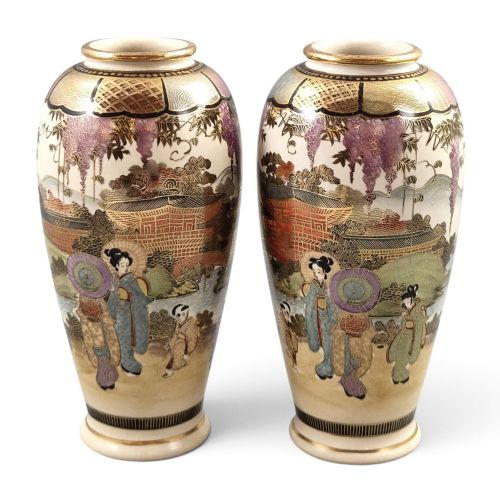
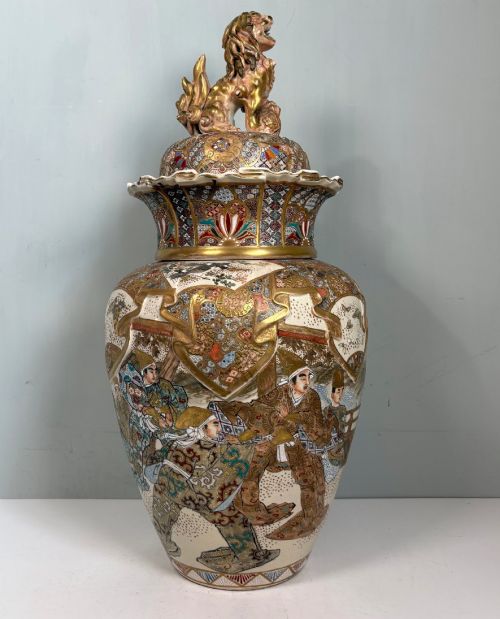
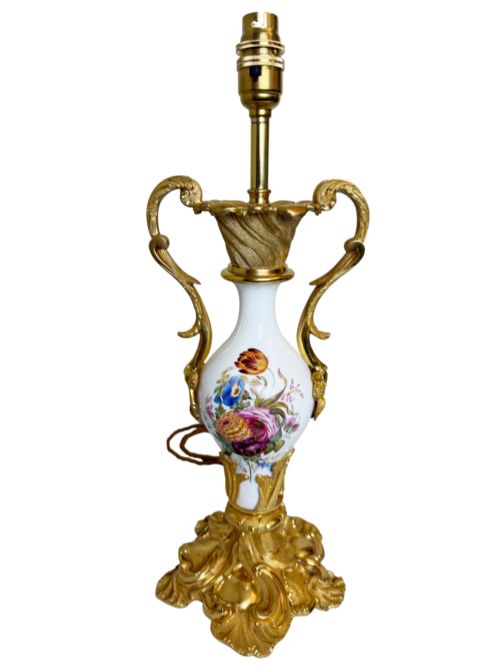
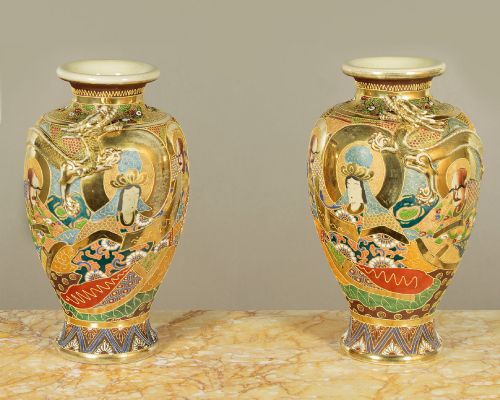
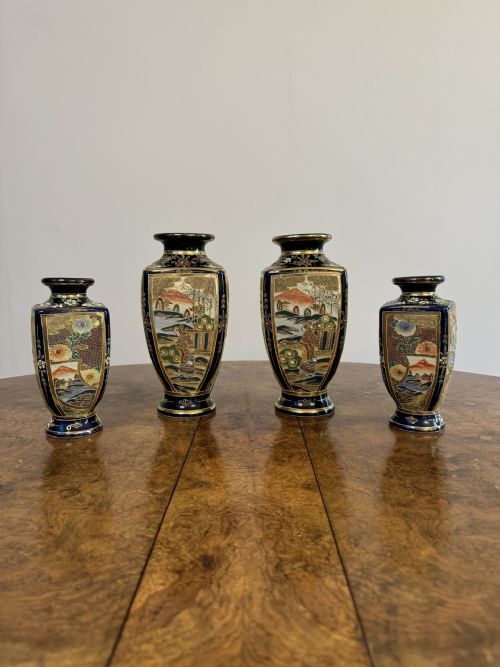
The selection also spans Japanese ceramic production from the Meiji period, featuring intricate earthenware vessels with extensive gold detailing alongside European Grand Tour bronzes. Forms range from classical campana shapes and amphorae to bulbous satsuma jars and delicate table lamps.
Buyers look for these pieces to introduce classical elegance and metallic warmth into domestic interiors, valuing both the hand-painted artistry of the ceramic bodies and the substance of the metal mounts. The inventory balances grand decorative centrepieces with smaller cabinet pieces.
How they were made
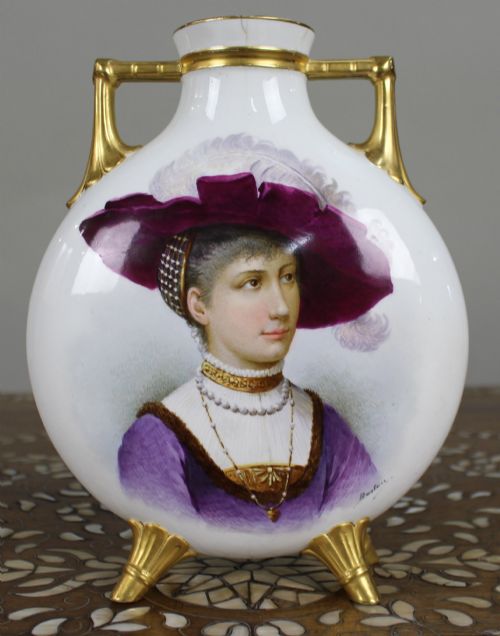
Makers utilised high-fired porcelain, earthenware, and ironstone as foundations, applying hand-painted polychrome enamel scenes alongside rich cobalt and mazarine blue grounds before firing the pieces multiple times. Artisans then added gold leaf or liquid gilding by hand to borders, handles, and figurative panels, sealing the metallic lustre through subsequent kiln firings.
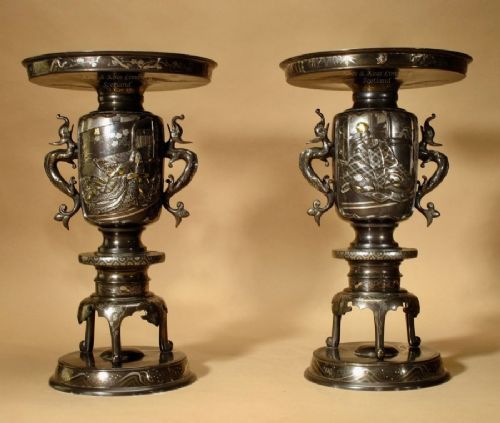
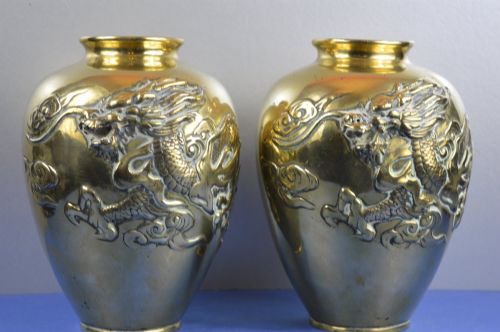
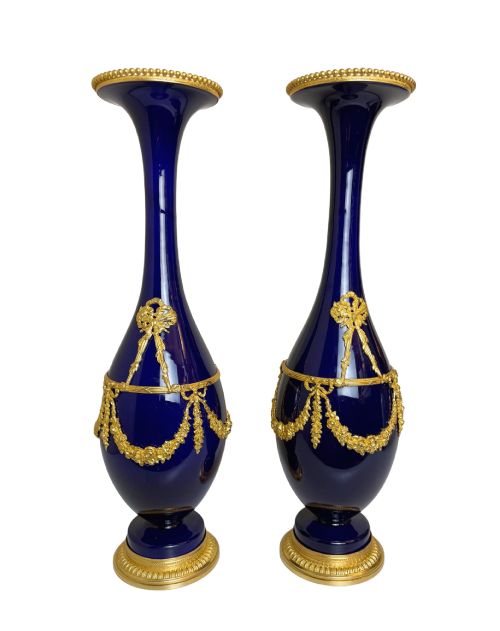
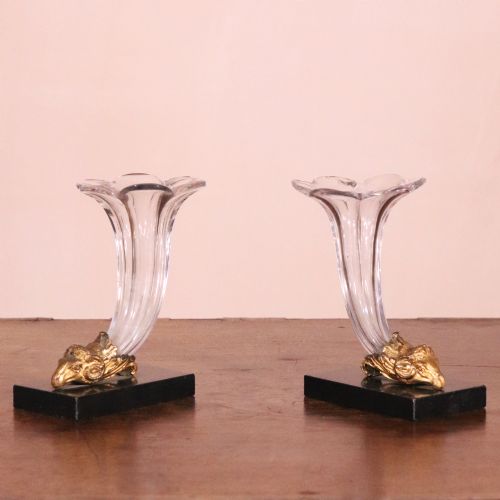
Metal vessels and mounts relied on bronze, brass, and copper, shaped through casting and chasing before undergoing mercury gilding or ormolu finishing to achieve a bright, durable golden surface. Glass variants, such as iridescent bohemian pieces, incorporated metallic vapours during the blowing process to produce shimmering, light-catching exteriors.
Listings feature 19th-century Satsuma vases, Regency gilt bronze urns, and Georgian porcelain from Worcester and Spode.
What varies in quality
Quality rests upon the crispness of the casting in metal mounts and the precision of the hand-painting on ceramic surfaces, where finer vessels display delicate brushwork and detailed figurative or floral scenes. Superior pieces maintain crisp relief in their ormolu or gilt bronze elements, whereas lesser examples show softer detailing and uneven gilding wear.
The reputation of the maker and the integrity of the original pairing also dictate the standing of a piece, with matched pairs from documented factories commanding greater appreciation than single or mismatched items. The richness of the cobalt grounds and the complexity of the gilt ornamentation further distinguish masterworks from standard commercial production.
Royal Crown Derby·Flight Barr And Barr·Royal Worcester·Royal Doulton
The Gold Vases Glossary
- Ormolu
- A gilded bronze technique utilising powdered gold dissolved in mercury, applied to metal mounts and decorative elements. This process imparts a rich, deep golden lustre distinct from modern electroplating.
- Satsuma
- A type of Japanese earthenware originating from the Satsuma Province, characterised by an ivory crackle-glaze and elaborate polychrome and gilt decoration. These pieces frequently depict figures, landscapes, and floral motifs.
- Imari
- A style of Japanese export porcelain featuring a distinctive palette of underglaze blue, iron red, and abundant gold accents. European factories subsequently imitated these vibrant designs during the Georgian and Victorian eras.
- Campana
- A classical vase shape resembling an inverted bell with flared rims and looped handles, popular in ancient Greece and Rome. Grand Tour makers revived this silhouette in bronze and porcelain during the nineteenth century.
- Gilding
- The application of gold leaf, powder, or liquid gold to the surface of porcelain, wood, or metal objects. It serves to highlight architectural details, handles, and painted borders.
Gold Vases: Frequently Asked Questions
What is the difference between ormolu and gilt bronze?
Ormolu specifically refers to a traditional mercury gilding technique applied to bronze objects, producing a deep, durable golden finish popular in the eighteenth and nineteenth centuries.
While both terms describe gold-finished bronze, modern descriptions often use gilt bronze as a broader category for any bronze vessel with applied gold leaf or modern plating.
How do I care for antique gilded porcelain?
Clean gilded porcelain gently using a dry, soft feather duster or a soft-bristled brush to remove dust without disturbing the delicate gold leaf or hand-painted enamel details.
Avoid submerging antique ceramics in water or using chemical cleaning agents, as moisture and harsh solvents can permanently lift historical gilding and crack fragile ceramic bodies.
Where were Satsuma vases made?
Satsuma vases originated in the Satsuma Province of Kyushu, Japan, though production later expanded to major urban centres such as Kyoto and Kobe to satisfy intense European demand.
These ceramic vessels are easily recognised by their distinctive cream-coloured crackled earthenware glaze and dense, meticulous applications of polychrome enamel and gold paint.
What does Grand Tour mean for decorative urns?
Grand Tour pieces are nineteenth-century souvenirs purchased by wealthy young Europeans touring the cultural sites of Italy, Greece, and France, often replicating famous classical antiquities.
These decorative urns and vases were cast in bronze or carved from marble to bring the aesthetic of classical antiquity back to English and European country houses.