




Hand Painted Vienna Vase
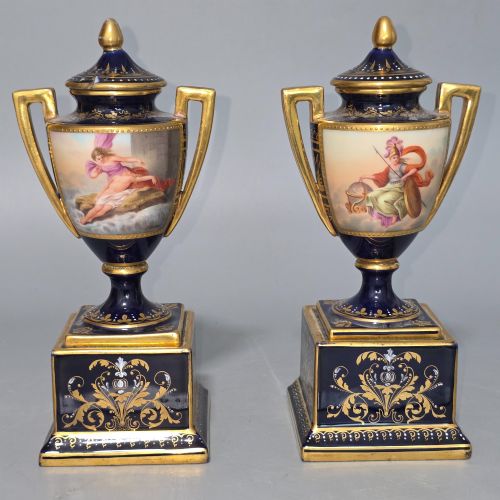
A hand painted vienna vase brings nineteenth-century neoclassical elegance and rich gilding into a room.
Hand Painted Vienna Vase
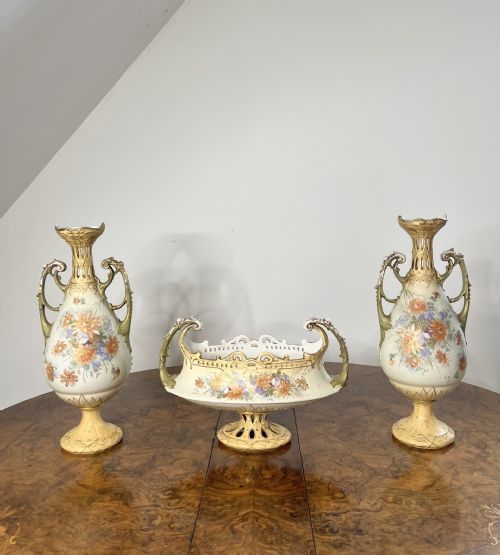
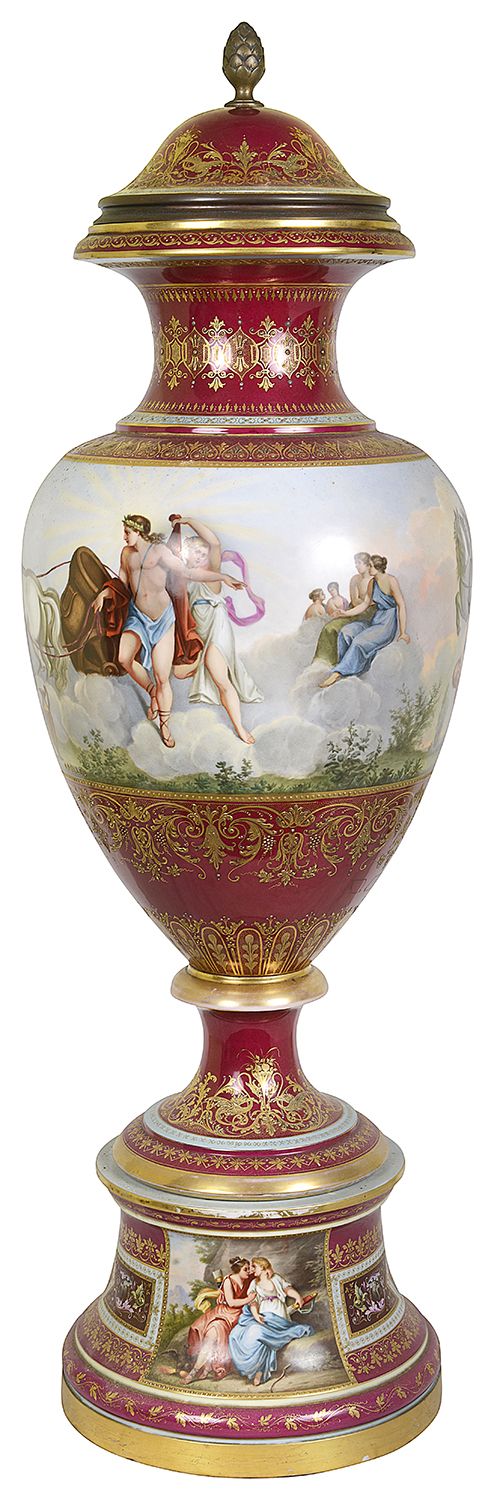
When you search for a hand painted vienna vase, you encounter nineteenth-century decorative urns, lidded vessels, and garniture sets shaped by neoclassical and empire revivals. These porcelain pieces range from intimate portrait jugs to large amphora forms and multi-piece garniture sets.
You are most likely to meet nineteenth-century examples decorated with intricate hand-painted motifs and rich gilding. The selection spans classical urns bearing nineteenth-century dates alongside later turn-of-the-century creations.
Makers such as Ernst Wahliss and signed artists like F. Koller appear across these nineteenth-century ceramics. The forms incorporate handles, covers, and pedestals designed for prominent display in traditional interiors.
What varies in quality
The refinement of the hand-painted brushwork and the complexity of the figural or floral scenes separate standard production from exceptional work. Precision in the application of gold leaf and gilt decoration dictates the visual weight of each piece.
Scale and ambition define the upper tier, where large lidded urns, complete garniture sets, and signed works by artists like F. Koller demonstrate superior ceramic mastery.
Poppies bloom across turn-of-the-century amphoras, proving that nineteenth-century artisans loved floral rebellion just as much as strict neoclassical symmetry.
Ernst Wahliss·F. Koller
The Hand Painted Vienna Vase Glossary
- Amphora
- A two-handled jar with a narrow neck used in antiquity and revived during the nineteenth century. These vessels often feature classical scenes and ornate handles.
- Garniture
- A set of three or more matching ceramic vases or urns designed to be displayed together on a mantelpiece or sideboard. They typically include a central lidded urn flanked by smaller matching vases.
- Ewer
- A large jug with a wide spout and a looped handle, traditionally used for holding water but produced in porcelain primarily for decorative display. Nineteenth-century examples often incorporate classical revival motifs.
- Gilding
- The application of gold leaf or powdered gold onto the surface of porcelain to create rich metallic highlights. This technique enhances the decorative borders and handles of nineteenth-century urns.
Hand Painted Vienna Vase: Frequently Asked Questions
What is a vienna vase?
A vienna vase is a nineteenth-century porcelain vessel decorated with hand-painted scenes, enamel work, and rich gilding. These pieces draw on neoclassical and empire design traditions.
They serve as decorative mantel or cabinet objects, often found in pairs or multi-piece garnitures.
How were these vases used?
These porcelain vessels functioned primarily as decorative garnitures, centrepieces, and architectural urns in nineteenth-century interiors. They were placed on mantelpieces, sideboards, and pedestals to display wealth and taste.
While some take the form of jugs or ewers, their role remained strictly ornamental rather than practical.
How do I date a vienna vase?
Dating relies on stylistic shifts between neoclassical revival, empire, and later art nouveau forms seen in nineteenth-century production. Reference to specific makers like Ernst Wahliss or painted signatures helps narrow the period.
Material analysis of the porcelain body and the application of gold leaf also provide chronological markers.