
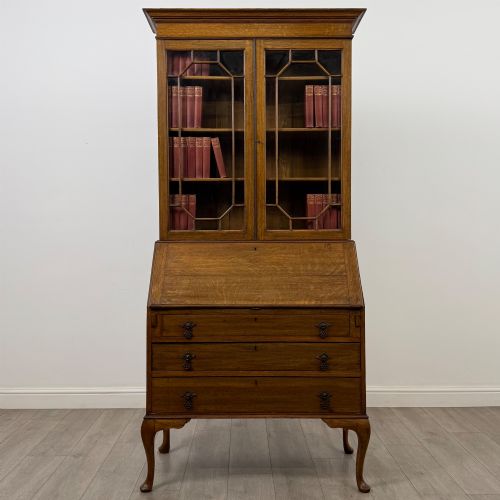
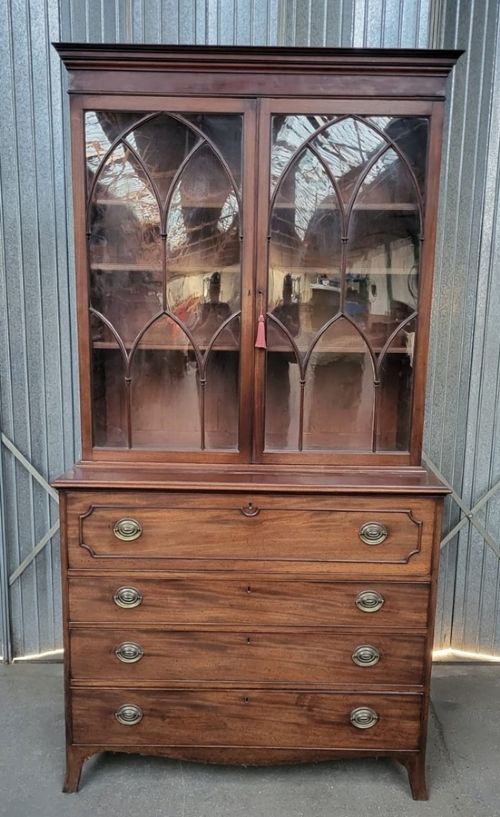
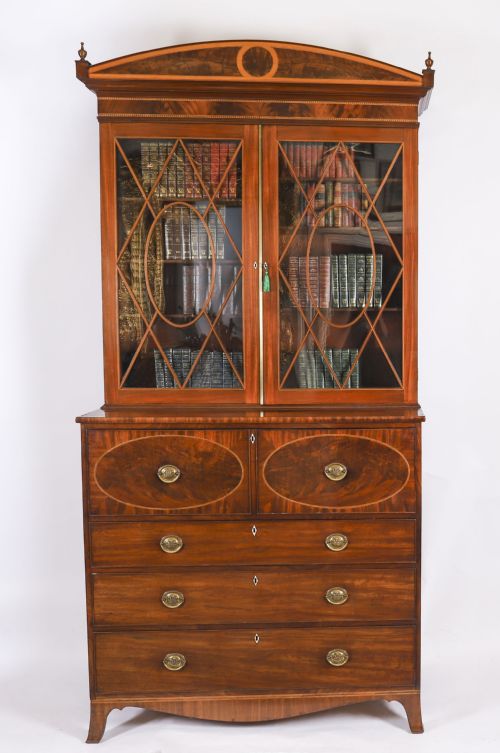
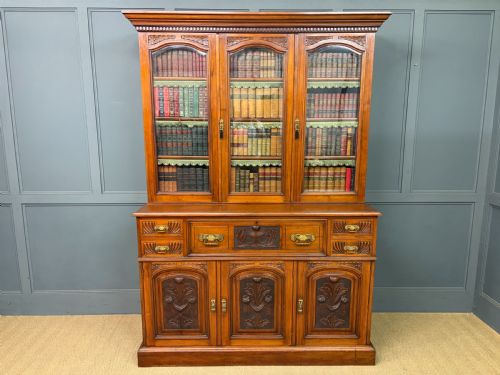


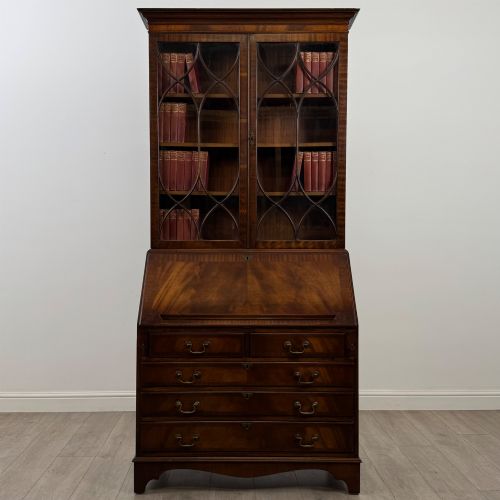
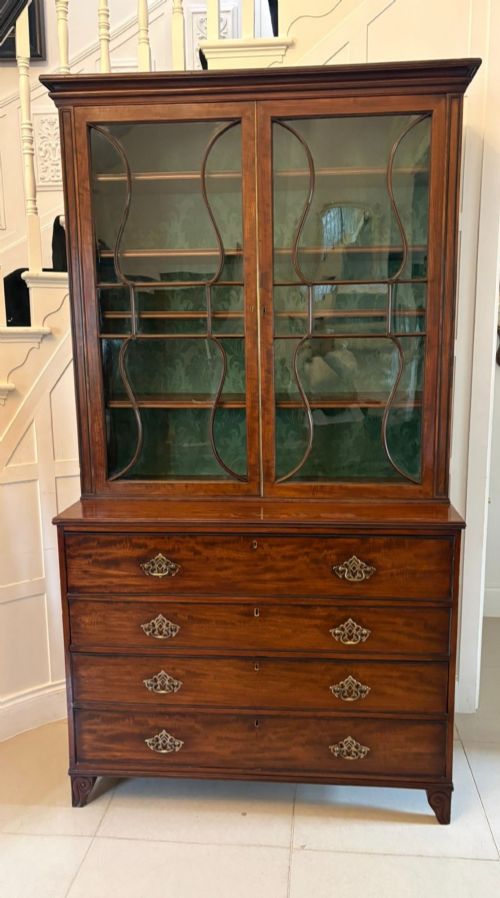
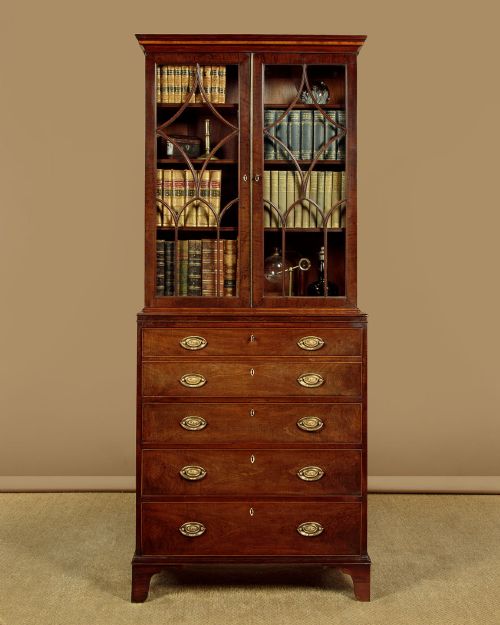
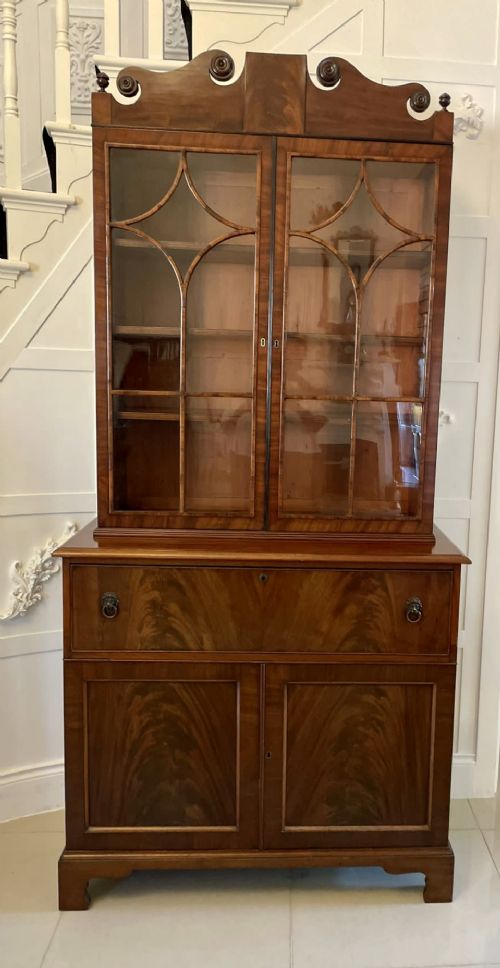
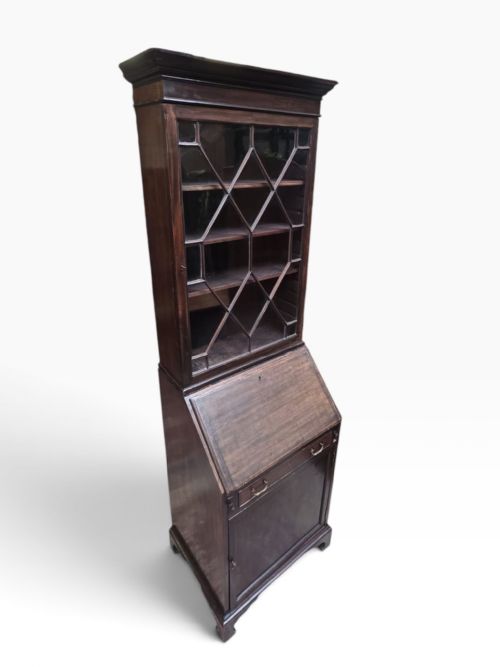
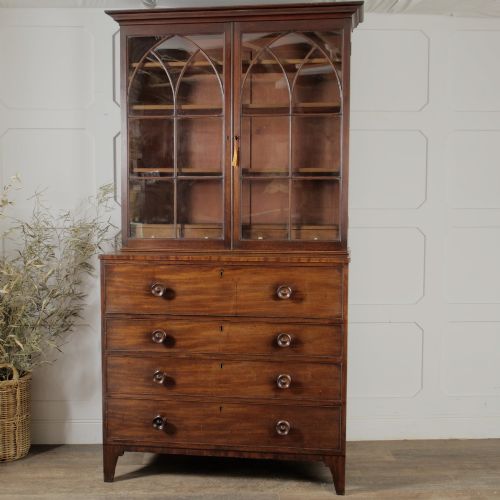
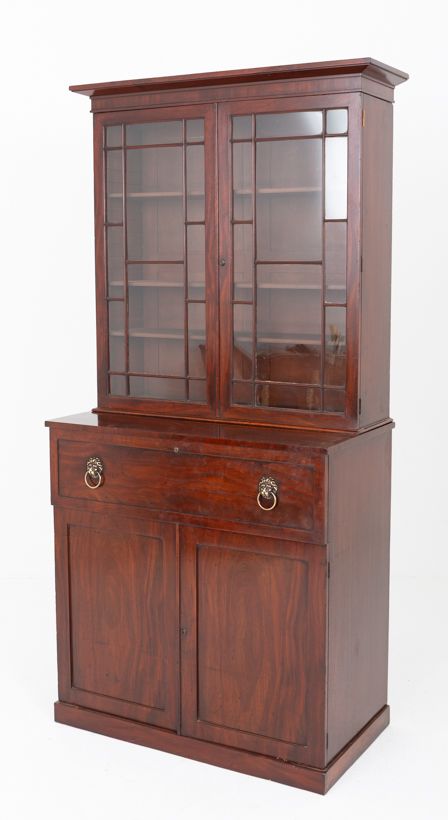
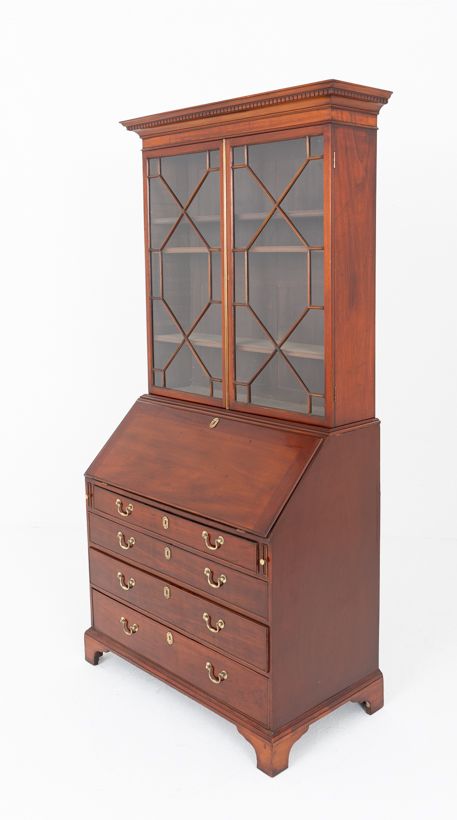
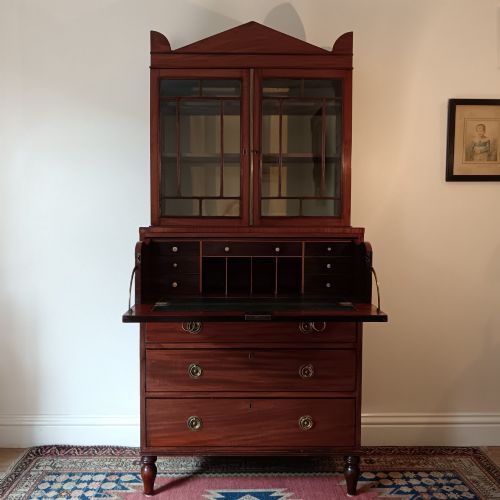
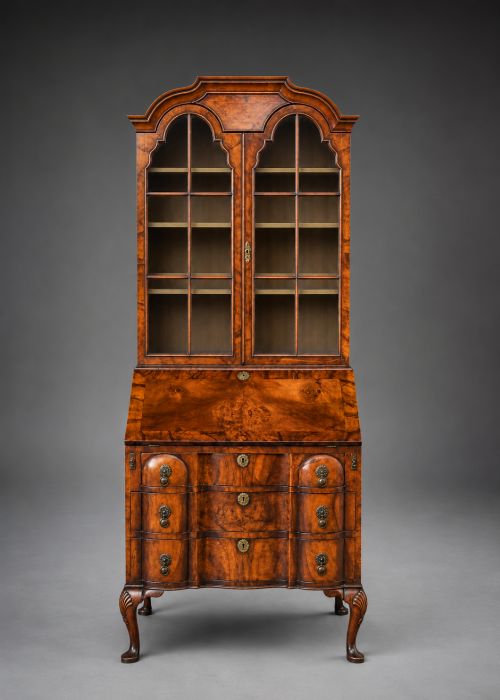
Glazed Writing Bookcase
A glazed writing bookcase combines a display cabinet and a drop-front desk, offering visible storage and a writing surface in a single tall piece of furniture.
Glazed Writing Bookcase
A glazed writing bookcase is primarily found as a bureau bookcase or secretaire bookcase, uniting upper glass doors for books with a lower compartment for writing. These pieces span several centuries, with examples originating from the Georgian and Regency eras through to the Edwardian period and the early twentieth century.
The version most commonly met on this page is the mahogany bureau bookcase from the Georgian or nineteenth-century periods, often featuring astragal glazed doors above a fitted desk interior. Oak and walnut variants also appear, alongside lighter Edwardian satinwood and inlaid pieces.
Factors of Quality
Quality rests upon the selection of timber figures, such as flame mahogany or burr walnut, and the crispness of any inlay or carved detail. Superior examples display balanced proportions, fine dovetailing on internal drawers, and original glass panes within the upper cabinet doors.
The complexity of the fitted interior and the integrity of the writing mechanism distinguish finer pieces from simpler utilitarian storage. Original brasses and minimal alteration to the secondary woods further elevate the standing of a piece.
Materials recorded across the inventory include glass, brass, mahogany, satinwood, oak, walnut, leather, and burr walnut.
George Oakley·Tudor & Burrey·Edwards & Roberts·Gillows·Maple & Co.
The Glazed Writing Bookcase Glossary
- Astragal glazed
- Glass doors divided by narrow wooden bars into smaller panes. These mouldings hold the individual glass segments securely in place.
- Secretaire
- A desk disguised as a drawer that pulls down to reveal a writing surface and pigeonholes. It provides a workspace without the bulk of a sloping bureau lid.
- Fitted interior
- The arrangement of small drawers, compartments, and central doors inside the writing section. It organises correspondence and stationery.
- Flame mahogany
- A veneer cut from the fork of the mahogany tree, producing a distinctive rippled, flame-like pattern. Furniture makers prized this wood for primary display surfaces.
- Candle slide
- A pull-out wooden board mounted beneath the upper cabinet to hold a candle. It provided illumination for the writer before electric lighting.
Glazed Writing Bookcase: Frequently Asked Questions
What is a glazed writing bookcase?
A glazed writing bookcase is a tall piece of furniture that combines an upper display cabinet with glass doors and a lower bureau or secretaire desk. It serves both to exhibit books and to provide a dedicated writing surface.
These pieces typically feature adjustable shelving behind the glass doors and a fold-down or pull-out writing flap concealing small drawers and pigeonholes below.
What woods were used for these bookcases?
Mahogany is the most frequent timber seen in these listings, appearing in plain, figured, and inlaid variations across the Georgian and Regency periods. Walnut and oak also feature prominently, particularly in earlier or revival pieces.
Edwardian examples introduce lighter woods such as satinwood and yew, occasionally paired with elaborate marquetry or stringing.
How do I fit a tall bookcase into a modern room?
Measuring both ceiling height and floor space is essential before introducing a tall bookcase into a room. Because these pieces combine storage, display, and a desk, they anchor a study or living area effectively without needing separate ancillary furniture.
Allow sufficient clearance in front of the piece for the writing flap to open fully and for a chair to pull out comfortably.
How do I distinguish eighteenth-century pieces from Edwardian copies?
Eighteenth-century pieces display hand-cut dovetails, older secondary woods like oak or pine inside drawers, and subtle signs of age in the timber and glass. Edwardian reproductions and style pieces often show machine-made precision, different internal construction methods, and lighter framing.
Examining the hinges, drawer linings, and the backboards helps clarify the period of manufacture.