

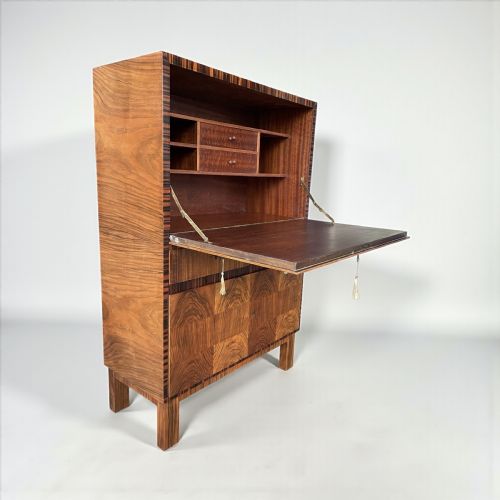


Brown Walnut Secretaire
A brown walnut secretaire brings together fitted writing drawers and concealed compartments in a dense hardwood carcass built to last generations.
Brown Walnut Secretaire
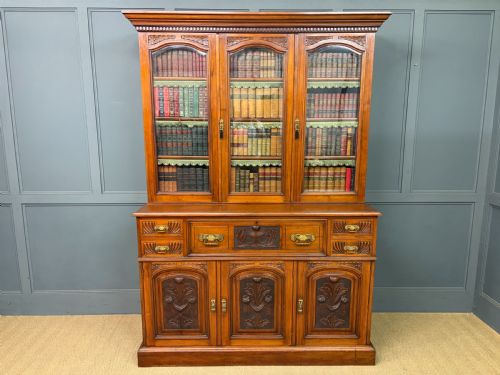
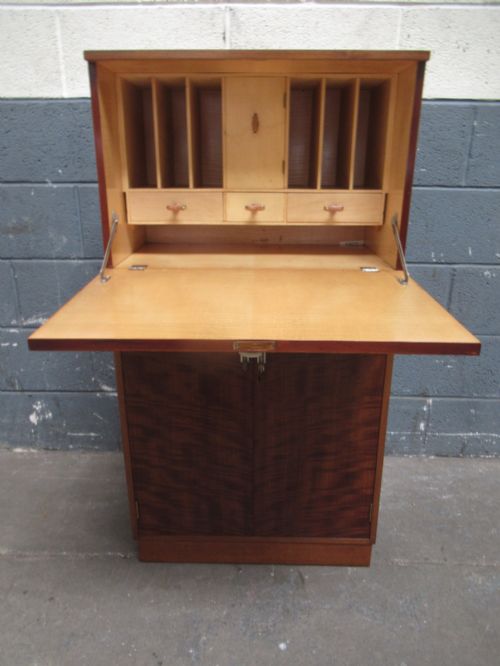
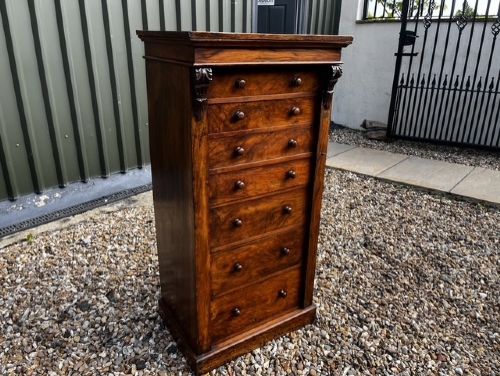
A brown walnut secretaire takes several distinct architectural forms, ranging from tall chests on chests and bureau bookcases to compact kneehole desks and upright cabinets. When exploring brown walnut secretaire options, collectors encounter pieces spanning the early eighteenth century through the Victorian era and into the Art Deco period.
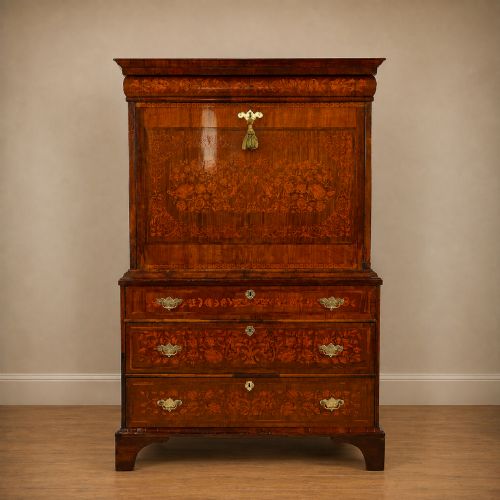
The most prevalent examples on this page date from the Georgian and Victorian periods, often taking the form of fall-front chests or elaborate escritoires. Makers across these centuries utilised rich timber grains to elevate utilitarian writing furniture into striking centrepieces for the home.
Materials and construction
Carcasses rely on solid walnut, burr walnut, and figured walnut veneers applied over secondary timbers such as oak, whilst internal fittings frequently incorporate brass hardware and leather writing surfaces. Marquetry inlay, ormolu mounts, and tambour doors appear across various regional traditions from English workshops to French and Dutch cabinets.
Joinery methods depend on the period, pairing eighteenth-century dovetailing and bracket feet with nineteenth-century structural framing. Cabinetmakers selected figured sections of timber to create symmetrical grain patterns across drop-front panels and drawer fronts.
Several secretaires hide tiny secret drawers behind false partitions, designed to keep love letters safe from prying eyes.
Standards of execution
Quality rests upon the selection and matching of wood veneers, particularly the symmetry of burr walnut patterns across large unbroken surfaces like fall-fronts and cabinet doors. Superior examples maintain crispness in floral marquetry and feature tightly fitted interior pigeonholes and secret compartments that operate smoothly.
Structural integrity of the drop-front hinges and internal writing drawers dictates the practical standing of each cabinet. The depth of the grain and the preservation of original brass handles and mounts further separate standard production from exceptional cabinetmaking.
Gregory & Co. of London
The Brown Walnut Secretaire Glossary
- Secretaire
- A cabinet or desk containing a concealed writing drawer or a fall-front panel that opens to reveal pigeonholes and small drawers. This form allows a writer to close away correspondence instantly.
- Escritoire
- An alternative term for a writing cabinet or desk, frequently encountered in eighteenth-century and revival pieces. These units often combine display space or upper shelving with a drop-front writing surface.
- Burr walnut
- Timber taken from the warted growths on walnut trees, yielding highly decorative swirling grain patterns. Cabinetmakers sliced these burls into thin veneers to ornament primary display surfaces.
- Secretaire a abbant
- An upright cabinet featuring a drop-front writing flap that conceals an interior fitted with small compartments. This continental form places emphasis on vertical storage.
- Marquetry
- The art of applying small pieces of veneer to a structure to form decorative patterns or pictorial scenes. Floral motifs appear frequently on Dutch and Georgian examples.
Brown Walnut Secretaire: Frequently Asked Questions
What is a brown walnut secretaire?
A brown walnut secretaire is a piece of furniture featuring a dedicated writing compartment hidden behind a drop-front panel, cylinder lid, or specialised drawer.
These units combine storage with a functional writing surface, incorporating internal pigeonholes and small drawers for correspondence.
How do I identify a Georgian secretaire?
Georgian examples often display figured walnut veneers, bracket feet, and herringbone banding around drawer perimeters. The internal fittings typically utilise solid oak for secondary drawer linings.
Proportions remain architectural and restrained, reflecting the cabinetmaking standards of the eighteenth century.
Where were these cabinets placed?
Owners historically positioned these desks in private libraries, drawing rooms, or master bedchambers for managing personal correspondence and household accounts.
The lockable drop-front ensured that sensitive documents remained secure when the room was unattended.
How should I care for walnut veneer?
Walnut benefits from stable room temperatures away from direct sunlight and heat sources, which can dry out the timber and lift old veneers.
Regular dusting with a dry cloth and occasional application of appropriate wax preserves the depth of the grain.