
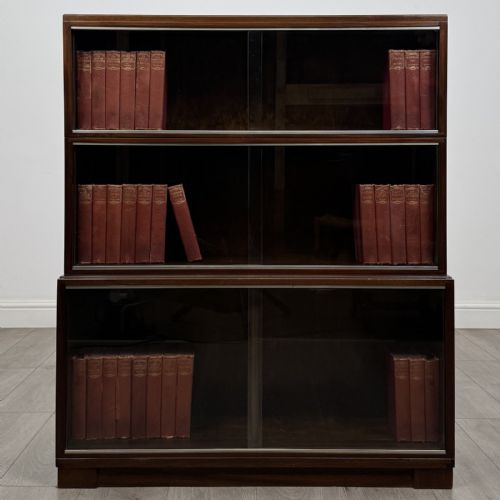
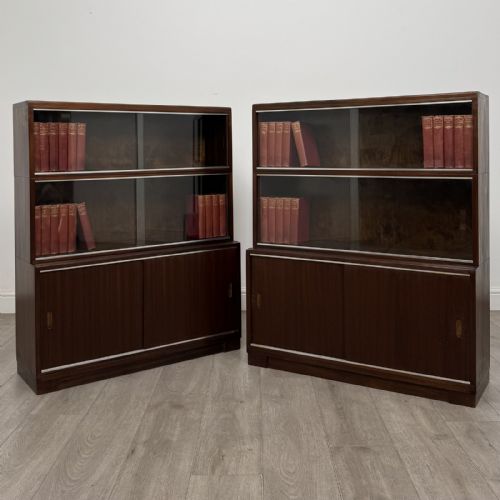
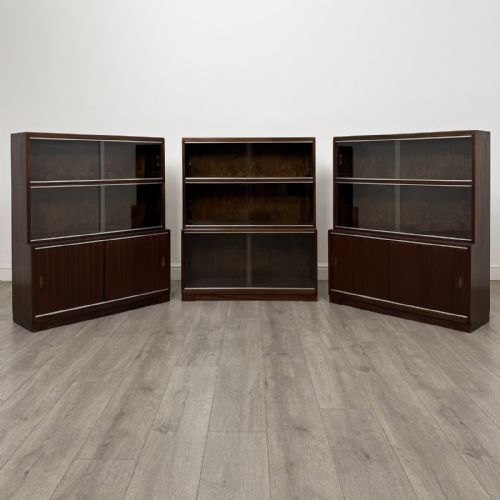
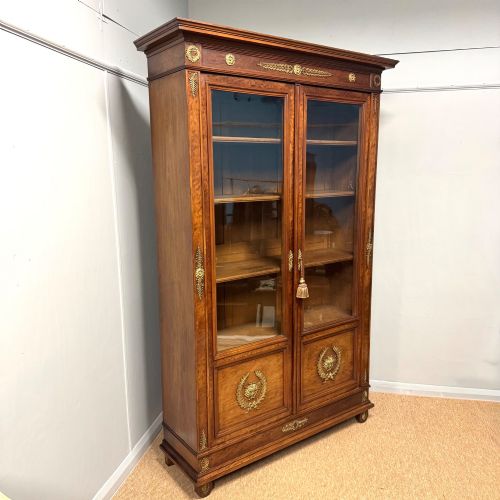
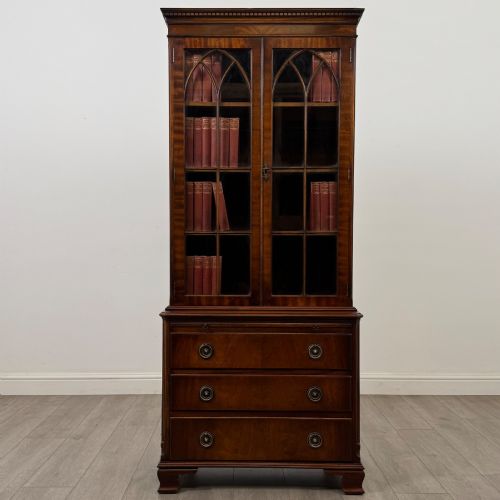
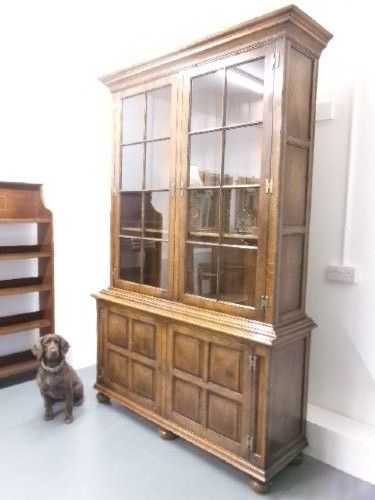
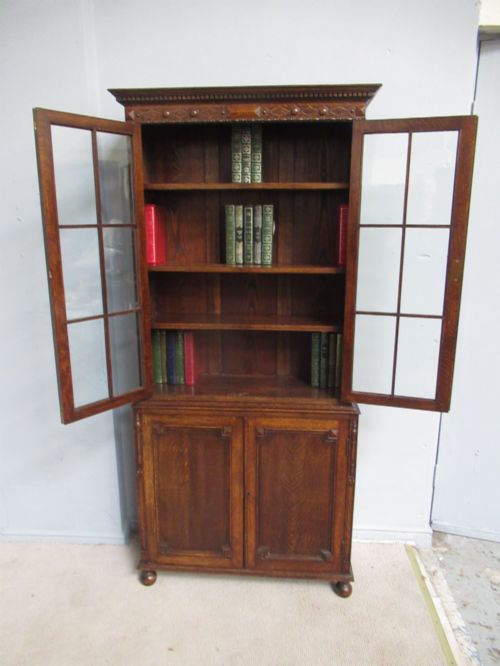
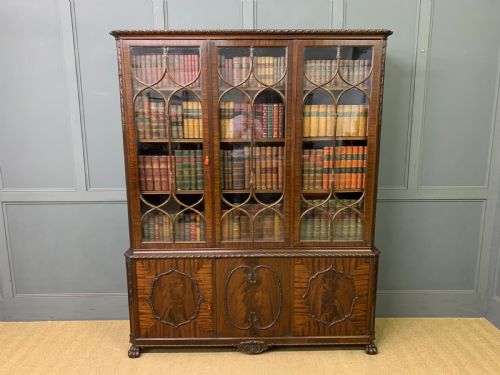
Glazed Door Library Bookcase
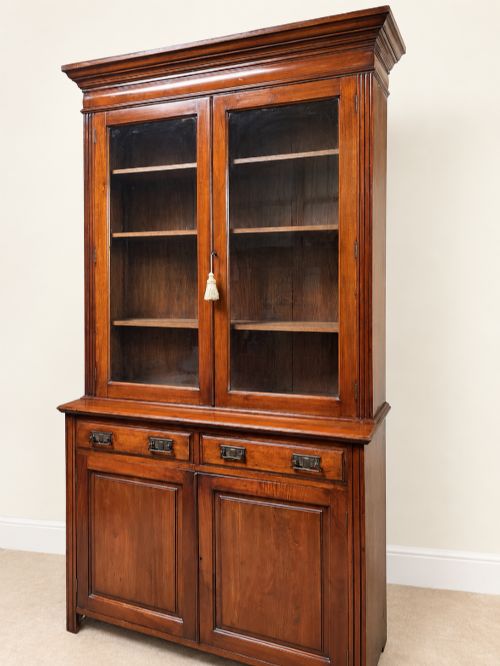
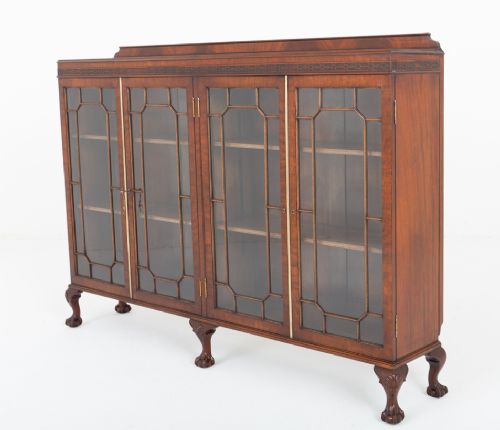
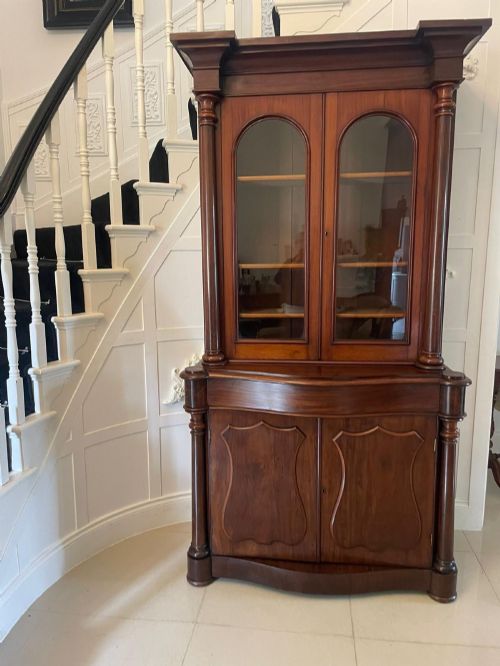
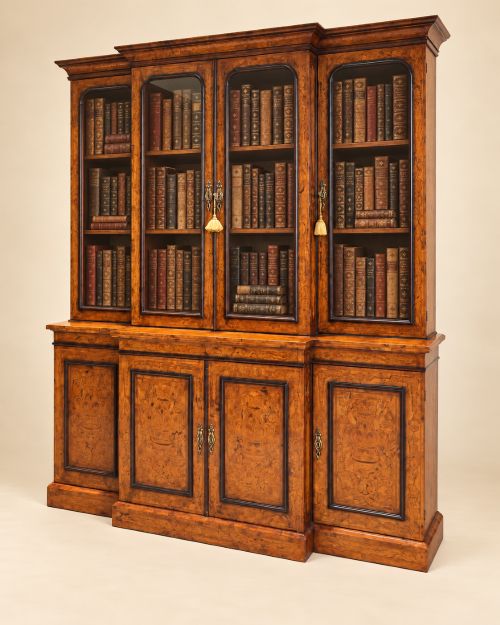
A glazed door library bookcase houses volumes behind glass panels, bringing order and presence to a room.
Glazed Door Library Bookcase
A glazed door library bookcase combines timber cabinetry with transparent panels to protect texts while keeping titles visible. You meet these primarily in Victorian and Edwardian iterations, alongside robust early twentieth-century examples.
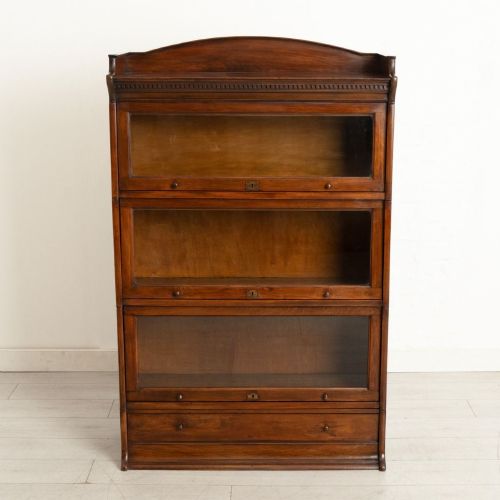
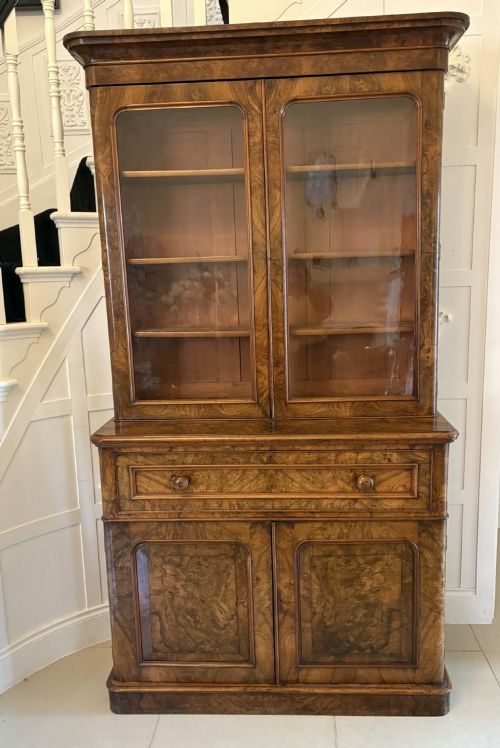
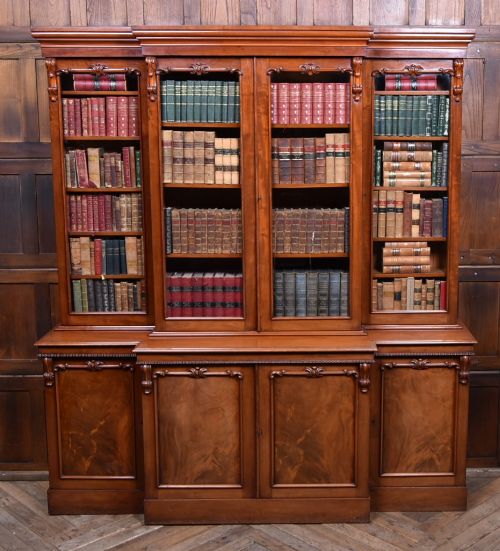
Makers constructed these storage pieces in configurations ranging from slender two-door cupboards to grand breakfront triple units and stacking barrister designs. The underlying forms draw on Georgian, Regency, and revival styles including Chippendale and Jacobean.
Interior shelving accommodates substantial personal libraries, while lower sections frequently incorporate solid wooden doors or secretaire drawers. The physical scale spans from compact school library pieces to large architectural room dividers.
Materials and Construction
Cabinet makers relied predominantly on mahogany, walnut, and oak timbers, often selecting figured grains, flame veneers, and burr walnut for primary visual surfaces. Boxwood stringing and brass hardware appear as decorative accents.
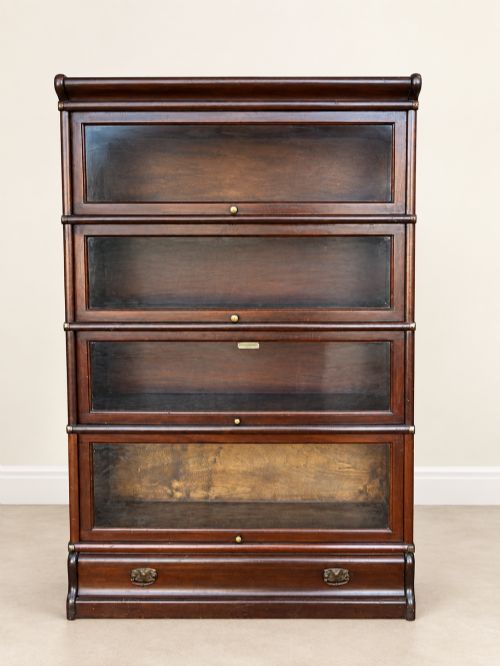
Transparent glass panes fit into timber frames to form the upper doors, allowing unobstructed observation of the book spines within. Sectional and stacking variants utilise specialised internal mechanisms to connect individual tiers.
Pine knockdown bookcases allowed nineteenth-century owners to dismantle their entire library storage with a mallet before moving house.
Gradations in Execution
Superior examples demonstrate meticulous timber selection, evidenced by symmetrical flame mahogany or richly figured burr walnut veneers across the principal facade. Lesser pieces employ plain secondary woods with minimal figure.
The precision of joinery in the door frames, swan neck pediments, and internal pigeonholes separates standard utility furniture from master cabinet work. Finer items integrate subtle inlay work, such as boxwood stringing, executed with exact linear continuity.
Lebus·Globe Wernicke·Hille
The Glazed Door Library Bookcase Glossary
- Breakfront
- A cabinet design where the central section projects forward from the flanking wings. This architectural arrangement creates depth and shadow across the facade.
- Secretaire
- A desk compartment incorporated into the body of the cabinet, featuring a drop-down writing flap. It typically conceals a series of small drawers and pigeonholes.
- Pediment
- The decorative structure crowning the top of the bookcase. Common variations include swan neck designs with scrolling timber profiles.
- Veneer
- A thin layer of highly figured wood applied over a stable secondary timber base. Flame mahogany and burr walnut serve as typical examples.
- Barrister bookcase
- A stacking sectional bookcase featuring glazed doors that lift and slide inward above each shelf tier. This modular format allows individual sections to separate.
Glazed Door Library Bookcase: Frequently Asked Questions
What fits inside these bookcases?
Adjustable wooden shelving accommodates standard volumes, folio editions, and reference sets behind protective glass panels.
Lower cupboards or enclosed cabinet bases provide out-of-sight storage for papers, ledgers, and larger household items.
How do sectional bookcases work?
Sectional bookcases utilise independent stacked tiers that separate for transport and reassembly. Glazed doors on these units lift upward on concealed tracks to slide into the cabinet interior.
This modular engineering became popular for office and home libraries during the early twentieth century.
Where should a library bookcase go?
These large cabinets require stable floor space against a primary wall in a study, drawing room, or library. Tall proportions and breakfront footprints demand adequate ceiling clearance and wall width.
Positioning them away from direct sunlight protects vulnerable timber veneers and book bindings from fading.
How do I spot a revival style?
Revival pieces incorporate decorative vocabulary from earlier centuries, such as Georgian proportions or Chippendale fretwork details, executed with later Victorian or Edwardian construction methods.
Examining the secondary woods and interior fixings helps distinguish a nineteenth-century interpretation from an eighteenth-century original.