


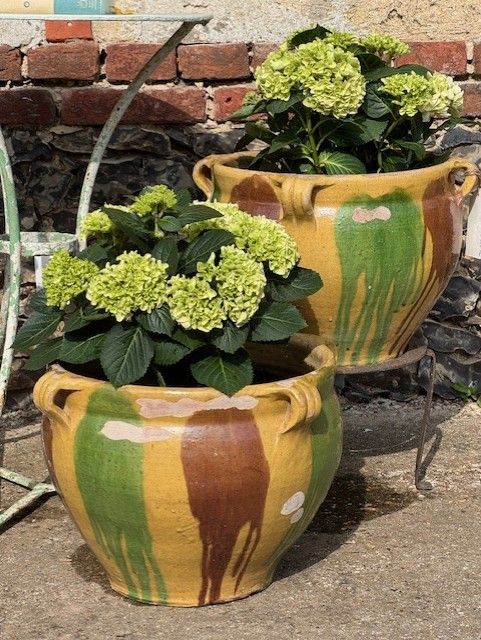


Glazed Pottery Planter
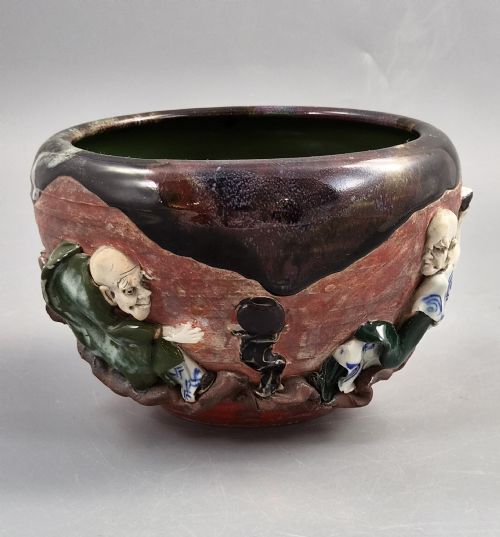
These glazed pottery planter pieces range from nineteenth-century salt-glazed stoneware to Victorian majolica, offering practical vessels for greenery.
Glazed Pottery Planter
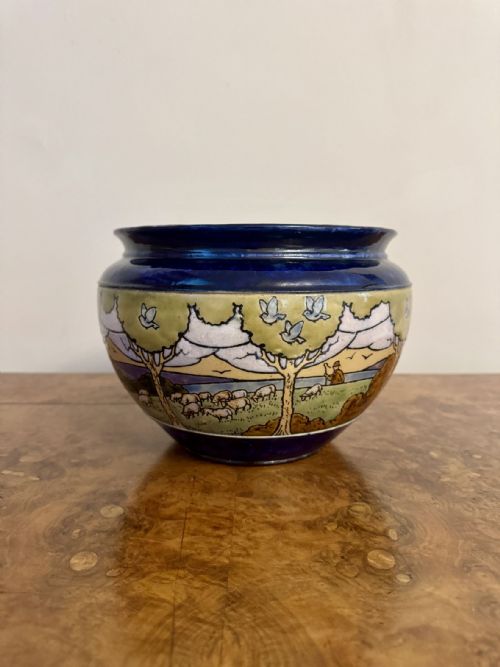
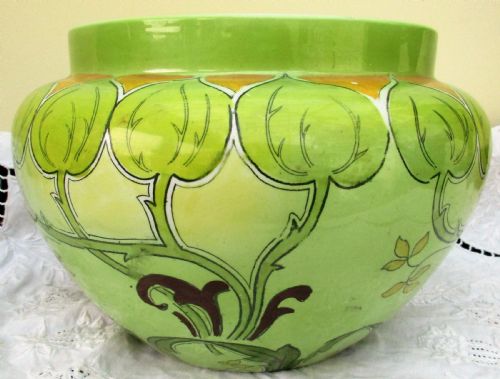
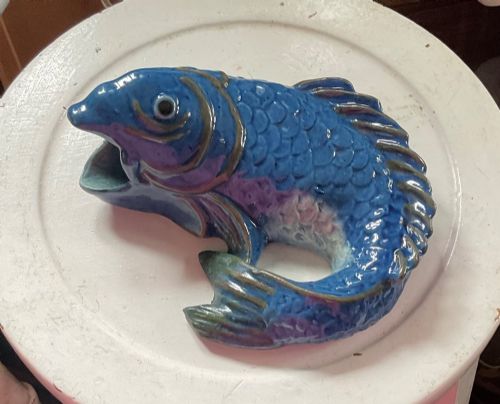
A glazed pottery planter search brings together vessels designed to hold plants and flowers, frequently encountered on this page as jardinières, wall pockets, and pots. These items span periods from the eighteenth century through the early twentieth century, reflecting domestic horticulture across various styles.
The selection includes earthenware, stoneware, and terracotta forms produced in England, France, Germany, and Scotland. Buyers frequently encounter Victorian and Art Nouveau examples alongside earlier Delftware and later twentieth-century studio ceramics.
How They Were Made
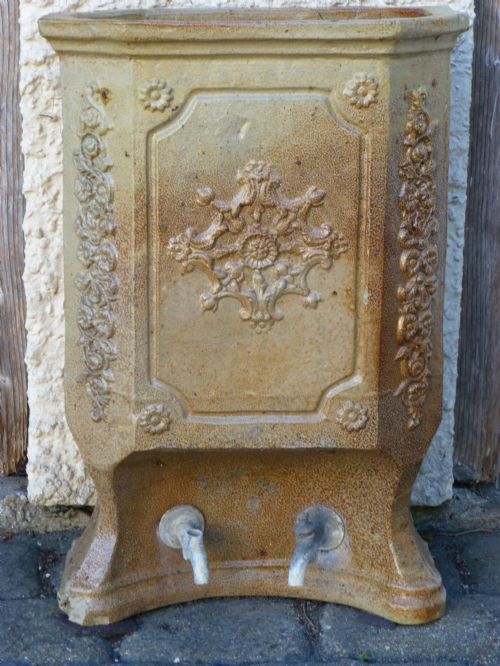
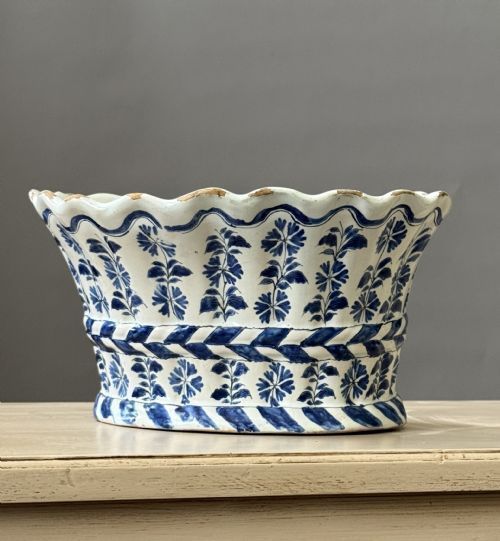
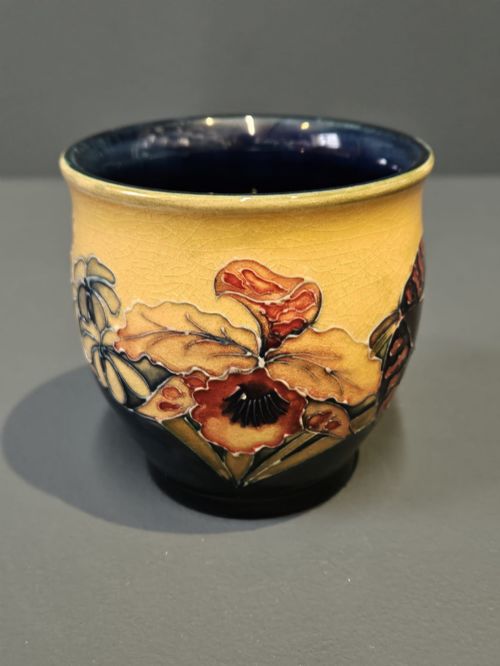
Makers utilised earthenware, stoneware, and terracotta bodies shaped by hand or moulded into complex botanical and architectural forms. Glazing techniques range from simple salt glaze and slip glaze to complex majolica and lustre finishes.
Surface ornamentation often involved relief modelling, hand-painted decoration, or specialised drip glazes applied before firing in kilns.
Cats peer from walls as ceramic pockets.
What Varies in Quality
Quality rests upon the crispness of moulded relief work and the depth of the glaze application. Pieces showing careful hand-finishing and well-defined botanical details stand apart from simpler commercial wares.
The cohesion of the design, particularly in pieces combining stands with jardinières or complex multi-handled forms, determines the overall character of the item.
Inoue Ryosai·W.A. Adderley·Lauder Pottery·Clement Massier·Julius Dressler·Royal Doulton·George Jones·Macintyre And Co·William Moorcroft·Linthorpe Pottery·Minton·Doulton Burslem·Doulton Lambeth·Eichwald
The Glazed Pottery Planter Glossary
- Jardiniere
- A large ornamental pot or stand for holding plants or flowers. These vessels often sit on matching pedestals or floor stands.
- Majolica
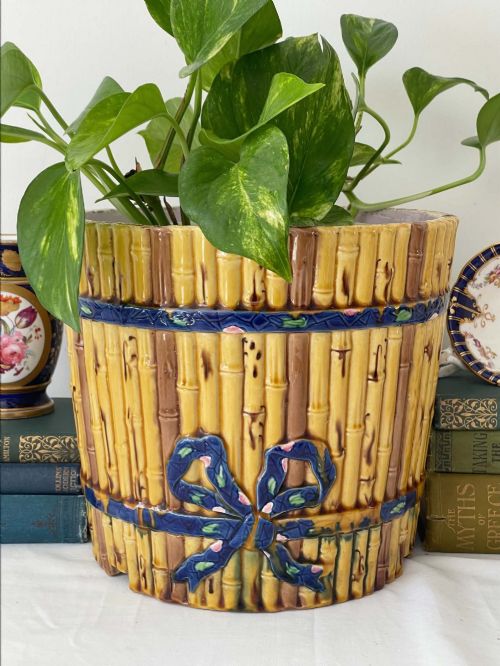
- A type of earthenware glazed with tin enamel and painted with colourful metal oxide colours. This technique creates vibrant surfaces popular during the Victorian period.
- Salt glaze
- A vitreous coating of orange-peel texture formed by throwing common salt into the kiln during high-temperature firing. The sodium reacts with the clay body.
- Wall pocket
- A container designed to be hung flat against a vertical surface to hold floral arrangements or small items. They frequently take naturalistic animal or botanical forms.
- Slaterware
- A textured ceramic finish developed by Royal Doulton that mimics the appearance of coarse lace or woven fabric. It is often combined with applied floral decoration.
Glazed Pottery Planter: Frequently Asked Questions
How do I use a jardiniere?
A jardiniere serves as an ornamental container designed to hold potted plants rather than planting directly into the vessel. Placing a smaller saucer inside helps catch drainage water.
These pieces sit well on tabletops, pedestals, or hearths, functioning as decorative focal points within a room.
What is majolica pottery?
Majolica is earthenware covered with an opaque tin-lead glaze and painted with metallic oxide colours that fuse during firing. This results in bright, glossy surfaces with rich greens, browns, and blues.
Victorian makers adopted this technique widely for garden seats, planters, and decorative tableware featuring naturalistic motifs.
How do I date a ceramic planter?
Dating relies on stylistic clues such as Victorian naturalism, Art Nouveau curves, or Arts and Crafts simplicity. Maker marks, registry lozenges, and impressed pottery stamps provide more precise chronological markers.
The choice of body material, from early earthenware to dense twentieth-century stoneware, also guides identification.
Can these planters hold live plants?
Most antique pots function best when used with an internal plastic nursery pot or liner. This protects the porous historic ceramic body from constant moisture and mineral salts.
Careful watering preserves both the interior glaze and the exterior finish of the piece.