
Glazed Pier Bookcase
A glazed pier bookcase is a narrow display cabinet designed to sit against the wall between windows, offering refined storage for treasured volumes.
Glazed Pier Bookcase
When you search for a glazed pier bookcase, you encounter elegant tall furniture designed to utilise slim architectural wall spaces in formal rooms. These pieces originate predominantly from the Victorian and Regency periods, though Edwardian examples also appear.
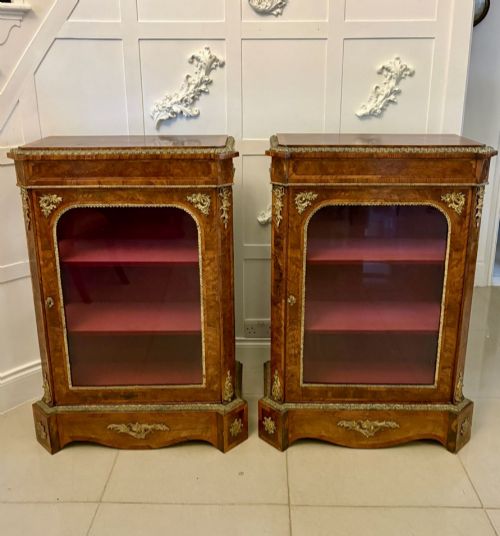
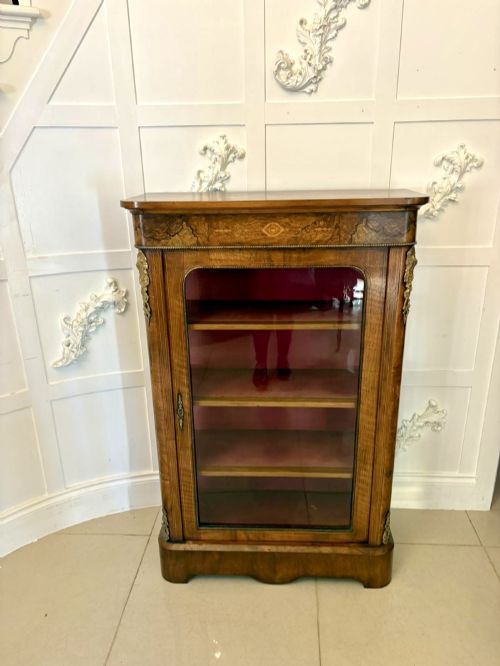
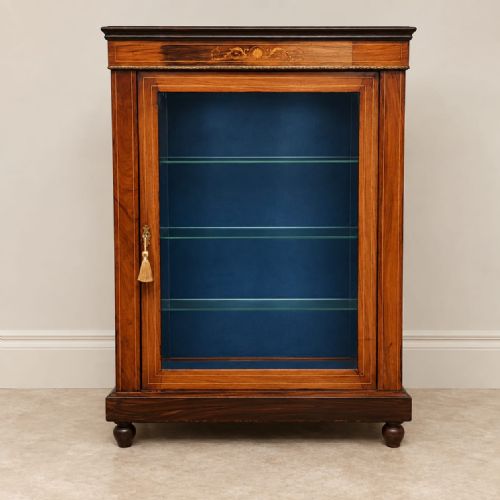
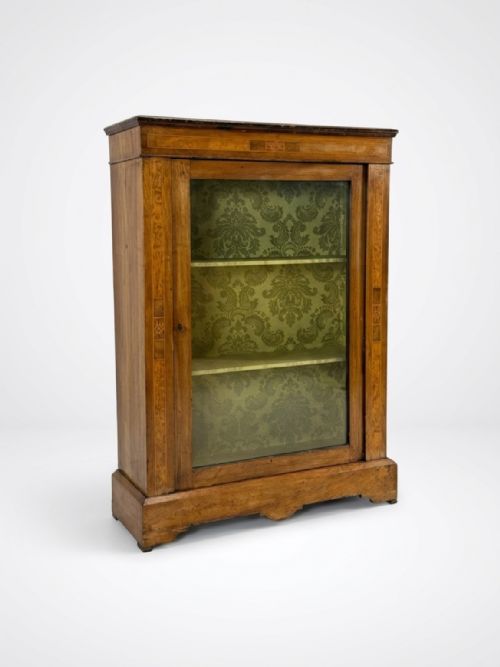
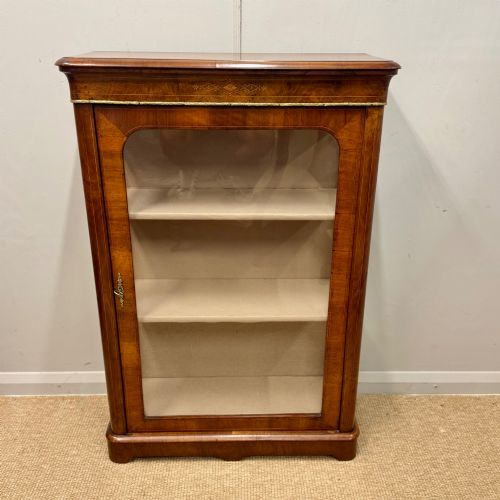
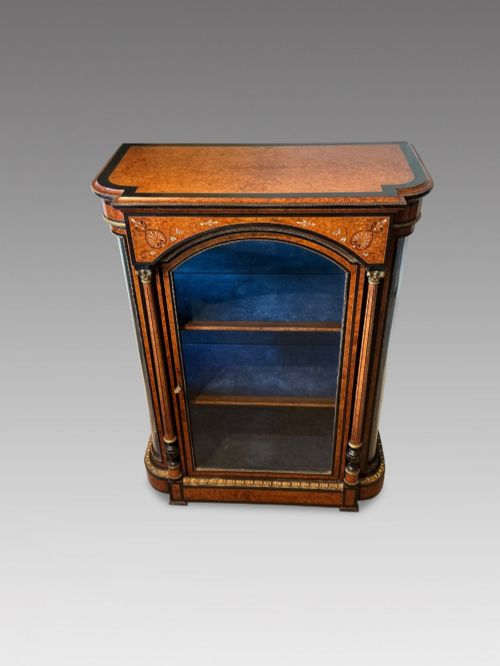
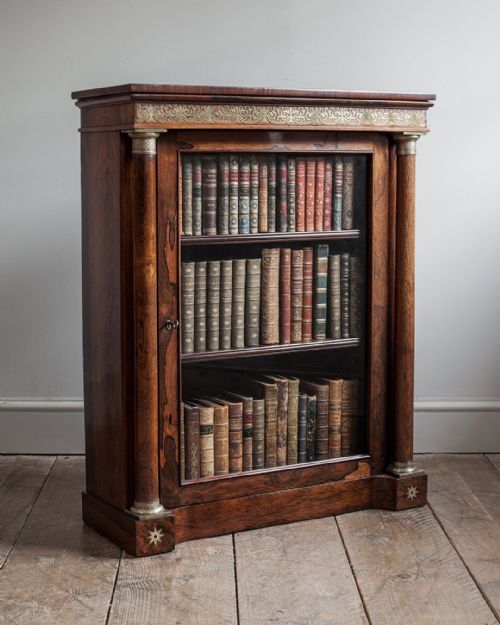
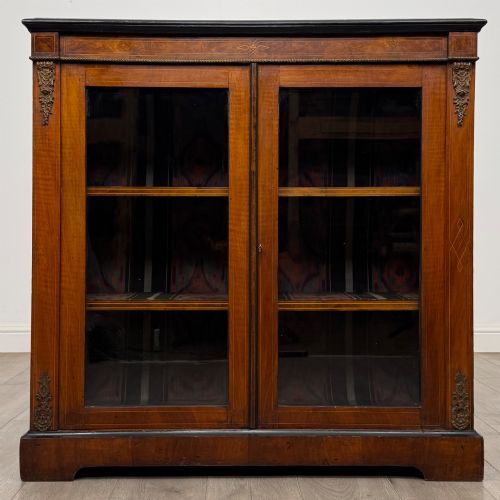
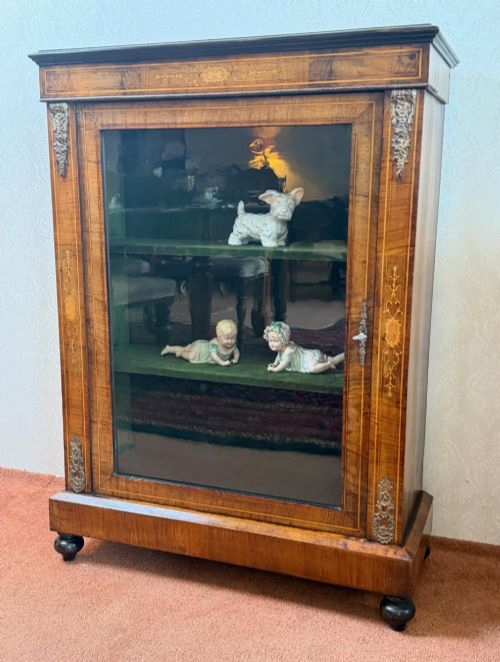
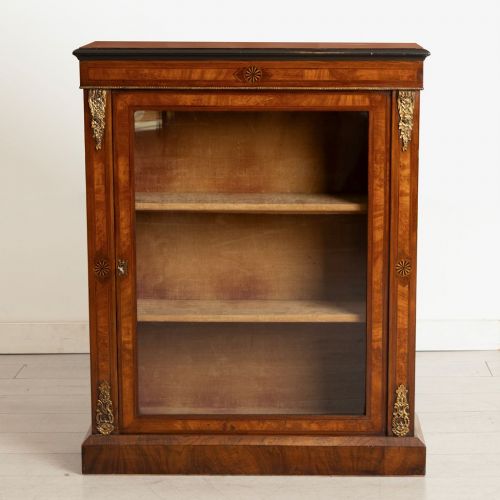
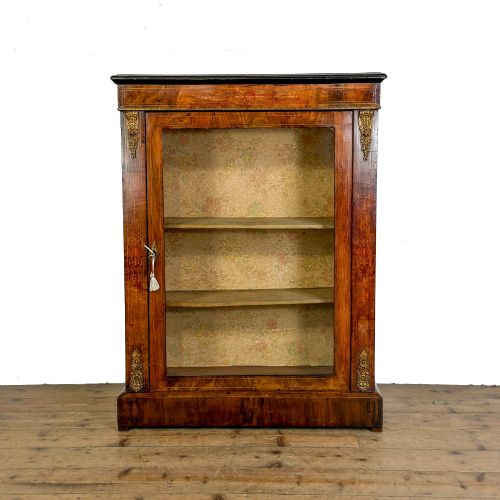
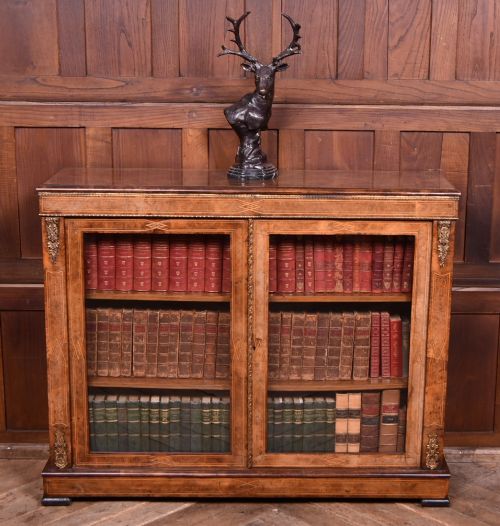
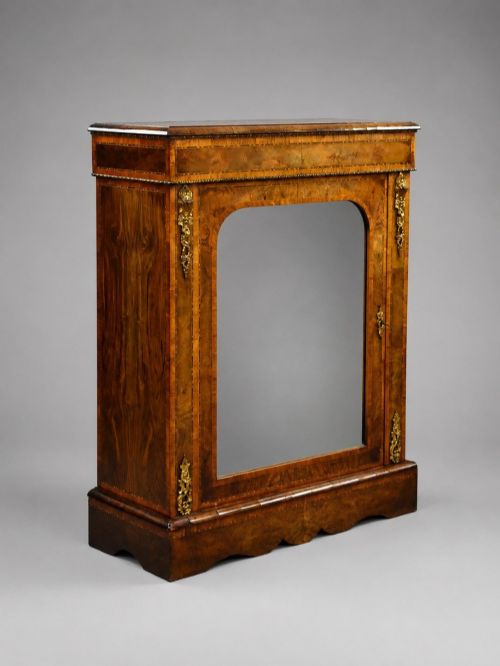
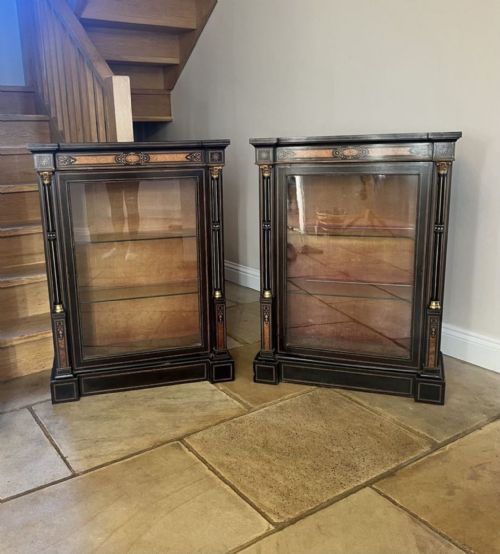
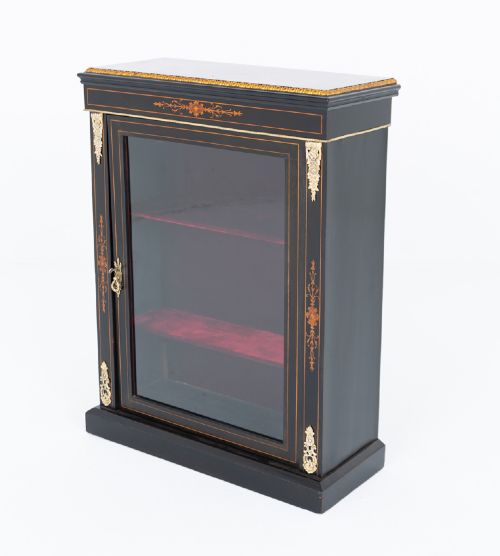
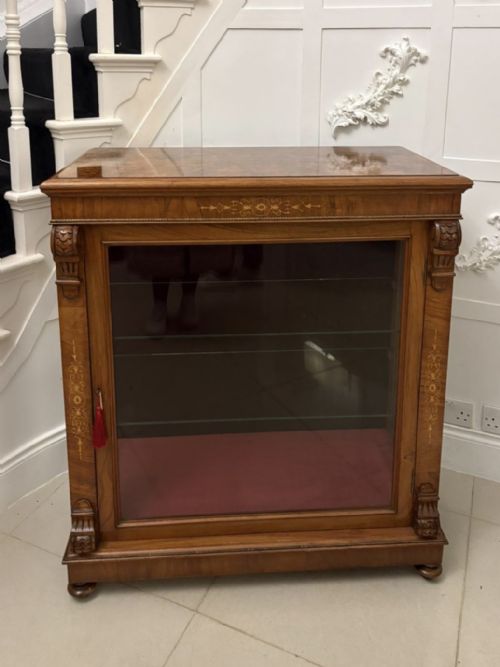
The version most commonly met on this page is the single-door glazed walnut or burr walnut cabinet, often enhanced with marquetry inlay and brass mounts. Alongside these stand rosewood and ebonised variants, functioning as both bookcases and display cabinets.
How They Were Made
Cabinetmakers constructed these pieces using dense timber carcases overlaid with decorative veneers like burr walnut, rosewood, and mahogany. Boxwood and ebony stringing often define the panel borders.
Glazing protects the interior shelves, while cast or chased ormolu mounts and brass details accent the corners and door frames. Marble tops occasionally complete the upper surface.
Early makers occasionally hid small velvet-lined compartments inside, perfect for stashing secretive nineteenth-century correspondence.
What Varies in Quality
The standard of a glazed pier bookcase depends heavily on the choice of timber figure and the precision of the marquetry. Finely figured burr walnut and intricate floral inlay distinguish finer workshop output from simpler production.
Attention to detail in the cast brass mounts and the crispness of any applied carving also divide standard regional output from exceptional cabinet work.
James Winter·Edwards & Roberts
The Glazed Pier Bookcase Glossary
- Pier cabinet
- A narrow cabinet specifically proportioned to fit the wall space between two windows. These pieces often feature glazed doors to display books or ceramics.
- Burr walnut
- A highly decorative wood grain obtained from the wart-like growths on walnut trees. It creates intricate, swirling patterns across the door panels.
- Marquetry
- The art of applying small pieces of veneer to form decorative pictures or geometric patterns. Boxwood and fruitwoods frequently provide contrasting tones in these designs.
- Ormolu
- Gilded bronze used for decorative mounts and framing on furniture. It adds metallic warmth to the dark wood surfaces.
- Ebonised
- Timber treated with a dark finish to imitate ebony. This technique was favoured during the Victorian and aesthetic periods.
- Aesthetic movement
- A late nineteenth-century design style emphasising visual beauty over narrative content. Pieces from this movement often incorporate ebonised finishes and subtle inlay.
Glazed Pier Bookcase: Frequently Asked Questions
What is a glazed pier bookcase used for?
These cabinets served primarily to display prized volumes and delicate ornaments in nineteenth-century drawing rooms. The glazed doors protected collections from dust while keeping them visible.
Today, they function well in narrower rooms or hallways where standard bookcases would protrude too far into the floor space.
How do I date a pier cabinet?
Dating relies on observing timber choices, construction methods, and stylistic cues recorded across the periods. Regency pieces tend to show rosewood with simpler brass work, while Victorian examples frequently employ burr walnut and elaborate marquetry.
Later Edwardian versions adopt slightly lighter framing and simpler interior shelving arrangements.
Where should I place one in my home?
The narrow proportions suit awkward wall spaces, alcoves, or corridors where traditional furniture looks cramped. They perform particularly well in studies or sitting rooms alongside complementary antique seating.
Direct sunlight should be avoided to protect sensitive rosewood and walnut veneers from fading over time.
Are these pieces strictly for books?
Contemporary use extends well beyond traditional libraries, as the adjustable shelving accommodates ceramics, glassware, and small collections. The glass fronts keep delicate objects safe while maintaining an open feel in the room.
Their dual identity as display cabinets and bookcases makes them remarkably adaptable for modern interiors.