





Glazed French Credenza
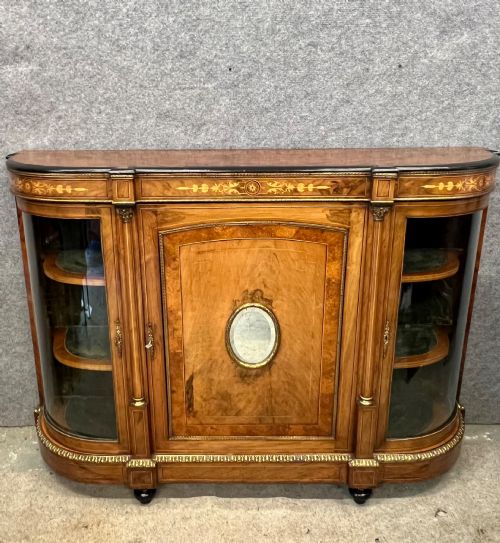
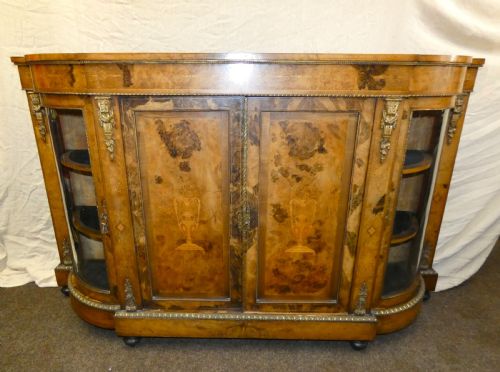
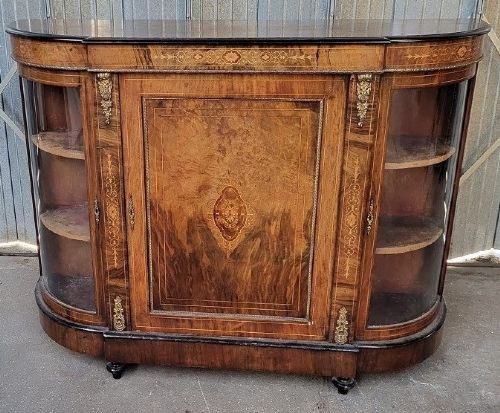
A glazed french credenza brings nineteenth-century display presence into a room, combining timber veneer with glass and gilt metal.
Glazed French Credenza
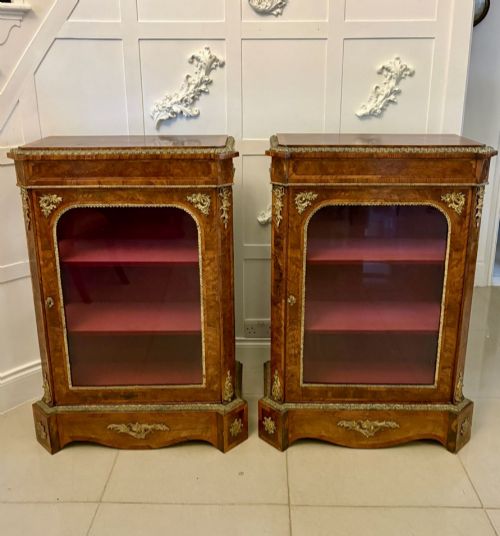
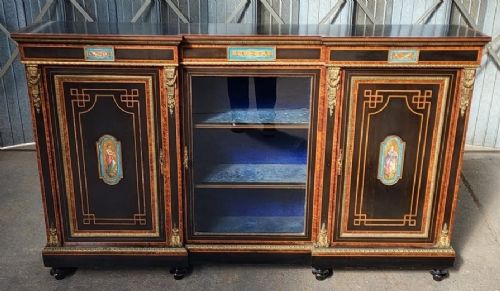
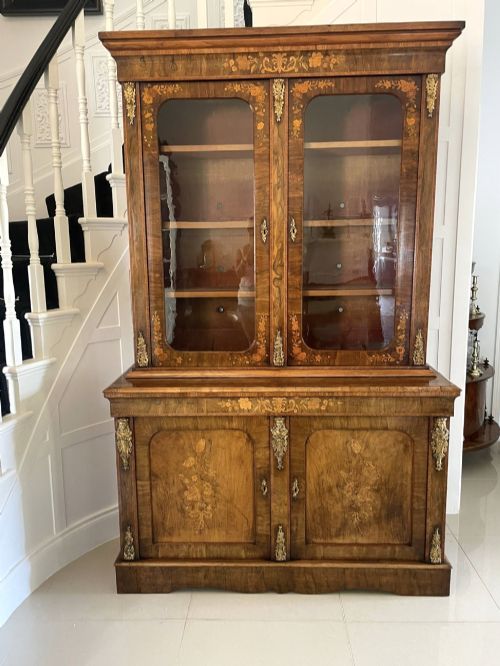
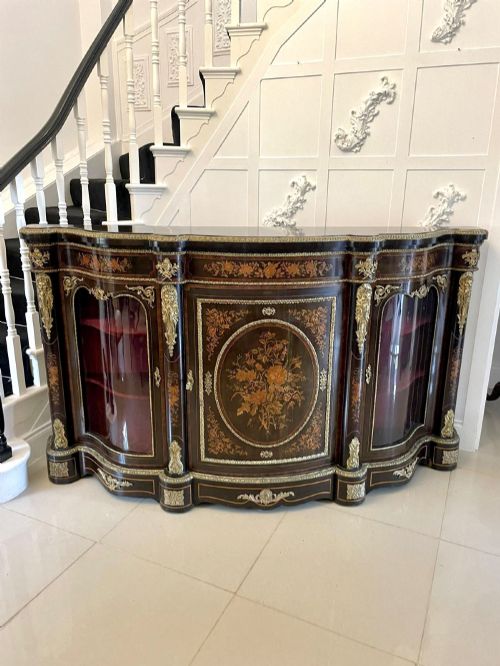
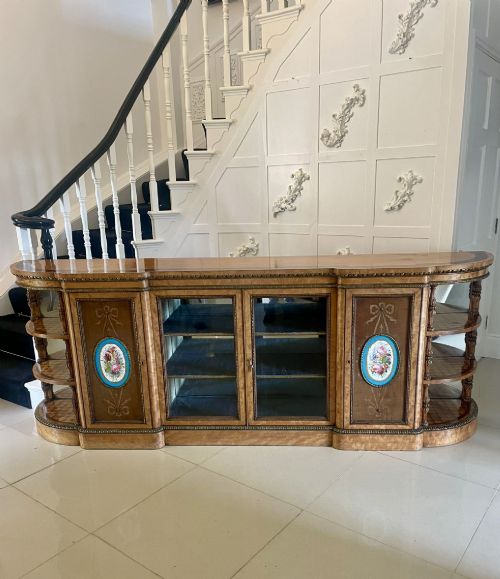
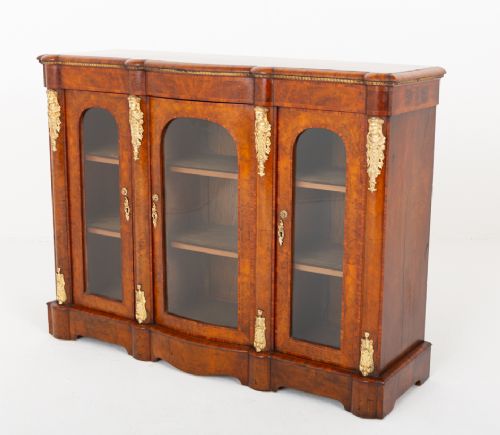
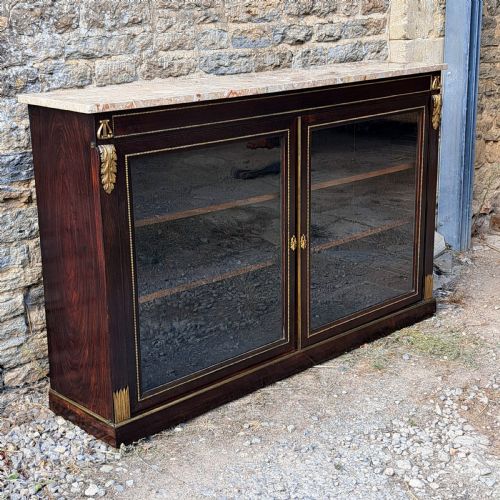
Buyers seeking a glazed french credenza encounter substantial nineteenth-century Victorian and French Revival statement furniture designed for formal display and storage. These pieces typically incorporate glazed central or flanking cabinet doors intended to showcase porcelain and decorative objects.
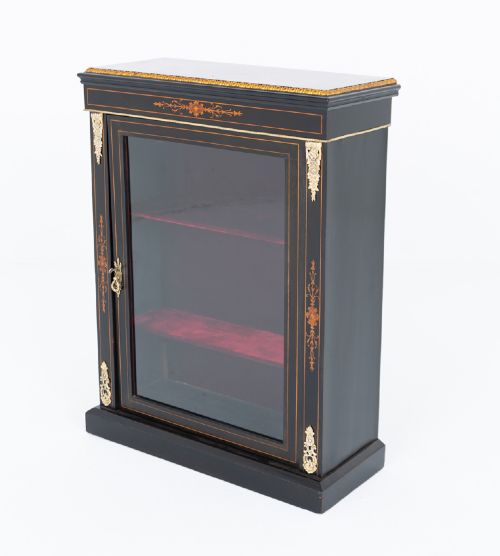
The dominant forms on this page include serpentine-fronted credenzas, three-door side cabinets, and taller pier cabinets originating from the Victorian era and the Napoleon III period. Walnut, burr walnut, and ebonised wood dominate the physical evidence, often enhanced by marquetry inlay.
Originating primarily from nineteenth-century workshops, these cabinets merge British Victorian cabinet-making traditions with French aesthetic revivals. They function today as principal storage and display surfaces in traditional dining rooms and drawing rooms.
Materials and construction methods
Makers built these pieces using supportive carcases of timber overlaid with figured veneers such as burr walnut, kingwood, and rosewood. Ebonised wood and satinwood also appear alongside traditional carcase timbers to create contrasting tonal effects.
Structural enrichment relied heavily on cast ormolu mounts, brass banding, and inlaid floral marquetry panels. Glazed doors and porcelain plaques, notably Sevres-style inserts, were integrated into the timber framework to punctuate the facade.
Surfaces were frequently shaped into serpentine or bowed fronts requiring precise veneer work and joinery. French polish and hand-finishing techniques sealed the timber while accentuating the natural grain patterns.
Many of these grand Victorian cabinets contain tiny, secret keys that still lock the delicate glass display doors after more than a century.
Distinguishing grades of workmanship
Quality rests upon the crispness of the ormolu mounts and the intricacy of the marquetry inlay. Superior examples demonstrate finely chased gilt-bronze details and complex, multi-timber floral patterns set flush into the veneer.
The selection and book-matching of burr walnut or kingwood veneer define the visual hierarchy of these cabinets. Pieces exhibiting symmetrical, highly figured grain patterns across large serpentine surfaces indicate superior workshop output.
Structural integrity is evident in the alignment of glazed doors, the weight of the marble tops where fitted, and the retention of original glass and interior shelving. Finer items often display exhibition-standard finishing throughout the interior and rear framing.
The Glazed French Credenza Glossary
- Credenza
- A low cabinet traditionally used for serving or display, featuring glazed doors or open shelving in nineteenth-century iterations. It serves as a focal point for formal interior rooms.
- Ormolu
- Gilded bronze mounts applied to furniture edges and panels for decorative accent. This technique requires metal casting and acid-gilding processes.
- Marquetry
- Inlaid wood patterns forming pictorial or floral designs on the furniture surface. Artisans cut various coloured veneers to fit precisely within a background sheet.
- Pier Cabinet
- A narrow display cabinet designed to fit against the wall space between windows. These tall, single-door glazed units often incorporate ormolu mounts.
- Boulle
- A form of marquetry utilising brass and tortoiseshell inlaid in intricate scroll patterns. It is strongly associated with French Napoleon III furniture styles.
Glazed French Credenza: Frequently Asked Questions
What is a glazed french credenza?
A glazed french credenza is a low nineteenth-century cabinet featuring glass doors and stylistic influences derived from French revival design. These units combined functional storage with visible display space for decorative ceramics.
They emerged strongly during the Victorian period, utilising rich wood veneers and gilt-metal mounts to project status in domestic interiors.
Where were these cabinets placed?
These cabinets typically stood against principal drawing room or dining room walls where their reflective glass and gilded mounts caught the light. Pier cabinets occupied narrow wall spaces between architectural windows.
Their low profiles allowed the top surface to function as an additional display tier for ornaments and clocks.
How do I care for burr walnut?
Burr walnut veneer requires stable indoor humidity away from direct sunlight to prevent the timber from drying out or splitting. Gentle dusting with a dry cloth maintains the French polished finish without stripping natural oils.
Avoid placing damp items directly onto the wooden surface to protect the historic grain and inlay work.
How can I date these pieces?
Dating relies on examining the combination of timber choices, fastening methods, and stylistic revivals such as Napoleon III or Victorian French Revival. The physical evidence on this page spans from Georgian examples up to early twentieth-century French side cabinets.
Internal construction markers, secondary woods, and the style of the ormolu casting further narrow the period of manufacture.