



Walnut Porcelain Mounted Credenza
A walnut porcelain mounted credenza offers grand display space for collector ceramics, bringing refined nineteenth-century reception rooms into modern homes.
Walnut Porcelain Mounted Credenza
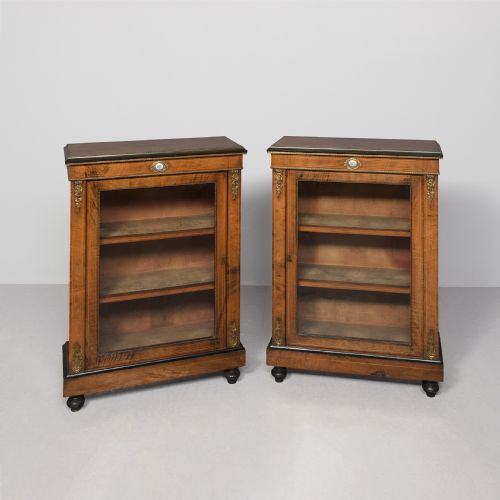
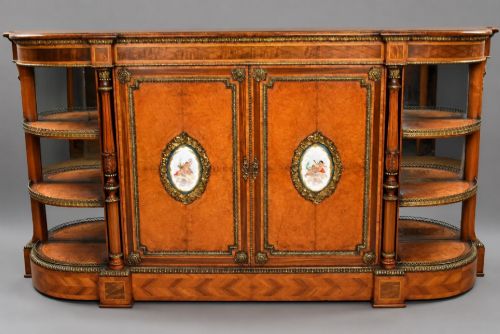
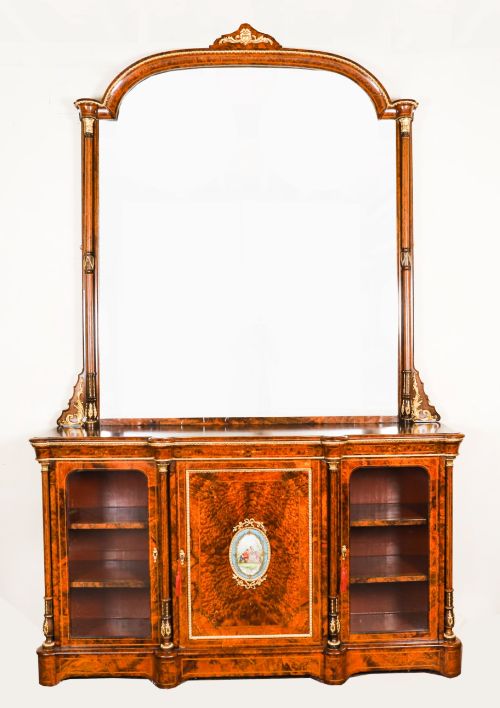
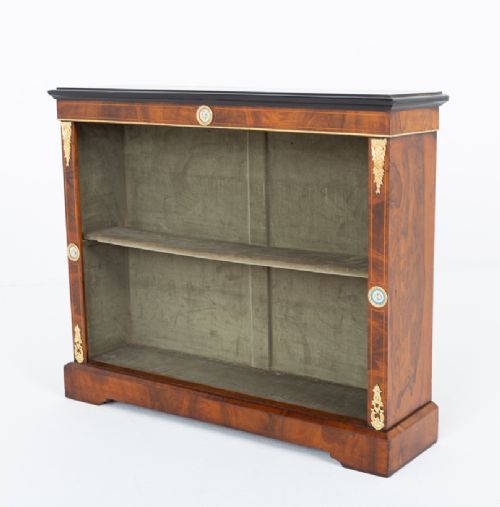
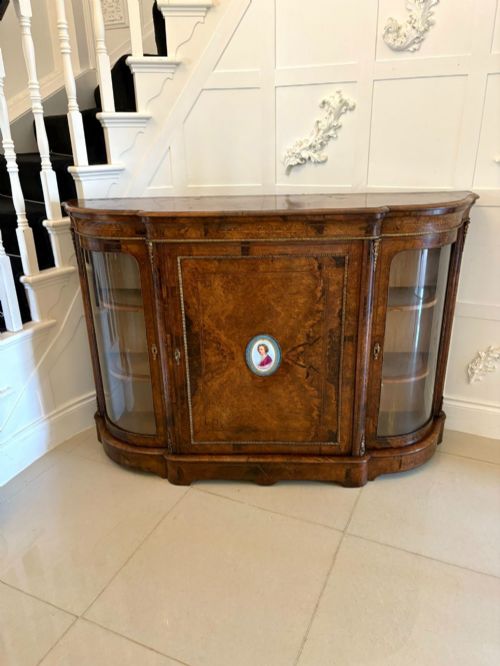
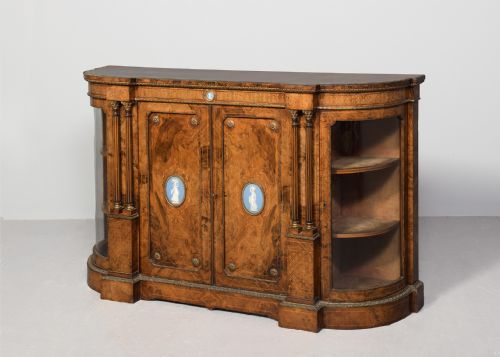
A walnut porcelain mounted credenza is a low, substantial display cabinet designed for formal reception rooms, frequently featuring glazed central doors flanked by curved side compartments. The examples found here span the nineteenth century, including Victorian and French revival interpretations.
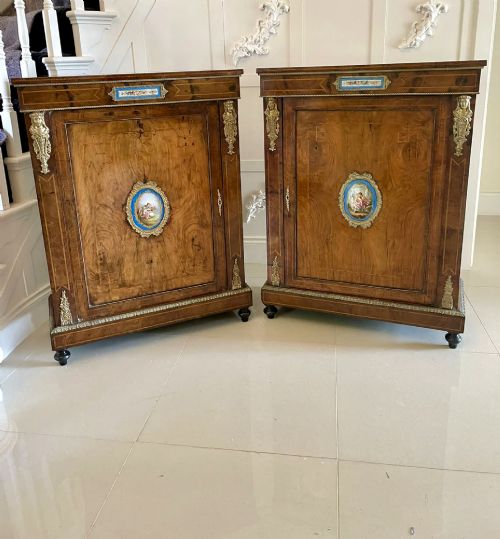
Most pieces combine rich burr walnut veneers with glazed doors, polished wooden shelves, and inset ceramic plaques. Alongside traditional credenzas, buyers frequently encounter related side cabinets, pier cabinets, and occasional display furniture utilising similar materials.
The dominant aesthetic draws upon French Louis XVI and Napoleon III revival styles, incorporating ornamental mounts and dark ebonised framing. These low cabinets functioned historically as focal points for displaying prized porcelain collections alongside decorative bronzes.
How they were made
Cabinet makers utilised figured burr walnut veneers over secondary timbers to create highly decorative patterned grain across the expansive flat doors and curved panels. Contrasting dark ebonised wood often outlines the structural borders and frames.
Gilt bronze, ormolu, and cast metal mounts highlight the architectural corners, panels, and borders of the cabinetry. Fired porcelain plaques, including Sevres-style pieces and jasperware, are inset directly into the wooden fascias and door frames.
Glazed doors utilise slender wooden frames to enclose interior shelving intended for the display of ceramics and glassware. Many surviving items incorporate shaped marble tops or elaborate marquetry inlay alongside the porcelain decorations.
Walnut Porcelain Mounted Credenza Retail Price Guide 2026
Typical asking prices for walnut porcelain mounted credenza among the pieces listed under this phrase on Sellingantiques today, from the lower quarter to the upper quarter. They describe what is for sale here now, not the wider market.
Some credenzas incorporate secret locking mechanisms concealed behind decorative ormolu mounts to protect fragile porcelain collections.
What varies in quality
The sophistication of the timber selection determines the visual impact, ranging from plain walnut surfaces to highly figured burr veneers with matched grain patterns across the primary doors. Finer examples display meticulous marquetry inlay and subtle colour variation in the wood.
The quality of the porcelain plaques and decorative metal mounts dictates the tier of the piece, with finely painted ceramic scenes and crisply chased ormolu separating standard production from exhibition-level workmanship. Heavier casting in the bronze mounts and finer detail in the porcelain painting indicate superior workshop standards.
Construction methods such as the thickness of the walnut timber, the precision of the curved glass framing, and the integrity of the interior lining separate simpler side cabinets from monumental credenzas.
The Walnut Porcelain Mounted Credenza Glossary
- Credenza
- A low cabinet or sideboard used for display and storage, typically featuring a central cupboard with flanking glass doors. These pieces sit low to the ground and traditionally displayed porcelain on top and inside.
- Burr Walnut
- Timber taken from the gnarled growth of a walnut tree, producing swirling, highly decorative grain patterns. Cabinet makers prized this wood for veneering important furniture facades.
- Ormolu
- Finely ground high-carat gold applied to a bronze base metal, used for decorative mounts on nineteenth-century furniture. The technique provides a bright metallic finish that resists tarnishing.
- Sevres Plaques
- Fired ceramic panels produced in the manner of the French Sevres factory, featuring hand-painted scenes or monograms. They appear inset into cabinet doors as decorative centerpieces.
- Pier Cabinet
- A narrow display cabinet designed to fit wall spaces between windows. These upright pieces often feature single glass doors and porcelain mounts.
- Jasperware
- A fine-grained, unglazed stoneware developed in the eighteenth century, commonly featuring white relief figures against a coloured background. It is frequently incorporated into cabinetry plaques.
Walnut Porcelain Mounted Credenza: Frequently Asked Questions
What is a walnut porcelain mounted credenza?
A walnut porcelain mounted credenza is a low nineteenth-century display cabinet constructed from burr walnut and decorated with ceramic plaques and metal mounts.
These pieces were built to showcase decorative arts in formal rooms, combining glass-fronted storage with flat display surfaces.
Where were these cabinets placed historically?
These pieces occupied prominent positions along drawing room walls, often between windows or beneath large mirrors.
Their low profile allowed the top surface to hold decorative objects while interior shelves protected sensitive ceramics.
How do I care for burr walnut furniture?
Burr walnut requires stable indoor humidity away from direct sunlight and heat sources to prevent veneer movement.
Regular dusting with a dry cloth maintains the polished finish without the need for heavy waxes.
How can I tell a Victorian piece from a French revival piece?
Victorian pieces often display heavier proportions and characteristic English walnut framing, while French revival examples lean toward elaborate ormolu mounts and Sevres-style plaques.
Both styles frequently overlap due to the strong influence of French design on mid-nineteenth-century British cabinet makers.