





Sevres Porcelain Side Cabinet
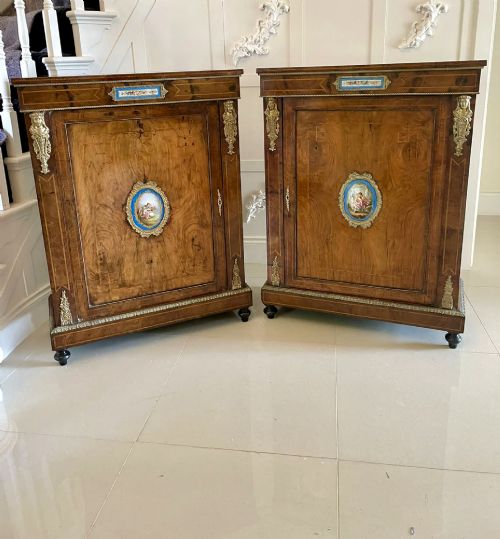
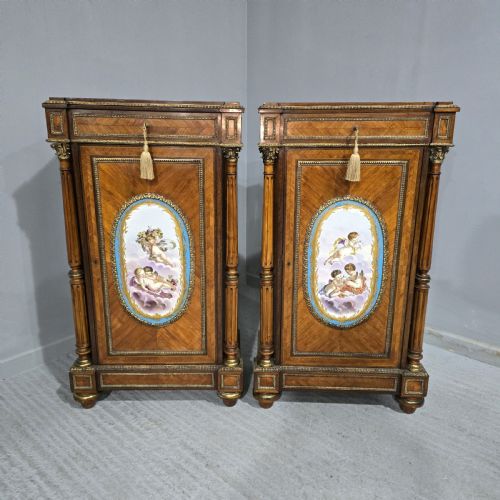
A sevres porcelain side cabinet brings together polished timbers and hand-painted ceramic plaques in a singular piece of formal nineteenth-century furniture.
Sevres Porcelain Side Cabinet
When you search for a sevres porcelain side cabinet, you are looking at nineteenth-century French and Victorian display furniture featuring inset ceramic plaques. These pieces range from compact pier cabinets to large credenzas designed for formal reception rooms.
You are most likely to meet ebonised wood or burr walnut versions on this page, often mounted with ormolu or gilt bronze and topped with marble. The forms encompass pairs of tall cabinets, single side cabinets, and three-door credenzas dating from the middle to the end of the nineteenth century.
The styles span Louis XVI revival, Napoleon III, and Victorian French revival, reflecting a period of intense fascination with eighteenth-century court aesthetics. Each piece uses porcelain plaques as central visual foci, surrounded by intricate marquetry or dark polished surfaces.
Materials and construction
Cabinet makers utilised a rich palette of timbers including burr walnut, kingwood, ebonised wood, and satinwood as the foundational structures for these cabinets. These woods were selected for their striking grain patterns or deep dark finishes, providing a contrasting backdrop for the mounted ceramic plaques.
Ormolu and gilt bronze mounts were cast and chased to frame the porcelain plaques and protect the vulnerable corners of the cabinet bodies. Glass panels also appear in doors and sides to enclose the interior shelves, while marble tops provide a heavy, durable surface finish.
Sevres Porcelain Side Cabinet Retail Price Guide 2026
Typical asking prices for sevres porcelain side cabinet among the pieces listed under this phrase on Sellingantiques today, from the lower quarter to the upper quarter. They describe what is for sale here now, not the wider market.
Listings feature pieces from the nineteenth century, including specific years like 1860, 1880, and 1900 alongside general Victorian periods.
Differences in quality
The distinction between standard production and the finest work lies in the handling of the materials and the execution of the bronze mounts. Finer cabinets display heavily chased ormolu with crisp detail, whereas simpler pieces rely on lighter, less intricate brass or bronze applications.
The quality of the timber veneers and the precision of the marquetry inlay also divide the range. Cabinets constructed from figured burr walnut or carefully matched kingwood with detailed floral or geometric inlay occupy the upper tier of craftsmanship.
The Sevres Porcelain Side Cabinet Glossary
- Ormolu
- Gilded bronze used for decorative mounts and framing on furniture. This technique involves applying a finely ground gold-mercury amalgam to cast bronze.
- Pier cabinet
- A narrow cabinet designed to stand against the wall space between windows. These tall, slender pieces often feature glazed doors for displaying porcelain.
- Kingwood
- A dense, richly coloured timber with dark violet-brown streaks used extensively in fine cabinet making. It provides a luxurious surface when polished.
- Credenza
- A large sideboard or cabinet used primarily for storage and display. Victorian examples often incorporate multiple doors and extensive ceramic mounts.
- Ebonised wood
- Timber treated to imitate the dark, heavy appearance of ebony. This finish creates a stark contrast against gilt bronze mounts and colourful porcelain.
Sevres Porcelain Side Cabinet: Frequently Asked Questions
How were these cabinets used?
These pieces served as formal reception room furniture designed to display prized porcelain collections behind glass doors or upon open shelves.
The flat marble tops also provided a sturdy surface for placing decorative bronzes, clocks, or additional porcelain ornaments.
How do I date a porcelain mounted cabinet?
Dating relies on examining the timber veneers, construction methods, and stylistic revivals present in the overall design.
Most pieces date from the mid-nineteenth century up to around nineteen hundred, aligning with the Victorian and Napoleon III periods.
What woods are commonly found on them?
Makers frequently employed burr walnut, ebonised wood, kingwood, and satinwood to construct the bodies of these cabinets.
These specific timbers offered contrasting tones and textures that highlighted the central porcelain plaques and gilt bronze mounts.
Are marble tops original to these cabinets?
Marble tops are a standard feature on many French and Victorian porcelain mounted side cabinets.
They provide a heavy, polished stone finish that matches the formal character of the ormolu mounts and ceramic plaques.