


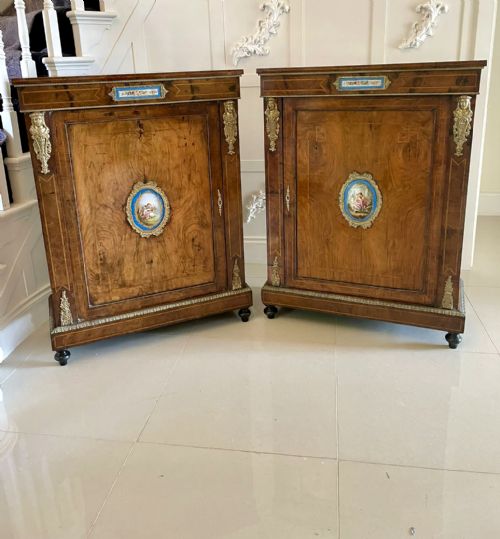

French Style Victorian Credenza
A french style victorian credenza brings continental curves and rich timber into a nineteenth-century interior, offering grand display space.
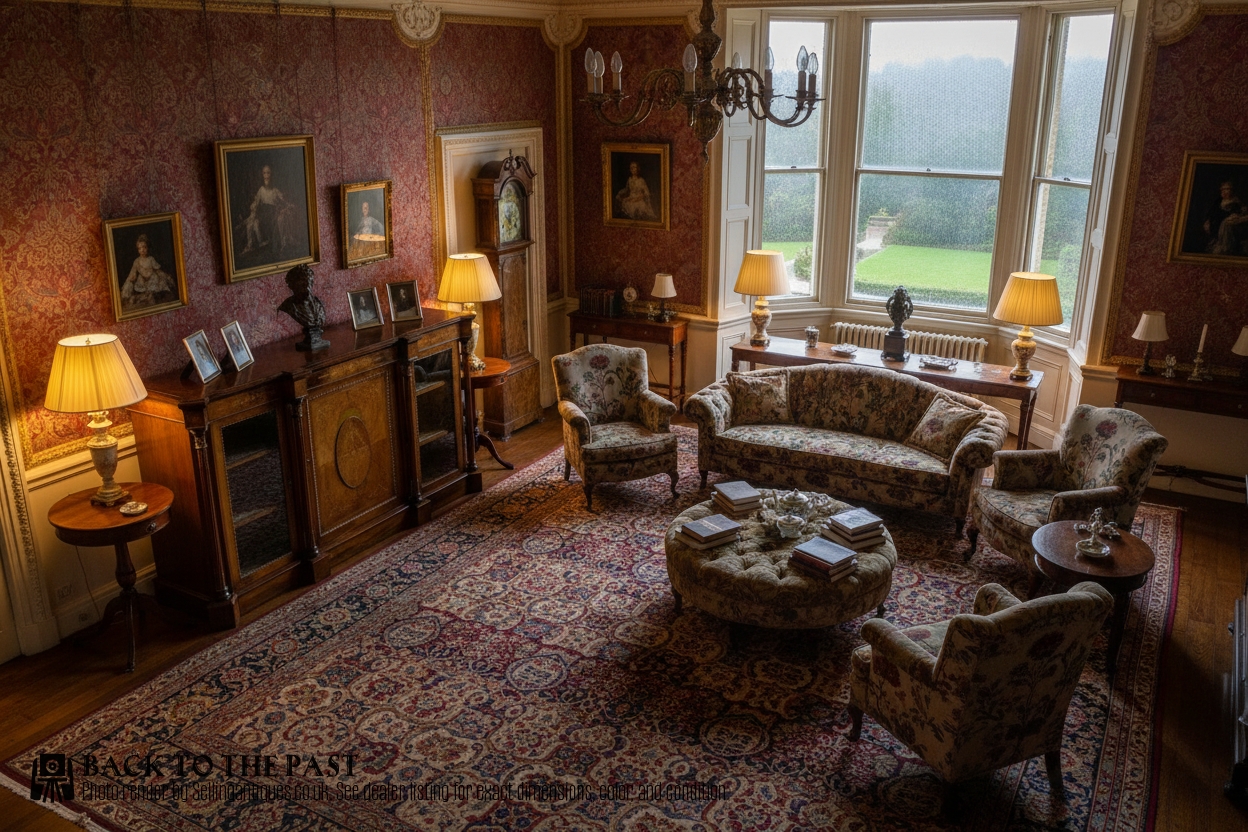
French Style Victorian Credenza
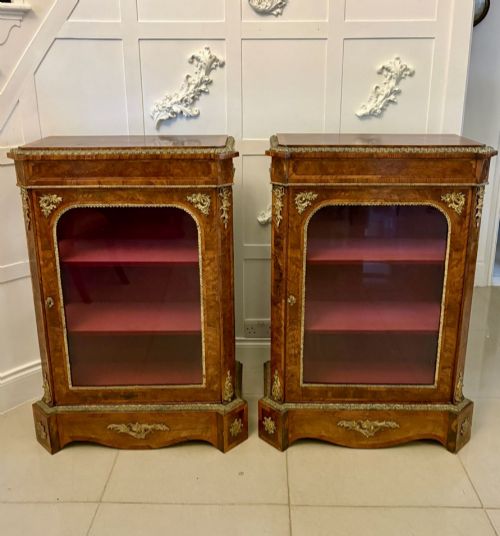
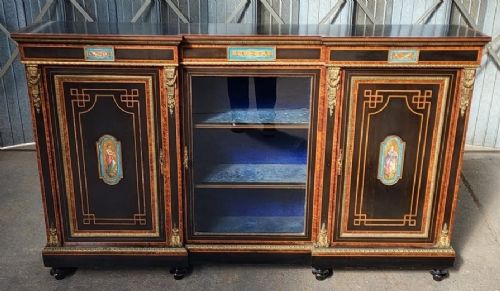
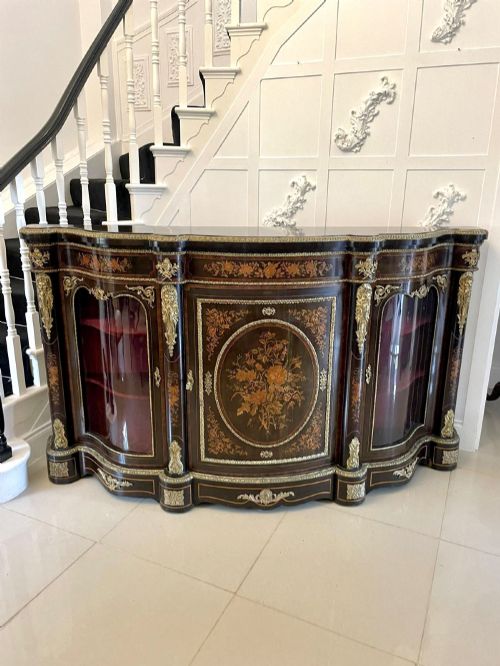
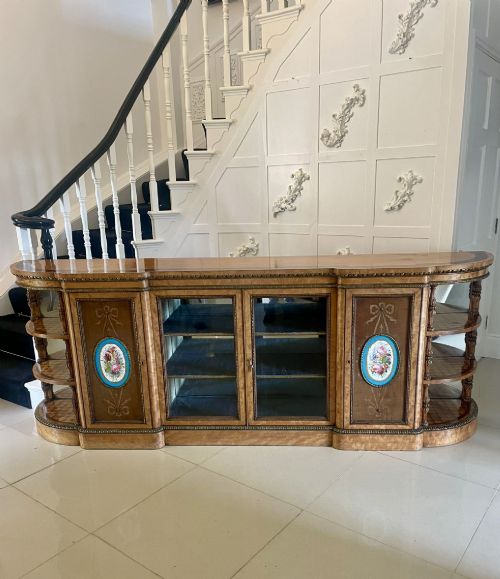
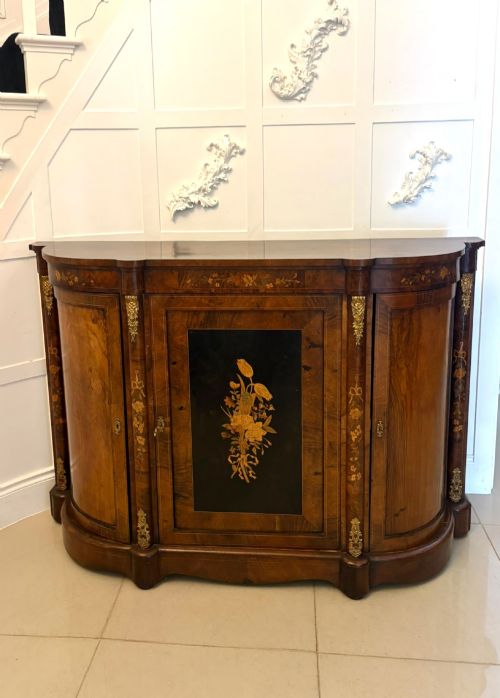
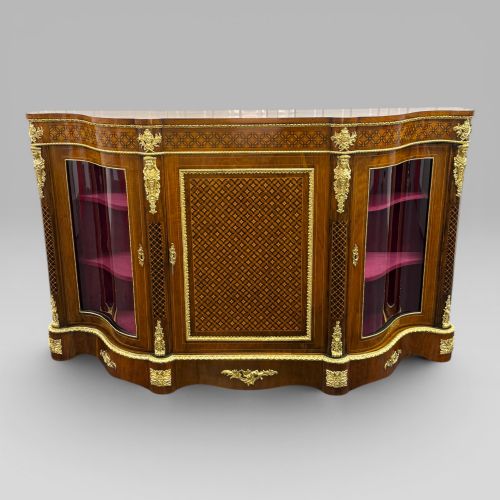
A french style victorian credenza sits low to the floor, often featuring mirrored doors flanked by curving glazed side cabinets. These nineteenth-century forms borrow heavily from continental revivals, mixing cabinet-maker precision with decorative display.
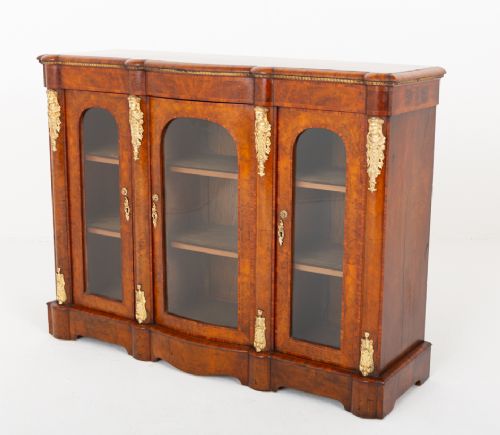
The versions most common here rely on burr walnut or ebonised wood, shaped with serpentine fronts and fitted with shelves for china or books. They function as central room statements rather than simple storage cupboards.
Makers adapted French Louis XV and Rococo motifs to suit Victorian drawing rooms, incorporating glazed panels and low timber platforms. The resulting furniture balances functional cabinetry with elaborate surface decoration.
Materials and construction
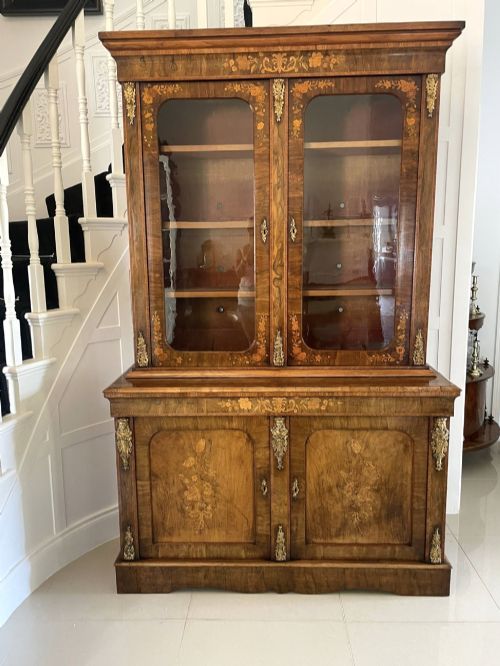
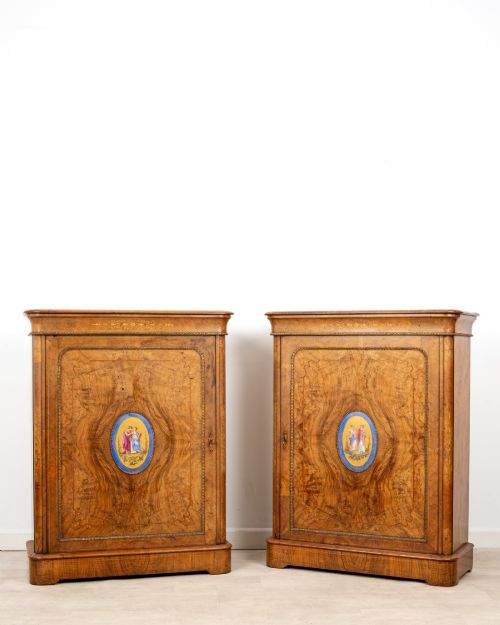
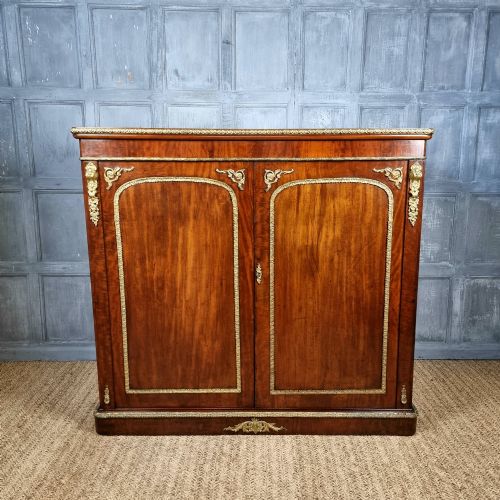
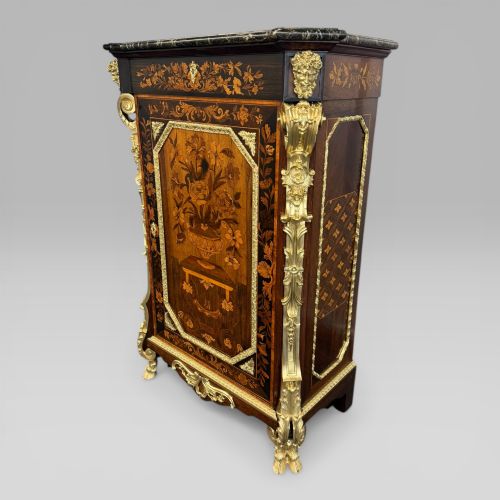
Cabinet-makers laid fine burr walnut or kingwood veneers over sound carcases, creating intricate floral marquetry patterns across curved doors. They integrated brass and ormolu mounts to highlight the structural lines and frame porcelain plaques.
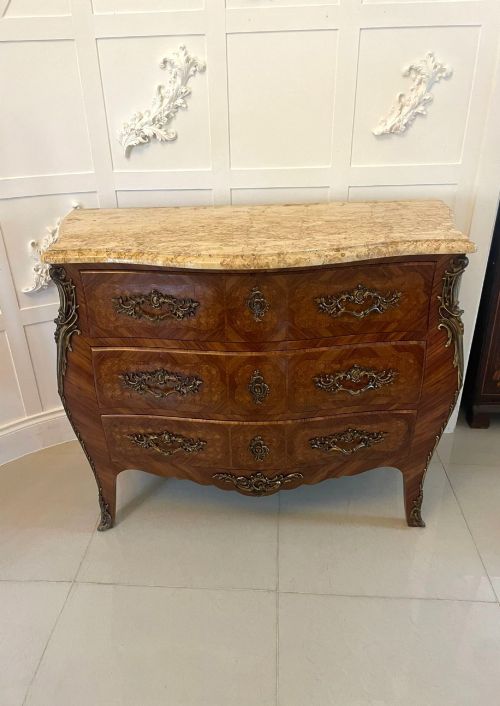
Heavy marble tops, often in white or grey, sit atop several of these cabinets, requiring sturdy timber framing underneath to bear the weight. Glazed side doors use fine timber astragals to hold curved glass panes safely in place.
Judging the execution
Quality shows in the crispness of the cast ormolu mounts and the precision of the marquetry inlay rather than the mere presence of decoration. Finer pieces maintain tight joints along serpentine curves and employ figured timbers with deep natural grain.
The refinement of the interior mahogany or walnut secondary wood signals a superior workshop output. Well-preserved original porcelain panels and uncracked marble tops elevate a piece far above standard production models.
Gillows·Edward Holmes Baldock·Maison Gagneau
The French Style Victorian Credenza Glossary
- Ormolu
- Gilt-bronze mounts applied to furniture for decorative enrichment. These brass or bronze fittings are cast and then gilded to provide bright metallic contrast against dark woods.
- Marquetry
- Inlay work using various coloured wood veneers to form pictorial or geometric designs. Craftsmen cut contrasting timbers together to ensure tight, seamless joints.
- Pier Cabinet
- A narrow display cabinet designed to fit wall spaces between windows. They frequently feature glazed doors and velvet-lined interiors for porcelain.
- Serpentine
- A furniture front curved in a wave shape, convex at the centre and concave at the sides. This contour demands advanced woodworking skill to fit doors and frames precisely.
- Ebonised
- Wood finished to resemble ebony through staining or painting. This dark surface creates a stark background for gilt mounts and inlaid floral panels.
French Style Victorian Credenza: Frequently Asked Questions
What is a French style Victorian credenza?
A French style Victorian credenza is a low nineteenth-century display cabinet influenced by continental revival designs. It typically combines curving woodwork with glass doors and decorative mounts.
Cabinet-makers built these pieces to showcase porcelain and glassware in formal Victorian rooms. They serve as focal points due to their elaborate marquetry and polished timber surfaces.
How do I care for marble top credenzas?
Marble surfaces require gentle cleaning with mild, pH-neutral soap and warm water to avoid damaging the stone polish. Acidic liquids like wine or citrus should be wiped away immediately.
Polishing the timber frame should be done with traditional beeswax, keeping products away from the porous stone. Placing felt pads under heavy decorative objects protects the marble from scratches.
Where were these cabinets placed originally?
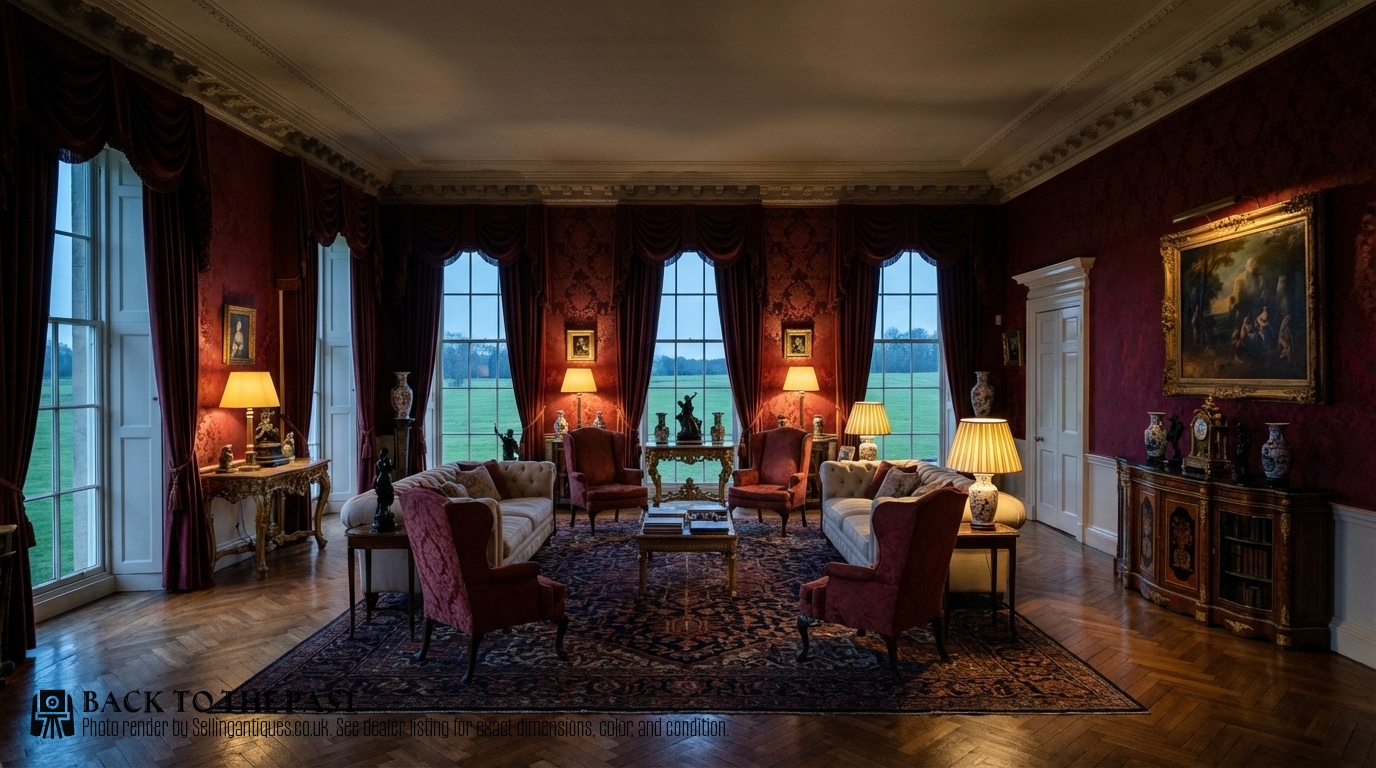
Victorian households positioned these credenzas against main drawing room walls, often between tall windows where light could strike the ormolu mounts. They anchored large formal reception spaces.
The low profile allowed owners to place decorative urns, clocks, or bronzes on the top surface without blocking artwork or wall mirrors.
How do I spot a later nineteenth-century date?
Nineteenth-century dating relies on observing construction methods inside the carcase, such as hand-cut dovetails in the drawer linings and secondary woods like mahogany. Saw marks and timber shrinkage patterns help confirm the period.
Stylistic shifts also provide clues, as makers moved from simple mid-century burr walnut to heavier ebonised and Renaissance revival designs by the eighteen-eighties.