
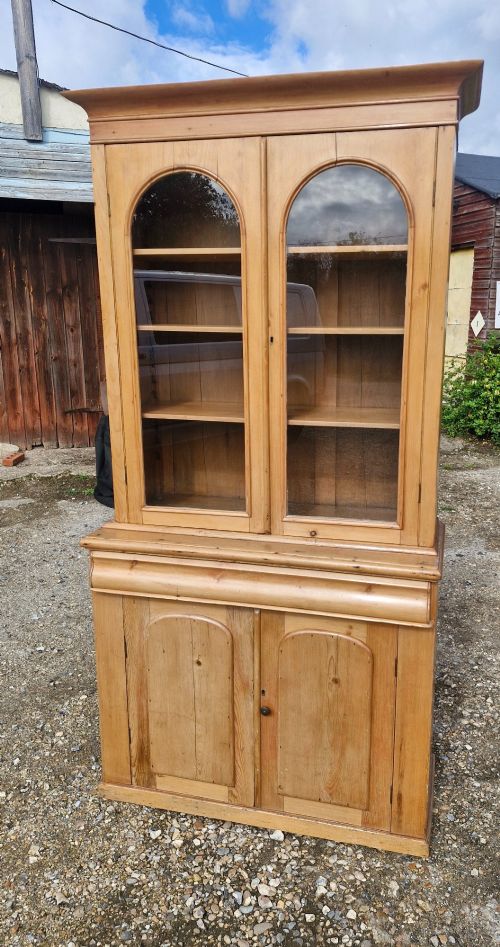
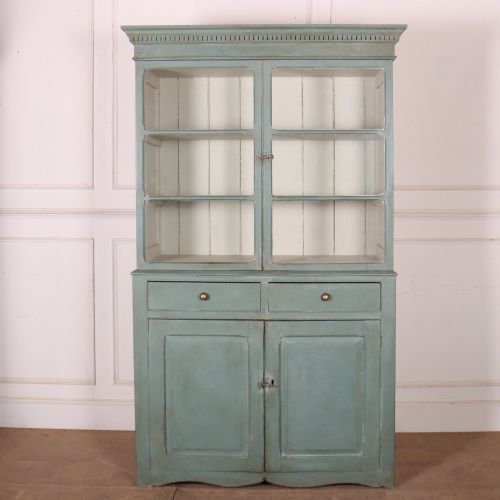
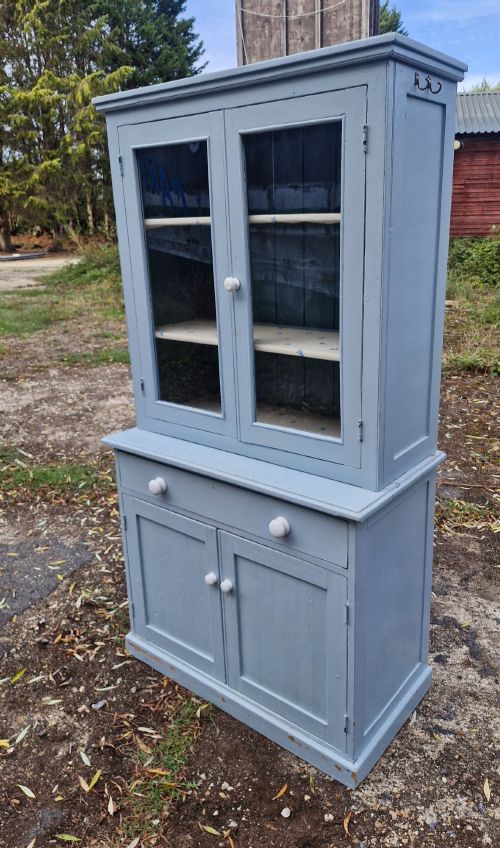
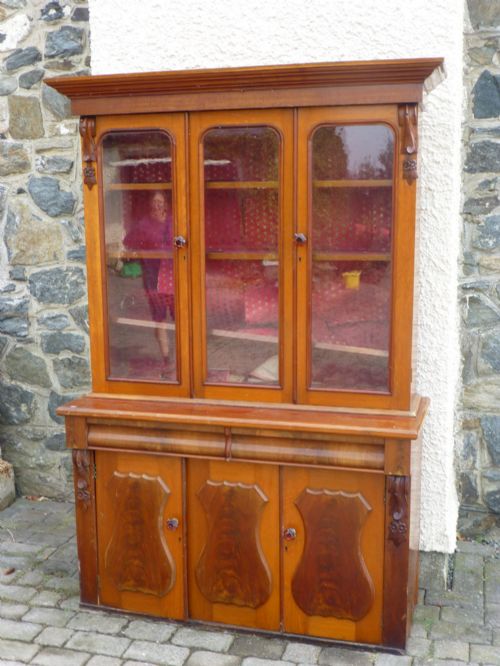
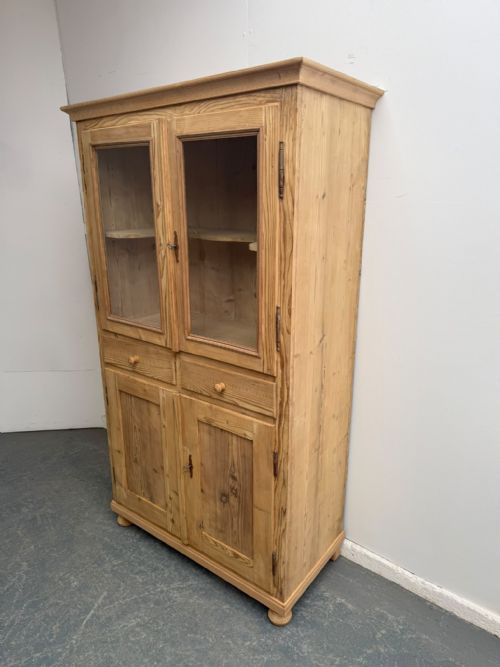
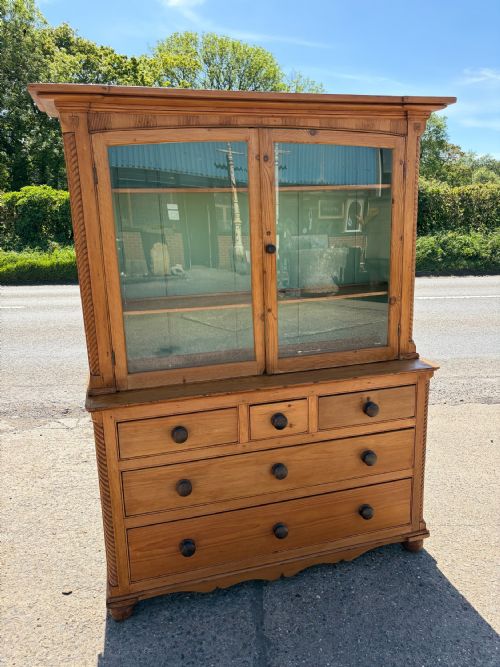


Glazed Door Kitchen Dresser
A glazed door kitchen dresser is a utilitarian storage staple offering upper display glass alongside lower concealed shelving, built for domestic service.
Glazed Door Kitchen Dresser
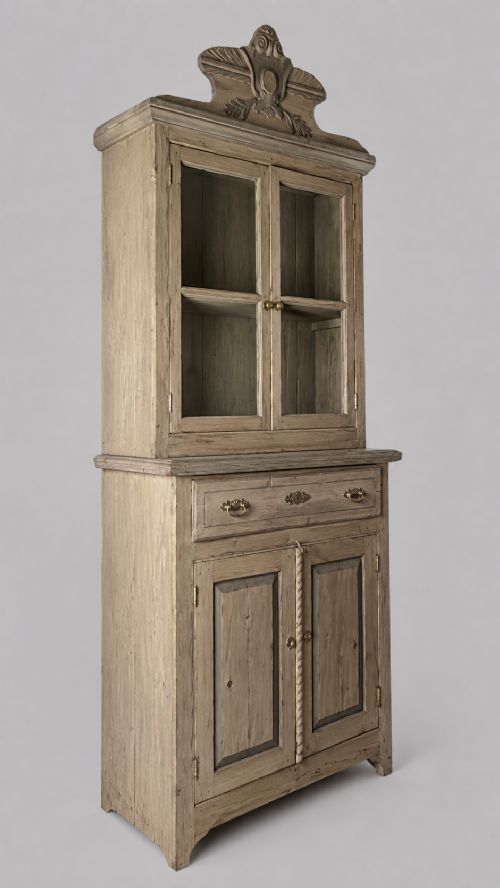
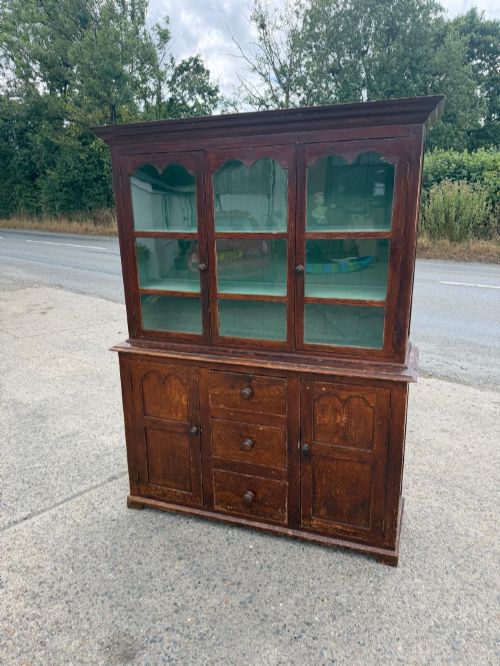
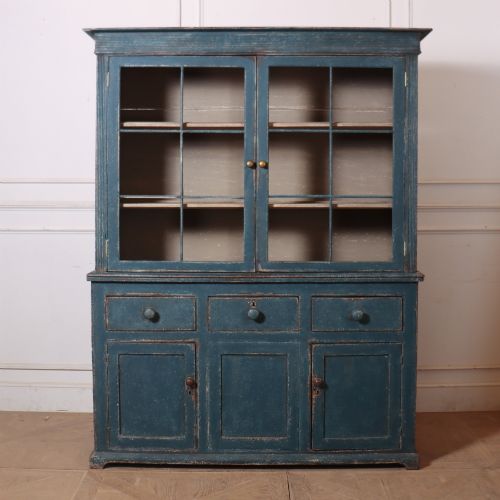
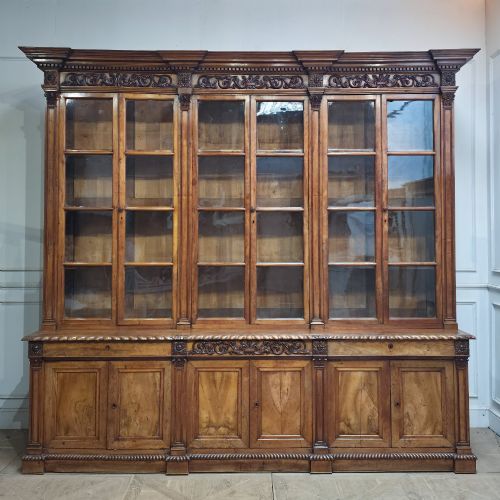
A glazed door kitchen dresser represents a traditional form of domestic storage combining a glazed upper section for display with a lower cabinet or drawer base. When you search for a glazed door kitchen dresser, you encounter regional variations spanning the nineteenth century through the early twentieth century.
The pieces listed here range from compact painted pine cupboards to large multi-door oak and mahogany Welsh and West Country examples. French, Hungarian, and Danish formats also appear alongside English vernacular pieces, providing various configurations of shelving and glass doors.
Most examples function as two-part furniture items designed to separate for transport, housing crockery in the upper glazed compartment and heavier kitchen utensils below. These cabinets serve practical kitchen and dining storage requirements while exhibiting distinct period craftsmanship.
How they were made
Cabinet makers utilised solid timber construction, employing pine, oak, walnut, and mahogany depending on the region and the status of the piece. Painted wood finishes also feature prominently across European and British vernacular examples.
Glazing relies on framed wooden doors holding panes of glass, paired with functional brass or iron hardware such as hinges and latches. Joinery methods include traditional panel and frame construction designed to support heavy domestic loads.
Listings feature items from the 19th Century, Victorian period, and early 20th Century, constructed in pine, oak, walnut, mahogany, and painted wood.
What varies in quality
Quality depends upon the selection of timber and the integrity of the original construction, ranging from simple regional pine to polished oak and mahogany with refined architectural mouldings. The retention of original glass panes and hardware alters the character of each cabinet.
Proportion and scale distinguish finer examples, where cornice details and door framing display balanced design rather than purely utilitarian assembly. Surface treatments, whether original paint layers or clean waxed finishes, also determine the preservation state.
The Glazed Door Kitchen Dresser Glossary
- Breakfront
- A cabinet design where the central section projects forward from the flanking outer sections. This configuration adds architectural depth to larger kitchen dressers.
- Cornice
- The ornamental moulding running around the top edge of a piece of furniture. It provides a finished architectural cap above the glazed upper doors.
- Vernacular
- Furniture built by local tradesmen to regional traditions rather than following metropolitan design patterns. These pieces reflect specific local domestic needs.
- Two-part
- Construction method where the upper glazed cabinet rests upon a lower sideboard or cupboard base. This facilitates movement and placement in domestic spaces.
Glazed Door Kitchen Dresser: Frequently Asked Questions
How are glazed dressers cleaned?
Maintenance involves dusting timber surfaces with a dry cloth and cleaning glass panes with standard solutions.
Waxed finishes benefit from occasional nourishment, while painted surfaces require gentle wiping without harsh chemical solvents.
Do these dressers separate for moving?
Many larger examples utilise a two-part construction where the upper glazed section lifts off the lower base cabinet.
This division simplifies transport through doorways and up staircases during relocation.
What timber was used most often?
Pine appears frequently in regional and painted kitchen furniture due to its widespread availability and workability.
Oak, walnut, and mahogany are also found on higher status or specific continental pieces.
Where were these cupboards originally placed?
Kitchens and dining spaces served as the primary locations for housing everyday crockery and provisions.
The glazed upper doors protected delicate tableware from kitchen soot while keeping items visible.