

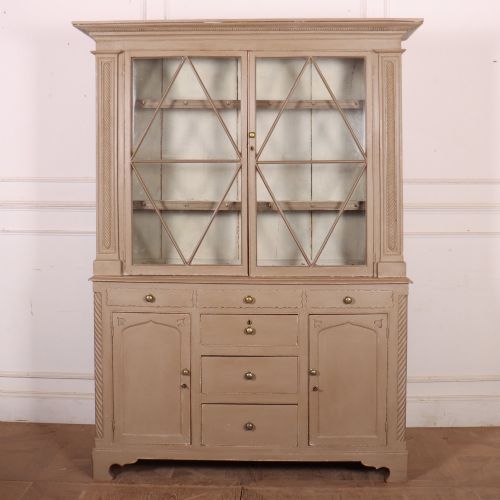

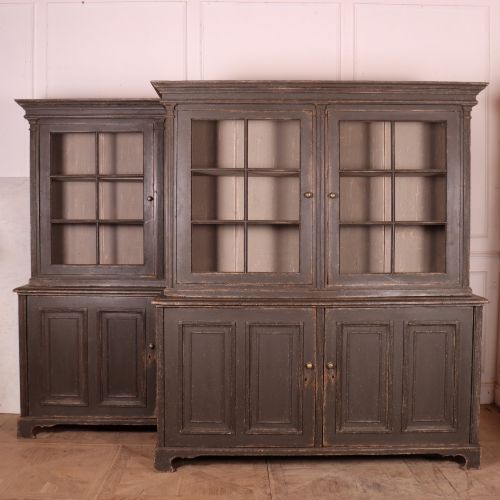


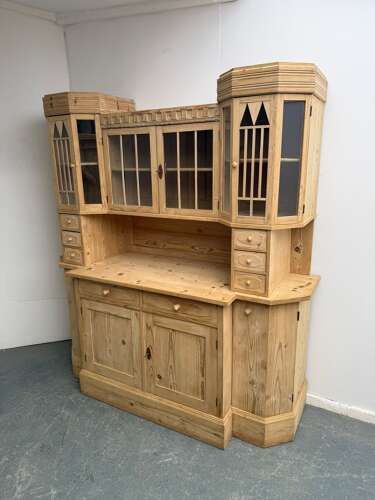
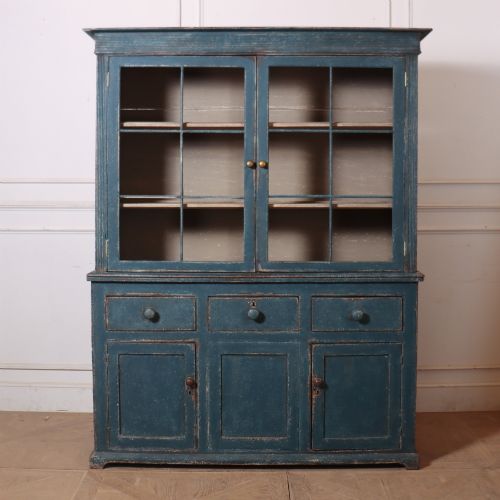
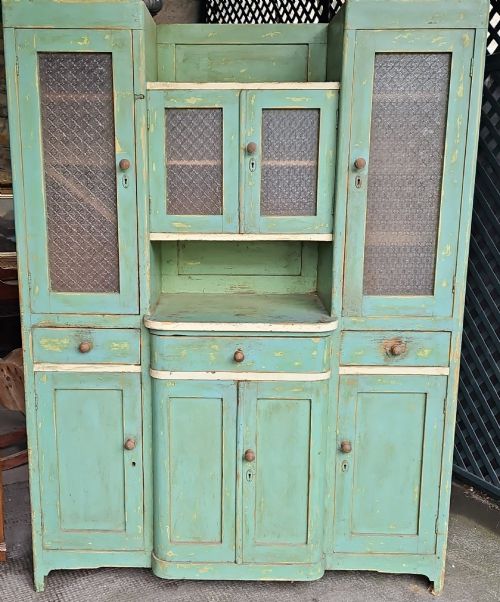


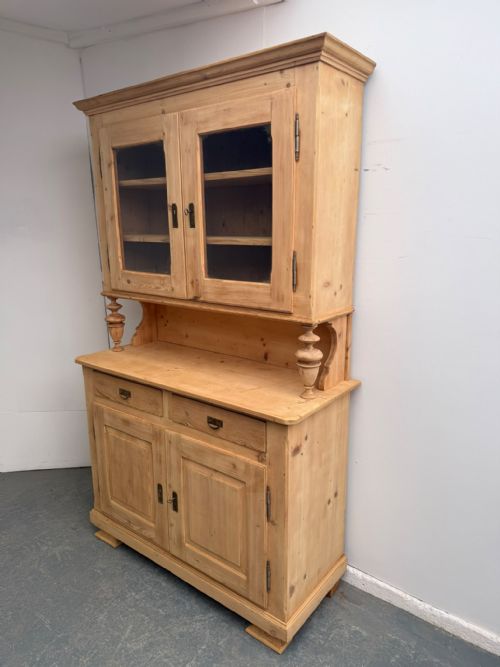
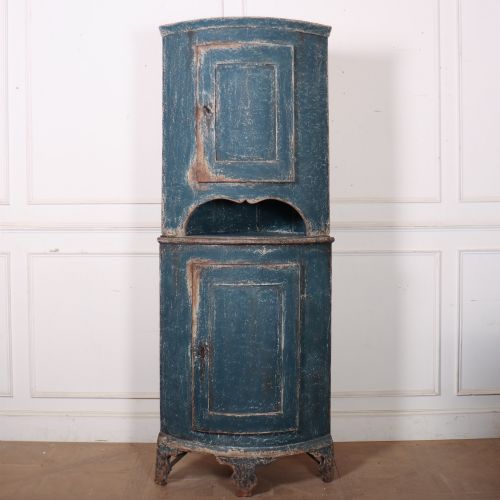


Painted Pine Hutch
These painted pine hutch pieces bring honest domestic storage from the eighteenth and nineteenth centuries into modern rooms.
Painted Pine Hutch
A painted pine hutch serves primarily as functional kitchen and dining storage across various rural European and English traditions. Buyers examining this search phrase encounter regional dressers, corner cupboards, and food hutches built for everyday domestic utility.
The nineteenth century provides the majority of surviving examples on this page, alongside robust eighteenth-century vernacular pieces. Forms range from tall two-piece kitchen dressers with open racks to compact corner cabinets and specialised storage items.
Regional variations span English West Country and Welsh workshops to Scandinavian, French, Hungarian, and Alpine traditions. Each piece reflects local vernacular construction methods tailored to domestic storage needs in farmhouses and country houses.
Materials and construction methods
Makers constructed these storage pieces predominantly from solid pine, utilising local softwoods suited to vernacular cabinet making. Structural joints and backing often incorporate secondary timbers while visible surfaces display painted finishes.
Surface treatments include historical layers of hand paint, folk art decoration, scrumbled effects, and occasional glazed doors or textured glass panels. Hardware frequently consists of brass or iron fittings, including wrought iron hinges and latches.
Painted Pine Hutch Retail Price Guide 2026
Typical asking prices for painted pine hutch among the pieces listed under this phrase on Sellingantiques today, from the lower quarter to the upper quarter. They describe what is for sale here now, not the wider market.
Materials recorded across the inventory include solid pine, wrought iron, brass hardware, and textured glass.
Assessing quality in country furniture
Quality rests in the integrity of the original construction and the preservation of early or original painted surfaces rather than sterile perfection. Regional proportions, well-balanced proportions in the base and upper rack, and untouched vernacular details distinguish superior examples.
The character of the paint surface dictates much of the distinction between ordinary utility items and exceptional folk art pieces. Retained surface patination from centuries of use outweighs pristine modern restoration.
The Painted Pine Hutch Glossary
- Vernacular
- Everyday furniture built by local joiners or regional carpenters for domestic use rather than following high-style metropolitan cabinet designs.
- Scrumbled
- A decorative paint technique involving translucent glazes dragged or mottled over a paler base coat to imitate grain or create textured depth.
- Dresser
- A dual-purpose storage item featuring a base cabinet with drawers or cupboards combined with an open plate rack on top.
- Folk art
- Traditional decorative work executed by self-taught makers, often featuring characteristic regional motifs and vibrant painted schemes.
- Hutch
- An enclosed cabinet or cupboard traditionally used for storing food provisions or household items in rural kitchens.
Painted Pine Hutch: Frequently Asked Questions
What is a painted pine hutch used for?
These pieces function primarily as practical storage furniture for kitchenware, tableware, and provisions in domestic spaces.
Today they serve equally well in kitchens and dining rooms to display ceramics or store everyday household items.
How do I date an old pine hutch?
Dating relies upon examining construction methods, tool marks, timber characteristics, and hardware types used in the assembly.
Earlier eighteenth-century pieces display distinct hand-planed surfaces and pegged joinery compared to later nineteenth-century examples.
Are painted finishes on these hutches original?
Many pieces retain early or period painted surfaces, while others show historic overpainting applied during their long working life.
Examining the underlying layers and wear patterns reveals whether the paint accumulated through decades of domestic use.
How do I care for antique pine furniture?
Keep wooden furniture away from direct heat sources and sudden humidity changes to prevent timber movement or paint flaking.
Dust gently with a dry cloth and avoid harsh chemical cleaners that might damage aged painted or waxed surfaces.