
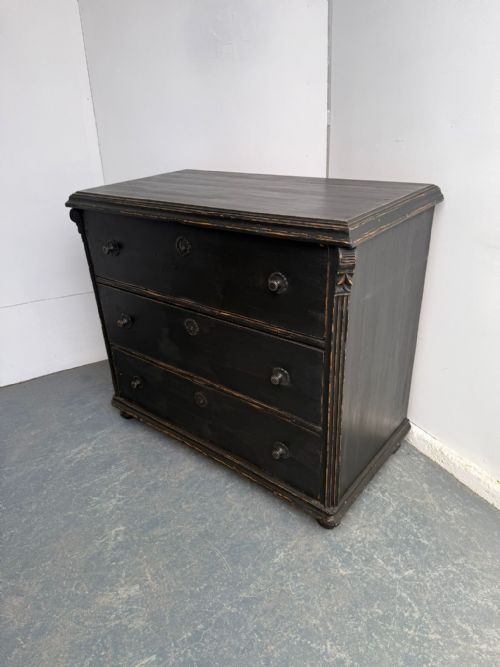
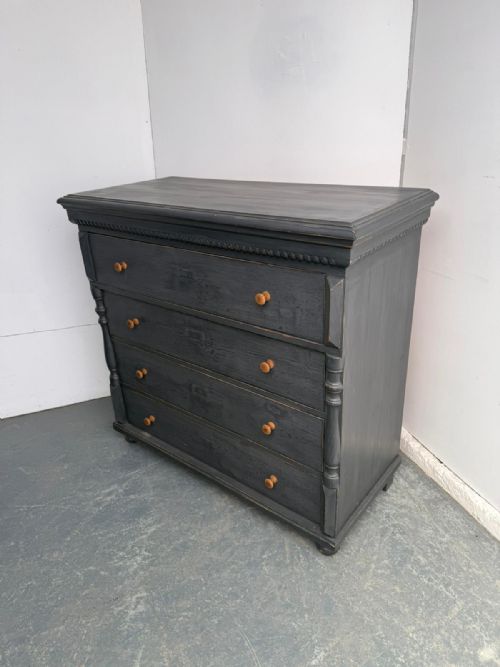
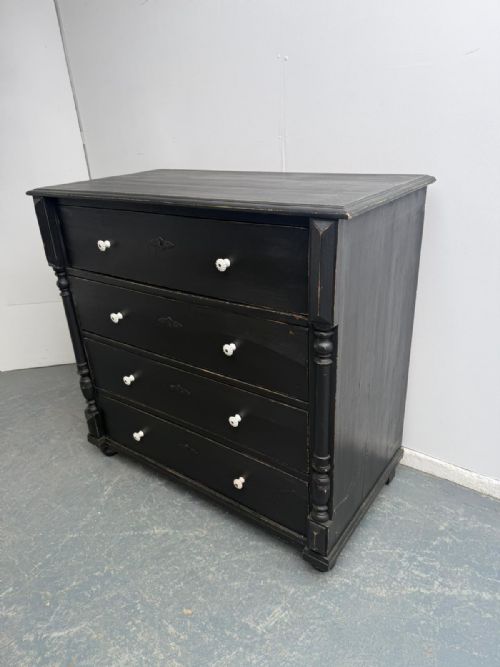
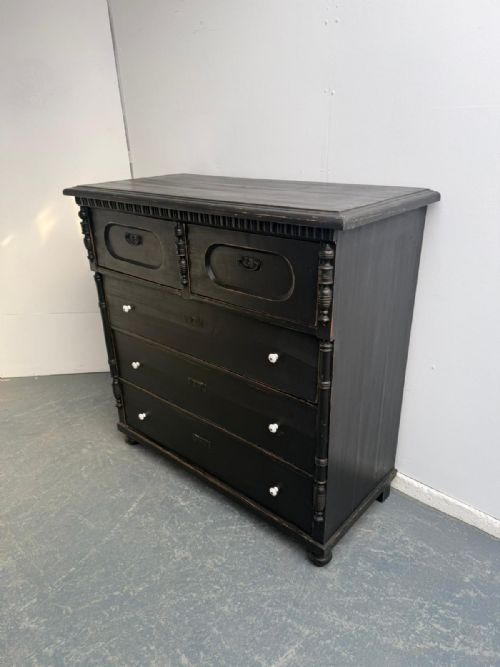


Hungarian Painted Dresser
These hungarian painted dresser pieces bring robust Central European folk art and country style into a room, offering practical storage with striking coloured surfaces.
Hungarian Painted Dresser
When you search for a hungarian painted dresser, you are looking at substantial wooden storage furniture originating from Central Europe, often finished in vibrant historical colours. These pieces bridge the gap between utilitarian storage and folk art expression, functioning as cupboards, multi-drawer chests, or two-piece kitchen dressers.
The versions you are most likely to meet on this page date from the Georgian and Victorian eras, alongside examples from around nineteen ten and the wider nineteenth century. They typically take the form of chests of drawers or dresser bases, constructed to serve domestic needs in European country settings.
The style spans Hungarian folk art, European country, and Victorian country traditions, showing regional character through painted finishes in black, grey, cream, teal, green, and light green. Such furniture provides a grounded, lived-in aesthetic that relies on painted pine construction and straightforward regional craftsmanship.
Materials and Making
Construction relies primarily on pine and wood, selected for availability and utility rather than cabinet timber prestige. Carpenters built these items solidly, framing cupboards and chests to withstand daily domestic use in rural households.
Surfaces were painted directly onto the pine, utilising pigments such as black, grey, teal, and green to seal and decorate the wood. Metal, iron, and brass details appear on hardware, whilst ceramic elements occasionally complete handles or fittings.
One cheerful cupboard arrived sporting a coat of amazingly painted green that has survived well over a century of household chores.
Variations in Quality
Quality in these pieces rests upon the integrity of the original painted surface and the degree of later intervention. Examples retaining their untouched historic coats of paint stand apart from pieces that have undergone modern repainting or heavy restoration.
Proportion and scale also define the better examples, from massive five-drawer chests to shallow dresser bases. The depth of the regional folk art character and the crispness of surviving hardware help distinguish standard utility items from more striking regional expressions.
The Hungarian Painted Dresser Glossary
- Dresser base
- A low sideboard or cupboard unit providing surface and internal storage without upper shelving. These pieces often feature multiple drawers or doors.
- Folk art
- Artistic work created within a traditional culture by self-taught or local artisans, seen here in regional European painted motifs.
- Painted pine
- Softwood timber coated with historical pigments, forming the structural and aesthetic basis of these Central European items.
- Victorian country
- Furniture produced during the nineteenth century for rural homes, combining utilitarian forms with local vernacular styling.
Hungarian Painted Dresser: Frequently Asked Questions
What is a Hungarian painted dresser?
It is a piece of wooden storage furniture, such as a chest of drawers, cupboard, or dresser base, originating from Central Europe with a traditional painted finish.
These items combine practical domestic storage with regional folk art aesthetics, using painted pine to bring character to an interior.
How do I date these pieces?
Dating relies on stylistic markers pointing to the Georgian and Victorian periods, the nineteenth century, or around nineteen ten.
Examining the construction methods, timber ageing, and the nature of the painted surface helps place each piece within its historical era.
How were they used originally?
They served as everyday utility furniture in European country homes for storing kitchenware, linens, and domestic goods.
Cupboards and drawer chests provided enclosed storage to keep household items clean and organised in rural settings.
How do I live with painted furniture?
Integrating these pieces involves placing them in living spaces, kitchens, or hallways where their coloured finishes can act as a focal point.
They pair well with neutral walls and natural materials, offering both a surface for display and functional storage capacity.
What colours do these pieces come in?
The listings show a range of historical surface colours including black, mid grey, cream, teal, green, and light green.
These finishes are often original to the piece, displaying the characteristic tones of Central European folk tradition.