
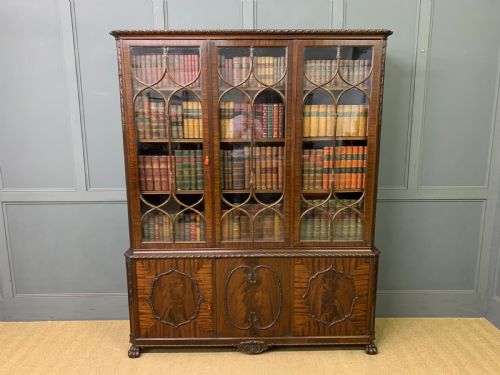
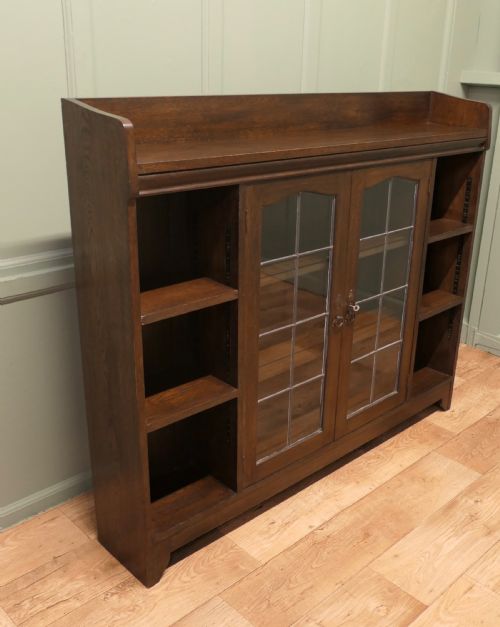
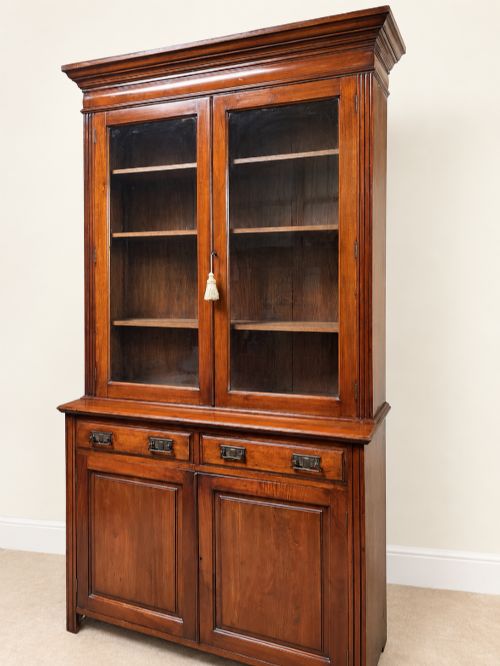
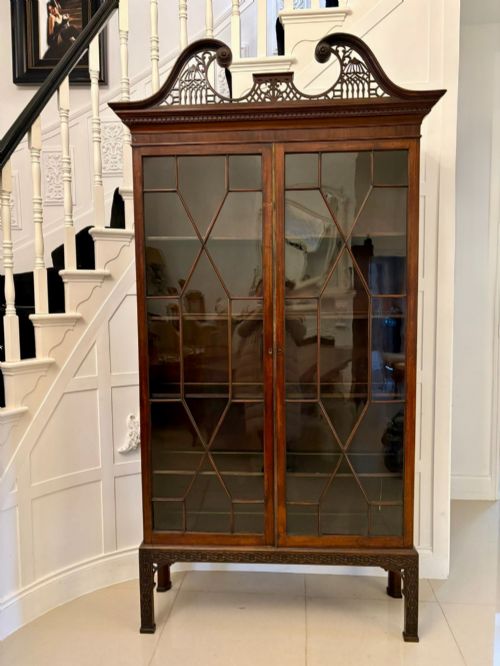
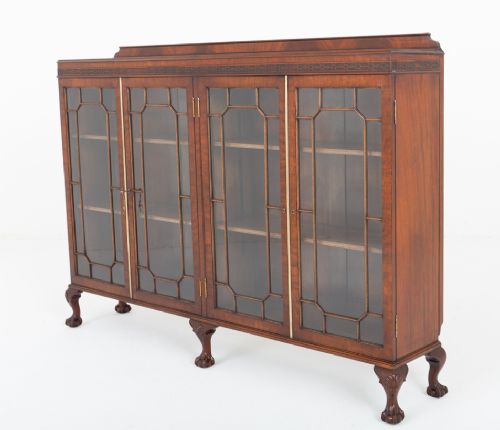
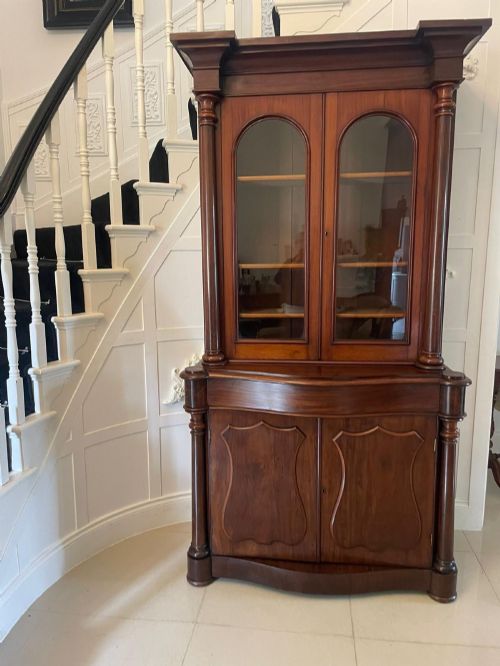
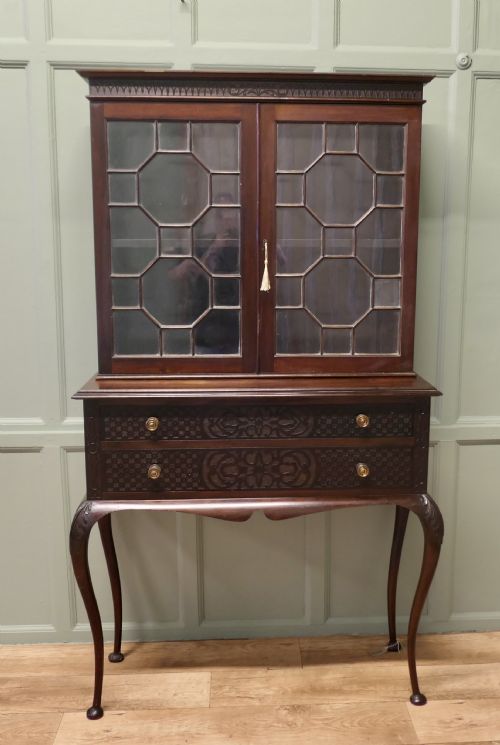
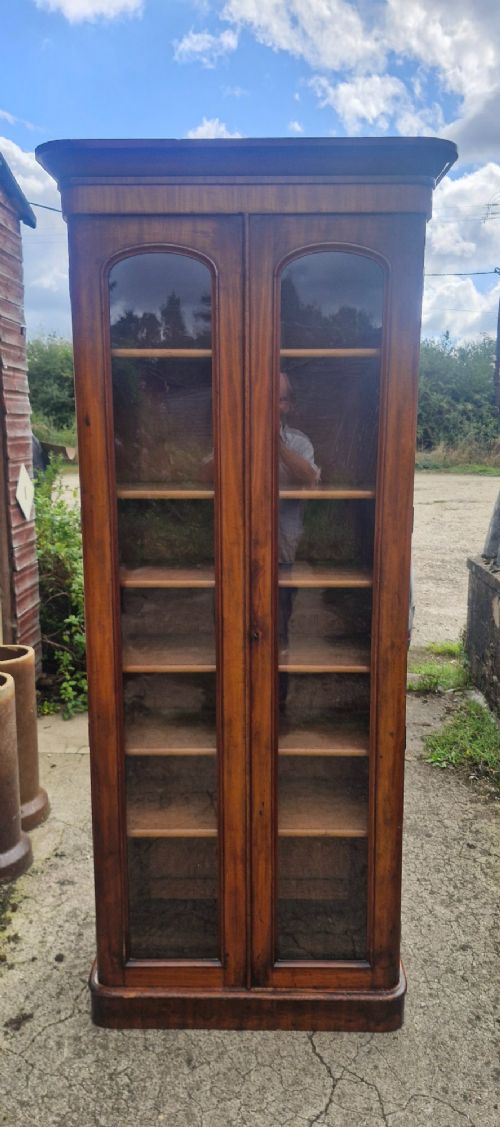
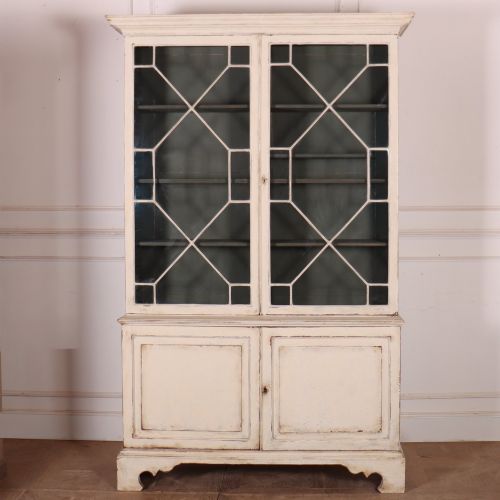
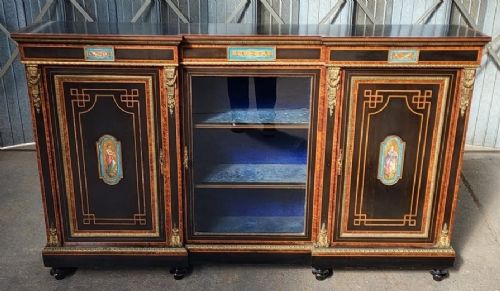
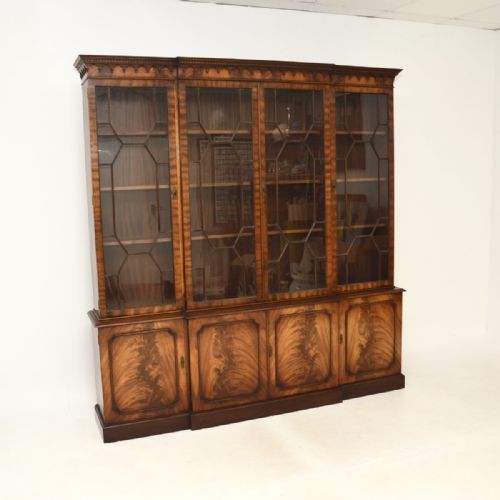
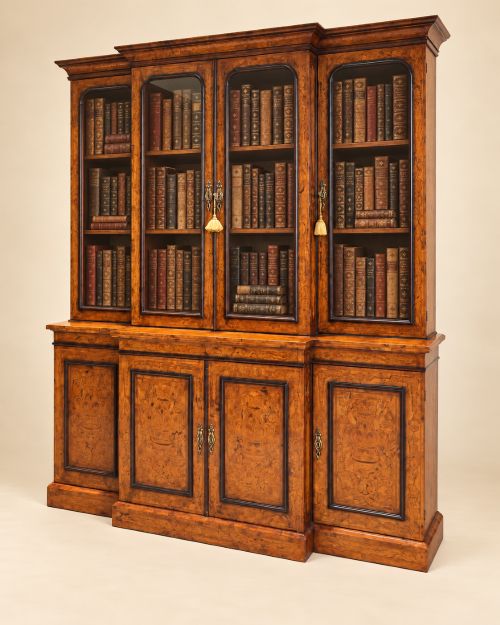
Glazed Door Bookcase Display
When you search for a glazed door bookcase display, you seek a piece that frames books and treasures behind glass.
Glazed Door Bookcase Display
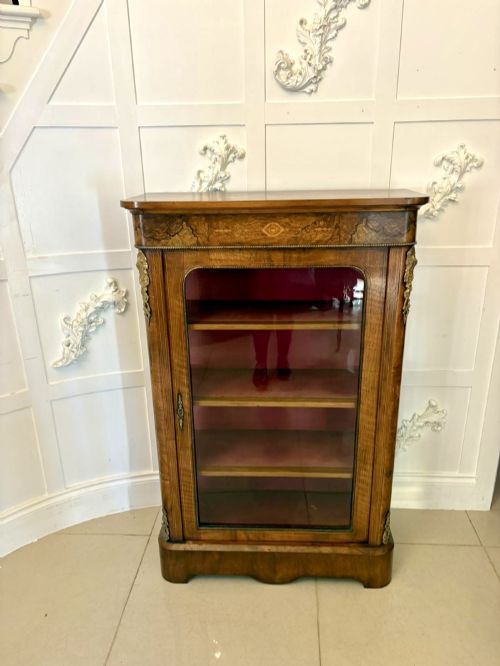
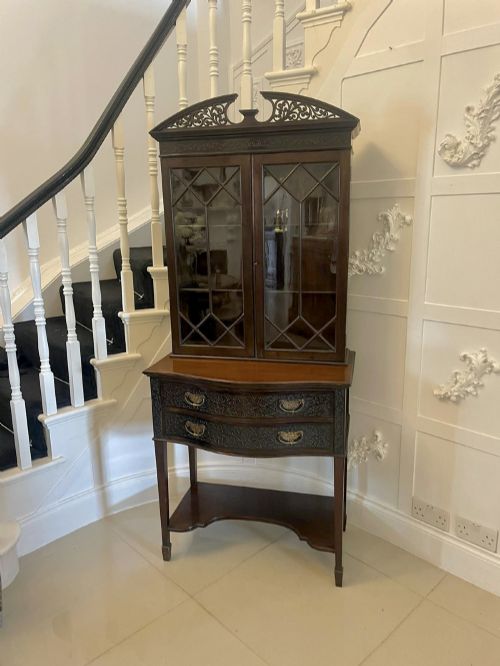
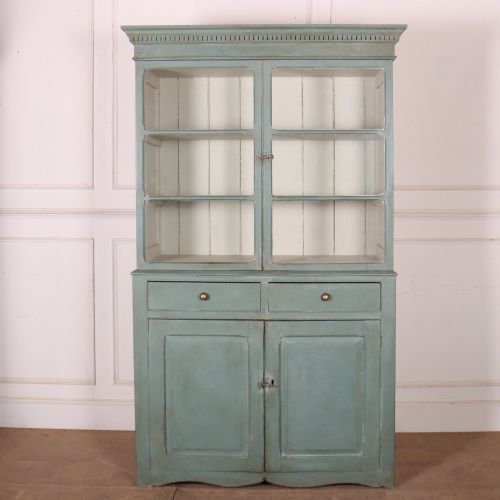
A glazed door bookcase display combines upper book storage behind transparent glass with lower cabinets or shelving in formats spanning Victorian, Edwardian, and Regency periods.
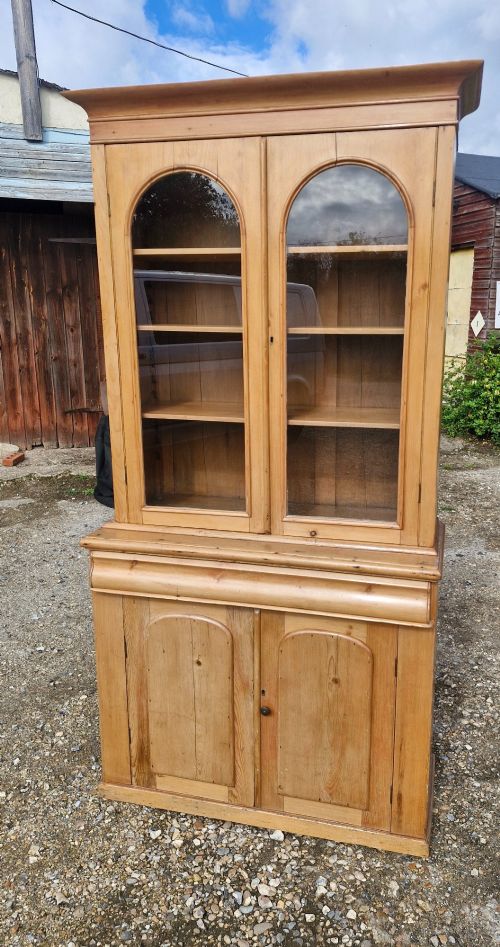
Most pieces seen here are mahogany or walnut bookcases, though oak, pine, and satinwood examples appear alongside breakfront and modular forms.
Origins stretch across English, Scottish, and Welsh workshops, taking the shape of kitchen dressers, pier cabinets, and grand breakfront library bookcases.
How They Were Made
Cabinet makers utilised dense hardwoods like mahogany, walnut, and oak, often applying figured veneers, satinwood banding, and intricate inlay to the exterior surfaces.
Glazed doors were framed around individual glass panes using timber astragals, while interior fittings frequently included adjustable wooden shelving and fitted secretaire drawers.
Metalwork played a structural and decorative role, incorporating brass hardware, ormolu mounts, and fabric linings within display compartments.
School libraries and country kitchens contributed as many sturdy oak and pine bookcases as grand drawing rooms did.
What Varies in Quality
The selection of timber grain, from plain pine to highly figured flame mahogany or burr walnut, dictates the visual weight and refinement of the piece.
Precision in the joinery, such as finely rebated glazed door frames, hand-cut dovetails in drawers, and the subtlety of carved ornamentation, separates standard utility pieces from exhibition items.
The integrity of original glass, brass hardware, and fitted interior components establishes the physical completeness of a cabinet.
Hampton and Sons·Edwards and Roberts
The Glazed Door Bookcase Display Glossary
- Astragal
- The wooden moulding strips that divide and hold individual panes of glass within a door frame. They create geometric patterns across the front of the cabinet.
- Breakfront
- A cabinet design where the central section projects forward from the flanking wings. This architectural form adds depth and presence to large library bookcases.
- Secretaire
- A desk compartment disguised as a drawer, featuring a drop-front that reveals small drawers and pigeonholes. It adds a working writing surface to the bookcase.
- Vitrine
- A glass-fronted display cabinet designed primarily for showing porcelain and objects rather than housing books. Ormolu mounts often embellish these polished display pieces.
- Pier cabinet
- A narrow cabinet designed to stand against the wall space between windows. They typically feature glazed doors and decorative wood inlays.
Glazed Door Bookcase Display: Frequently Asked Questions
What is a glazed door bookcase display?
A glazed door bookcase display is a cabinet with glass panels in the doors, designed to store books while keeping them visible and protected from dust.
These pieces range from tall breakfront library units to compact pier cabinets and kitchen dressers made in various timber eras.
How do I use one in a room?
These cabinets serve as living room focal points or dining room storage for china, glassware, and collections.
Adjustable shelves allow you to arrange books of different heights behind the glass doors while storing bulkier items in lower cupboards.
How do I tell Victorian pieces from Edwardian ones?
Victorian pieces often use heavy mahogany or walnut with darker finishes and rich carving, reflecting mid-nineteenth-century taste.
Edwardian examples tend towards lighter satinwood or oak with simpler lines and brighter inlay work from the early twentieth century.