



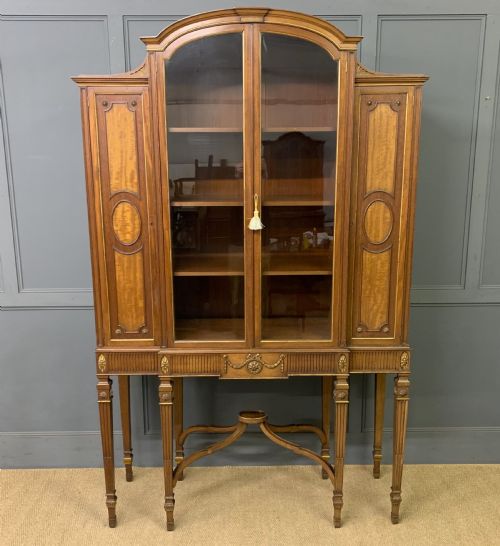
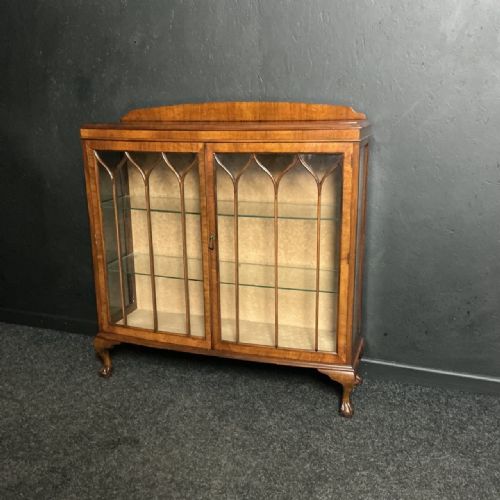
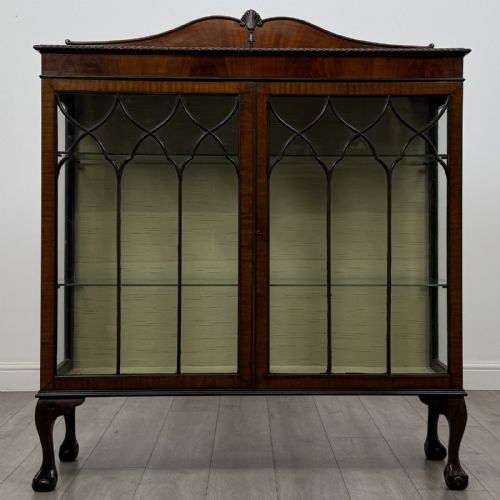
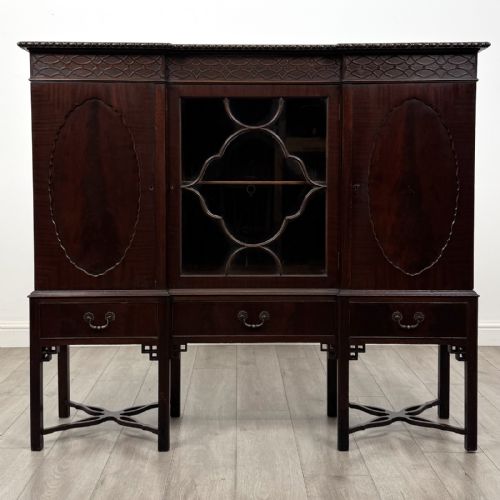

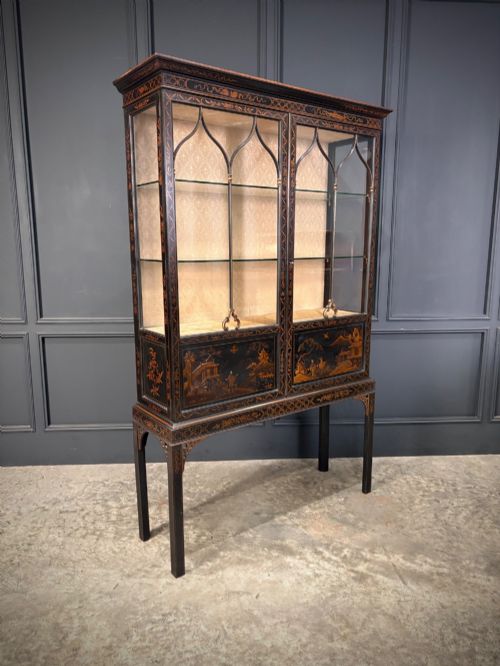
Georgian Style Glazed Cupboard
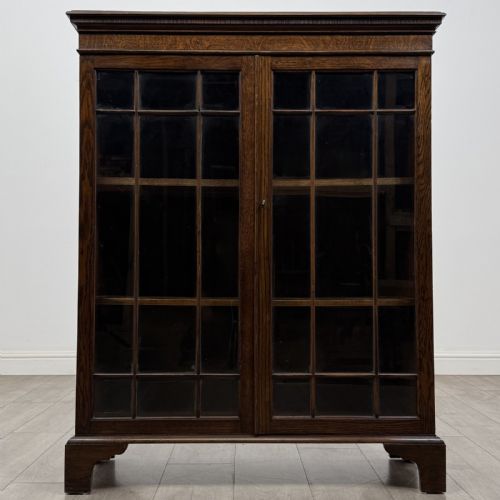
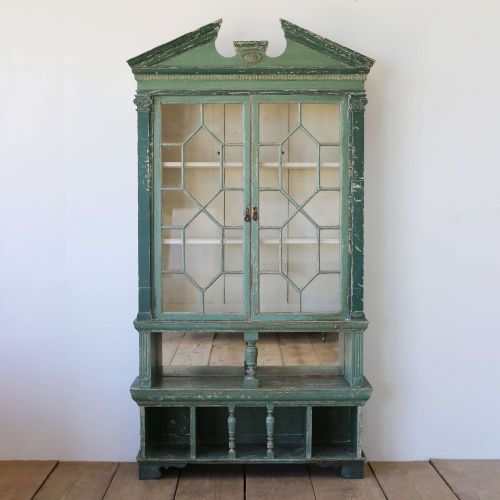
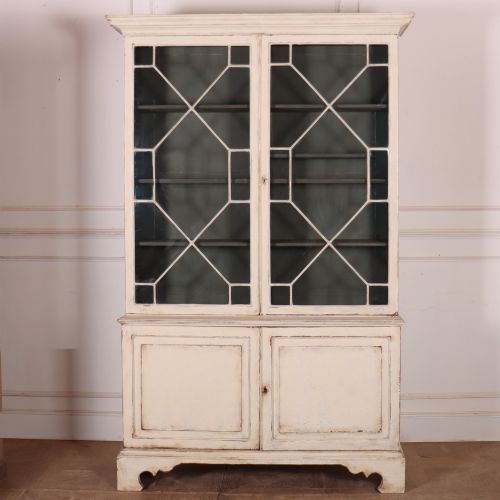
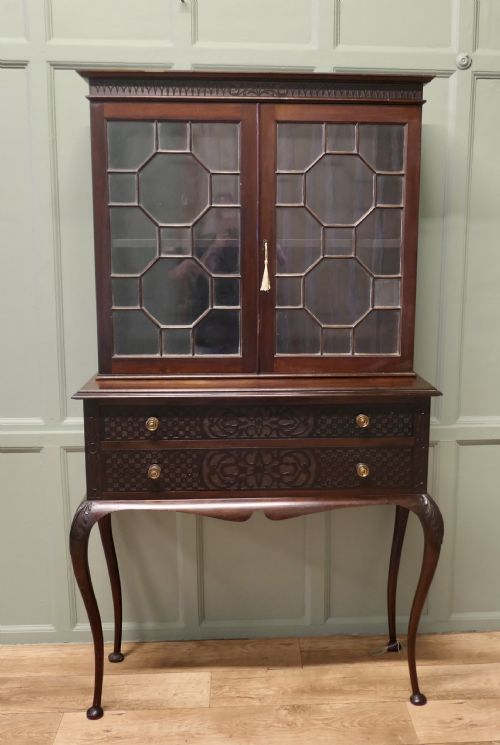
A georgian style glazed cupboard is a handsome storage piece that displays books or china behind glass doors.
Georgian Style Glazed Cupboard
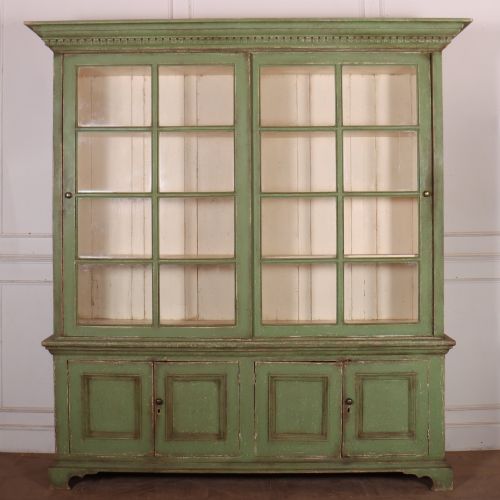
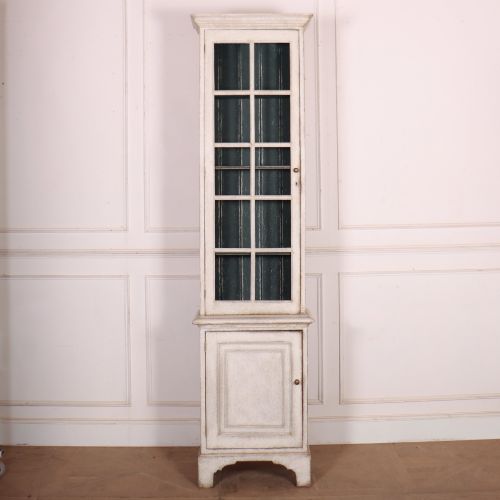
A georgian style glazed cupboard brings classical proportions and visible storage into a room, taking forms such as freestanding bookcases, breakfront cabinets, and corner units. You will most frequently meet mahogany examples from the nineteenth and twentieth centuries, built in revival styles that echo earlier eighteenth-century designs.
The selection ranges from tall library bookcases with astragal glazing bars to smaller corner cabinets designed to fit domestic spaces. Many pieces date from the Edwardian era and the late nineteenth century, reflecting a sustained Victorian and revivalist interest in Georgian forms.
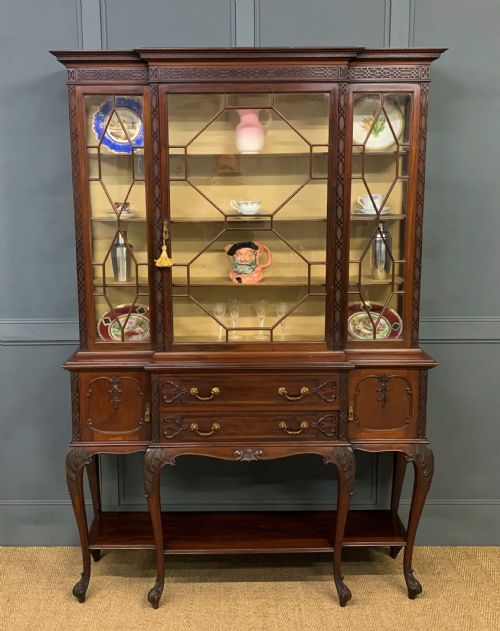
Makers and cabinetmakers drew on established architectural vocabularies, producing breakfront formats with extensive glass fronts or compact hanging wall display cabinets. These pieces served to house prized volumes and porcelain collections, combining utility with formal display.
Materials and construction
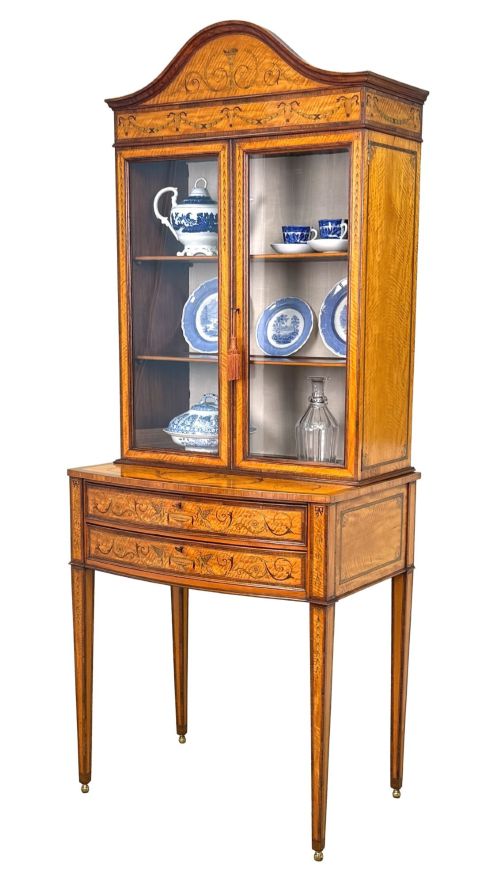
Mahogany forms the structural core of the majority of these pieces, often selected for its grain and stability, while secondary woods such as pine appear in carcases and internal shelving. Workshops also utilised walnut, rosewood, and satinwood, applying marquetry inlay and veneer to enrich the exterior surfaces.
Glazing relies on individual panes held together by timber astragal bars, creating geometric patterns across the cabinet doors. Brass hardware secures the doors and drawers, while hand-painted finishes appear on specific regional kitchen dressers and food cupboards.
Georgian Style Glazed Cupboard Retail Price Guide 2026
Typical asking prices for georgian style glazed cupboard among the pieces listed under this phrase on Sellingantiques today, from the lower quarter to the upper quarter. They describe what is for sale here now, not the wider market.
Food cupboards doubled as kitchen dressers in West Country homes, keeping the cheese safe from the cat.
Assessing craftsmanship
Quality reveals itself in the handling of timber and the precision of the joinery, particularly in the thickness of solid mahogany and the selection of figured veneers. Superior examples display finely moulded cornices and crisply carved details rather than superficial applied ornamentation.
The execution of the glazing bars dictates much of the visual refinement, where slender, hand-planed woodwork separates the glass panes. Well-made pieces maintain structural integrity in their breakfront frames and drawers over centuries of use.
Maple and Co·S and H Jewell of London
The Georgian Style Glazed Cupboard Glossary
- Astragal
- Timber moulding bars that divide glass panes within a cabinet door. These delicate wooden strips create distinctive geometric patterns across the front of a bookcase.
- Breakfront
- A large cabinet design where the central section projects forward from the flanking wings. This architectural arrangement adds depth and shadow to bookcases and display cabinets.
- Marquetry
- Decorative veneer work forming pictorial or geometric patterns using various coloured woods. Craftsmen cut contrasting timbers like satinwood and walnut to fit precisely into the primary surface.
- Cornice
- The ornamental projection that crowns the top of a cabinet or bookcase. It provides a finished architectural transition between the wall and the furniture piece.
- Corner cabinet
- A specialised storage piece designed to fit neatly into a room angle. These units appear as standing floor models or hanging wall cupboards with glazed doors.
Georgian Style Glazed Cupboard: Frequently Asked Questions
How do I identify a revival piece?
Revival pieces date from later periods such as the Edwardian era or the late nineteenth and early twentieth centuries.
They copy eighteenth-century Georgian proportions and details while exhibiting machine-sawn timber preparation or modern hardware fittings.
Where were corner cabinets used?
Corner cabinets were built to utilise otherwise wasted space in dining rooms and parlours.
They allowed households to display ceramic collections and glassware securely behind glass doors without obstructing room movement.
What are astragal bars?
Astragal bars are the slender timber strips that hold individual panes of glass together within a cabinet door.
Their thickness and joinery design offer a reliable indicator of the cabinet's period and standard of manufacture.