

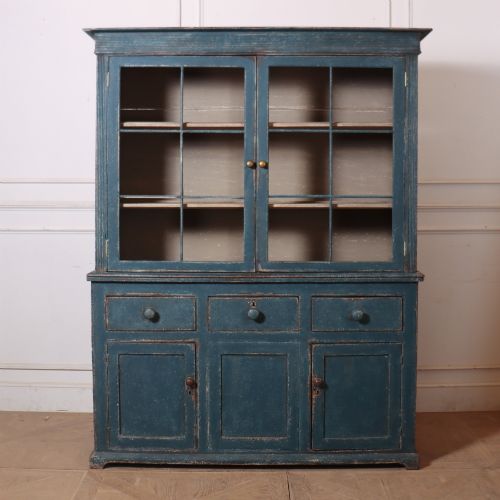


West Country Kitchen Dresser
A west country kitchen dresser brings honest regional utility and time-worn timber into a modern interior.
West Country Kitchen Dresser
A west country kitchen dresser represents a distinct regional tradition of provincial storage furniture built for practical domestic use. These pieces combine open plate racks or enclosed glazed upper cabinets with substantial lower cupboards and drawers.
The versions met most frequently on this page date from the eighteenth and nineteenth centuries, spanning Georgian and Victorian periods. They originate from West Country vernacular workshops and reflect the straightforward requirements of English country houses.
Forms range from open-shelf dressers to glazed cabinets designed to display ceramic tableware while keeping provisions secure below. Each kitchen dresser carries the physical evidence of its provincial origin in its proportions and timber choice.
How they were made
Local joiners built these pieces primarily using pine and oak, selecting domestic timber for its availability and structural strength. Surfaces frequently show original paint finishes or layers of historical pigment applied over the bare wood.
Hardware such as brass pulls and hinges secured doors and drawers, while glass panels were fitted into upper frames for glazed variations. Construction relied on traditional provincial joinery techniques designed to withstand heavy daily use in a working kitchen.
West Country Kitchen Dresser Retail Price Guide 2026
Typical asking prices for west country kitchen dresser among the pieces listed under this phrase on Sellingantiques today, from the lower quarter to the upper quarter. They describe what is for sale here now, not the wider market.
Many surviving dressers still bear the faint ghost marks where pewter plates rested against the timber for generations.
What varies in quality
Quality in a regional dresser rests upon the integrity of the timber and the survival of original surface finishes. Pieces retaining their early paint surfaces display a depth of colour that later stripped examples lack.
Proportions and structural balance distinguish superior provincial cabinetmaking from basic utility work. Well-judged cornice details and well-fitted drawer construction elevate certain examples within the vernacular tradition.
The West Country Kitchen Dresser Glossary
- Vernacular
- Furniture made by local craftsmen for everyday domestic use rather than following high-style metropolitan fashions. This style defines the unpretentious character of regional English pieces.
- Glazed dresser
- A cabinet featuring glass panes fitted into the upper doors to display ceramics. This variation protected valuable tableware from kitchen dust while keeping it visible.
- Plate rack
- The open shelving superstructure attached to the top of a dresser base. It allowed everyday plates to dry and remain within reach.
- Cornice
- The decorative moulding that caps the top of the upper cabinet structure. It provides a finished architectural boundary to the piece.
West Country Kitchen Dresser: Frequently Asked Questions
What is a west country kitchen dresser?
A west country kitchen dresser is a large storage unit traditionally used in English provincial homes for storing and displaying tableware and provisions.
These pieces typically feature a combination of lower cupboards with drawers and an upper section of open shelves or glazed cabinets.
How do I date a kitchen dresser?
Dating relies on examining construction methods, timber types, and the style of mouldings and hardware present on the piece.
Eighteenth-century examples often show different joinery characteristics and timber patination compared to mid-nineteenth-century Victorian counterparts.
Where were these dressers made?
They were produced by local provincial cabinetmakers and joiners operating within the western counties of England.
These makers served rural communities and incorporated regional design preferences into their everyday output.
How should I care for an original painted finish?
Original painted surfaces require protection from direct sunlight and excessive moisture fluctuations to preserve the historical pigment.
Dusting with a dry, soft cloth is sufficient for routine maintenance without applying modern polishes or solvents.