

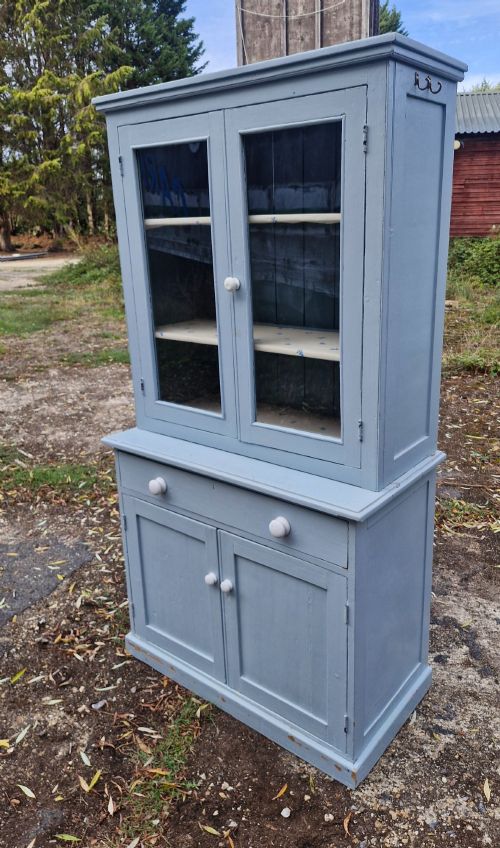
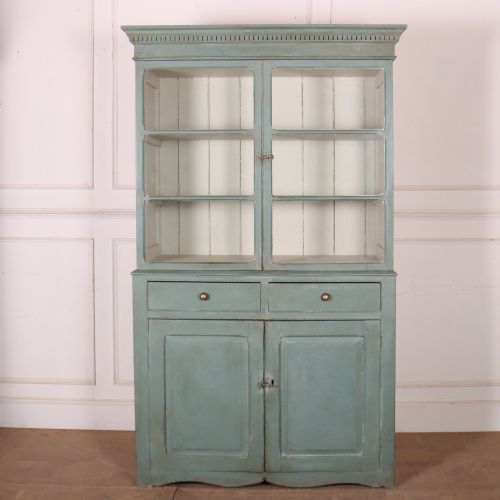
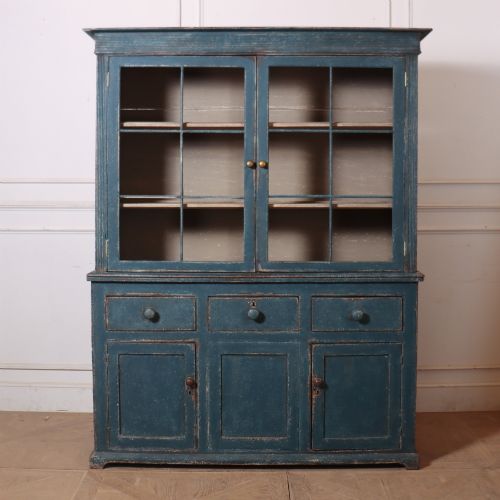


Blue Painted Kitchen Dresser
A blue painted kitchen dresser brings hardworking country utility and calm colour to a room, offering open display alongside deep storage.
Blue Painted Kitchen Dresser
When you search for a blue painted kitchen dresser, you encounter pieces built for domestic service in rural farmhouses and country houses. These sturdy items combine an open plate rack or upper cabinet with a lower base fitted with drawers and cupboards.
The versions most commonly found here date from the eighteenth century through to the early twentieth century, originating from English regional workshops, Scotland, Wales, and Scandinavia. They arrive in various formats, ranging from tall two-part glazed cupboards to low dresser bases and compact housekeepers cupboards.
Regional styles such as West Country vernacular, Gustavian Swedish, and English provincial dictate the proportions and architectural detailing of each piece. Their painted surfaces have often developed through layers of history, showing the honest wear of daily domestic use.
Materials and construction
Makers relied principally on solid pine for the carcase, doors, and internal shelving of these kitchen dressers, selecting timber that was readily available and straightforward to work with using hand tools. Structural joints relied on traditional pegged mortise and tenon construction to withstand heavy daily use.
Surfaces were finished with oil or water-based paint, sometimes applied over earlier decorative schemes or ragwork techniques. Iron hinges, brass pulls, and occasionally glass panes for upper doors completed the hardware, fastened directly to the timber frames.
Blue Painted Kitchen Dresser Retail Price Guide 2026
Typical asking prices for blue painted kitchen dresser among the pieces listed under this phrase on Sellingantiques today, from the lower quarter to the upper quarter. They describe what is for sale here now, not the wider market.
Several pieces wear centuries of accumulated kitchen steam and elbow grease beneath their cheerful blue coats.
Assessing quality and proportion
Quality in a country kitchen dresser lies in the balance of its proportions, the integrity of its timber framing, and the character of its painted surface. Pieces with original or early pigment display a depth and craquelure that later applications simply cannot replicate.
Structural harmony between the upper rack and the lower base distinguishes superior pieces from those married together at a later date. Well-executed drawer construction, using hand-cut dovetails and solid timber linings, marks the work of competent regional joiners.
The Blue Painted Kitchen Dresser Glossary
- Dresser base
- The lower section of a two-part dresser, typically featuring a row of drawers above enclosed cupboards.
- Ragwork
- A decorative paint technique where rags or cloths are used to manipulate wet glaze or paint, creating a textured pattern.
- Vernacular
- Architecture or furniture built by local craftsmen to traditional designs, using regional materials rather than following formal academic styles.
- Glazed
- Fitted with glass panes in the doors, usually to allow the display of china while protecting it from dust.
- Gustavian
- The Swedish neoclassical style spanning the late eighteenth and early nineteenth centuries, known for restrained symmetry and pale painted finishes.
Blue Painted Kitchen Dresser: Frequently Asked Questions
How do I clean a painted dresser?
Dust the surface regularly with a dry, soft cloth to prevent grime accumulation. Avoid harsh chemical cleaners or abrasive pads that might strip the historic paint layers.
For stubborn marks, use a slightly damp cloth with mild soap, drying the timber immediately afterwards to protect the finish.
Are these dressers supplied in two pieces?
Many tall examples are built as two separate sections, comprising an upper rack or cabinet sitting upon a lower dresser base. This construction method assists greatly with transport and placement in homes with low doorways.
Smaller sideboards and single-piece cupboards remain as one solid unit and cannot be dismantled for moving.
Can I use a dresser in a modern kitchen?
These pieces integrate well into contemporary spaces, providing practical storage for tableware, dry goods, and kitchen linens. The open shelves allow for everyday display, while the cupboards conceal less decorative items.
Placing timber furniture away from direct heat sources and excessive moisture ensures the wood and paint remain stable.
What is the difference between Welsh and Gustavian dressers?
Welsh dressers typically feature open plate racks above solid pine bases, reflecting the robust requirements of English and Welsh country houses. Their construction is straightforward and utilitarian.
Gustavian pieces from Sweden lean towards neoclassical restraint, often incorporating glazed cabinets and pale grey or blue paint schemes inspired by French court fashions.