

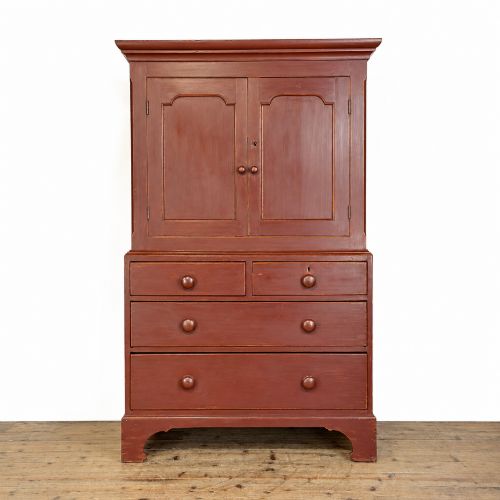
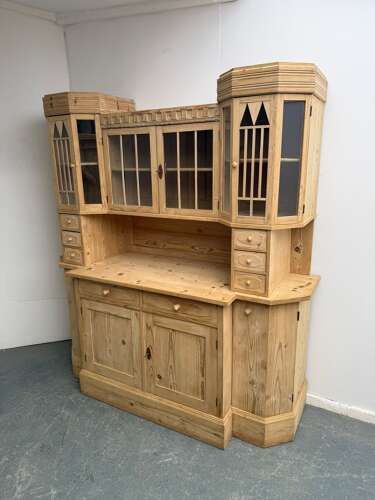
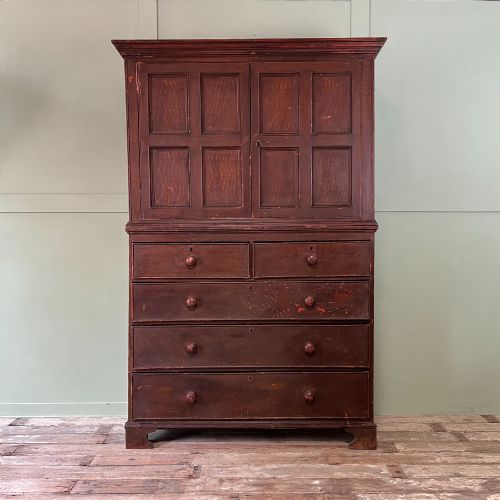
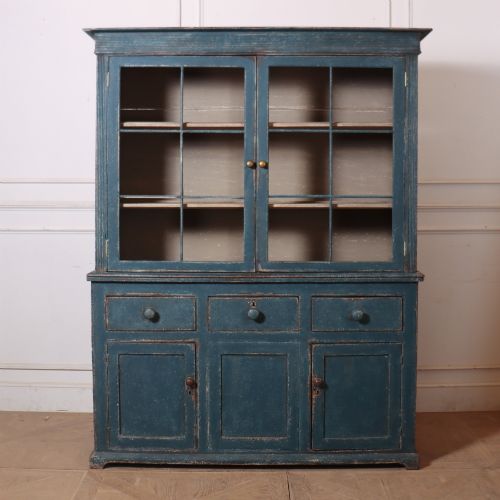
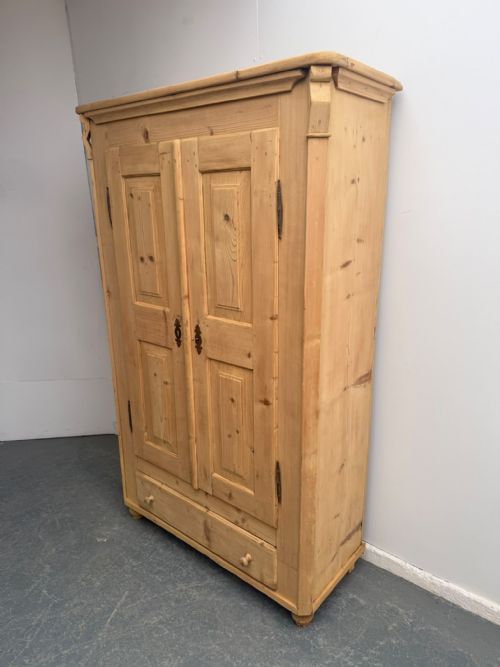

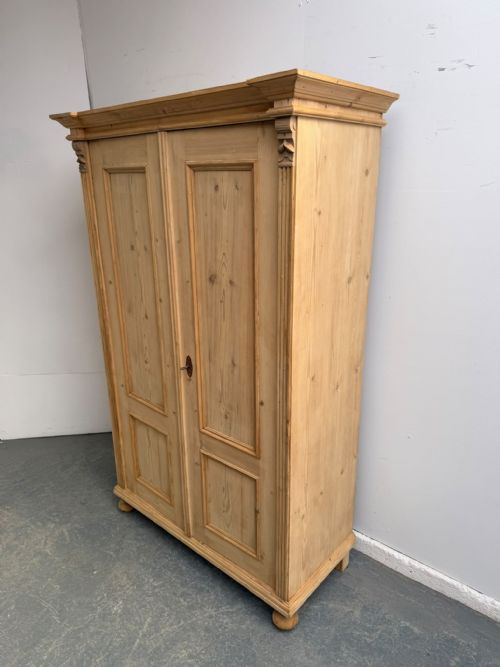


Painted Two Piece Cupboard
A painted two piece cupboard brings robust storage and enduring regional character to a room, formed of two separate sections for easy movement.
Painted Two Piece Cupboard
A painted two piece cupboard splits into an upper and lower section, making transit and placement simpler in domestic spaces. These pieces span centuries of rural and provincial woodworking traditions across Britain and Europe.
The versions most commonly met here include kitchen dressers, linen presses, and buffets à deux corps. They serve primarily as practical storage for tableware, linens, and provisions while establishing a strong visual anchor.
Makers shaped these tall storage units to suit local domestic needs, resulting in regional forms from English country workshops to French provincial kitchens. Each painted two piece cupboard carries the structural traits of its period, from Georgian symmetry to nineteenth century utility.
How they were made
Carpenters constructed these sectional cabinets predominantly from solid pine and oak, relying on durable timbers capable of supporting heavy loads. Iron and brass hardware such as hinges and handles secured the doors and drawers while adding functional detail.
Surfaces received layers of traditional paint finishes, sometimes revealing older cream or teal pigment beneath subsequent coats. Master joiners joined the upper and lower carcases securely to ensure stability despite the height of the assembled furniture.
Painted Two Piece Cupboard Retail Price Guide 2026
Typical asking prices for painted two piece cupboard among the pieces listed under this phrase on Sellingantiques today, from the lower quarter to the upper quarter. They describe what is for sale here now, not the wider market.
Original teal paint hides beneath decades of kitchen steam, waiting quietly for a curious eye to spot the colourful past.
What varies in quality
Proportion and architectural balance separate standard utility pieces from exceptional examples of cabinetmaking. The harmony between the upper section and the lower base dictates the visual weight of the entire piece.
The integrity of the original timber and the character of the aged paint surface define the upper tiers of the market. Surviving brass or iron hardware and undisturbed internal shelving contribute substantially to the authenticity of the structure.
The Painted Two Piece Cupboard Glossary
- Buffet à deux corps
- A traditional French two body cupboard featuring a distinct upper section sitting upon a lower cabinet. This regional form provides substantial storage capacity while maintaining architectural presence.
- Press cupboard
- A tall piece of furniture designed for storing folded clothes or linens, often featuring internal shelves or hanging space. The term historically denotes a wardrobe or linen storage unit.
- Kitchen dresser
- A dual purpose storage item combining open or glazed upper shelving with a lower enclosed cabinet or drawers. It functions as both a display surface and a practical sideboard.
- Vernacular
- Furniture built by local tradesmen using regional traditions rather than following formal metropolitan design patterns. These pieces reflect the specific materials and domestic requirements of their geographic origin.
- Carcase
- The main structural body or framework of a cabinet without doors or drawers fitted. It provides the essential skeleton that supports both sections of a two piece storage unit.
Painted Two Piece Cupboard: Frequently Asked Questions
What is the difference between a dresser and a press cupboard?
A kitchen dresser typically incorporates open shelving or a plate rack on the upper section for displaying tableware. A press cupboard is designed specifically to enclose linens or garments behind solid doors.
Both forms utilise the two piece construction method to ease movement through narrow doorways and stairwells.
How do I care for painted wooden surfaces?
Dust the painted timber regularly with a soft, dry cloth to prevent the accumulation of grit. Avoid harsh chemical cleaners that can degrade historic pigment or wax layers.
Maintain a stable room humidity to prevent the wood beneath the paint from expanding or contracting excessively.
How can I tell the period of a cupboard?
Examine the construction methods, such as hand-cut dovetails in the drawers and the type of fixings used in the carcase. Tool marks and timber selection often point toward specific centuries of manufacture.
Stylistic details like cornice mouldings and panel configurations align with known periods from Georgian to Arts and Crafts.