
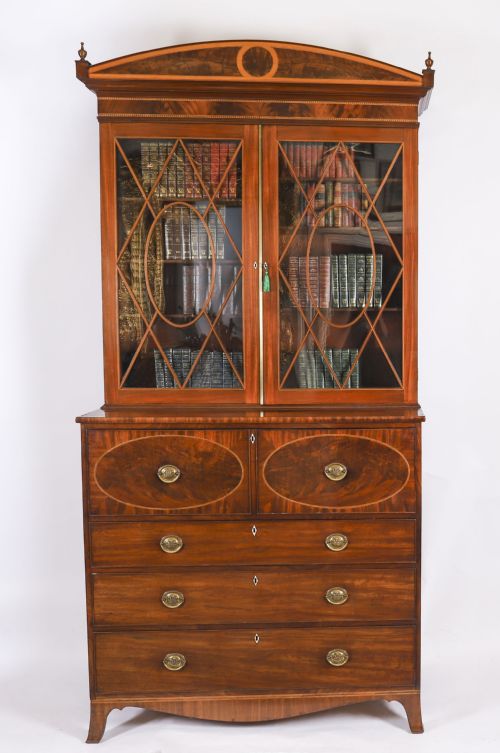
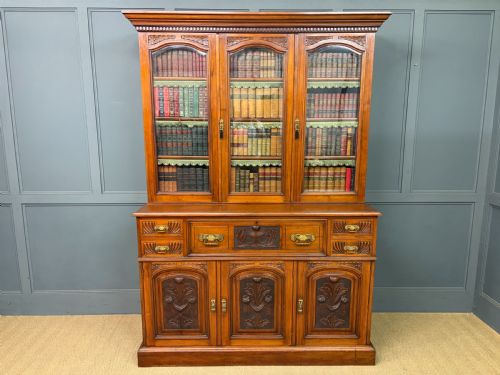

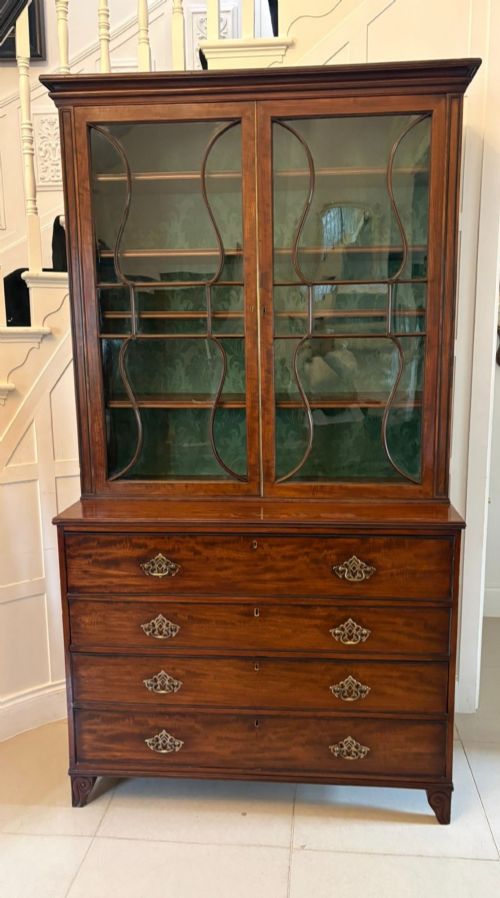
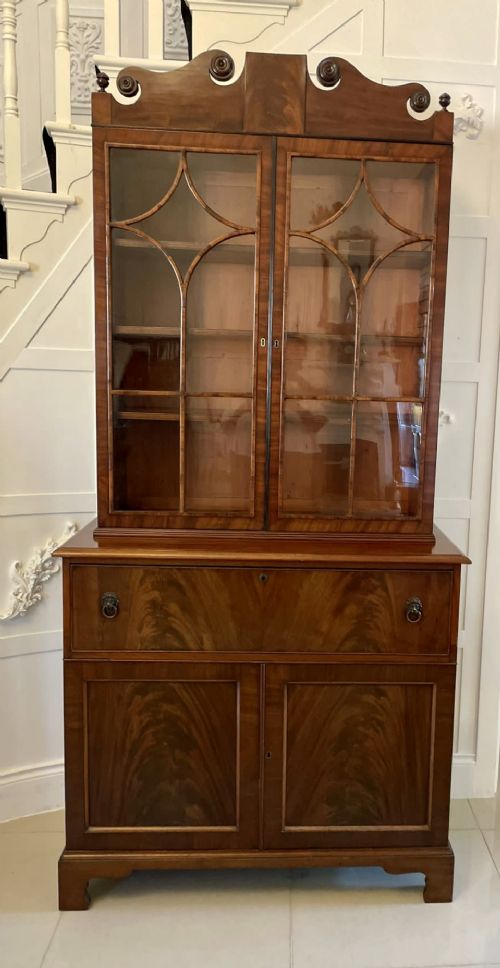
Glazed Display Bureau
A glazed display bureau combines a fitted writing drawer with shelved upper glazing to hold books and porcelain.
Glazed Display Bureau
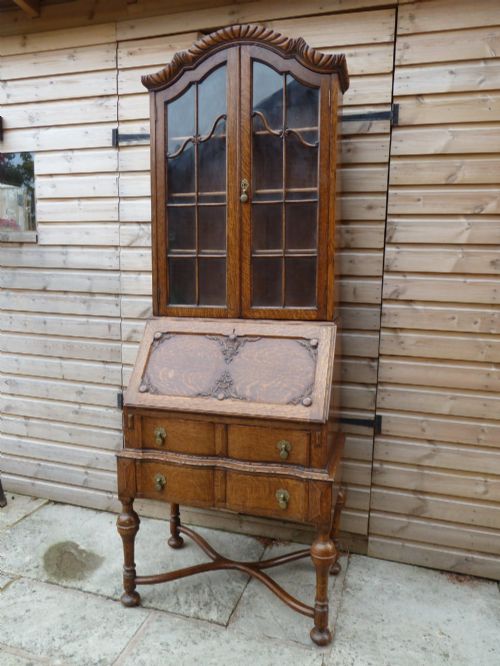
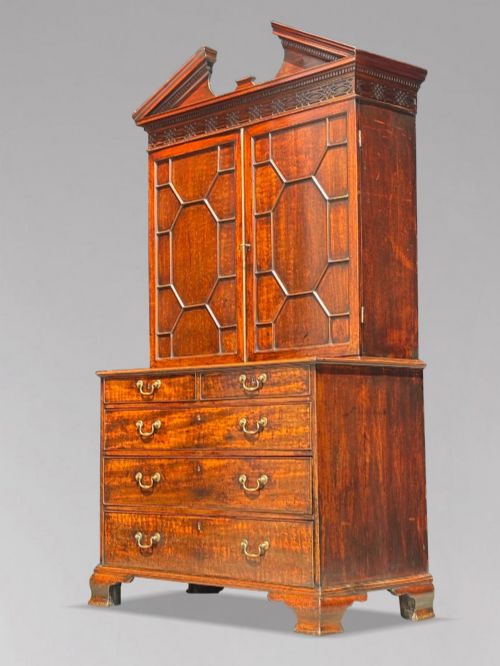
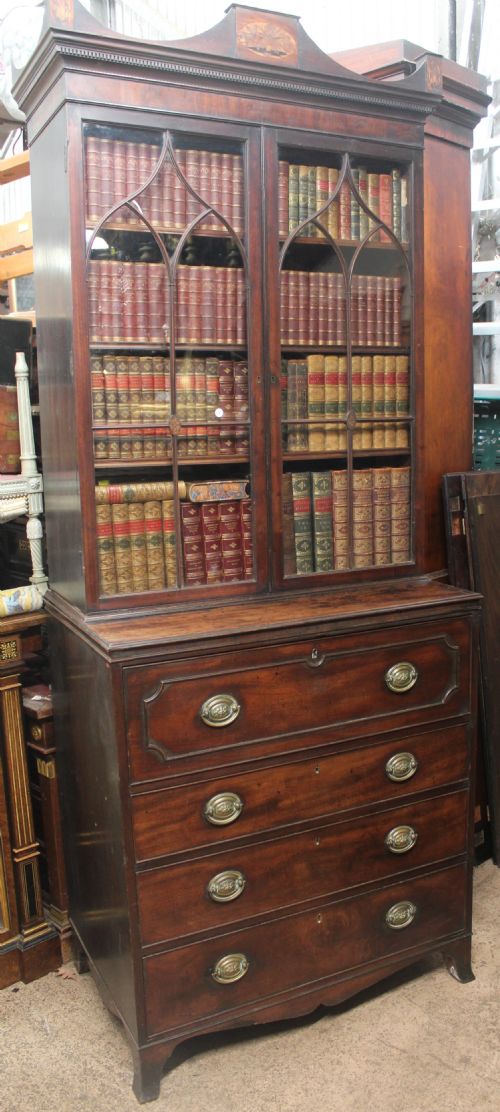
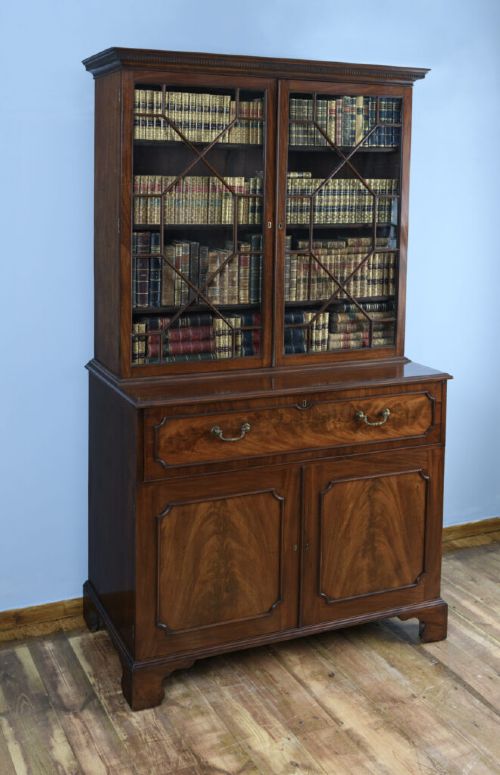
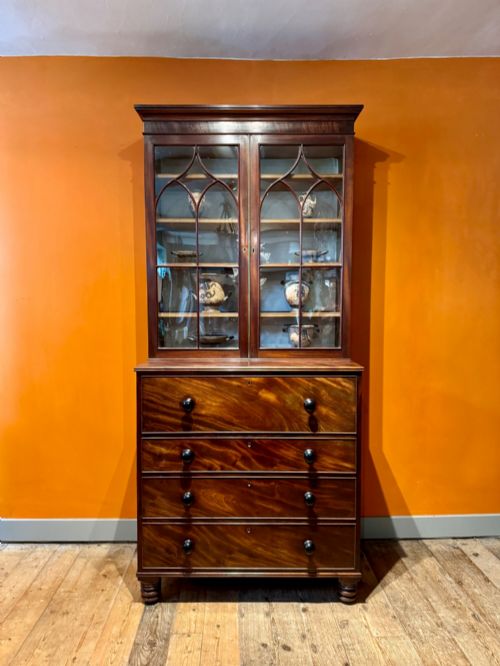
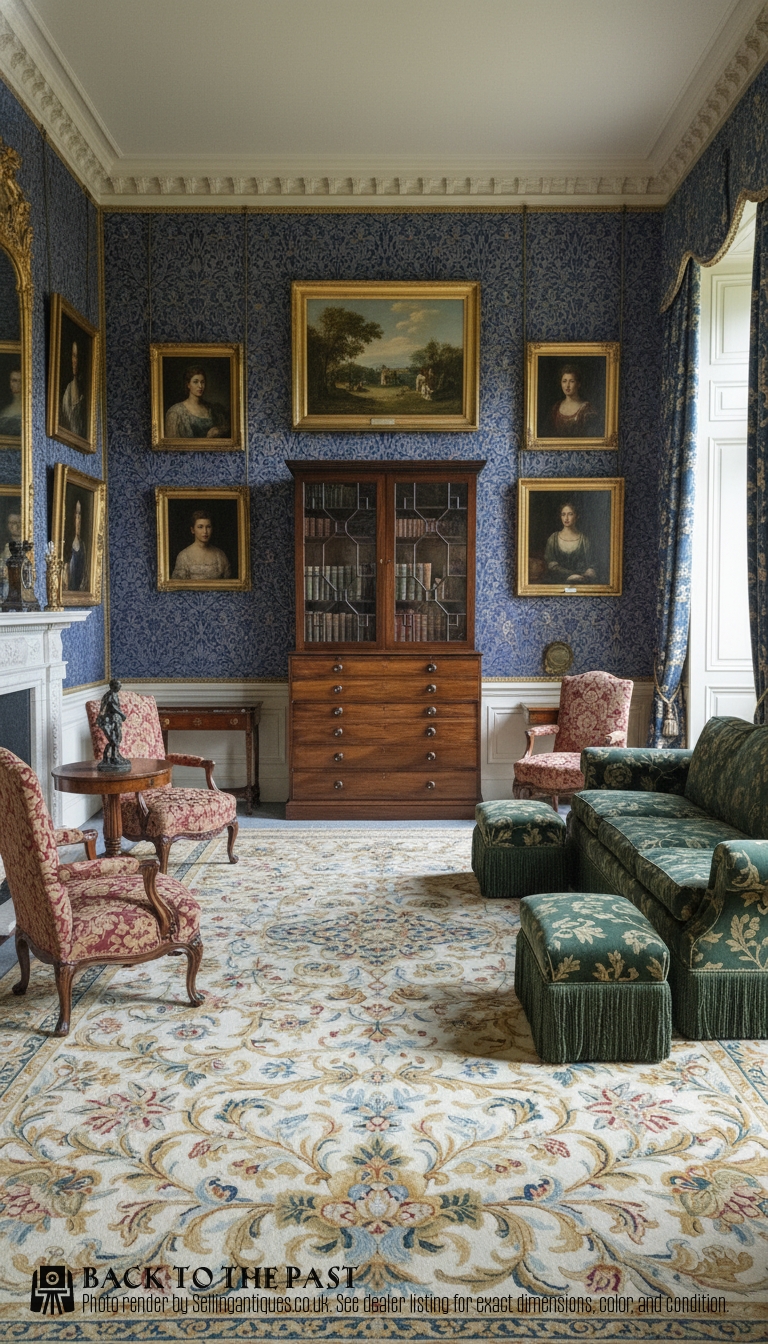
A glazed display bureau provides a dual function of enclosed upper shelving behind glass doors and a lower drop-front writing surface concealing small drawers and pigeonholes. When exploring options for a glazed display bureau, you will encounter taller cabinet forms primarily spanning the eighteenth century through the Edwardian era.
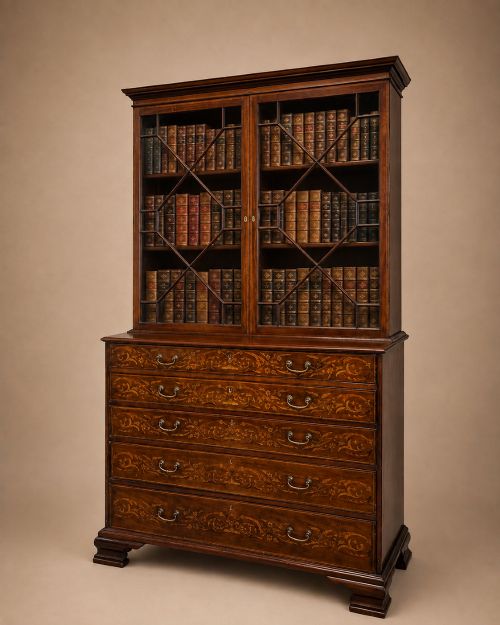
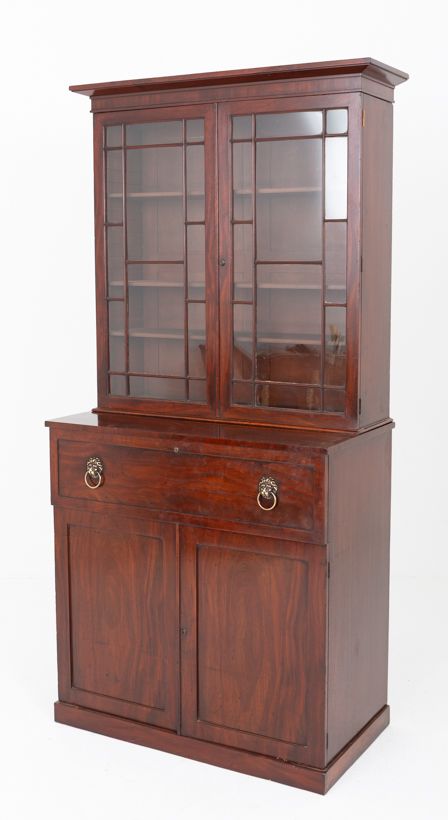
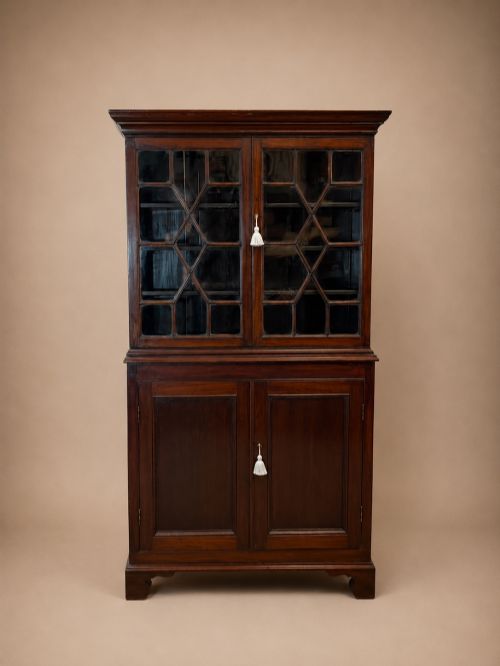
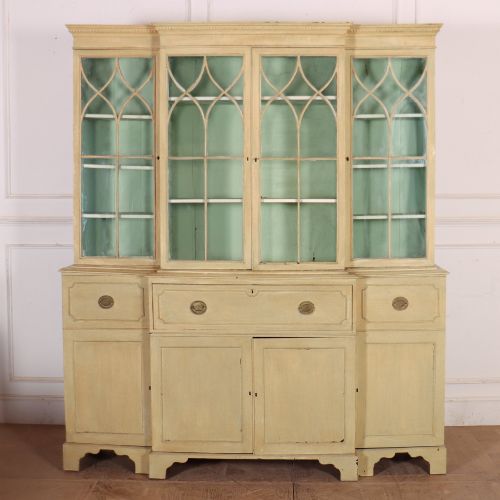
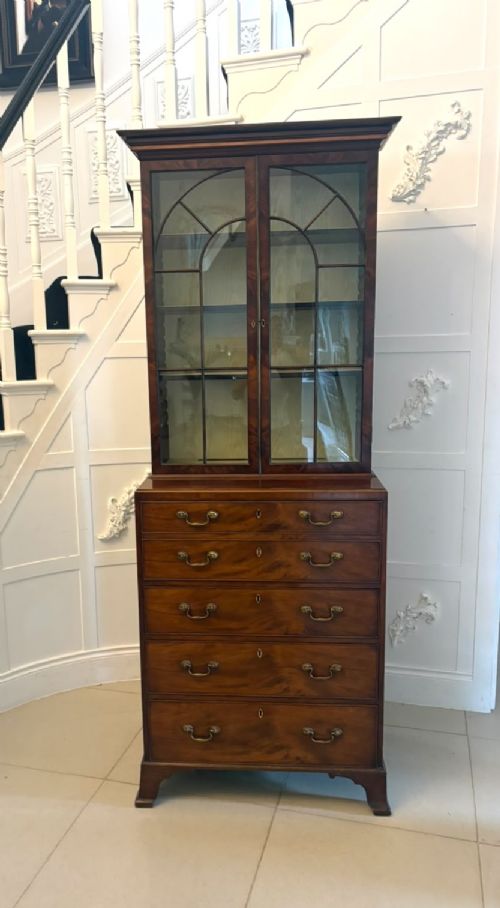
The most frequent examples on this page are constructed from mahogany and walnut, often featuring astragal glazed upper doors that divide the glass into smaller panes. These pieces served as library cabinets and writing desks in formal rooms, combining visible display space with private storage.
Materials and Construction
Cabinet makers built these pieces using solid timbers for structural frames alongside figured veneers such as flame mahogany, burr walnut, and satinwood applied to the primary surfaces. Brass hardware secures the doors and supports internal fittings, while glass panes are held within timber framing.
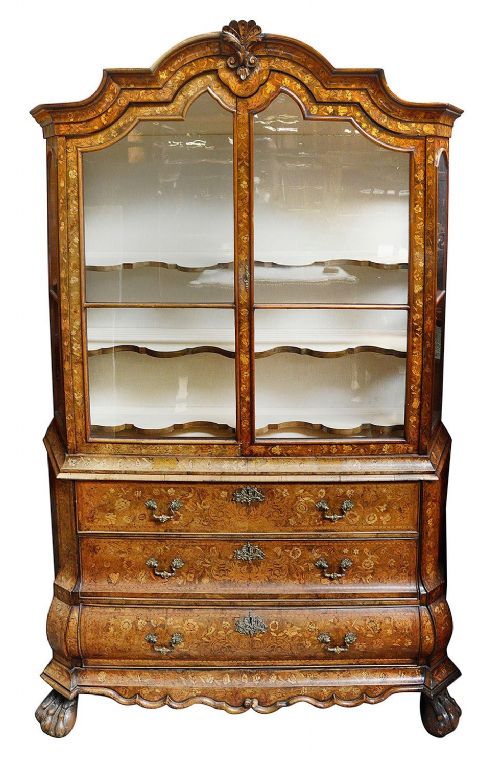
Joinery techniques include dovetail construction for the internal drawers and mortise and tenon joints for the main carcass. Marquetry inlay appears on select Dutch and English pieces, integrating contrasting woods into the exterior panels.
Several pieces combine three distinct functions into one furniture item: a bookcase, a display cabinet, and a writing desk.
Distinctions in Quality
The division between standard workshop production and finer pieces rests in the selection of timber veneers and the intricacy of the internal fittings. Superior examples utilise matched flame mahogany or burr walnut across the entire front facade, maintaining grain continuity from the writing flap to the lower drawers.
Glazing bar thickness also indicates standard; narrower, delicately moulded astragal bars require greater carpentry skill than heavy timber framing. The complexity of the interior pigeonholes and secret compartments defines the depth of craftsmanship in the writing section.
Thomas Chippendale·Gillows·Maple and Co
The Glazed Display Bureau Glossary
- Secretaire
- A writing drawer with a drop-front that conceals a fitted interior of small drawers and pigeonholes. This component sits beneath the glazed upper bookcase.
- Astragal
- Moulding strips that hold individual panes of glass within a glazed door. They create a grid pattern across the front of the cabinet.
- Marquetry
- Decorative veneer work forming pictorial or geometric patterns using various coloured woods. This technique frequently appears on Dutch furniture.
- Burr walnut
- Timber taken from a growth on a walnut tree, yielding a swirling, highly figured grain pattern. Cabinet makers used it for high-status furniture fronts.
- Satinwood
- A pale, lustrous hardwood from the tropical regions, utilised for fine inlay and veneering during the Georgian period.
Glazed Display Bureau: Frequently Asked Questions
Where should I place a glazed display bureau?
These tall cabinets require stable wall space away from direct heat sources to protect the timber veneers and solid wood construction.
Their combined depth from the drop-front writing surface means they need adequate clearance in a study or drawing room.
How do I clean the internal woodwork?
Dust the interior shelves and pigeonholes gently with a dry, soft cloth without applying modern liquid polishes.
Natural beeswax applied sparingly maintains the timber finish over time.
How do I identify a Georgian piece?
Look for proportion, hand-cut dovetails on the internal drawers, and timber choices such as solid mahogany or satinwood veneer.
Georgian examples often feature fine astragal glazing bars and traditional brass drop handles.
What is the drop-front used for?
The fall-front writing surface opens outward to reveal a fitted interior designed for correspondence and paperwork.
It closes securely to hide desk clutter behind the main facade.