

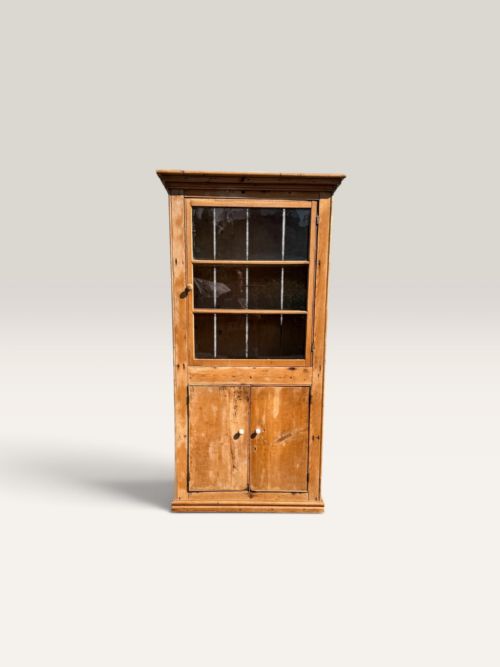
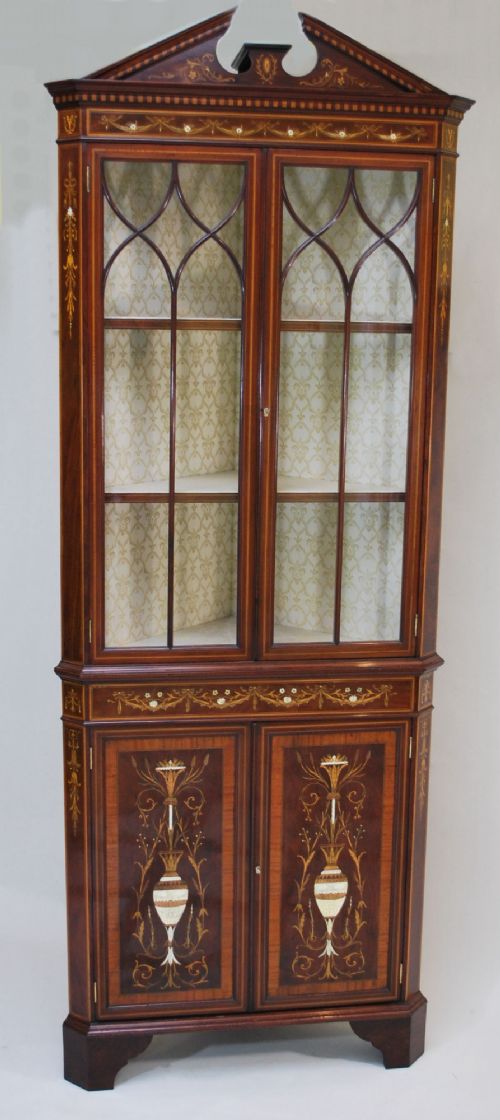
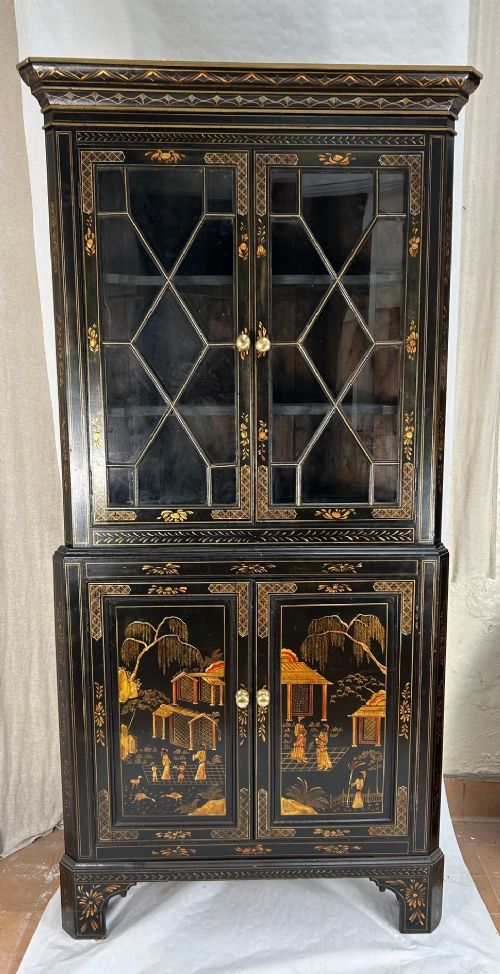
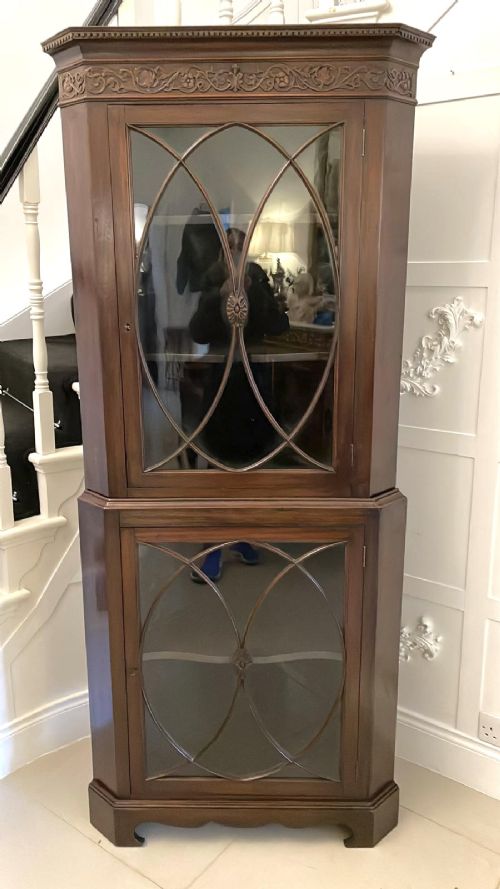
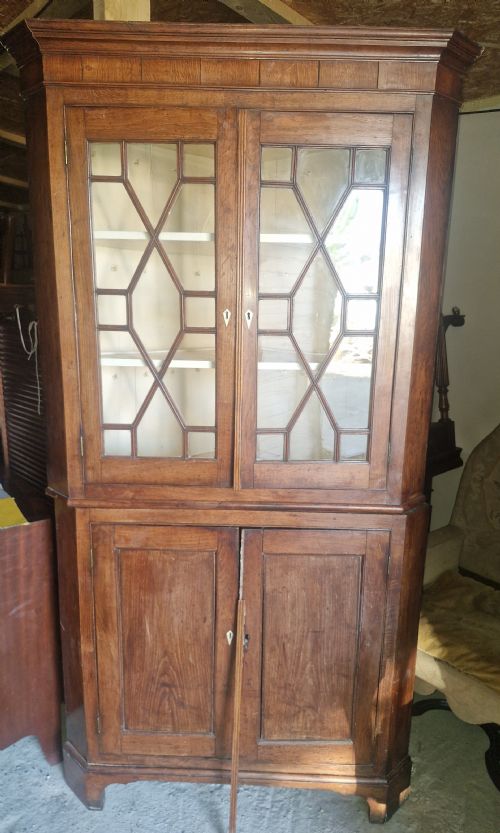
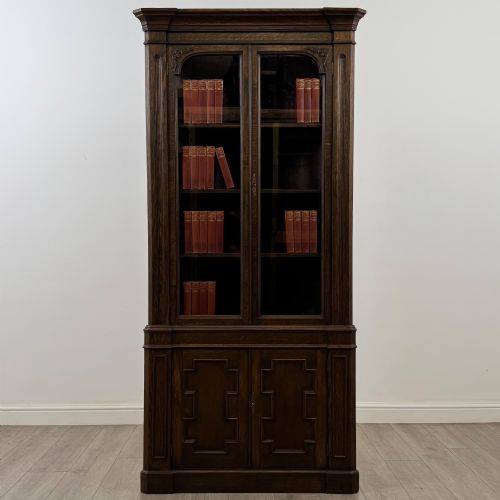
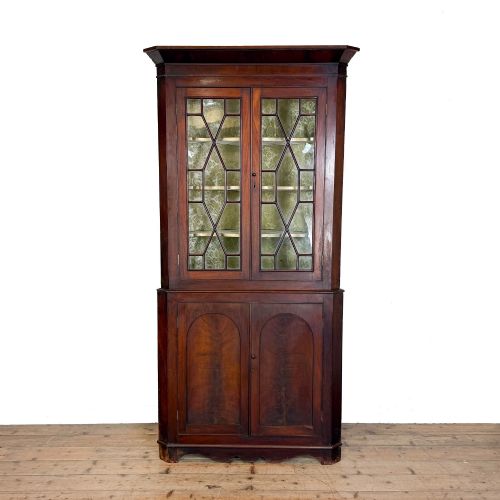
Glazed Corner Display
When searching for a glazed corner display, you uncover timber storage built specifically to fit awkward room angles while exhibiting prized possessions behind glass.

Glazed Corner Display
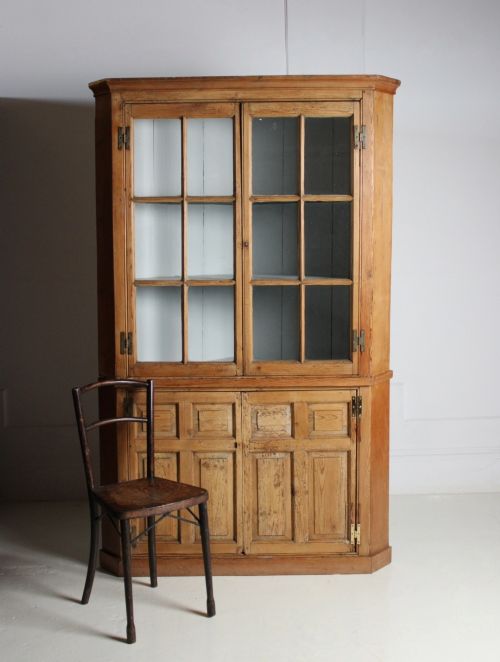
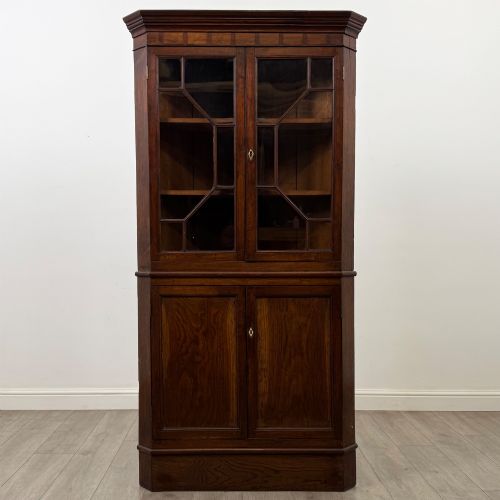
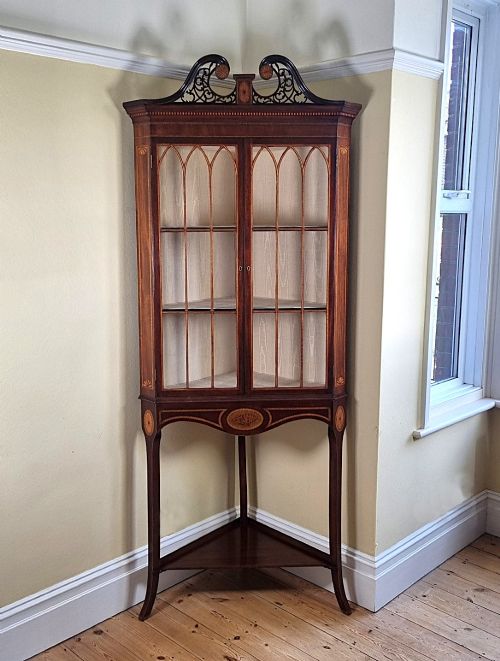
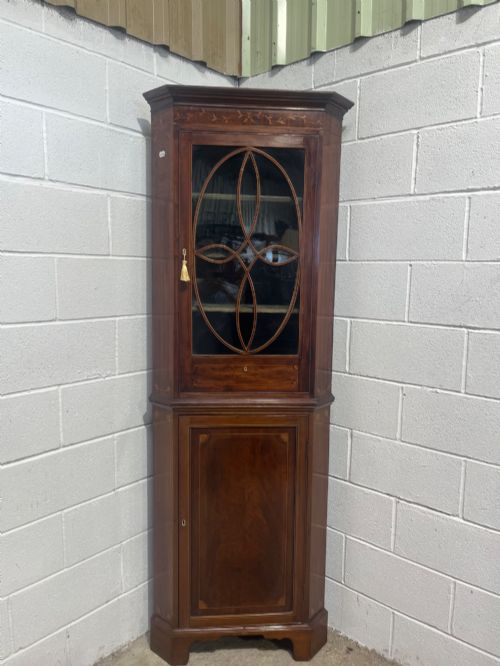
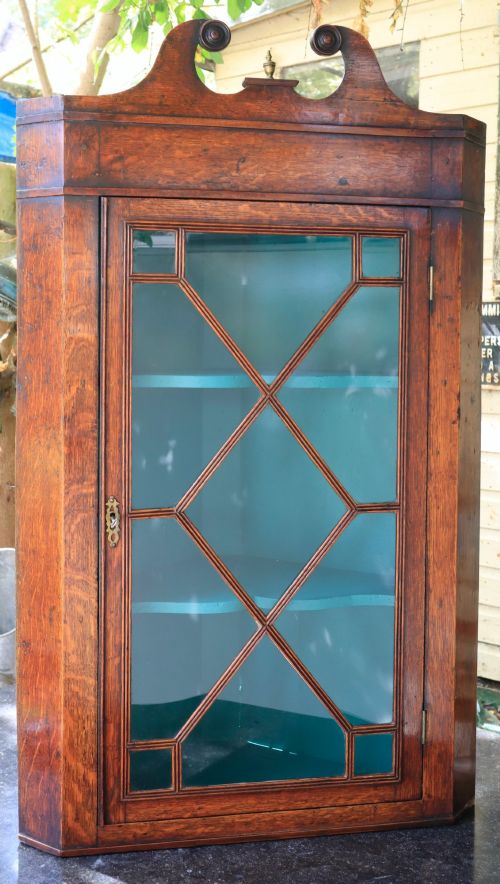
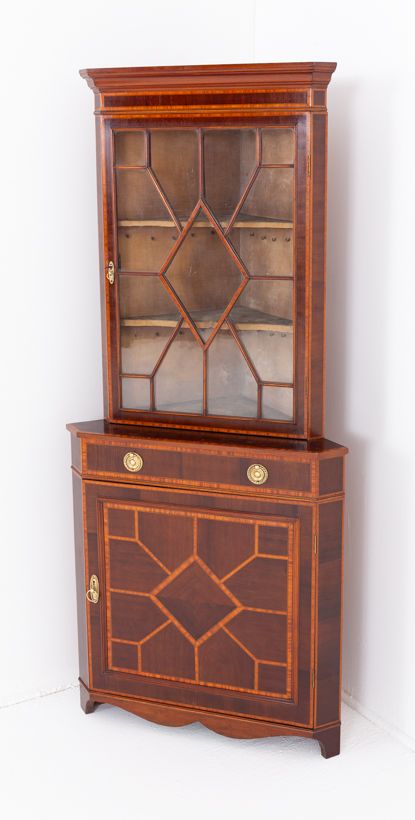
A glazed corner display takes the form of wall-hanging units, floor-standing single pieces, and grander two-part double-height cupboards originating from Georgian, Victorian, and Edwardian periods.
The layout exploits unused domestic angles, utilising triangular footprints that save floor space while framing contents through glass doors.
Makers shaped these utilitarian domestic items in diverse regional woods, ranging from simple country pine and Welsh oak to refined urban mahogany and satinwood.
Materials and Technique
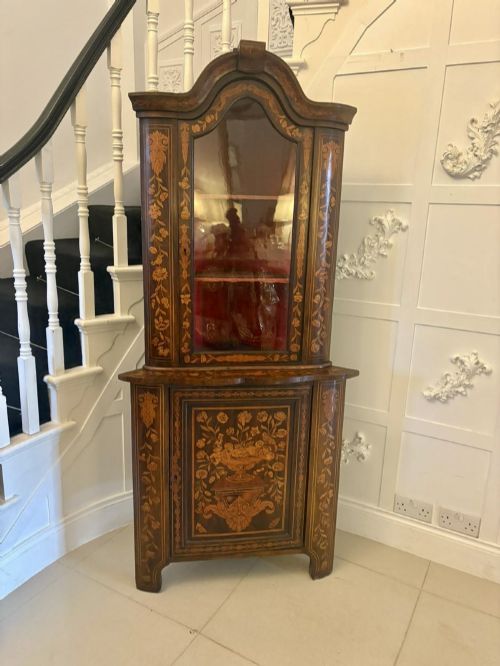
Cabinet makers built carcasses from solid hardwoods and softwoods like oak, mahogany, walnut, and pine, frequently applying intricate marquetry or satinwood inlay to primary surfaces.
Doors feature glass panes secured by wooden astragal bars, dividing the aperture into geometric panes that showcase the interior.
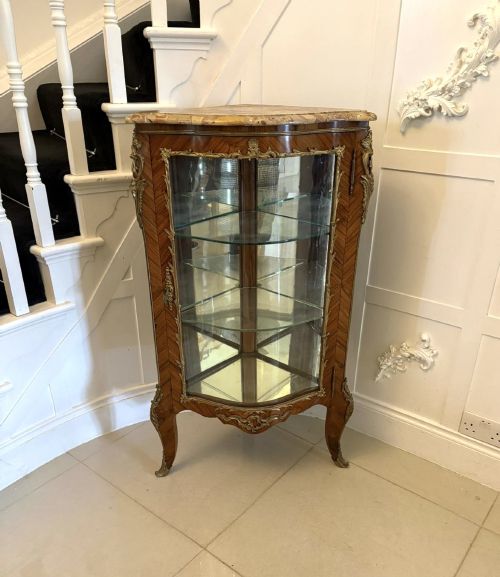
Higher specifications incorporate brass hardware, fabric-lined interiors, and occasionally marble tops or ormolu mounts on Continental variants.
Some pine interiors retain their original painted finishes, offering a splash of hidden colour behind antique glass.
Gradations in Quality
Quality rests upon the selection of timber grain, the precision of inlay work, and the delicacy of the astragal bars framing the glass door.
Simpler pine and oak utility cupboards contrast sharply against finely figured mahogany and marquetry examples featuring architectural cornices and original painted interiors.
Maurice Adams
The Glazed Corner Display Glossary
- Astragal
- The narrow wooden moulding bars that divide a glass window into smaller panes within the door frame.
- Marquetry
- Decorative veneer patterns assembled from various tinted woods to form pictorial or geometric designs on the cabinet surface.
- Bow front
- A convex curved cabinet front that projects outward, softening the rigid lines typically associated with angular furniture.
- Two-part form
- A tall cabinet constructed as a distinct upper display section resting upon a matching lower cupboard base.
Glazed Corner Display: Frequently Asked Questions
How do I hang a wall cabinet?
Wall-hanging units require secure fixings into solid masonry or direct attachment to internal wall studs. The triangular weight distribution demands robust brackets to support both the timber carcass and the internal glass contents safely.
Positioning the unit at eye level ensures the glazed door properly frames whatever objects you choose to exhibit inside.
What rooms suit a corner cabinet?
These pieces function effectively in dining rooms, living areas, and hallways where floor space remains at a premium. The angled footprint turns dead wall junctions into functional focal points.
Matching the timber tone to existing room furniture helps the unit anchor naturally into the chosen corner.
How do I date an older piece?
Dating relies on examining construction methods, timber choices, and decorative motifs such as astragal glazing patterns or inlay styles. Georgian pieces often display different proportions and carcass timbers compared to later Victorian or Edwardian revivals.
Interior elements like original painted surfaces or hand-blown glass panes also offer clear chronological clues.
Are single or two-part pieces better?
Single units, whether wall-mounted or floor-standing, offer compact proportions suitable for smaller domestic spaces. Two-part double-height cabinets provide substantial presence and maximum storage capacity for larger rooms.
Your available ceiling height and floor area ultimately dictate which structural format fits the room best.