
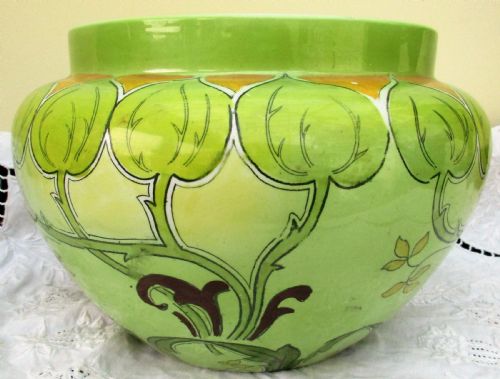


Glazed Ceramic Cachepot
A glazed ceramic cachepot holds house plants in pots, hiding standard nursery plastic behind decorative pottery.
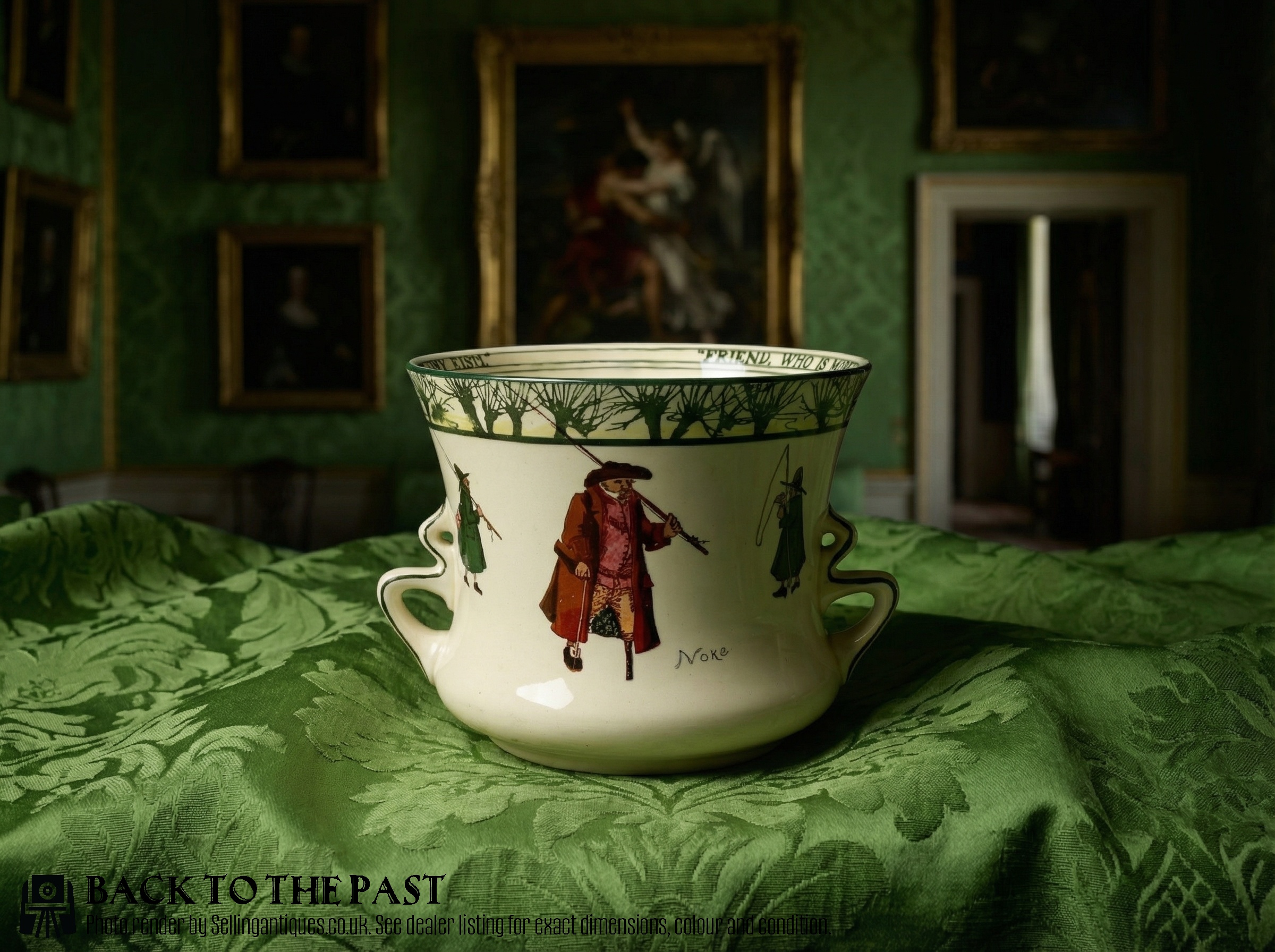
Glazed Ceramic Cachepot
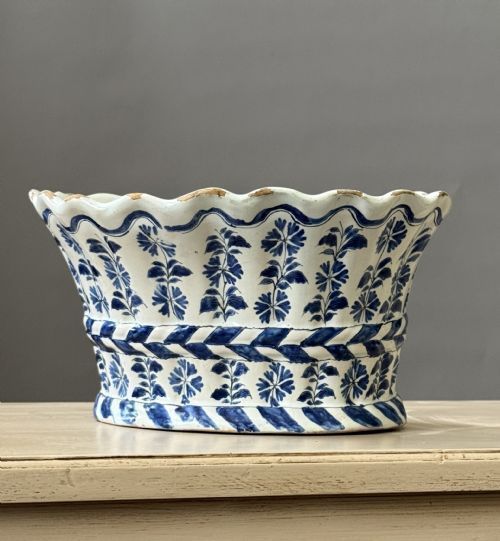
A glazed ceramic cachepot sits inside homes to house potted plants without leaking water onto furniture. When searching for a glazed ceramic cachepot, buyers encounter forms spanning from early eighteenth century Delft bough pots to later Victorian and Edwardian jardinieres and planters.
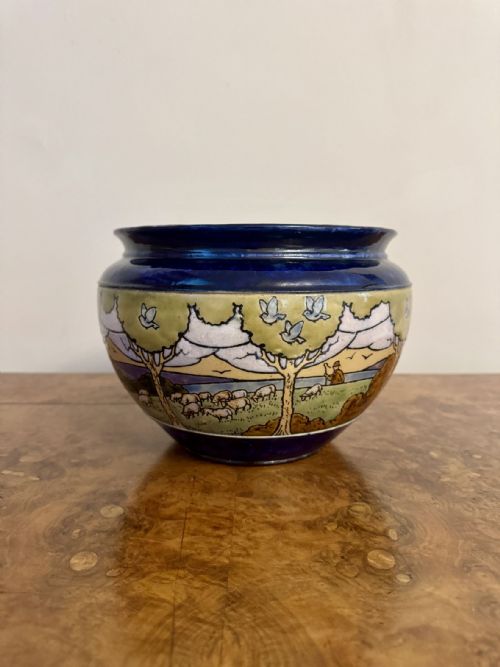
The selection here encompasses earthenware, stoneware, and tin-glazed earthenware shaped into jardinieres, planters, and vases. Many examples originate from nineteenth century English potteries alongside earlier continental pieces.
Makers such as Royal Doulton, Minton, and Royal Worcester appear frequently alongside pieces from Linthorpe and Nevers faience. Styles range from Victorian Naturalism and Arts and Crafts to Art Nouveau and Delftware.
Materials and production methods
Potters shaped these pieces using earthenware and stoneware bodies, applying glazes to seal the porous clay. Some examples feature tin-glazes or salt glazes while others incorporate gold leaf details.
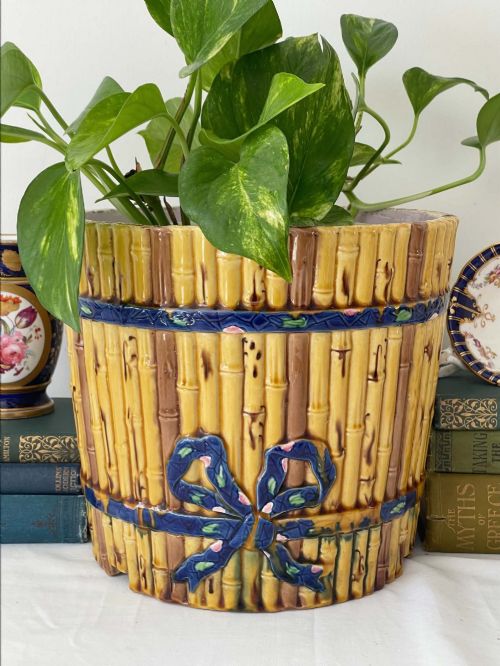
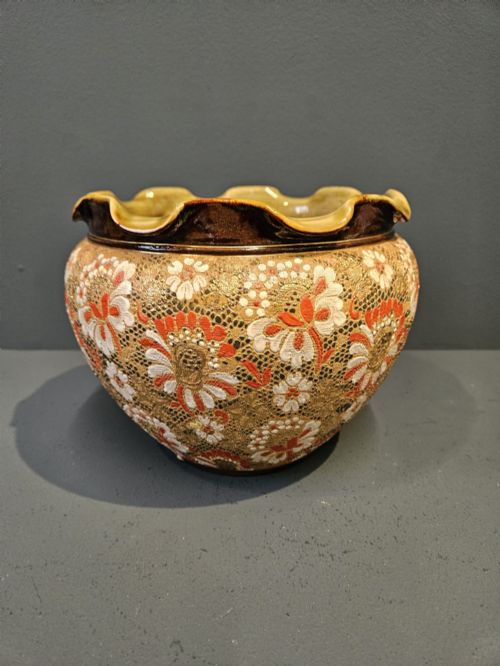
Decoration techniques include hand painting, slip decoration such as Slaterware, and moulded reliefs depicting bamboo, fern rockwork, and naturalistic motifs. Workshops fired these vessels in kilns before applying final decorative touches.
Several planters depict sculptural swans and bamboo stalks, proving that nineteenth century gardeners took their foliage very seriously indeed.
Assessing quality and craftsmanship
Quality rests in the crispness of the moulding and the depth of the glaze application. Superior examples show careful hand painting and well-defined relief work rather than soft or blurred details.
The reputation of the maker and the artistry of the design shape the standing of individual pieces. Fully marked examples with attribution to specific designers command particular attention.
W.A. Adderley·Doulton Lambeth·Royal Doulton·Royal Worcester·Linthorpe Pottery
The Glazed Ceramic Cachepot Glossary
- Cachepot
- An ornamental flowerpot container designed to hold an inner plant pot and catch drainage water. The word derives from the French term for hiding a pot.
- Jardiniere
- A large ornamental pot or stand for holding plants or flowers. These vessels often sit on floors or heavy furniture.
- Majolica
- A type of earthenware glazed with tin enamel and painted with colourful metallic oxide colours. Victorian potteries produced robust versions of this ware.
- Slaterware
- A textured ceramic finish produced by pressing lace or fabric into damp clay before firing. Royal Doulton utilised this technique extensively.
- Bough pot
- An early vessel designed to hold cut branches or flowers for interior decoration. These pieces often feature multiple apertures or removable lids.
Glazed Ceramic Cachepot: Frequently Asked Questions
What is a glazed ceramic cachepot?
A glazed ceramic cachepot is an indoor decorative container designed to hide standard plant pots.
They protect furniture by catching water drainage from potted plants while adding colour and texture to a room.
How were these pots used?
These vessels sat on tables, windowsills, or plant stands inside homes to display ferns, palms, and flowering plants.
Larger versions stood directly on the floor to support substantial indoor greenery during the Victorian and Edwardian periods.
How do I care for antique ceramic pots?
Place a plastic liner or saucer inside the vessel to prevent moisture from seeping into the historic ceramic body.
Dust the exterior gently with a soft cloth and avoid submerging older earthenware in water during cleaning.
How do I identify different periods?
Examine the glaze, clay body, and maker marks on the base to determine the manufacturing era.
Early pieces often feature tin-glazes and hand painting while later nineteenth and twentieth century examples show industrial factory stamps and moulded stoneware.