
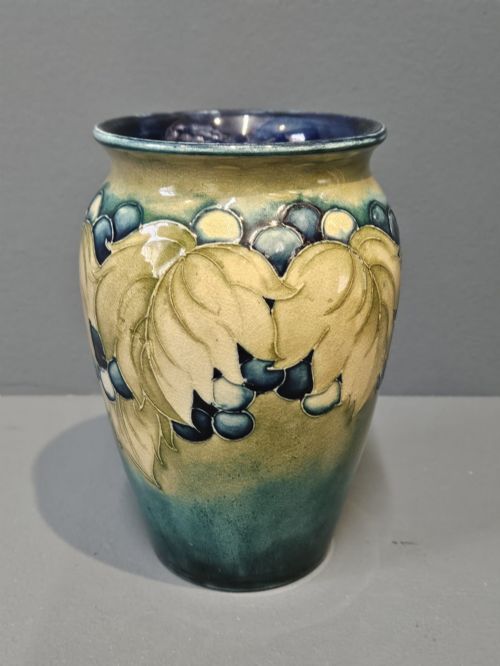
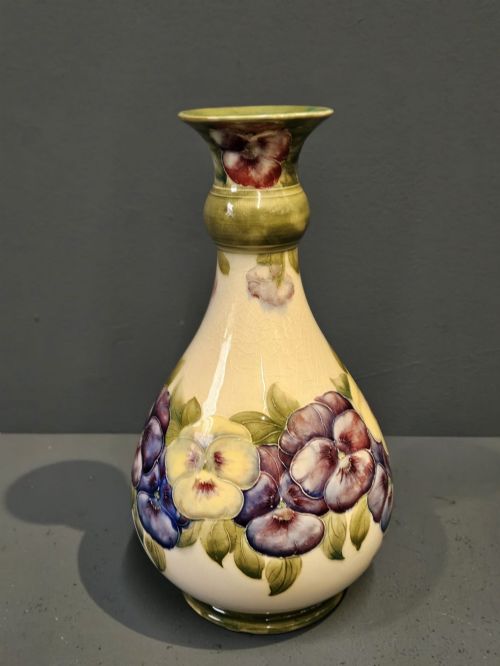
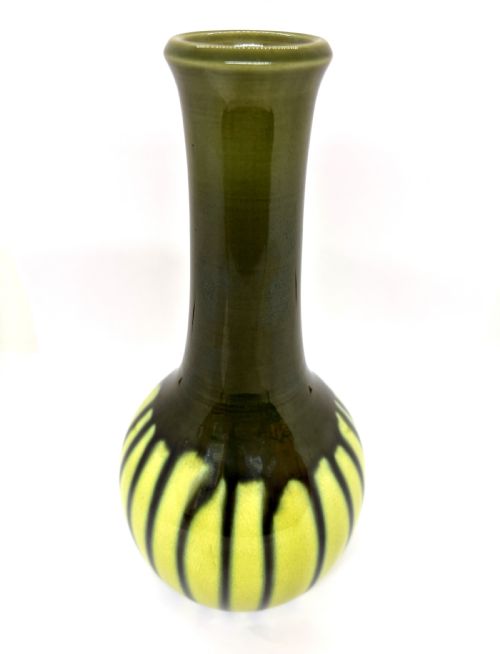
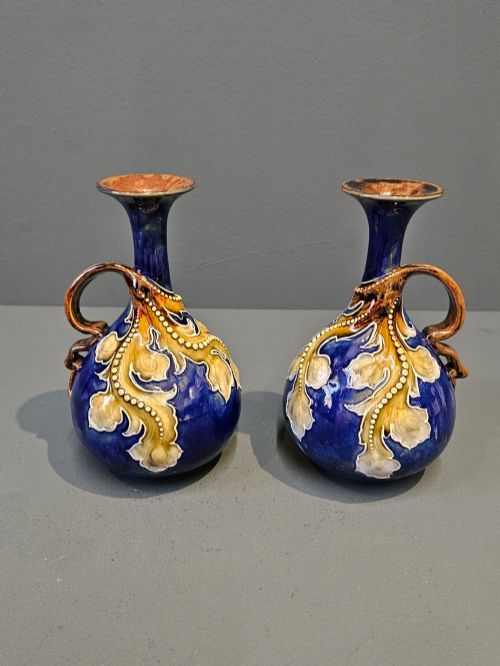
Glazed Art Pottery Vase
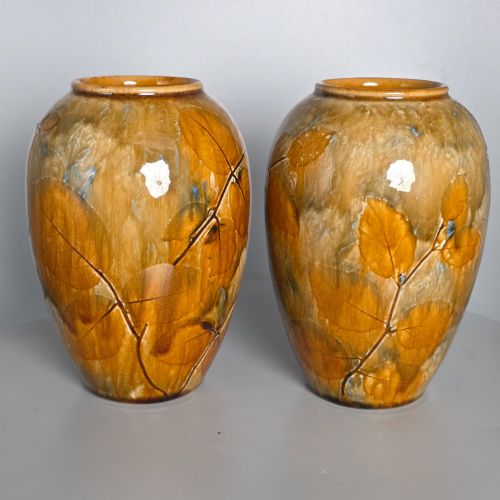
A glazed art pottery vase brings tactile depth and rich surface design into a room through historic ceramic traditions.
Glazed Art Pottery Vase
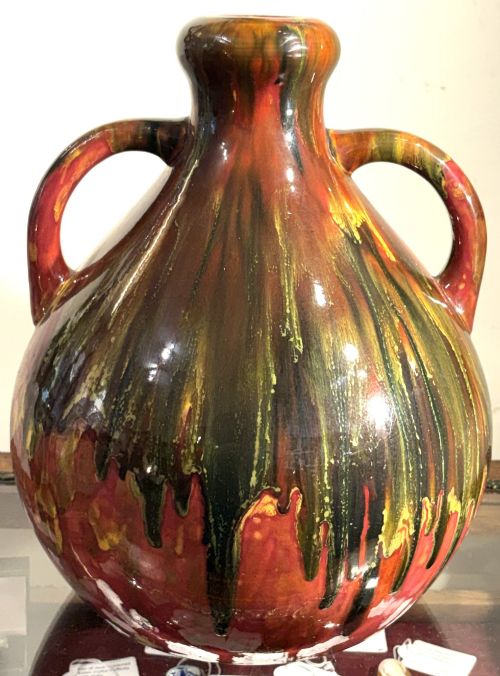
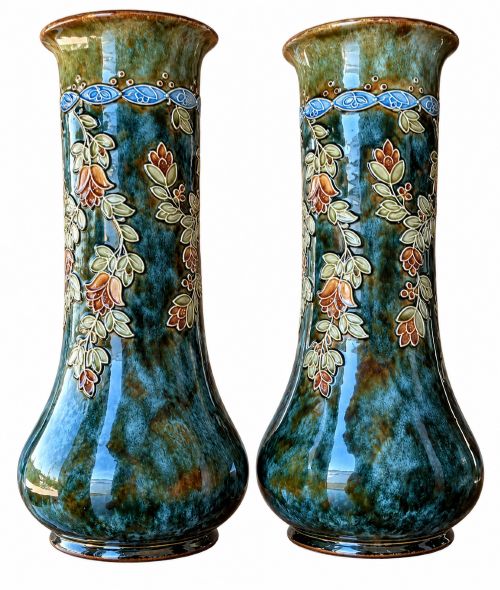
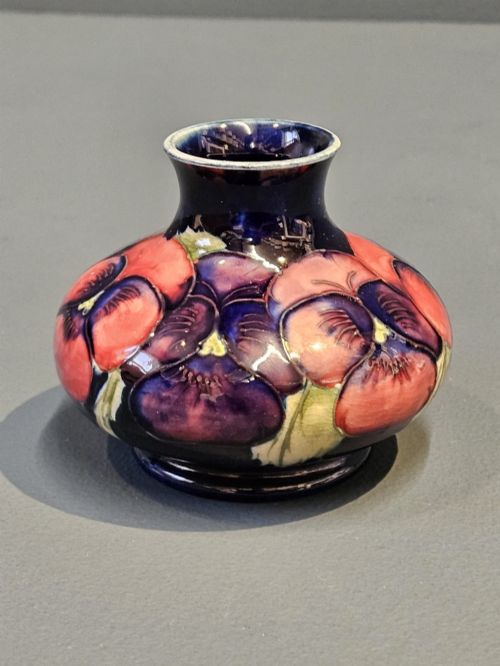
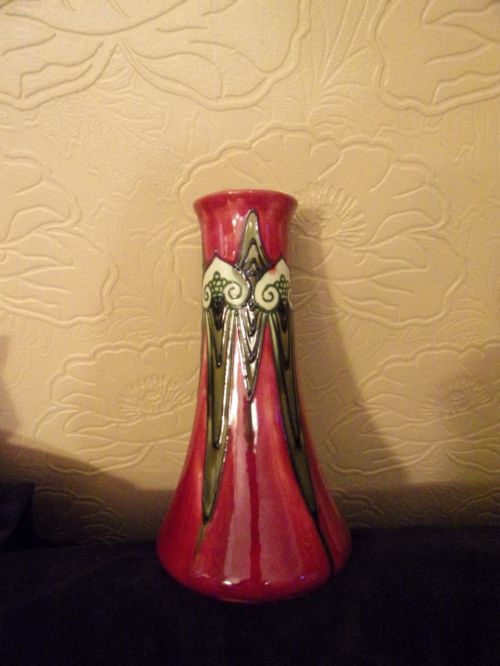
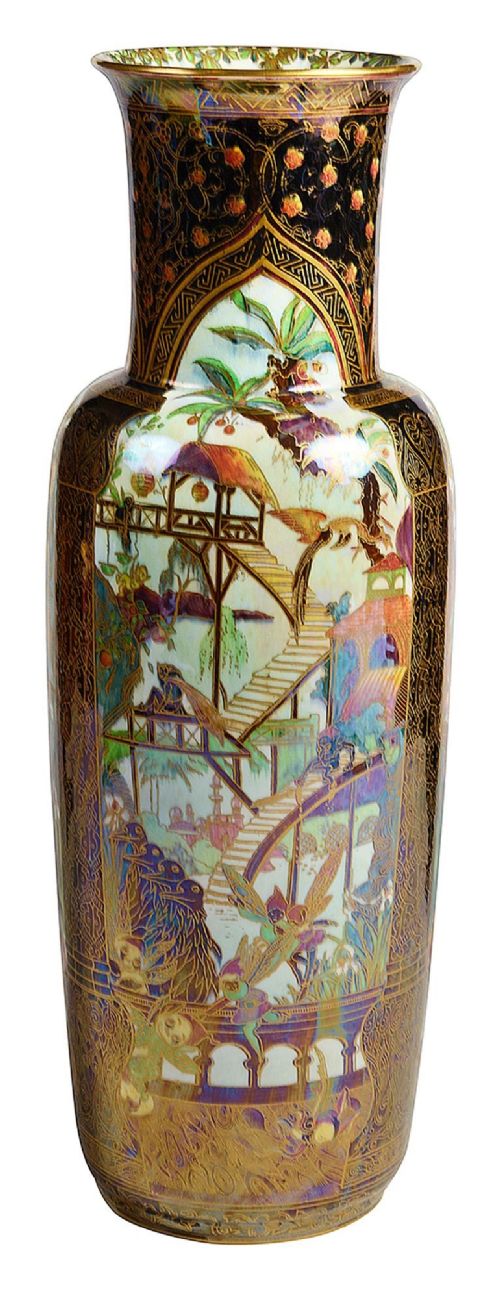
A glazed art pottery vase represents a period of intense creative output from the late Victorian era through the 1930s, encompassing styles such as Art Nouveau, Arts and Crafts, and Art Deco. These pieces range from British stoneware and earthenware to continental faience and Japanese creations.
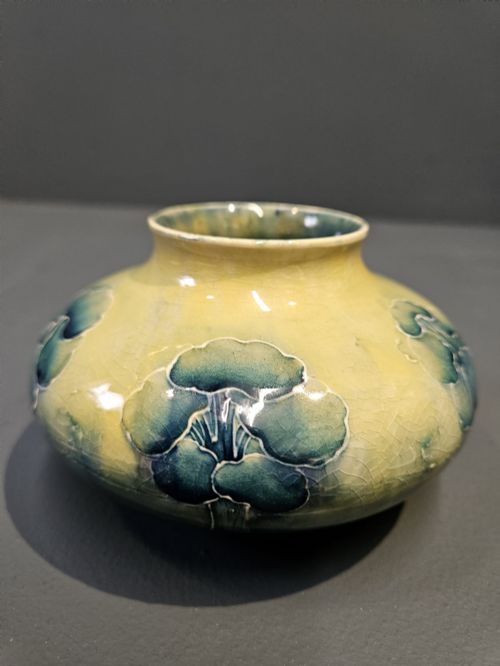
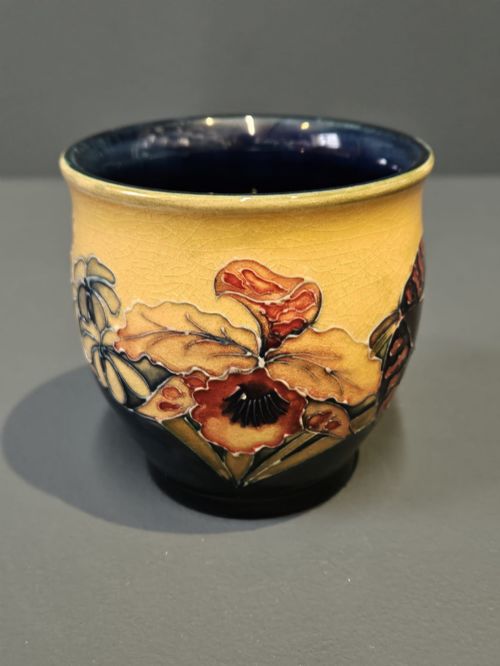
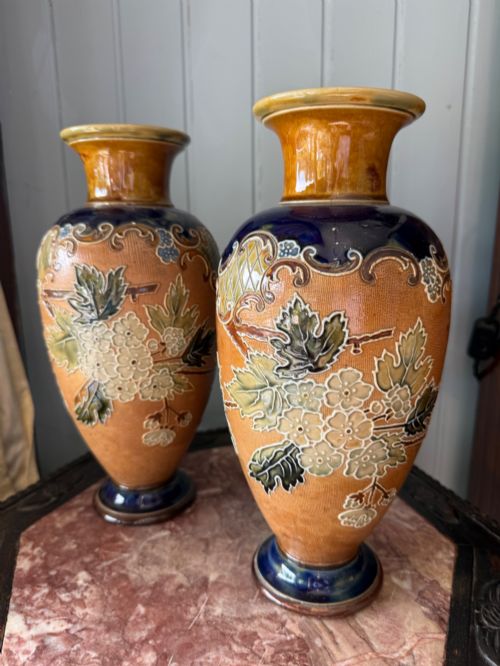
Makers on this page include major names like Royal Doulton, Moorcroft, and Minton alongside international works from Zsolnay Pecs and Japanese Sumida Gawa potteries. Forms vary from traditional vessels and jugs to wall pockets and umbrella stands.
The pieces most frequently met on this page date from 1900 to 1920, reflecting the height of studio pottery production in Europe and Japan. Buyers encounter both utilitarian forms elevated to art and strictly decorative pieces designed for display.
Quality factors in historic ceramics
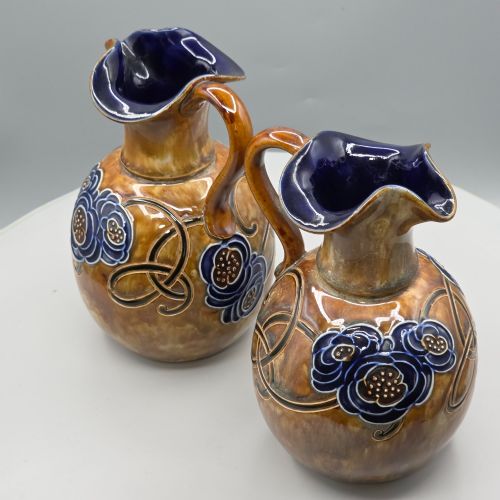
The distinction between standard production and top tier works often rests on the complexity of the glaze chemistry and the precision of the hand decoration. Pieces featuring tube lined designs or specialised lustre finishes demonstrate higher technical ambition from the pottery.
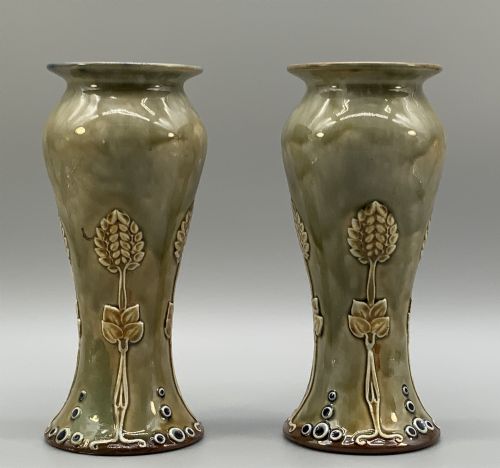
Execution and artistic attribution also set examples apart, particularly when signed by known designers or produced for specific retailers such as Liberty's. The crispness of the moulded or incised relief work indicates the level of care taken during the forming stage.
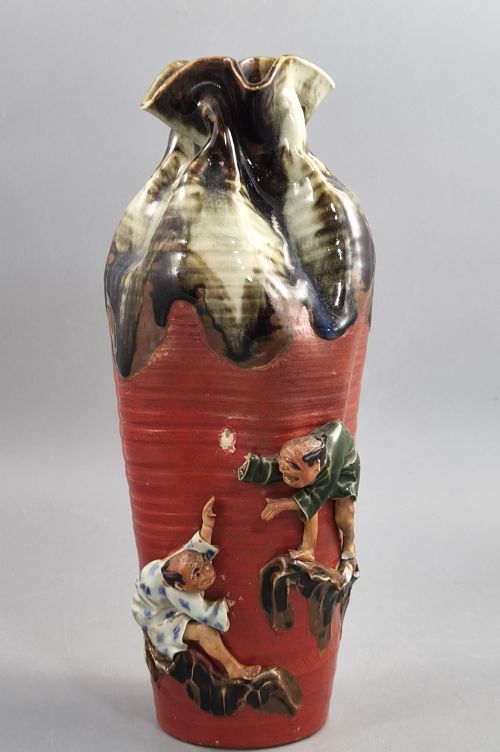
Several Japanese Sumida Gawa vases on this page feature tiny ceramic sages and children literally climbing up the sides of the vessels.
Royal Doulton·Moorcroft·Minton·Wedgwood·Zsolnay Pecs·Boch Freres·Bretby Pottery·Doulton Lambeth·Shelley·Lauder Pottery·Reissner Stellmacher and Kessel·Manpei·Makuzu Kozan·Brannam·Mettlach Pottery
The Glazed Art Pottery Vase Glossary
- Earthenware
- A porous ceramic body fired at lower temperatures that requires a complete glaze to become watertight. It forms the base for many traditional decorative vessels.
- Stoneware
- A dense, vitrified ceramic fired at higher temperatures until non porous and extremely durable. This material is common in robust British art pottery.
- Tube lining
- A decorative technique where liquid clay is piped onto a ceramic surface to create raised outlines for subsequent glazes. It produces a distinctive textured pattern.
- Flambe
- A unpredictable reduction glaze firing technique that produces striking streaked and mottled colour effects. It originated in Chinese ceramics and was revived by later makers.
- Faience
- Tin glazed earthenware decorated with opaque colours over a white background. It has a long history in European ceramic manufacturing.
Glazed Art Pottery Vase: Frequently Asked Questions
Are these vases watertight for flowers?
Many stoneware and fully glazed ceramic pieces can hold water safely for short periods. However, older earthenware and pieces with extensive crazing may allow moisture to seep through the body.
It is safest to use a small glass or plastic liner inside historic vases to protect the ceramic fabric from water damage and mineral deposits.
How do I identify the maker of a piece?
Turn the vessel over to examine the base for impressed stamps, painted monograms, or paper labels. Different potteries utilised distinct systems of marks and numbering that changed across the decades.
Stylistic clues such as specific glaze palettes or tube lined motifs can also point toward particular workshops or named artists when marks are faded.
What is the difference between earthenware and stoneware?
Earthenware is fired at lower temperatures, resulting in a porous body that requires glaze to hold liquids. It allows for bright, earthy colour palettes typical of Victorian and Edwardian studio pottery.
Stoneware is fired much hotter until the clay vitrifies into a dense, stone like material that is naturally impermeable. This makes stoneware heavier and more durable than earthenware.