
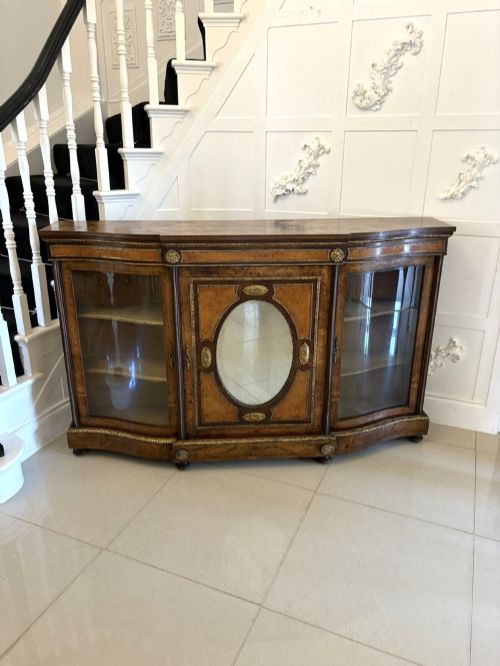
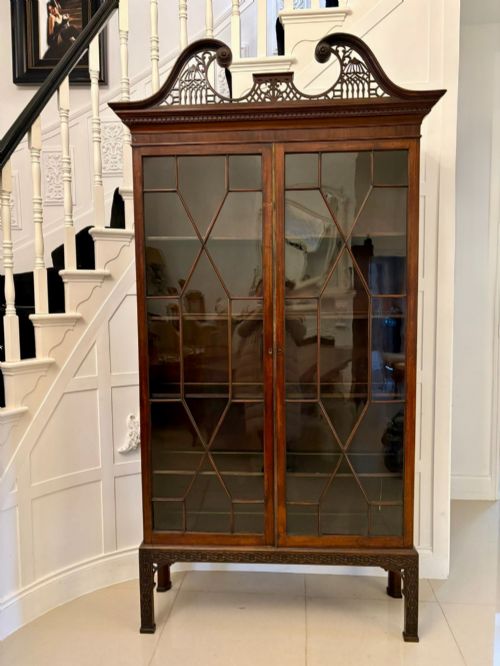
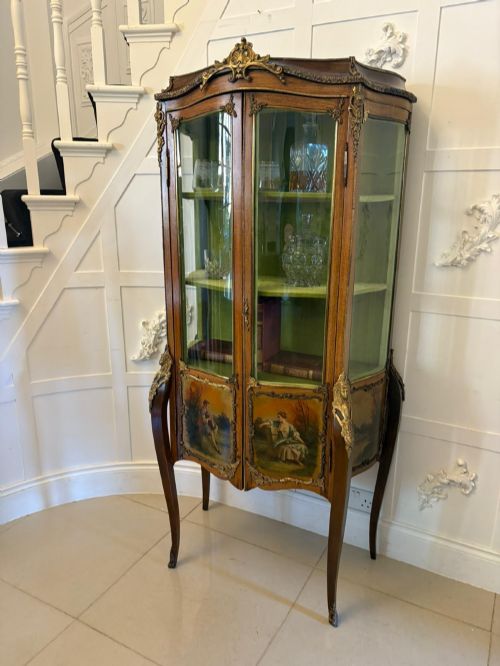
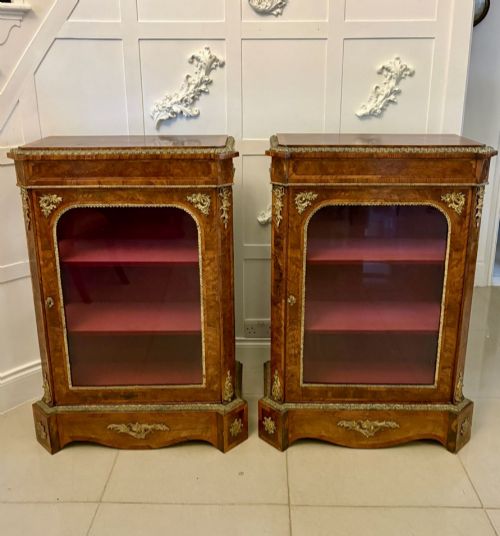
Glass Glazed Display Cabinet
A glass glazed display cabinet holds and protects prized possessions while putting them on full visual show.
Glass Glazed Display Cabinet
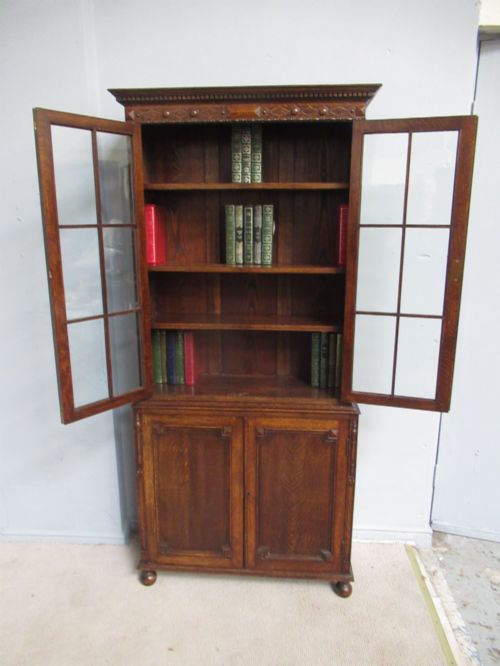
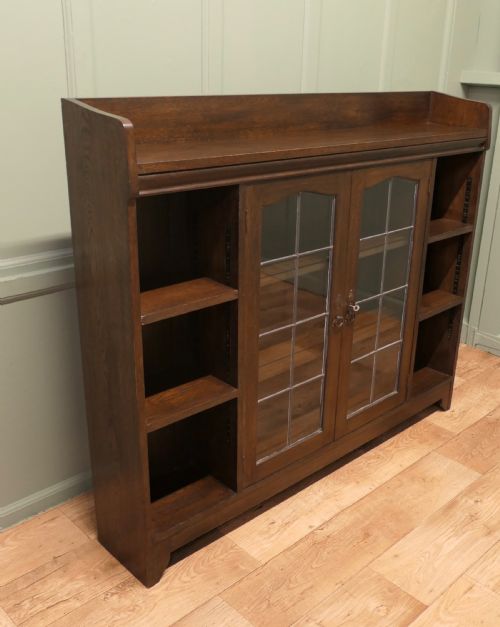
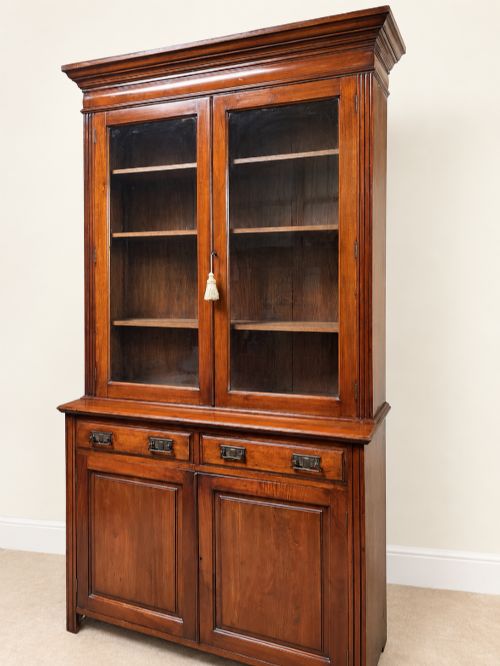
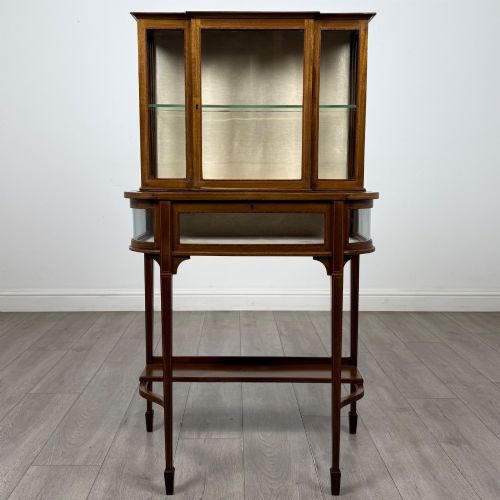
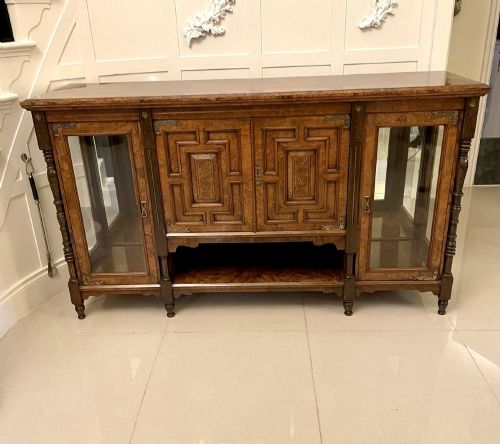
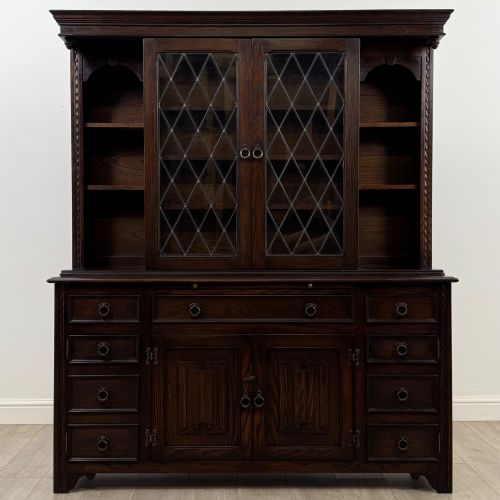
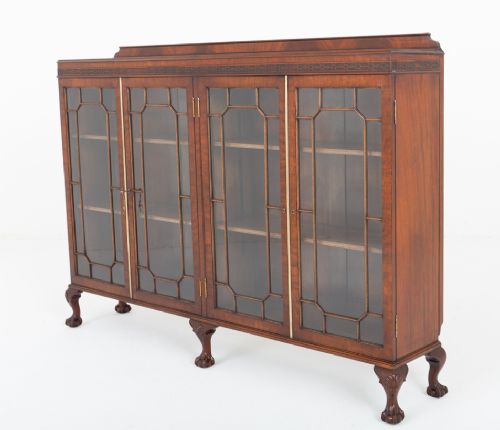
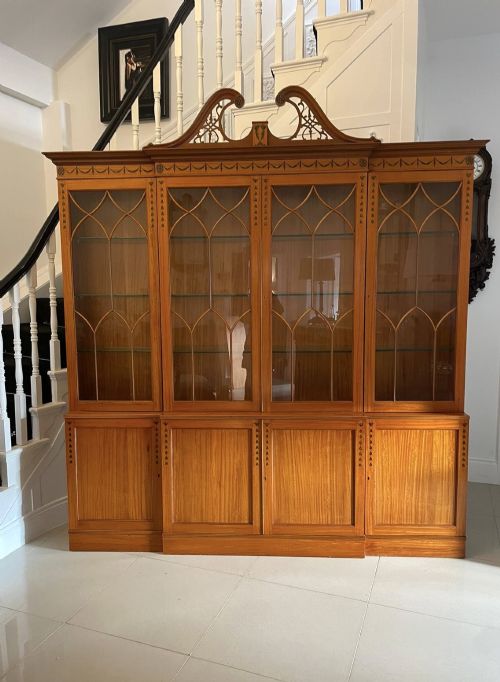
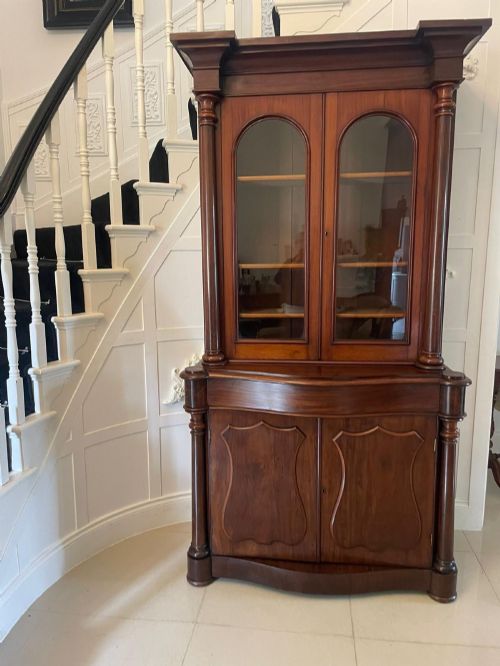
When you search for a glass glazed display cabinet, you meet a range of forms designed to showcase porcelain, books and collected objects. The selection spans freestanding bookcases, breakfront cabinets, pier cabinets, vitrines and sideboards from the Victorian, Edwardian and Art Deco eras.
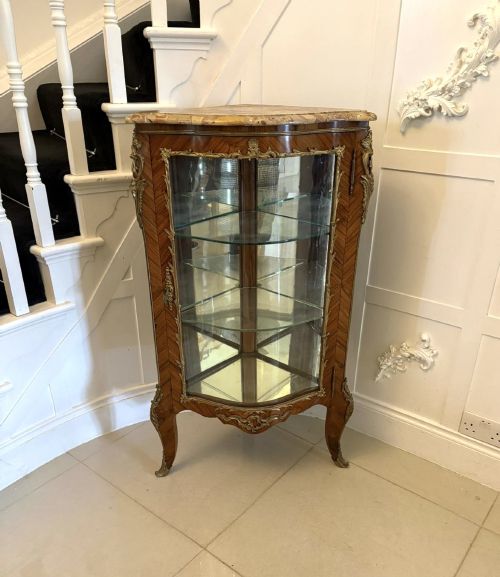
You are most likely to encounter Edwardian mahogany designs and Victorian walnut or mahogany pieces on this page. These versions frequently incorporate inlaid decoration, glazed doors and mirrored backs to enhance light within the interior.
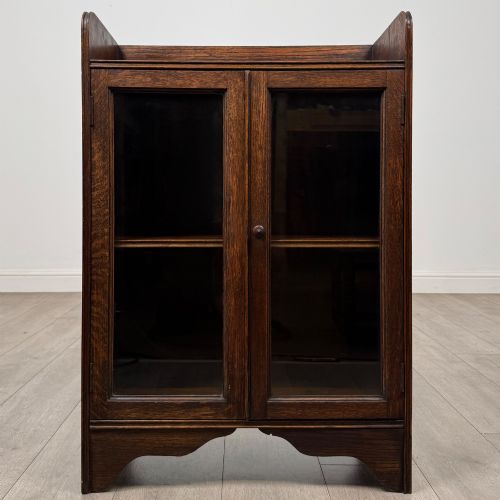
Origin points across the stock include English, French and Scottish workshops, alongside pieces influenced by Sheraton Revival, Louis XV and Arts and Crafts styles. Forms range from compact countertop display cases and dwarf oak cabinets to large breakfront libraries.
What varies in quality
The standard of timber selection and complexity of veneer work dictate the baseline grade of each cabinet. Pieces featuring burr walnut, amboyna or finely figured satinwood sit at a higher tier than plain utility carcases.
Craftsmanship shows in the precision of the joinery, the inclusion of original painted decoration, and the integration of ormolu mounts or intricate marquetry. Maker attribution and refined glass framing, such as astragal glazing, elevate the execution.
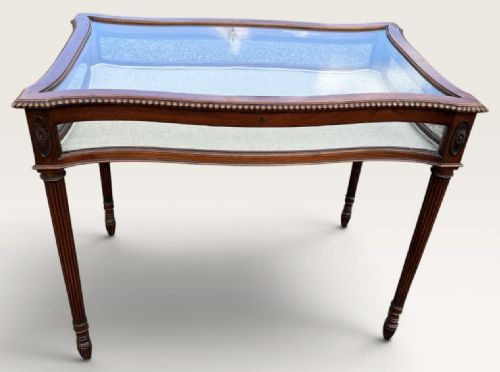
Some Edwardian merchants sold display tables containing velvet-lined trays beneath glass lids so visitors could inspect trinkets without touching them.
Jas Shoolbred
The Glass Glazed Display Cabinet Glossary
- Vitrine
- A glass-fronted cabinet or display case designed specifically for showing porcelain and small curiosities. These pieces often feature glass sides to maximise light penetration.
- Astragal glazed
- Glazing held together by small wooden bars that divide the glass pane into smaller geometric sections. This technique appears frequently on Georgian and Victorian bookcases.
- Ormolu
- Gilt bronze mounts applied to the exterior angles and cornices of furniture, common on French-influenced cabinets. The technique provides a bright metallic contrast to dark woods.
- Pier cabinet
- A low cabinet built specifically to fit the narrow wall space between windows. Victorian examples frequently incorporate inlaid walnut and mirrored backs.
- Marquetry
- Inlaid patterns formed by fitting small pieces of veneer into a prepared wood ground. Craftsmen used contrasting timbers to create floral or geometric motifs.
Glass Glazed Display Cabinet: Frequently Asked Questions
What is a glass glazed display cabinet used for?
These cabinets were traditionally built to protect and exhibit fine china, glassware, books and precious collections from dust and damage.
They allowed households to display their valued possessions in principal rooms while keeping delicate items safely enclosed behind glass doors.
How do I date a glass glazed display cabinet?
Dating relies on identifying the prevailing timber choices, hardware, decorative motifs and construction methods characteristic of specific periods.
Victorian pieces often feature heavy mahogany or burr walnut with elaborate inlay, whereas Edwardian items frequently display lighter satinwood and Sheraton Revival influences.
Where should I place a display cabinet at home?
Position your cabinet in a reception room or study away from direct sunlight to protect antique timber and internal fabrics from fading.
Ensure the floor is level so the glazed doors hang true and open smoothly without catching on the wooden frame.
What styles are available?
The available styles range from formal Victorian and Edwardian revival pieces to clean-lined Art Deco and sturdy Arts and Crafts oak designs.
French influences also appear through Louis XV style vitrines and cabinets mounted with ormolu.