
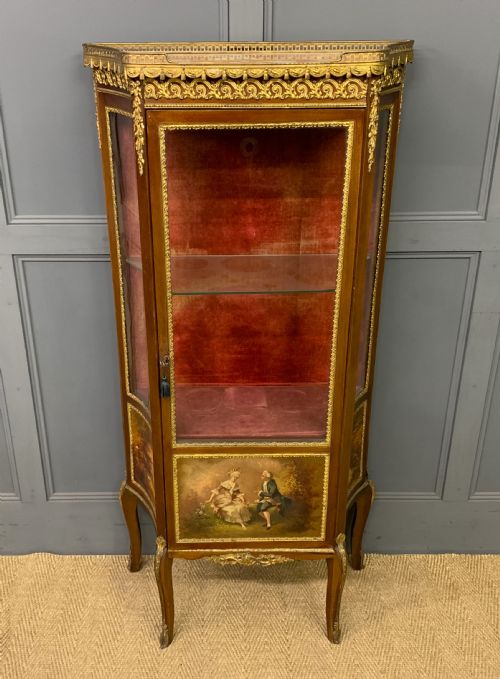
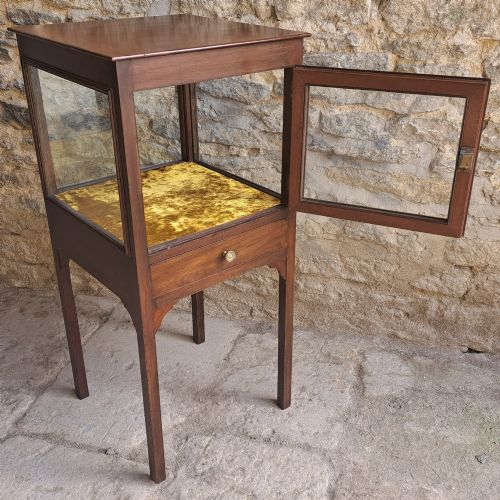


Velvet Lined Vitrine
These velvet lined vitrine examples bring glass and timber together to display treasured objects, most commonly found in Edwardian and Victorian forms.
Velvet Lined Vitrine
A velvet lined vitrine combines glass display areas with fabric linings to showcase small collections or individual curiosities. Buyers search this phrase to find specialised cabinets and tables designed for secure viewing.
The most common versions on this page take the form of bijouterie tables and display cabinets dating from the Victorian and Edwardian eras. These pieces typically utilise mahogany, walnut, or rosewood frames fitted with glazed panels.
Originating across English and French workshops, these items range from serpentine tables to tall pier cabinets. Each configuration provides a specific method for presenting objects at eye level or tabletop height.
How they were made
Makers constructed these pieces using timber frames in mahogany, walnut, and kingwood, often enhanced with brass or ormolu mounts. Glass panels were fitted into doors and tabletops to enclose the display space securely.
The interior surfaces received fabric treatments, specifically velvet linings, to cushion and contrast with the displayed items. Inlaid details and stylistic revivals, such as French Rococo and Louis XV, guided the decorative ornamentation.
Materials documented across these pieces include mahogany, walnut, rosewood, kingwood, brass, ormolu, and lacquer.
What varies in quality
Quality rests in the precision of the timber joinery and the integration of the metal mounts. Finer examples show careful attention to inlaid details and smooth operation of glazed doors or hinged tables.
The proportion of the glass panels relative to the wooden framework defines the visual balance of the piece. Superior construction ensures the internal velvet lining is properly fitted to the structural display area.
The Velvet Lined Vitrine Glossary
- Vitrine
- A glass-fronted cabinet or case for displaying fine wares or objects of curiosity. These pieces rely on transparent panels to keep contents visible while protected.
- Bijouterie table
- A glass-topped display table specifically designed for small ornaments, jewellery, and trinkets. They often feature hinged lids lined with fabric.
- Pier cabinet
- A tall, narrow display cabinet intended to fit against the wall space between windows. These upright units typically incorporate glazed doors and internal shelving.
- Ormolu
- Gilded bronze mounts applied to furniture for decorative effect. This technique was frequently utilised in French revival designs.
- Vernis Martin
- A simulated Japanese lacquer technique developed in France, utilising translucent varnishes. Pieces finished this way present a distinctive glossy surface.
Velvet Lined Vitrine: Frequently Asked Questions
What is a velvet lined vitrine used for?
These pieces serve to display and protect small collections, jewellery, and decorative objects. The glass enclosure keeps dust away while the fabric surface cushions the items.
They function as both furniture and display cases in drawing rooms and reception spaces. The design allows viewers to examine items from above or through side panels.
How do I date a display cabinet?
Dating relies on examining the timber species, construction methods, and stylistic influences present in the framework. Pieces from the eighteenth century show different joinery techniques compared to Victorian or Edwardian revivals.
Decorative mounts and inlay styles also provide clues to the period of origin. French and English pieces often display distinct regional characteristics for each era.
Are bijouterie tables secure?
Bijouterie tables feature hinged glass lids that enclose the display area. Many include working locks to secure valuable contents.
The glass top allows continuous viewing while keeping items contained. The internal velvet lining prevents objects from shifting when the lid opens.
Where should I place a pier cabinet?
Pier cabinets fit well against narrow wall spaces, particularly between windows or in alcoves. Their upright proportions maximise display capacity without dominating the room.
Positioning them away from direct sunlight protects both the timber and the internal velvet lining. Adequate lighting helps illuminate the contents through the glazed panels.