


Serpentine Display Table
These serpentine display table pieces combine serpentine forms with glass and timber to show off treasured objects.
Serpentine Display Table
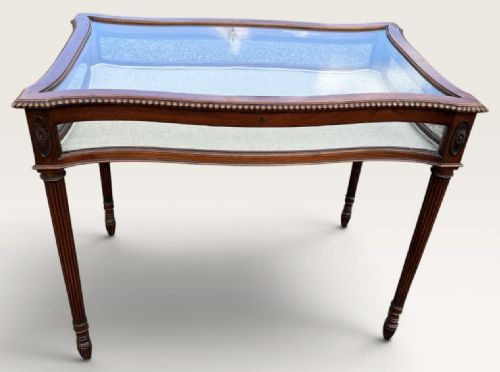
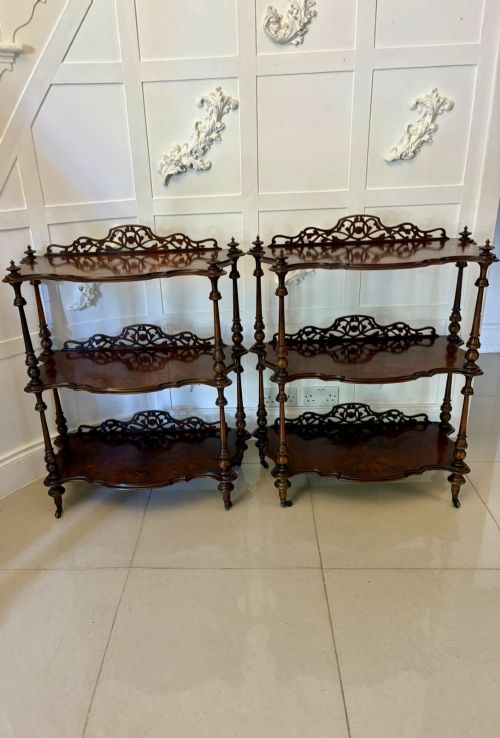
A serpentine display table brings together curved serpentine outlines and glass panels designed specifically to showcase small items and curiosities. These pieces range from bijouterie tables and vitrines to etageres and whatnots spanning the Victorian and Edwardian eras.
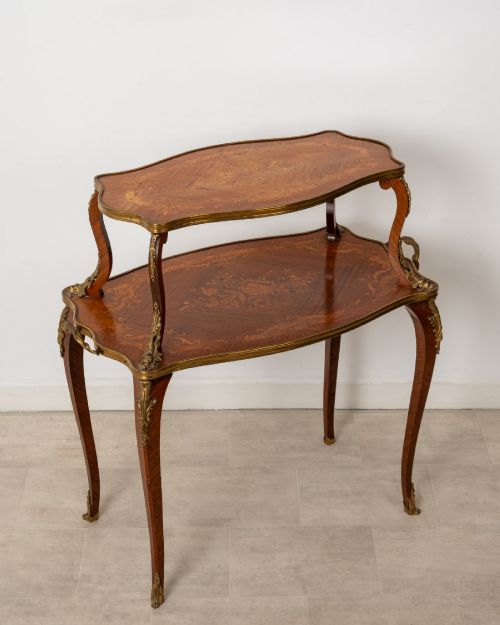
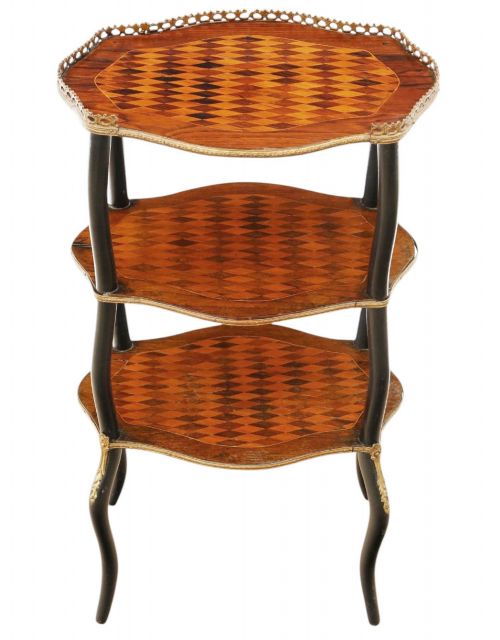
The versions most commonly found here feature mahogany, burr walnut, and kingwood, often incorporating marquetry, parquetry, or brass and ormolu mounts. Makers styled these tables using Louis XV Revival and Louis XVI influences to create elegant display furniture.
How they were made
Cabinetmakers constructed these tables using solid and veneered timbers such as mahogany, burr walnut, and kingwood, shaping the frames into distinct serpentine contours. Marquetry and parquetry inlay added decorative geometric and floral patterns across the surfaces.
Glazed panels and compartments were fitted into the tops and doors to protect items while keeping them visible from multiple angles. Brass and ormolu mounts finished the edges, legs, and corners, reflecting French revival tastes.
Some tables double as tiny museums for people who could not stop collecting buttons.
What varies in quality
Quality rests on the crispness of the serpentine shaping and the complexity of the timber veneers. Finer examples display detailed marquetry and precise parquetry rather than plain surfaces.
The refinement of the brass and ormolu mounts also sets apart better pieces, alongside the overall balance and proportion of the frame. Sound construction in the glazed compartments marks the higher tier of these tables.
Edwards and Roberts
The Serpentine Display Table Glossary
- Serpentine
- A curved shape resembling a snake, featuring alternating convex and concave lines along the front or top edge. This contour requires skilled carpentry to execute smoothly.
- Bijouterie table
- A glass-topped display table specifically made for housing small precious items, jewellery, and curiosities. These tables often stand on slender legs with hinged or lifted lids.
- Marquetry
- The art of applying decorative pieces of veneer to a structure to form intricate picture designs or patterns. Craftsmen utilised various coloured woods to achieve tonal depth.
- Parquetry
- A geometric mosaic of wood pieces used for decorative floors and furniture surfaces. It creates repeating patterns like cubes, squares, or chevrons.
- Ormolu
- Gilded bronze used for decorative mounts and furniture fittings during the eighteenth and nineteenth centuries. It provides a bright metallic contrast against dark timbers like mahogany.
Serpentine Display Table: Frequently Asked Questions
What fits inside a serpentine display table?
These tables are designed to hold small decorative objects, medals, pocket watches, and personal collections under glass.
The shallow glazed compartments keep delicate items safe from dust while allowing them to be viewed from above.
Where should I place one at home?
A drawing room, sitting room, or hallway works well for these tables, particularly where natural light can catch the glass tops.
They function effectively as focal points or occasional surfaces alongside seating areas.
How do I care for the timber and glass?
Dust the wood gently with a dry cloth and clean the glass panels with standard glass cleaner applied to a cloth rather than sprayed directly.
Keep the furniture away from direct heat sources to prevent the veneers from drying out.
How can I tell Victorian from Edwardian pieces?
Victorian examples often use heavier burr walnut and robust proportions, reflecting mid-nineteenth-century taste for rich, dark woods.
Edwardian pieces tend to lean towards lighter mahogany frames with delicate stringing and inlaid decoration.