
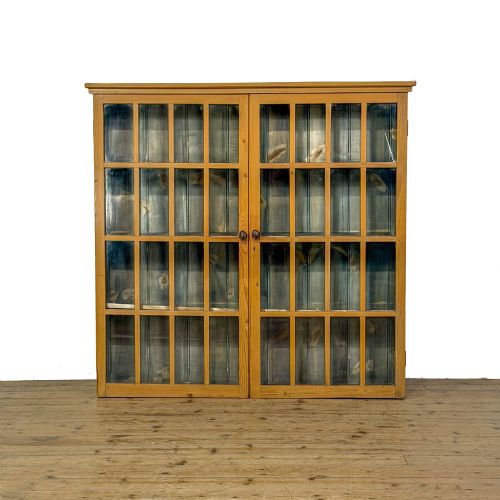
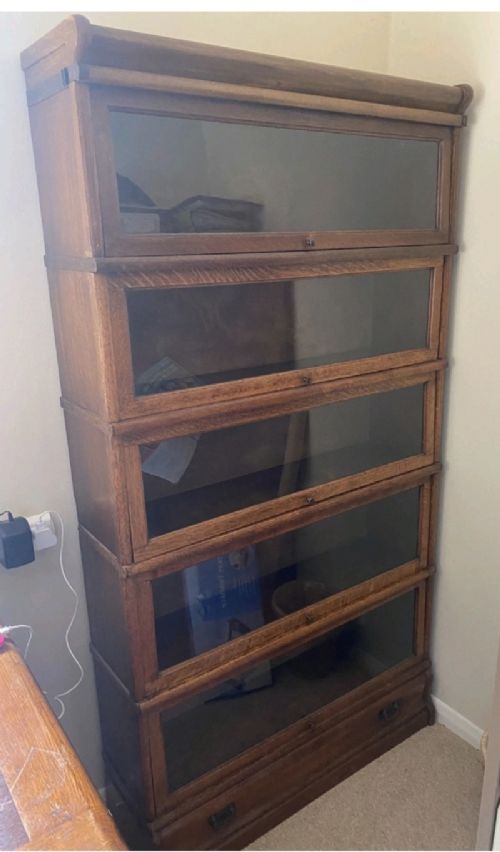
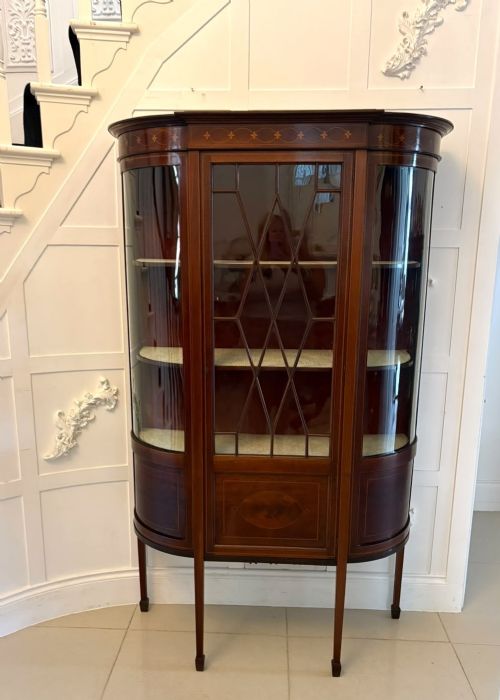
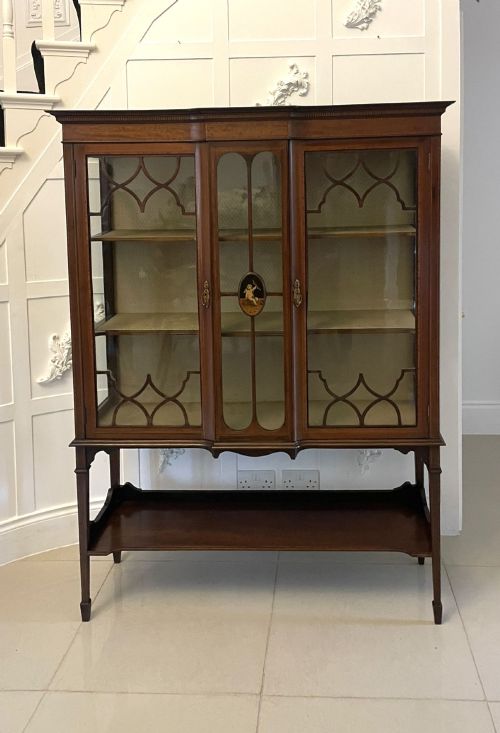
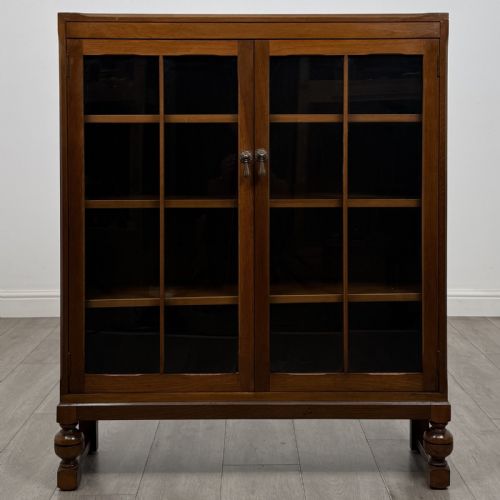
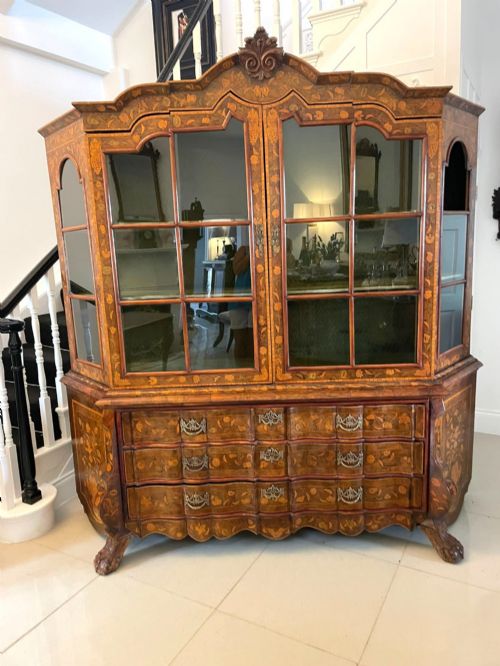
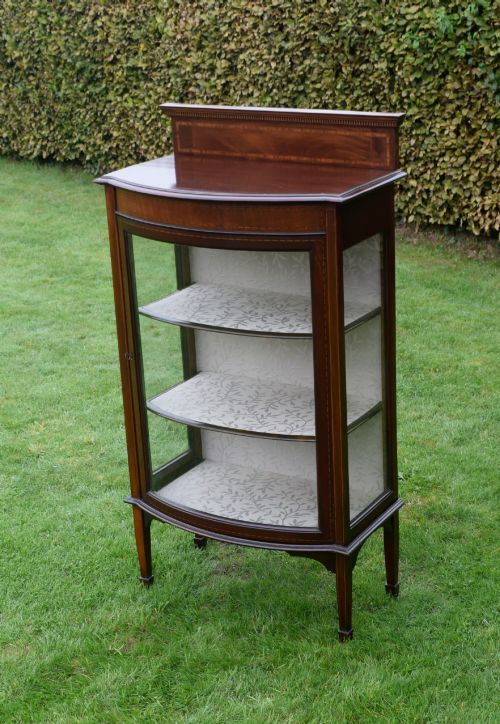
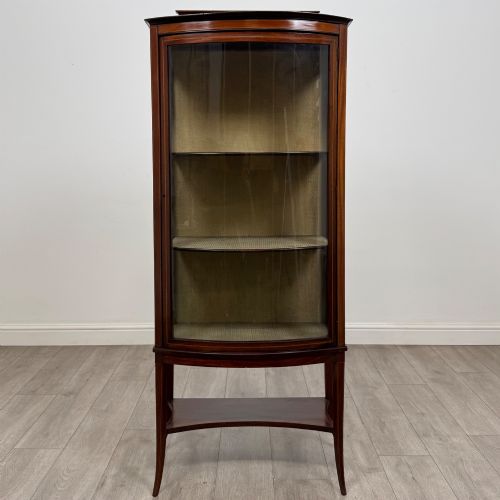
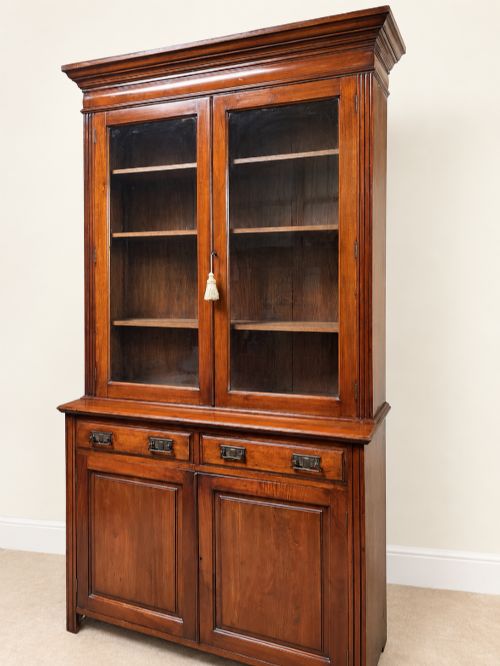
Glass Fronted Display Cabinet
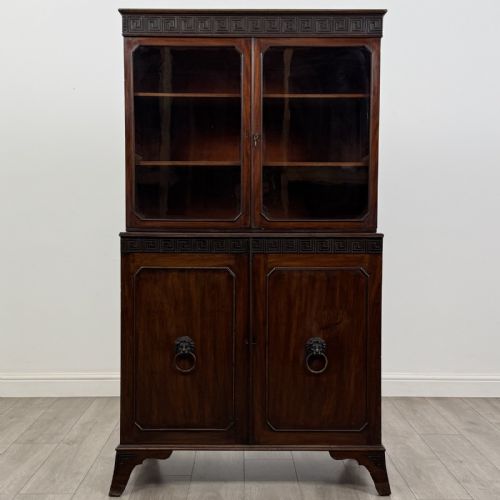
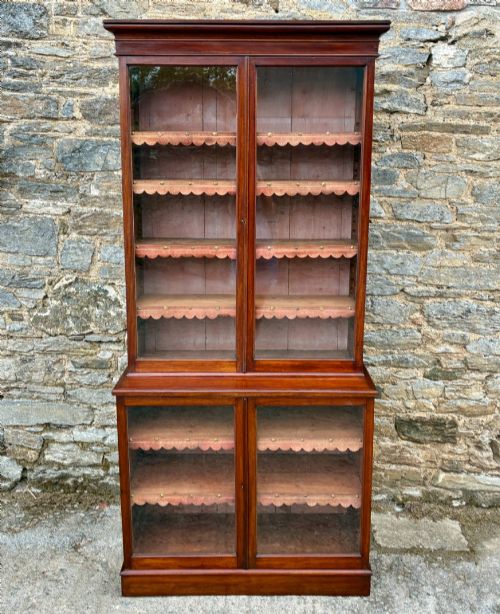
When you search for a glass fronted display cabinet, you meet timber framed glazed furniture designed to hold precious objects to the light.
Glass Fronted Display Cabinet
A glass fronted display cabinet serves to protect and exhibit valued possessions, books, and curiosities within domestic or commercial interiors. These pieces appear across several eras, ranging from compact pier cabinets to large breakfront bookcases and specialised shop counters.
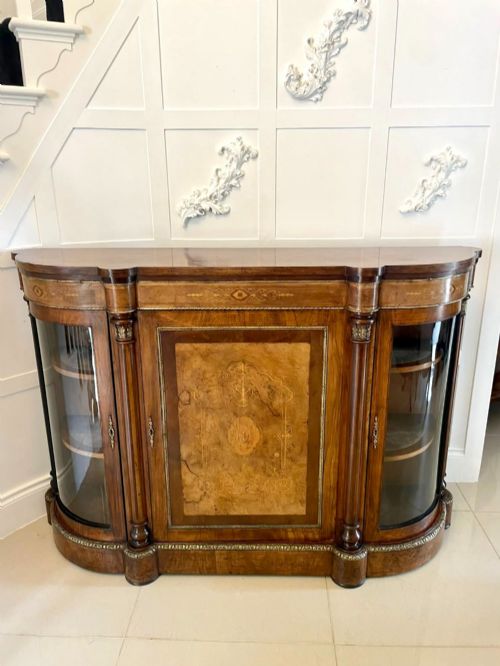
Victorian and Edwardian examples dominate the selection, often taking the form of inlaid mahogany, burr walnut, or satinwood vitrines. Makers utilised various formats, including bow-fronted doors, serpentine credenzas, and upright display cases, to suit different room layouts.
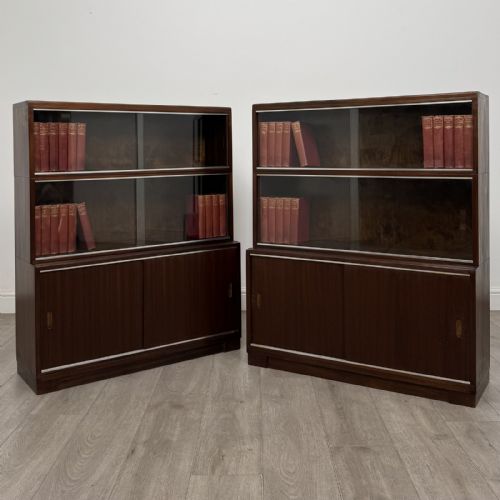
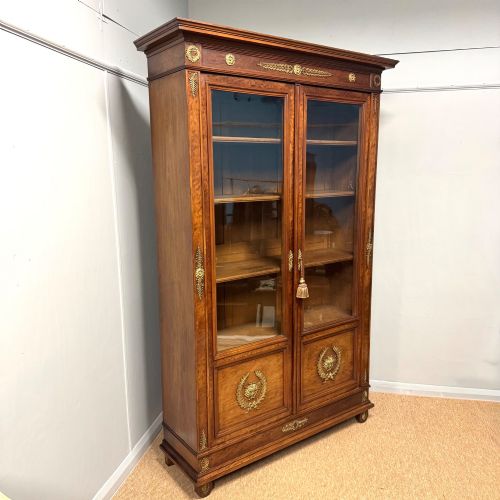
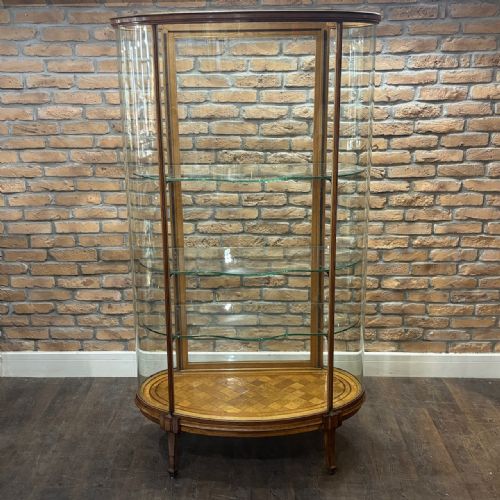
Earlier pieces from the nineteenth century frequently incorporate decorative marquetry and gilt metal mounts, whilst twentieth-century items lean towards practical oak frameworks and chrome detailing. Buyers encounter everything from tall library bookcases to low shop vitrines.
How they were made
Cabinet makers constructed these pieces using solid timbers and decorative veneers such as mahogany, walnut, satinwood, and oak, often reinforced with brass and ormolu mounts. Glazing formed the central visual element, requiring precise joinery to house glass panels securely within doors and side panels.
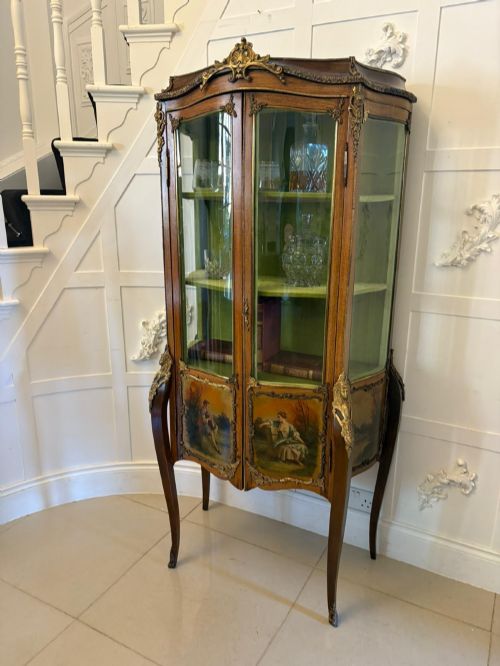
Inlaid decoration relied on fine marquetry and contrasting wood veneers, whilst specialised pieces incorporated painted panels or Vernis Martin finishes. Structural integrity depended on traditional mortise and tenon joints, drawer linings in secondary timbers, and fitted interior shelving.
What varies in quality
The degree of refinement in timber selection and decorative detail marks the distinction between standard production and exceptional craftsmanship. Figured burr walnut veneers, intricate floral marquetry, and fire-gilt ormolu mounts elevate the status of a piece considerably.
Structural proportion and the precision of the glazed door assembly dictate visual success. Superior examples exhibit harmonious lines, balanced inlay work, and robust internal fittings that remain true to their original period design.
F. Sage & Co·Edwards & Roberts·Dudley & Co·Rowland Ward Ltd·Maison Gagneau·Maple & Co
The Glass Fronted Display Cabinet Glossary
- Vitrine
- A glass-fronted cabinet designed specifically for the display of porcelain, curiosities, or fine objects. These cases often feature glazed sides to let light flood the interior.
- Marquetry
- Decorative veneer work created by fitting together small pieces of tinted wood, shell, or ivory to form pictorial or geometric patterns. It appears frequently on high-status Victorian and Edwardian cabinets.
- Ormolu
- Gilded bronze mounts applied to the corners, feet, or friezes of furniture for decorative effect. This technique was favoured by nineteenth-century makers imitating French court styles.
- Pier cabinet
- A narrow cabinet built to stand against the wall space, or pier, between two windows. These pieces are typically compact and glazed to display small collections.
- Credenza
- A sideboard or cabinet featuring cupboards and central display space, often elevated on a plinth. Victorian examples frequently combine glazing with rich burr walnut veneers.
Glass Fronted Display Cabinet: Frequently Asked Questions
What is a vitrine?
A vitrine is a glazed display cabinet built primarily to showcase porcelain, glassware, or small ornaments. The glass panels on the front and sides allow light to illuminate the contents from multiple angles.
Cabinet makers of the nineteenth and early twentieth centuries produced these in woods like mahogany and walnut. They often sat in drawing rooms as focal points for a collector's prized possessions.
How do I date a display cabinet?
Dating relies on identifying the prevailing timber fashions, construction methods, and decorative styles of the period. Victorian pieces frequently showcase burr walnut and ormolu mounts, whilst Edwardian examples often feature delicate satinwood inlay.
Looking at the backboards, drawer construction, and glass clarity also provides clues. Hand-pulled cylinder glass differs noticeably from later machine-rolled panes found in twentieth-century pieces.
Where should I place a pier cabinet?
A pier cabinet fits naturally against narrow wall spaces, particularly the solid section of wall between two windows. Because these cabinets are shallow and upright, they occupy minimal floor space whilst drawing the eye.
Placing one in a sitting room or hallway allows the glazed door to catch natural light. This placement honours the original domestic function of displaying small decorative items.
What is burr walnut?
Burr walnut is a highly decorative wood veneer harvested from the gnarled growths on walnut trees. It yields a swirling, speckled grain pattern that cabinet makers prized for formal furniture.
Victorian makers utilised this veneer extensively on credenzas and display cabinets. The rich figuring creates a strong visual texture that defines high-status pieces from the era.