




Giltwood Round Wall Mirror
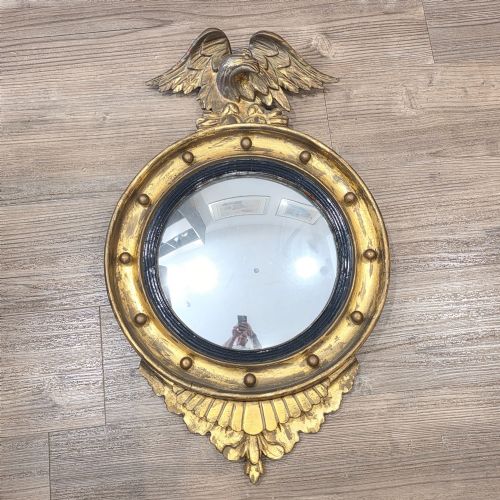
A giltwood round wall mirror brings deep warmth and historic character to a room, catching the light in a curved, convex glass.
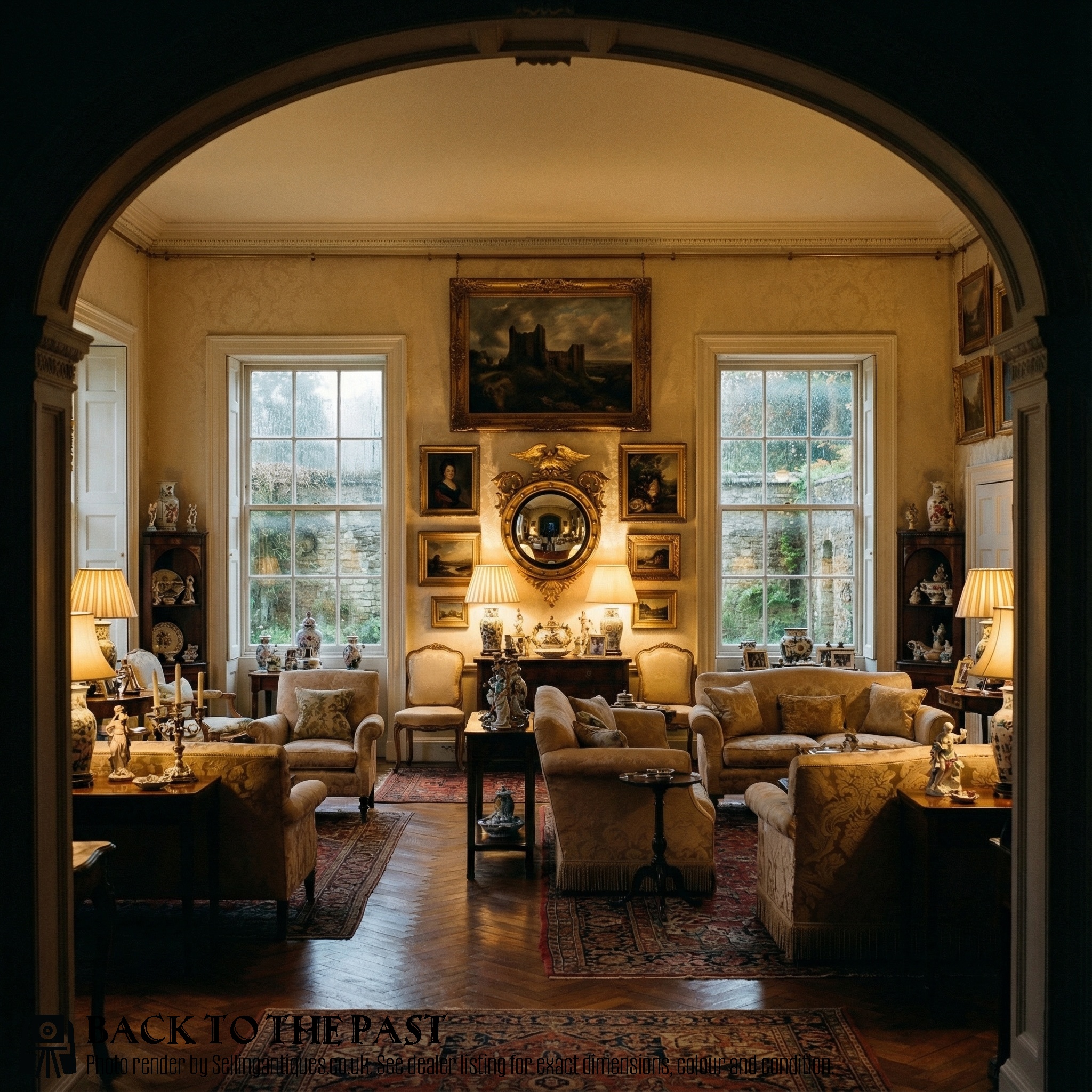
Giltwood Round Wall Mirror
A giltwood round wall mirror forms a striking focal point in traditional and eclectic interiors alike. Buyers seek these circular frames to bounce natural light across a room while introducing a strong period accent.
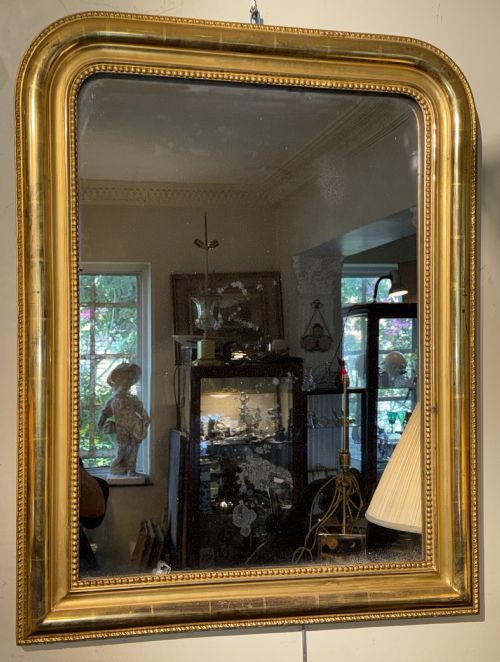
The selections here span from the Georgian and Regency eras through the Victorian period and into the early twentieth century. Convex plates, often called butler's mirrors or porthole mirrors, dominate the inventory alongside grander overmantel and French Louis Philippe formats.
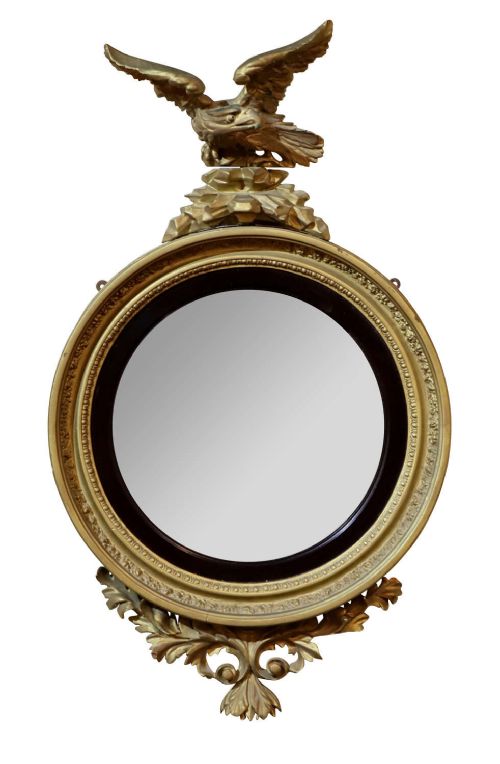
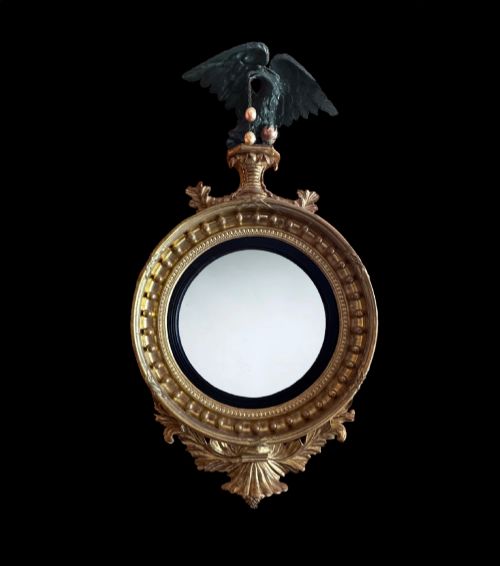
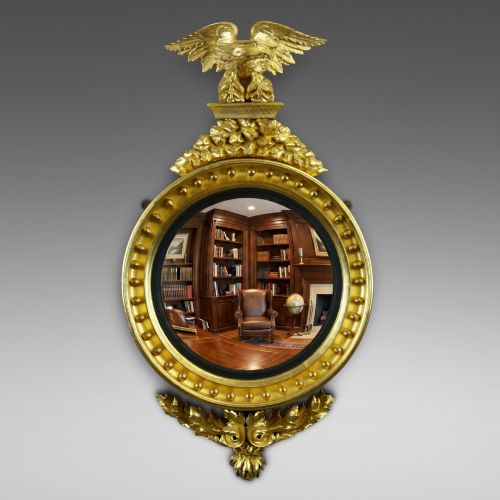
Originating largely from British and French workshops, these pieces arrive in various scales from small hall mirrors to grand four-foot diameters. Bold crests, notably spread eagles, frequently surmount the circular frames.
How they were made
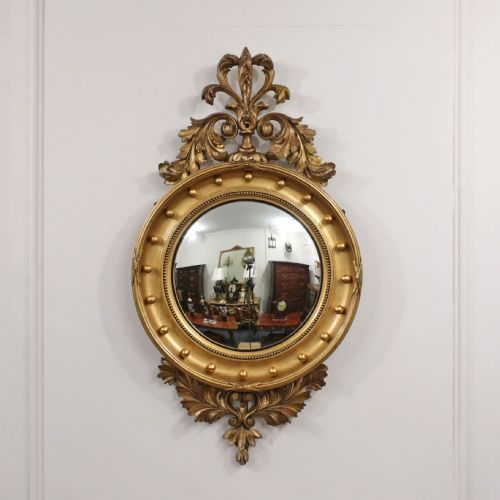
Craftsmen built these circular frames using carved wood and applied gesso, layering a chalk and glue mixture to form elaborate moulded details. Artisans then applied delicate gold leaf over the surface, burnishing parts to achieve a brilliant metallic sheen.
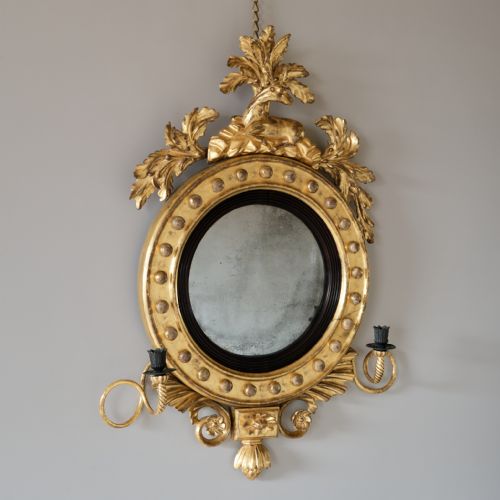
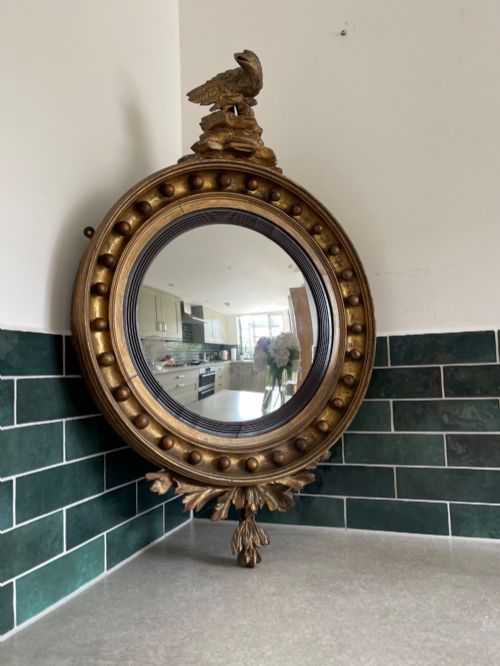
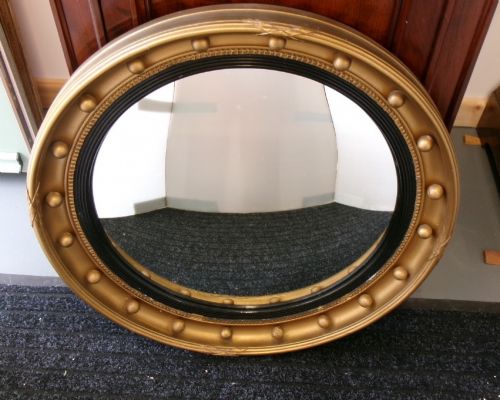
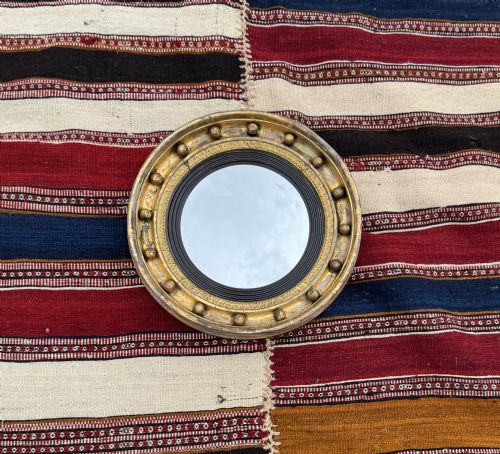
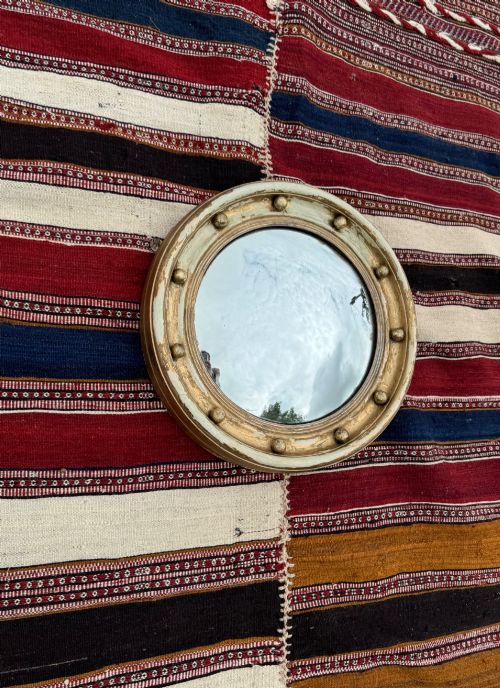
Many examples incorporate an ebonised slip, a blackened inner ring that creates a sharp visual contrast against the bright gilded exterior. The curved mirror glass itself sits deeply within the rebate, often accompanied by spherical ball ornaments embedded in the surrounding frame.
Convex mirrors were once nicknamed safety glasses because butlers used them to keep an eye on the entire dining room at once.
What varies in quality
The finesse of the hand-carved ornamentation and the crispness of the gesso mouldings separate everyday examples from exceptional pieces. Superior frames display deeply undercut foliage, sharply defined eagle crests, and meticulous gilding that retains its original warmth.
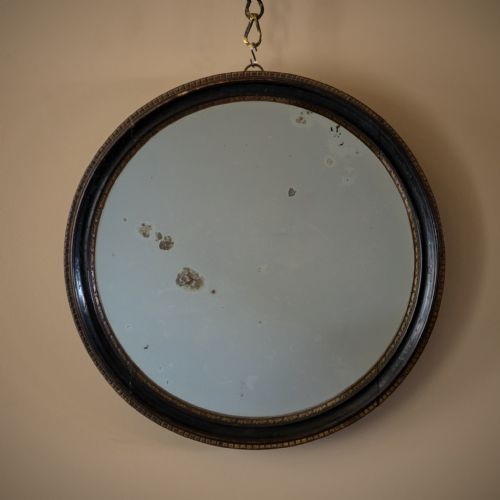
The clarity and depth of the convex mirror glass also influence the overall character, alongside the structural integrity of the heavy timber carcass. Original mercury glass or well-preserved silvering adds historic authenticity and depth to the reflection.
The Giltwood Round Wall Mirror Glossary
- Giltwood
- Wood that has been coated with gold leaf or gold paint. This technique gives frames a luminous, enduring metallic finish.
- Gesso
- A plaster mixture applied to wooden frames as a base for moulding and gilding. It allows craftsmen to sculpt intricate relief decorations.
- Convex glass
- Curved mirror glass that bulges outward to provide a wide, fish-eye reflection of the interior. It was historically used by butlers to survey entire rooms.
- Ebonised slip
- A dark, blackened wooden inner moulding set around the mirror glass. It serves to frame the reflection and separate the glass from the gilded border.
- Overmantel mirror
- A large mirror designed to hang above a fireplace mantel. These pieces frequently feature arched tops or grand rectangular proportions.
Giltwood Round Wall Mirror: Frequently Asked Questions
How do I hang a heavy giltwood round wall mirror?
These frames carry significant weight due to their dense timber and plaster construction, requiring secure fixing directly into wall studs or masonry using heavy-duty picture hooks and brackets.
Consult a professional installer to ensure the wall structure safely supports the substantial load of a large convex mirror.
Where should I place a convex mirror in my home?
Position the piece opposite a window or light source to maximise the panoramic reflection and brighten darker corners of a hallway, sitting room or dining space.
Hanging the mirror at eye level ensures the curved perspective functions effectively as a striking decorative centrepiece.
How do I clean and care for antique giltwood?
Dust the gilded frame gently with a soft, dry ostrich feather duster or a clean, dry microfibre cloth to prevent accumulation without disturbing the delicate surface.
Avoid using water, chemical sprays or abrasive cleaners on giltwood and mirror glass, as moisture readily damages aged gesso and gold leaf.
What is the difference between a Regency and a Victorian convex mirror?
Regency examples, dating from the early nineteenth century, frequently showcase classical motifs like eagle surmounts, ball-stud frames, and ebonised slips designed to reflect light in formal rooms.
Victorian and later nineteenth-century pieces often adopt simpler or heavier porthole formats with sturdier construction suited to domestic hall and parlour use.