






Victorian Giltwood Convex Mirror
A victorian giltwood convex mirror brings unmatched depth and drama to a room, offering a curved perspective that draws the eye instantly.
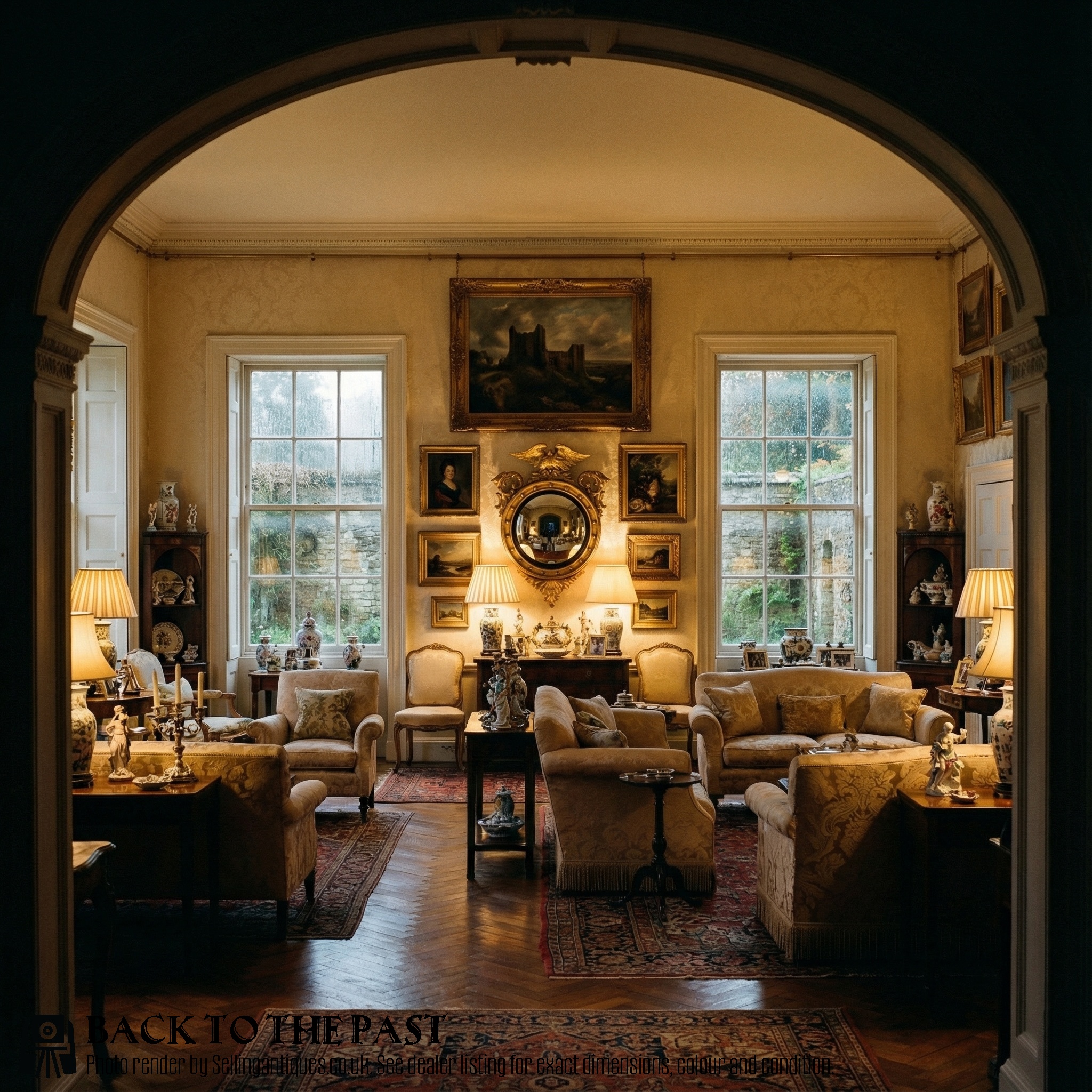
Victorian Giltwood Convex Mirror
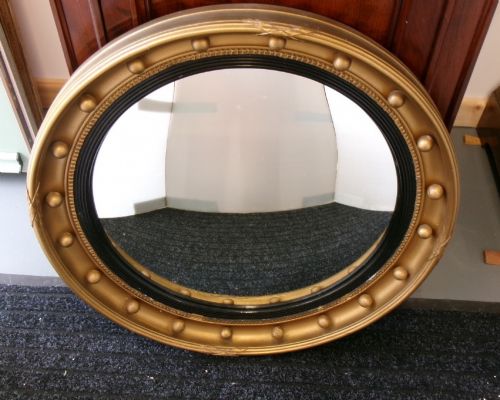
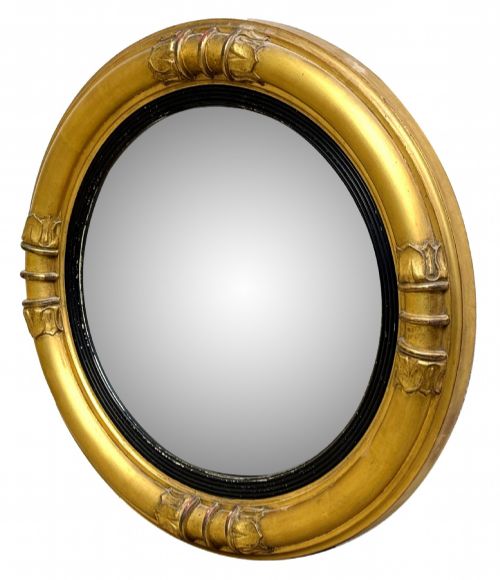
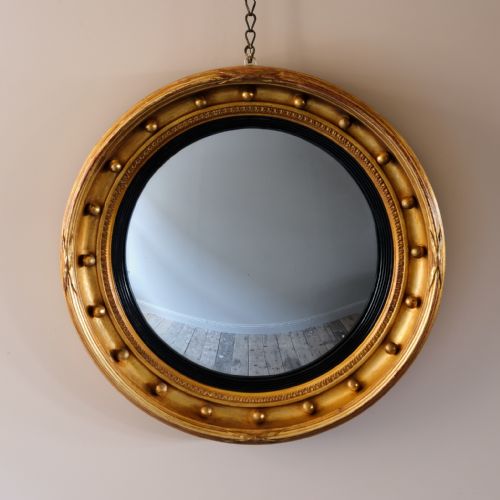
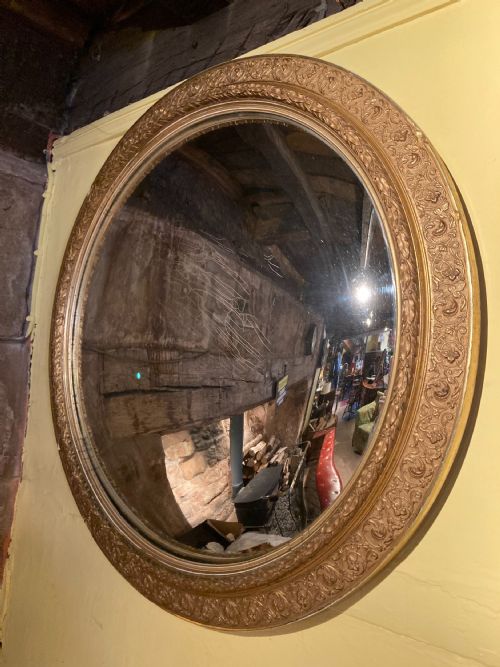
When you search for a victorian giltwood convex mirror, you uncover circular wall mirrors designed to reflect an entire room within a curved glass surface. These pieces range from small hall mirrors to large statement objects featuring distinctive circular frames.
Most examples found here date from the nineteenth century and the Victorian era, spanning specific periods like eighteen-ninety and mid-nineteenth century origins. You will frequently encounter wall mirrors and porthole designs alongside decorative frames with rich historical character.
The aesthetic bridges several related styles including Regency, Regency Revival, and French Chateau influences. Whether presented as a single focal point or a matched pair, these mirrors dominate interior spaces with traditional presence.
How they were made
Maker construction relies on carved wood and moulded gesso coated in brilliant giltwood finishes to achieve an opulent metallic sheen. Artisans also incorporated contrasting ebonised wood details within the frames to accentuate the central circular glass.
The defining characteristic remains the curved convex glass plate, which bends light and expands visual space across the interior. Frames often incorporate intricate woodwork and decorative crests such as an eagle surmount.
Victorian Giltwood Convex Mirror Retail Price Guide 2026
Typical asking prices for victorian giltwood convex mirror among the pieces listed under this phrase on Sellingantiques today, from the lower quarter to the upper quarter. They describe what is for sale here now, not the wider market.
Some specimens include an eagle perched proudly on top, keeping a watchful glass eye over the room below.
What varies in quality
The richness of the gilding and the crispness of the carved wooden ornament distinguish superior examples from simpler alternatives. Higher grade frames display deeper relief work and finer detailing across the gesso surface.
The clarity and condition of the convex glass plate also determine the overall standard of the piece. Well-preserved plates maintain an even reflection without excessive foxing or distortion of the curved perspective.
The Victorian Giltwood Convex Mirror Glossary
- Convex mirror
- A round mirror with an outward-curving glass surface that captures a wide-angle reflection of the surrounding interior. This optical design was historically prized for monitoring activity across a large room.
- Giltwood
- Timber that has been coated with a thin layer of gold leaf or gilt finish. It provides a luminous, reflective surface that catches natural light.
- Gesso
- A plaster-like mixture applied to wood frames and carved into intricate decorative motifs before gilding. It allows for sharp, ornate detailing.
- Ebonised wood
- Timber treated to resemble expensive ebony, typically creating dark contrasting accents within a lighter frame. This technique adds visual depth to nineteenth-century designs.
- Porthole mirror
- A colloquial term for a small, circular wall mirror resembling a ship's window. These compact pieces serve as striking focal points in hallways and intimate spaces.
Victorian Giltwood Convex Mirror: Frequently Asked Questions
Where should I hang a convex mirror?
These mirrors excel in hallways, reception rooms, and above mantelpieces where their wide-angle reflection can be fully appreciated. Positioning them opposite a window maximises the dispersion of natural light.
Because of their curved perspective, they function best at eye level as standalone decorative focal points rather than functional dressing mirrors.
How do I date a nineteenth-century mirror?
Dating relies on examining the construction of the wooden frame, the composition of the gesso, and the characteristics of the backing boards. Nineteenth-century examples often exhibit hand-carved details and period-specific framing styles.
Archival records and stylistic markers such as Regency Revival influences also help narrow down the decade of production.
How do I clean giltwood and convex glass?
Dust the giltwood frame gently with a soft, dry brush to protect the delicate gold leaf finish from abrasion. Avoid using chemical cleaners or water on the gilded surface entirely.
Clean the curved glass using a minimal amount of glass cleaner applied to a cloth rather than sprayed directly onto the surface, preventing moisture seepage behind the frame.
Why are these mirrors round?
The spherical glass naturally produces a wide-angle, fish-eye reflection that encompasses an entire room within a compact boundary. This optical property made them popular in period interiors for both decoration and practical observation.
Circular frames emphasise this geometric form, often enhanced by decorative surrounds like ball-bearing bezels or carved mouldings.