
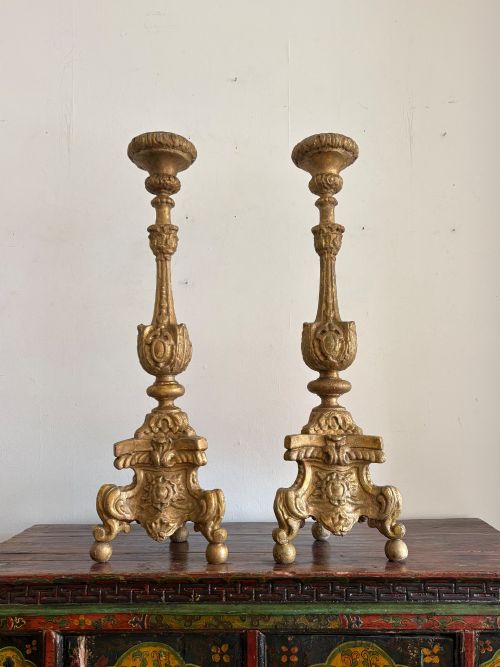
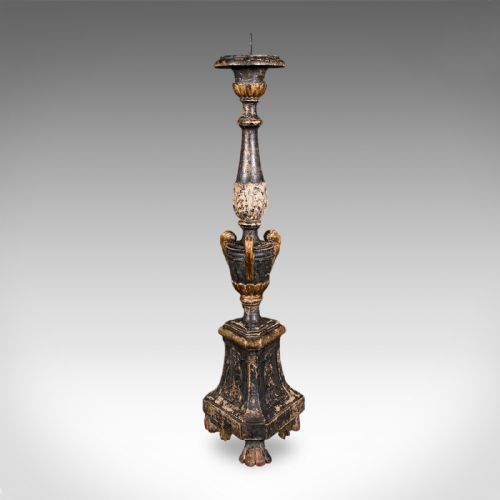


Giltwood Pricket Candlesticks
Giltwood pricket candlesticks are commanding altar lights and large table lamps carrying centuries of carved ornament and bright metallic leaf.
Giltwood Pricket Candlesticks
When you search for giltwood pricket candlesticks, you are looking at tall carved altar lights and candle holders, alongside pieces later adapted into standard and table lamps. The most common examples met here originate from Italian workshops working in the Baroque and Venetian styles, alongside English Georgian and Victorian interpretations.
Forms range from modest single sticks to large altar-type candlesticks of impressive proportions, often appearing as pairs. Many pieces in this selection carry the heavy carved ornament characteristic of eighteenth-century ecclesiastical furnishing.
How they were made
Maker-carpenters shaped these objects primarily from wood, applying gesso to smooth the surface before laying down gold leaf and sometimes silvered mecca finishes. Polychrome highlights and ebonised details frequently appear alongside the dominant gilt surface.
Iron and brass components occasionally form the internal or structural support for the spikes, known as prickets, upon which the large candles sit.
Materials recorded across the selection include carved wood, gesso, gold leaf, iron and brass.
What varies in quality
The depth and vigour of the carved woodwork set the baseline for quality, separating master carvers from routine workshop production. Crisp detail in the acanthus leaves, scrollwork and architectural turning remains clear beneath the layers of gold leaf on superior examples.
The integrity of the original gesso and gilt surface defines the visual impact of each piece. Surface wear and historic regilding alter the character, distinguishing untouched church survivals from pieces restored at a later date.
The Giltwood Pricket Candlesticks Glossary
- Pricket
- A sharp metal spike on top of a candlestick designed to hold a large candle securely in place. This form predates socket candlesticks and remains common on altar pieces.
- Giltwood
- Timber that has been coated with gold leaf or gold paint over a prepared ground. It provides a rich, reflective surface for ecclesiastical and decorative objects.
- Gesso
- A plaster mixture applied to wood surfaces as a smooth base for gilding and painting. It allows carvers to achieve sharp details before applying gold leaf.
- Baroque
- An ornate artistic style characterised by dramatic movement, deep carving and grand proportions. It dominates the Italian and English pieces in this category.
- Mecca
- A transparent yellow varnish applied over silver leaf to imitate the warmer tone of gold. It creates a distinctive lustrous finish on Venetian pieces.
Giltwood Pricket Candlesticks: Frequently Asked Questions
What is a pricket candlestick?
A pricket candlestick uses an upright metal spike rather than a socket to secure the candle during burning. This traditional ecclesiastical design held large wax candles on church altars.
Over time, many of these tall wooden sticks lost their spikes or were drilled to accept electrical wiring for table and standard lamps.
How do I care for giltwood?
Giltwood requires gentle treatment to preserve the delicate gold leaf and underlying gesso layers from damage. Dusting should be done lightly with a dry, soft brush rather than a cloth that might snag.
Keep these pieces away from direct sunlight, excessive heat and moisture, which can cause the gesso to crack and the gold leaf to flake.
Are these pieces from churches?
Many large giltwood candlesticks originated as altar furnishings in European churches, particularly in Italy during the Baroque period. Their impressive height and grand ornamentation served liturgical functions during services.
Other examples were made for domestic reception rooms and grand English houses in the Georgian and Victorian periods, echoing ecclesiastical forms.
How can I tell Italian from English pieces?
Italian pieces often display exuberant Baroque or Venetian carving with rich gilt surfaces and occasional polychrome or silvered mecca finishes. Their proportions tend to be monumental and heavily ornamented with acanthus scrolls.
English pieces from the Georgian and Victorian eras generally show a more restrained interpretation of carved wooden forms, sometimes incorporating ebonised wood.