
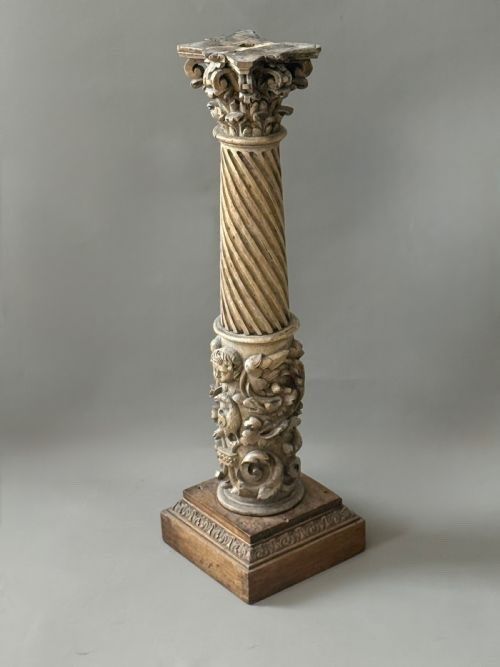


Cherub Base Candlesticks
Cherub base candlesticks bring together cast bronze putti and substantial marble plinths, offering a classic ornamental lighting form for period interiors.
Cherub Base Candlesticks
Cherub base candlesticks combine sculptural metal figures of winged putti with solid stone or metal supports to hold candles or multi-arm lighting attachments. The forms frequently appear as matched pairs fashioned during the nineteenth century, drawing heavily on earlier Continental design traditions.
The materials span patinated bronze, gilt bronze, and ormolu combined with contrasting marble bases, while some examples extend into multi-light candelabra. These pieces reflect stylistic revivals including Louis XVI, French Rococo, and Continental Baroque aesthetics seen across the surviving inventory.
Materials and construction
The production relies on metal casting techniques to shape detailed bronze putti figures, which are then finished with patination, parcel gilding, or ormolu highlights. Artisans combined these metal components with carved marble bases to provide weight and stability.
Additional lighting arms and sconces were attached to the main figures using threaded fixings or pins, allowing multi-light candelabra configurations alongside simpler single-candle holders.
Some putti manage to hold heavy multi-light candelabra with expressions of serene indifference.
Quality and execution
The selection and density of the marble used for the plinths also mark distinctions in grade, as does the integration between the metal figure and its stone base.
Claude Clodion
The Cherub Base Candlesticks Glossary
- Putti
- Plural of putto, representing plump male infant figures often depicted with wings in classical and revival art. These figures form the primary sculptural support in cherub base candlesticks.
- Ormolu
- Finely ground high-carat gold applied to a bronze base using a mercury amalgamation process, or cast bronze finished to imitate gold. This treatment provides a bright, lasting metallic lustre on French nineteenth-century lighting.
- Candelabra
- A branched lighting fixture designed to hold multiple candles or lights. Many examples in this category expand upon basic candlestick forms by adding arms.
- Pricket stick
- A type of candlestick featuring a sharp central spike rather than a socket to secure the candle. These appear in earlier Continental decorative pieces.
Cherub Base Candlesticks: Frequently Asked Questions
What are cherub base candlesticks?
These decorative objects feature sculpted figures of winged putti supporting candle sockets or lighting arms, typically mounted on stone or metal plinths.
They function both as functional lighting and as ornamental sculptural pieces for tabletops and mantelpieces.
How were they used historically?
Historically, they provided ambient illumination in grand interiors, often placed on mantelpieces or side tables where the gilt or patinated surfaces reflected candlelight.
Over time, many surviving examples have been adapted for modern electrical wiring while retaining their original sculptural mounts.
How do I date a pair?
Dating relies on examining the casting quality, the type of marble used for the base, and the stylistic vocabulary such as Louis XVI revival motifs.
Most surviving pieces originate from the nineteenth century, drawing on earlier Baroque and neoclassical design influences.
What materials should I expect?
The primary components consist of cast bronze, often with patinated or gilded finishes, paired with heavy marble bases.
Secondary materials include carved wood and gesso found in rarer Continental interpretations.