

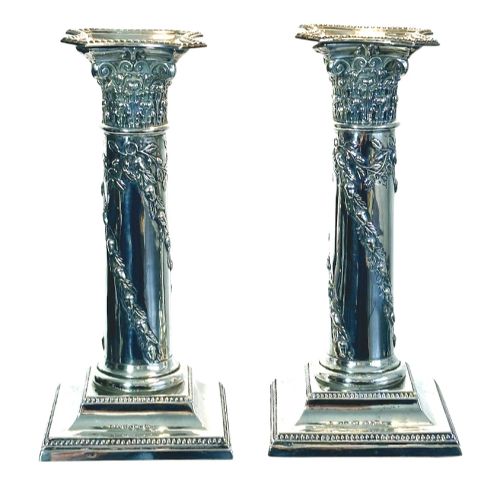


Classical Carved Candlesticks
Classical carved candlesticks bring sculptural presence to a room, offering tactile timber and gleaming ormolu shaped by centuries of European design.
Classical Carved Candlesticks
Classical carved candlesticks encompass sturdy mahogany shafts, ornate giltwood columns, and bronze figures that bridge functional lighting and decorative sculpture. When you search for classical carved candlesticks, you meet objects spanning the eighteenth, nineteenth, and early twentieth centuries, created across British, French, and Venetian workshops.
The selection on this page leans heavily toward nineteenth-century continental pieces alongside Victorian timber items and Edwardian mahogany table lamps. Many examples have been converted from traditional candleholders into wired lamps while retaining their original carved profiles and socle bases.
How they were made
Makers shaped these pieces from dense hardwoods like mahogany alongside soft timbers destined for gesso and leaf application. Carvers worked timber by hand to achieve fluted columns, female figures, and rams head details before applying gilding or silvering.
Metal components relied on bronze and ormolu casting techniques, often executed by notable foundries to produce crisp relief work. Gilt bronze and brass elements were chased and finished to contrast against the matte warmth of carved wooden bases.
Classical Carved Candlesticks Retail Price Guide 2026
Typical asking prices for classical carved candlesticks among the pieces listed under this phrase on Sellingantiques today, from the lower quarter to the upper quarter. They describe what is for sale here now, not the wider market.
Materials across these listings span mahogany, giltwood, bronze, and ormolu, originating from the eighteenth to the twentieth centuries.
What varies in quality
Quality rests in the crispness of the hand-carving and the depth of the original gilding rather than mere age. Superior pieces display fluid naturalism in figurative elements and precise architectural detailing on capitals and socle bases.
The integrity of the material transition, particularly where timber meets bronze or ormolu mounts, defines the upper tier of craftsmanship. Pieces retaining their untouched surface patination command greater appreciation than those heavily restored.
Ferdinand Barbedienne
The Classical Carved Candlesticks Glossary
- Ormolu
- Gilded bronze, where a mercury and gold amalgam was applied to cast bronze and fired to create a durable, golden finish. It adds bright metallic highlights to wooden and stone shafts.
- Giltwood
- Timber coated with gesso and gold leaf to simulate solid gold enrichment. This technique catches candlelight and ambient room illumination effectively.
- Pricket
- A sharp metal spike set on a candlestick drip pan to secure a thick church candle or wax taper. These form the earliest configurations found in domestic lighting.
- Socle
- A short plain plinth or pedestal supporting a candlestick shaft or figurative carving. It raises the main decorative body above the tabletop.
- Torchere
- A tall stand or pedestal originally designed to carry a torch or heavy candle. Later nineteenth-century examples often served as sculptural floor lamps.
Classical Carved Candlesticks: Frequently Asked Questions
Are these candlesticks wired for electricity?
Many examples listed here have been adapted into table lamps to suit modern living spaces while preserving the original carved wooden or gilt bronze structure.
Buyers should check individual descriptions to see whether wiring is present or if the piece retains its original candle-holding configuration.
How do I identify Louis XVI style pieces?
Louis XVI style items typically feature restrained classical geometry, straight fluted columns, and symmetrical ornaments derived from ancient architectural ruins.
They stand apart from earlier baroque or rococo items through a preference for straight lines over restless asymmetry.
What is the difference between giltwood and ormolu?
Giltwood consists of carved timber coated in thin gold leaf over gesso, whereas ormolu is mercury-gilded bronze cast in metal foundries.
Both materials provide golden reflectivity but offer entirely different tactile qualities and weight proportions.
Can I use real candles in pricket sticks?
Eighteenth-century pricket sticks utilise a central metal spike designed specifically for large wax tapers used in ecclesiastical or grand domestic settings.
Care must be taken with historic wax catchers and spike fittings to ensure secure candle placement during use.