



18th Century Church Candlesticks
These 18th century church candlesticks bring heavy giltwood and brass presence to a room, offering genuine ecclesiastical scale and decorative impact.
18th Century Church Candlesticks
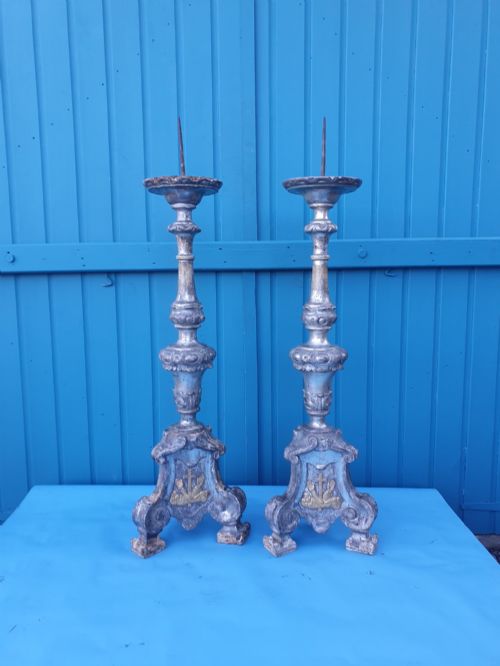
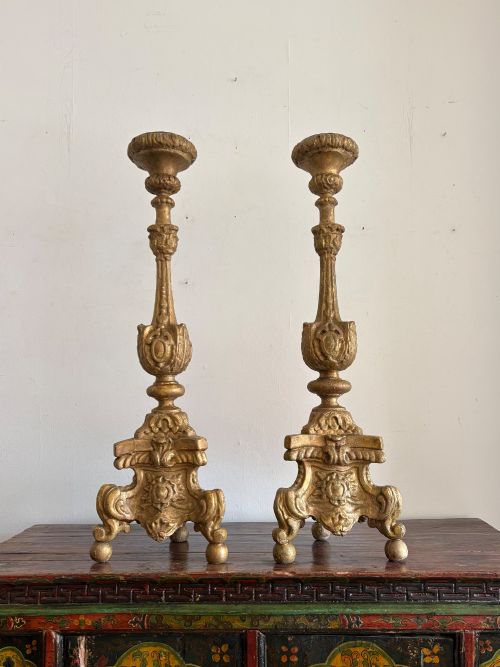
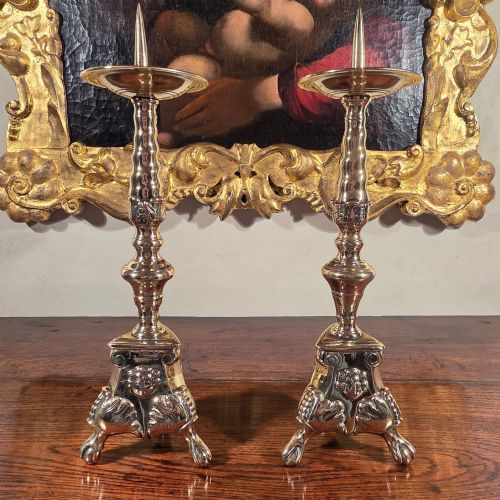
When you search for 18th century church candlesticks, you are looking at items designed for liturgical use, predominantly carved wood and brass forms created across European workshops. The examples found here span forms such as altar candlesticks, pricket sticks, acolyte figure bases, and table lamps adapted from older bodies.
You are most likely to meet Italian Baroque or Georgian pieces on this page, often presented as pairs of substantial height. These objects carry the marks of centuries of devotional use, shifting from church altars into domestic decorative schemes.
How they were made
Makers shaped these pieces from solid timber, brass, and metal, employing traditional carving techniques to build up intricate forms before applying surface decoration. Wood elements received layers of gesso, gold leaf, and silvered mecca finishes to achieve a rich metallic sheen.
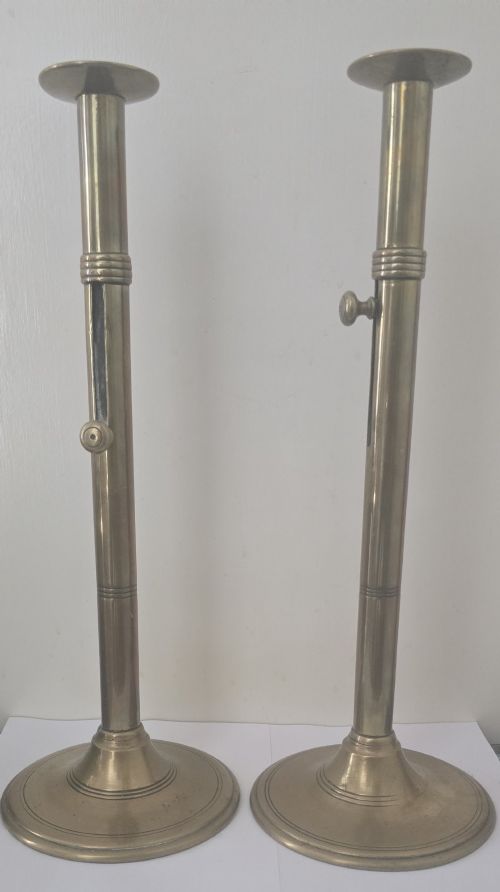
Brass items utilised casting methods, incorporating functional components like side ejectors in later Georgian examples. Carved wood figures and altar sticks relied on joinery and hand-chizzled detailing to support tall candle platforms.
18th Century Church Candlesticks Retail Price Guide 2026
Typical asking prices for 18th century church candlesticks among the pieces listed under this phrase on Sellingantiques today, from the lower quarter to the upper quarter. They describe what is for sale here now, not the wider market.
Several pieces double as acolytes, meaning you get a carved wooden figure holding your candle for you.
What varies in quality
Quality rests in the crispness of the original wood carving and the depth of the surviving giltwood or silvered surfaces. Pieces that retain their unstripped gesso and original gilding hold greater visual coherence than those worn down by heavy restoration.
Proportion and scale dictate the upper end of the range, particularly in tall altar sticks where balanced turning and sculptural integration matter most. The presence of original prickets or period brass ejector mechanisms further distinguishes finer examples.
The 18th Century Church Candlesticks Glossary
- Giltwood
- Wood that has been coated with gold leaf or a gold-coloured finish. This surface treatment was standard for decorative church furnishings.
- Pricket
- A sharp metal spike on top of a candlestick designed to secure a wax candle. This form predates socket-type holders.
- Mecca
- A warm translucent varnish applied over silver leaf to imitate gold. It creates a distinctive aged metallic appearance on Italian wood pieces.
- Gesso
- A plaster-like mixture applied to wood as a base for gilding. It allows for sharp carved details before the application of leaf.
- Acolyte
- An altar assistant or the figure representing one. These carved wooden figures often incorporate candle holders into their design.
18th Century Church Candlesticks: Frequently Asked Questions
What is a pricket candlestick?
A pricket candlestick uses an upward-pointing metal spike rather than a socket to hold the candle in place. This traditional form was common on church altars before socket designs became standard.
Such sticks often appear in 18th century church candlesticks inventories, valued for their distinct medieval silhouette and historical liturgical function.
How were these candlesticks used?
These items stood upon church altars and sanctuary spaces to hold candles during religious services and ceremonies. Their impressive height ensured the light carried across large ecclesiastical interiors.
Today, buyers place them on side tables, mantels, or pedestals as sculptural decorative objects within domestic interiors.
Are these pieces made of solid gold?
No, they are made from carved wood, gesso, and base metals covered in gold leaf or gilt finishes. Solid gold was not used for large church candlesticks due to weight and cost.
The thin layer of gold leaf applied over gesso provides the rich metallic appearance associated with baroque ecclesiastical art.
How do I tell Italian Baroque from Georgian?
Italian Baroque examples typically feature heavily carved giltwood, scrollwork, and sculptural elements with an ornate continental aesthetic. Georgian pieces lean toward brass construction, clean turned columns, and functional additions like side ejectors.
Examining the materials and decorative carving styles quickly clarifies the regional origin of each piece.