

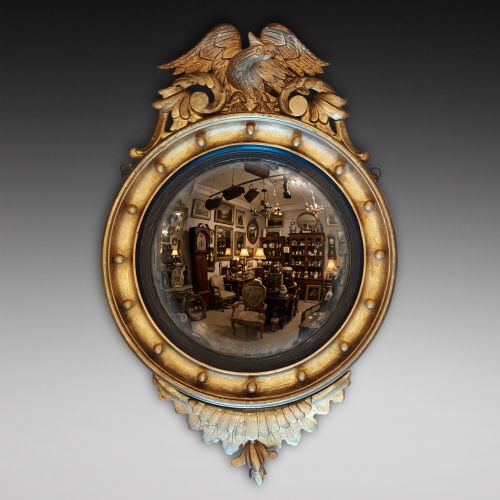
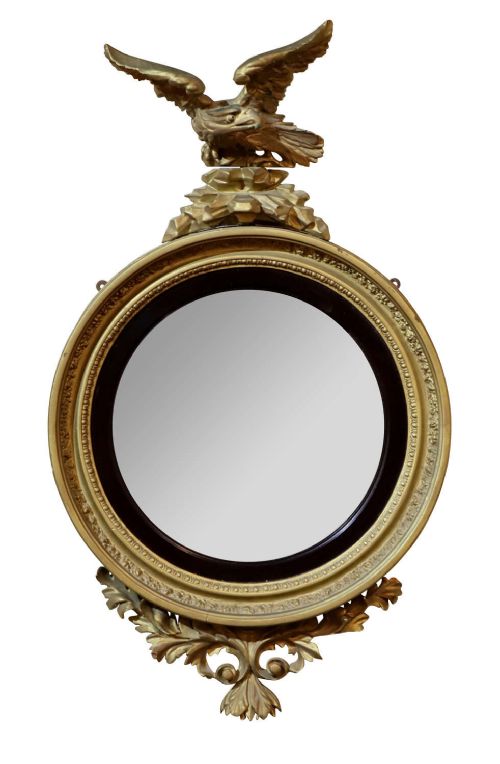
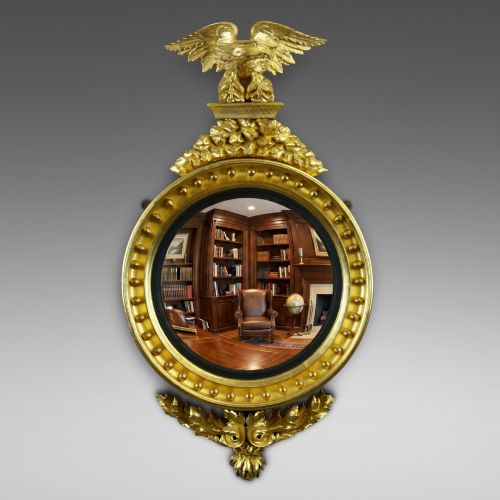
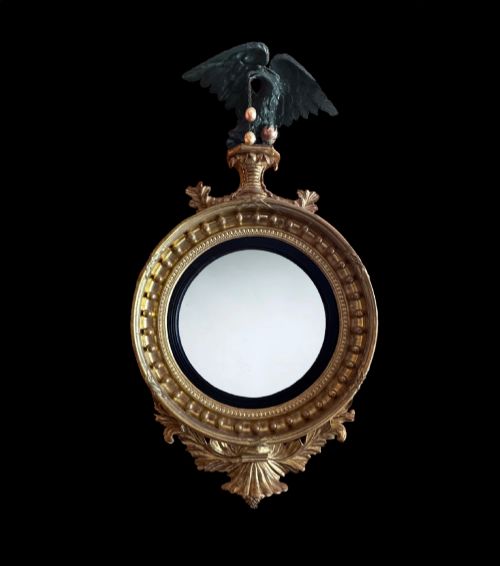





Giltwood Fish Eye Mirror
A giltwood fish eye mirror bends the room into a single curved sphere, catching light and movement across its round frame.
Giltwood Fish Eye Mirror
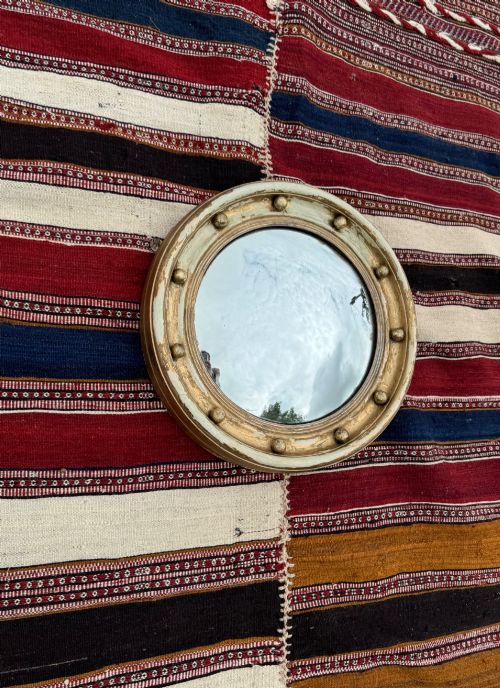
A giltwood fish eye mirror is a circular wall hanging designed to reflect a wide angle of an interior space. These pieces appear primarily in Regency, Georgian, and Victorian forms across the listings here.
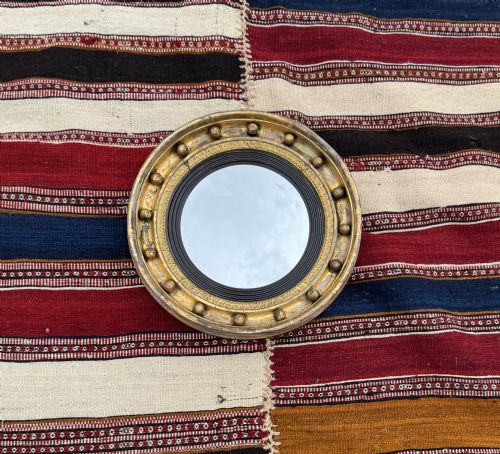
The version most commonly met on this page is the circular convex mirror set within a gilt wood frame. Many examples date from the nineteenth century, including specific Regency and Victorian interpretations.
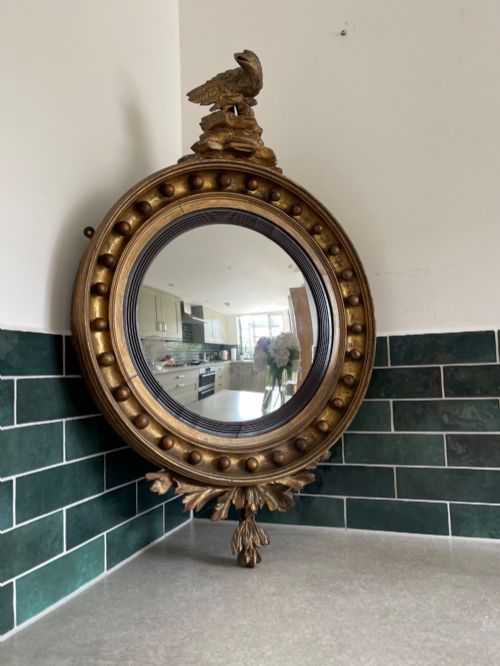
Makers often topped these wall mirrors with carved crests such as eagles. They serve both as functional optical devices and as decorative focal points in halls and reception rooms.
How they were made
Makers constructed the round frames using wood and gesso before applying gold leaf or gilt finishes. This traditional layering created the bright reflective surface of the giltwood frame.
The convex glass, often called mirror glass or mirrored glass, was blown or slumped to achieve its characteristic curvature. Ebonised wood details frequently appear alongside the gilding to add contrast to the moulding.
Giltwood Fish Eye Mirror Retail Price Guide 2026
Typical asking prices for giltwood fish eye mirror among the pieces listed under this phrase on Sellingantiques today, from the lower quarter to the upper quarter. They describe what is for sale here now, not the wider market.
Materials recorded across these items include giltwood, gesso, ebonised wood, and curved mirror glass.
What varies in quality
The refinement of the carved details, particularly on crests like eagles, separates standard frames from superior ones. Crisp carving in the gesso and wood indicates higher workshop skill.
The depth and clarity of the convex glass plate also define the grade of the piece. Older plates often show distinct ripples or dark spots that reveal their age and manufacturing method.
The Giltwood Fish Eye Mirror Glossary
- Convex glass
- Curved glass that bulges outward to create a fish eye reflection of the room. This form captures a wide panoramic view within a compact circular boundary.
- Giltwood
- Wood that has been coated with gold leaf or metallic gilt. It forms the bright ornamental border typical of these mirrors.
- Gesso
- A plaster-like mixture applied to wood frames to create a smooth surface for carving and gilding. It allows for sharp decorative moulding.
- Girandole
- A wall mirror fitted with candle arms or sconces attached to the frame. These branches reflect candlelight back into the room.
- Ebonised wood
- Timber treated to resemble ebony, providing dark accents on the frame. It is often paired with bright gold leaf.
Giltwood Fish Eye Mirror: Frequently Asked Questions
How do I hang a heavy convex mirror?
These mirrors require secure wall fixings due to the combined weight of the wood, gesso, and glass plate. Fixings must attach directly to wall studs or use appropriate heavy-duty wall anchors.
The hanging wire or bracket on the back of the frame must be checked for strength before installation. Professional installation is often recommended for larger nineteenth-century examples.
Why are some frames ebonised near the glass?
The black inner reeded ring, often rendered in ebonised wood, provides a visual barrier between the bright gilt frame and the reflective glass. This dark moulding helps to draw the eye inward toward the convex surface.
Designers in the Regency period frequently used this contrasting technique to add depth and formal structure to circular wall mirrors.
What is the difference between Regency and Regency Revival?
Regency pieces were produced during the early nineteenth century under the Regency style and the subsequent reign of George IV. They carry the authentic materials and wear of that era.
Regency Revival mirrors were made later, typically in the Victorian or Edwardian periods, copying the earlier aesthetic. They use similar giltwood and convex glass forms but date from a later manufacturing phase.
Can I clean the convex mirror glass?
Antique mirror glass requires gentle cleaning to preserve the silvering and backing on the rear of the plate. Harsh chemical cleaners can seep behind the edges and damage the original reflective coating.
A soft, dry cloth is best for removing dust from the surface. Any moisture should be kept away from the margins where the glass meets the gesso frame.