



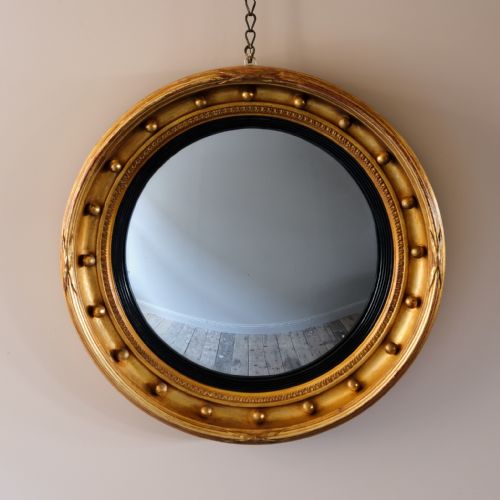


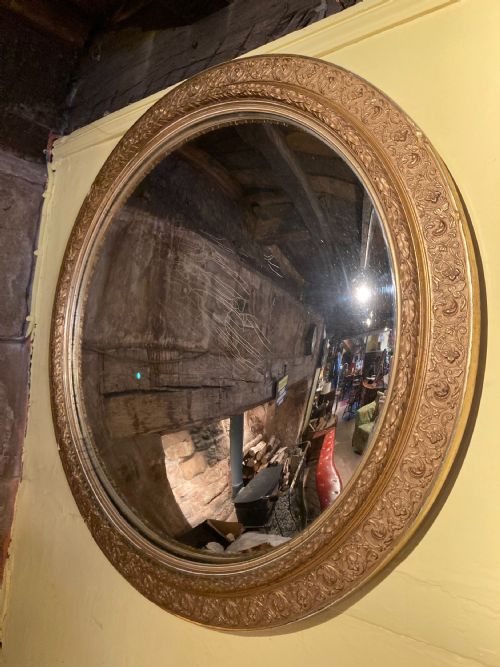


Gilded Bullseye Mirror
These gilded bullseye mirror examples bring intense focal light and a distorted, wide-angle interior view to any room.
Gilded Bullseye Mirror
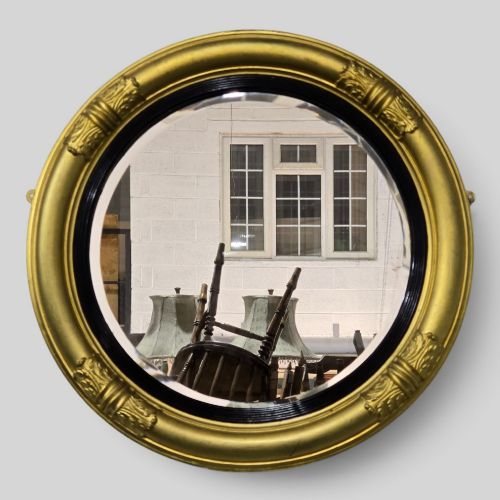
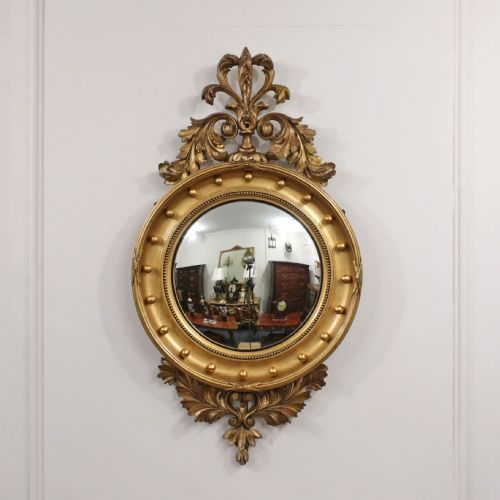
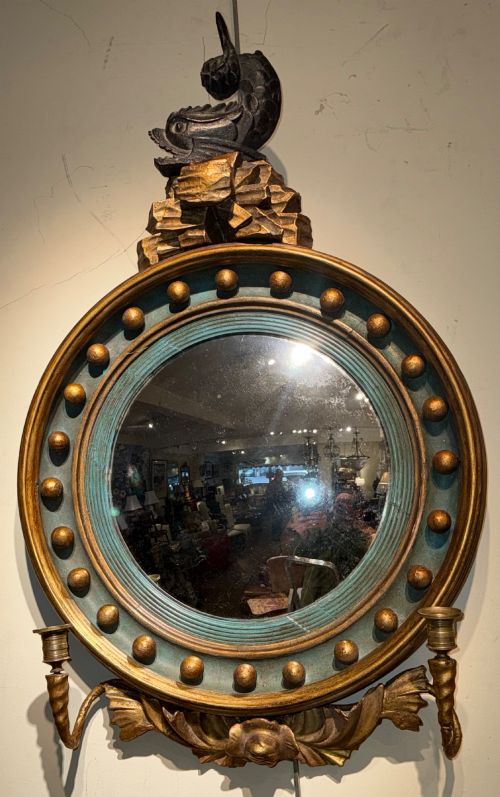
A gilded bullseye mirror presents a circular convex glass plate set within a round frame, designed to reflect an entire room in miniature. When you search for a gilded bullseye mirror, you encounter wall-mounted pieces predominantly from the Regency period, alongside 19th Century, Victorian, Georgian, 1920, 1900, 1930, and 1860 examples.
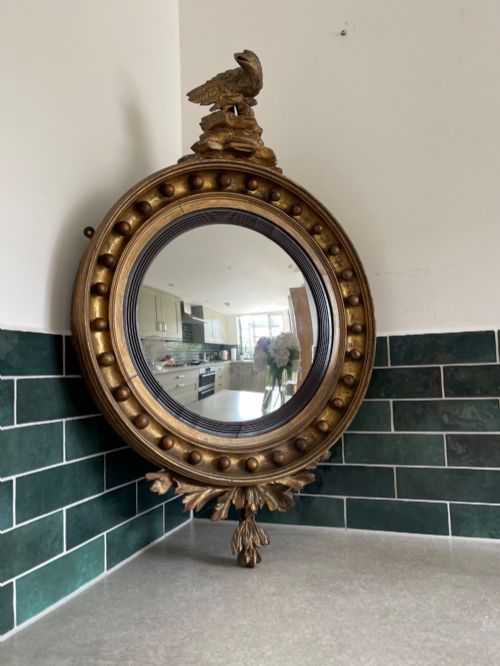
The versions most commonly met on this page are Regency or Regency Revival giltwood convex wall mirrors. These frequently feature circular formats with ornamental details such as carved eagle surmounts.
How they were made
Makers constructed these frames using wood, gesso, and composition materials to build up heavy decorative relief. Workers then applied gold leaf or painted wood finishes to create the characteristic metallic surface.
The central glass element is a blown convex lens, which naturally distorts reflections to project light outwards into the space. Ebonised wood details often frame the inner edge next to the glass to create visual depth.
The convex glass bends light so thoroughly that every visitor in the room appears trapped inside a tiny golden marble.
What varies in quality
The crispness of the carved ornamentation separates the finer examples from simpler work. Deeply undercut foliage, detailed eagle mounts, and sharp mouldings reflect a higher degree of sculptural skill.
The integrity of the original gilt surface and the clarity of the convex glass plate define the visual impact. Heavy losses to the gesso or poorly executed later regilding alter the character of the piece.
The Gilded Bullseye Mirror Glossary
- Convex mirror
- A round looking glass with an outward-curving surface that captures a wide-angle view of the surrounding room. This form is often called a bullseye mirror.
- Giltwood
- Wood that has been coated with a thin layer of gold leaf over a prepared gesso ground. This material defines the bright, reflective frames of the period.
- Gesso
- A plaster-like mixture applied to wooden frames as a smooth base for gilding. Artisans carved intricate decorative motifs directly into this dried layer.
- Composition
- A moulded paste of whiting, resin, and glue pressed into decorative ornaments for frames. Makers utilised this material to speed up production of repetitive leaf and ball details.
- Ebonised wood
- Timber treated with a chemical stain or dark finish to imitate ebony. This dark inner moulding provides a sharp contrast against the surrounding gold leaf.
Gilded Bullseye Mirror: Frequently Asked Questions
What is a convex mirror?
A convex mirror uses a curved spherical glass plate that pushes the reflection outward. This optical design allows the glass to capture a wide-angle panoramic view of an entire interior space.
Historically, these pieces served both decorative and practical functions in homes. The curved surface helped to illuminate dark hallways by gathering and scattering available light.
How do I hang a heavy bullseye mirror?
These mirrors require robust wall fixing because the combination of dense wood, gesso, and glass creates substantial weight. Secure screws must anchor directly into wall studs or masonry rather than relying on standard plasterboard plugs.
Checking the stability of the hanging ring on the reverse is essential before mounting. Professional installation ensures the frame remains safely supported over time.
Why do some have eagles on top?
The eagle surmount represents a classic decorative motif borrowed from classical antiquity. Carvers placed the bird at the crest of the frame as a symbol of majesty and power.
These carved birds often clutch chains or floral swags that drape down the sides of the circular frame. This embellishment was particularly popular on grander Regency examples.
How do I date an old mirror?
Dating relies on examining the construction methods, framing materials, and the characteristics of the glass plate. Early 19th-century pieces often display heavy timber frames with gesso ornamentation and distinct backboards.
Stylistic shifts also help separate Georgian and Regency forms from later Victorian revivals. Comparing the joinery and the wear on the gilding provides further clues to the age.