


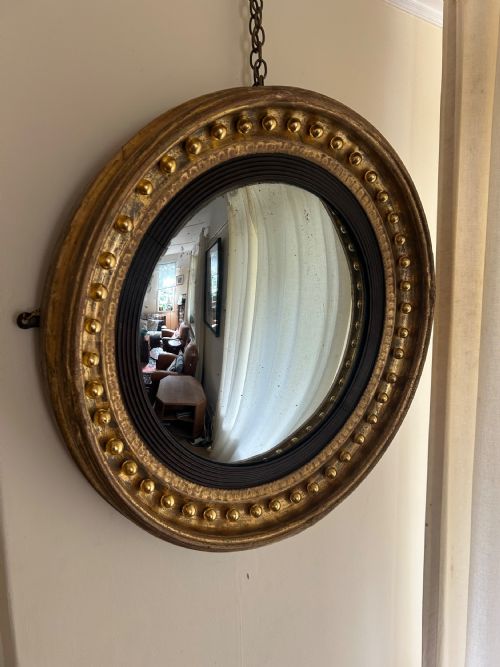

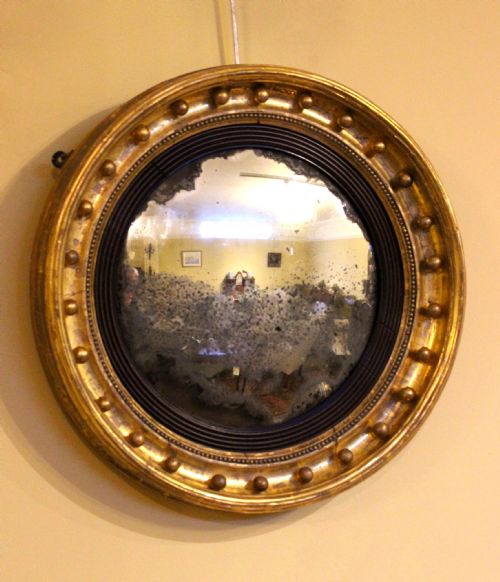


Spherical Wall Mirror
A spherical wall mirror brings an entire room into its curved glass, distorting space in the way that fascinated Georgian and Regency households.
Spherical Wall Mirror
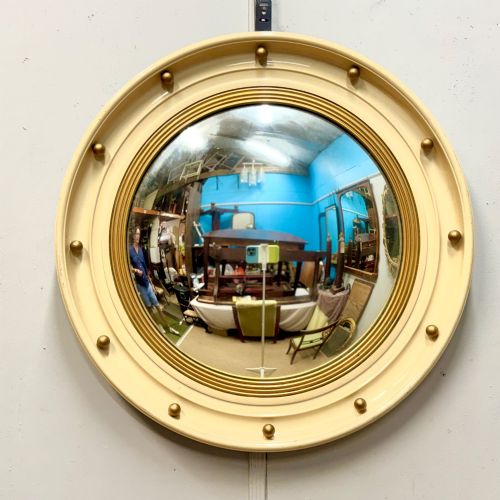
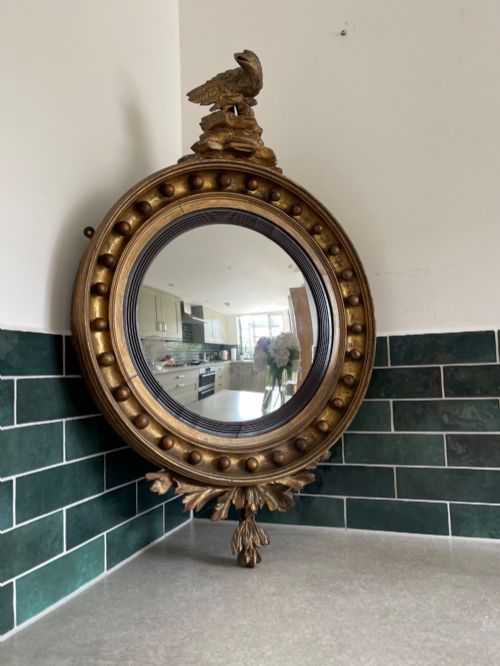
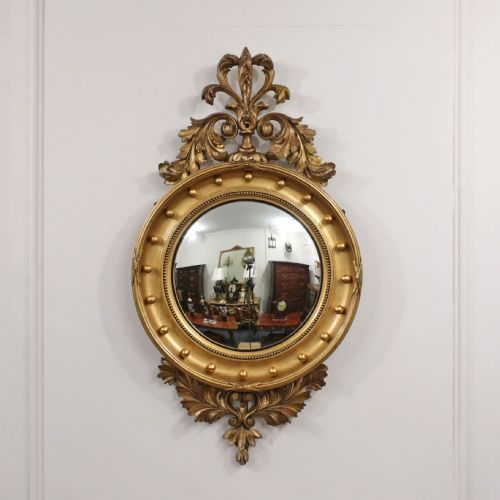
When you search for a spherical wall mirror, you are looking at convex circular glasses set into deep circular frames that capture wide-angle reflections. The versions you are most likely to meet on this page span the Georgian, Regency, and Victorian periods, alongside later revivals from around nineteen hundred. These pieces function primarily as optical novelties and decorative focal points rather than functional looking glasses for checking attire.
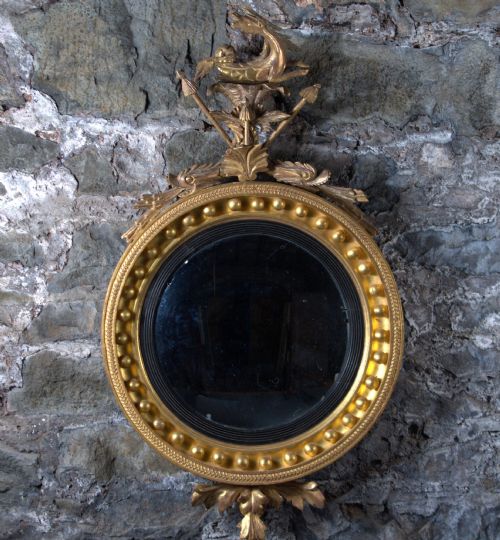
The form appears in various guises across our listings, including traditional butler's mirrors, simple circular frames, and elaborate Regency designs featuring carved eagles or dragons. Materials range from giltwood and gesso to ebonised wood, mahogany, and painted wood. Whether dating from the nineteenth century or built in a Regency revival style, each piece relies on its bulging glass to compress a room into a single circular frame.
How they were made
Makers constructed the primary frames of a spherical wall mirror using timber, often applying gesso to build up decorative details before finishing the surface with gold leaf or paint. Ebonised wood and mahogany also form the structure of certain examples, providing a dark contrast to the reflective glass. The giltwood elements frequently display the rich sheen characteristic of nineteenth century craftsmanship.
The convex glass itself required specialised blowing or forming techniques to achieve the uniform curve necessary for a clear, wide-angle reflection. Once formed, the glass was set into the circular housing, sometimes accompanied by ebonised inner slip rings that frame the reflective surface. The backboards typically consist of timber planks enclosing the mirror plate to protect it from dust and moisture.
Spherical Wall Mirror Retail Price Guide 2026
Typical asking prices for spherical wall mirror among the pieces listed under this phrase on Sellingantiques today, from the lower quarter to the upper quarter. They describe what is for sale here now, not the wider market.
Materials recorded across these items include glass, giltwood, ebonised wood, gesso, gilt, painted wood, and mahogany.
What varies in quality
The distinction between average and exceptional examples of a spherical wall mirror lies in the crispness of the frame's carving and the depth of the gilding. Pieces featuring intricate creatures like dragons or eagles demonstrate superior workshop skill compared to plain circular mouldings. The quality of the gesso application beneath the gold leaf dictates how sharply the decorative motifs retain their original definition.
The clarity and condition of the convex glass itself play a major role in the overall standard of the piece, as original antique glass often shows characteristic foxing and minor distortions. Furthermore, the weight and density of the timber frame indicate the structural integrity maintained over the centuries. Refinished surfaces versus original untouched gilt finishes also divide the standard examples from those of higher collectible interest.
The Spherical Wall Mirror Glossary
- Convex glass
- Curved outward like the exterior of a sphere, this glass reflects a wide, panoramic view of the surrounding interior. It is the defining feature of these mirrors.
- Giltwood
- Timber that has been coated with a thin layer of gold leaf over a prepared gesso base. This material gives many period frames their luminous golden appearance.
- Gesso
- A plaster-like mixture applied to wooden frames to create a smooth surface for carving or gilding. It allows for intricate decorative relief work.
- Butler's mirror
- A traditional term for a convex mirror often hung in dining spaces or service areas to allow staff to monitor the room. These frequently feature simple circular wooden frames.
- Ebonised wood
- Timber treated with a stain or finish to imitate ebony. This dark finish creates a striking contrast against gilded details on nineteenth-century frames.
Spherical Wall Mirror: Frequently Asked Questions
Where should I hang a spherical wall mirror?
These pieces work best in principal reception rooms, hallways, or dining spaces where their wide-angle reflection can capture the entire layout of the interior. Hanging them opposite a window maximises the amount of light they draw into the space.
Because of their optical distortion, placing them at eye level in narrow hallways or above mantelpieces allows viewers to appreciate both the room's reflection and the intricate frame details up close.
What is a sorcerer mirror?
A sorcerer mirror is an alternative historical term for a convex wall mirror, originating from the idea that the distorted, wide-angle reflection resembled a crystal ball used for divination. These pieces were popular curiosities in nineteenth-century homes.
They combine decorative appeal with optical science, serving as both room ornaments and fascinating conversation pieces.
How can I tell a nineteenth-century mirror from a later revival?
Examining the construction of the timber backing boards, the composition of the gesso, and the natural ageing of the gilt finish helps determine the true age of a piece. Older mirrors often exhibit hand-cut fixings and distinct shrinkage cracks in the gesso layer.
Revival pieces made around nineteen hundred or later tend to show more uniform manufacturing traits and less wear to the underlying materials.