
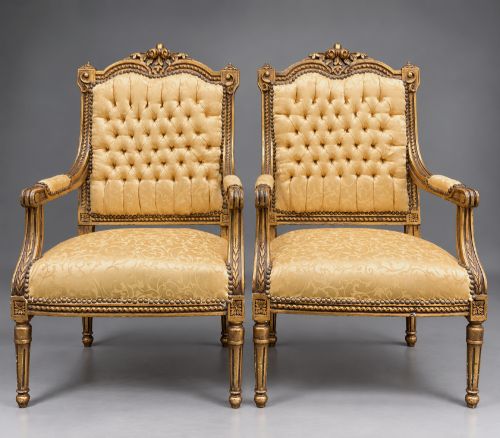
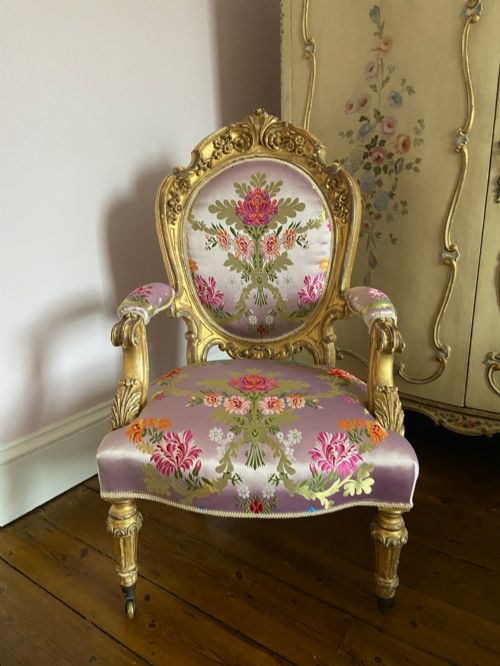
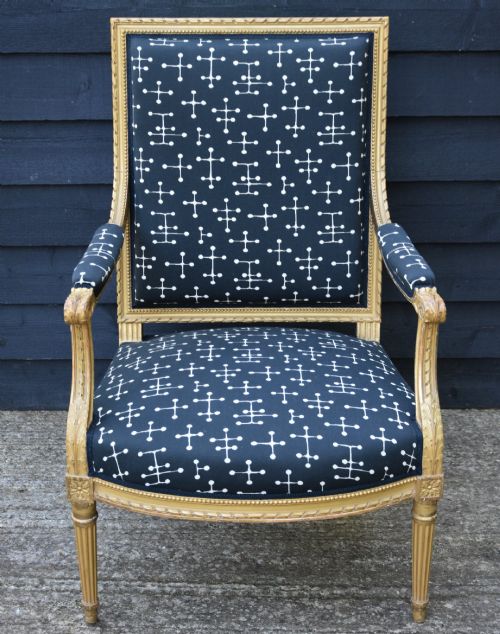
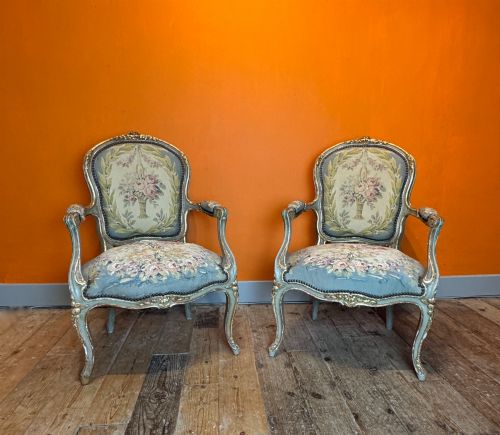
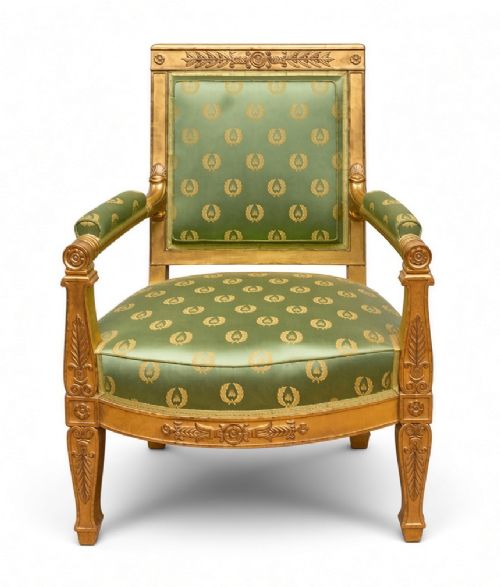
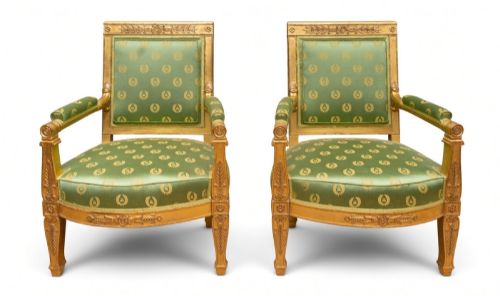
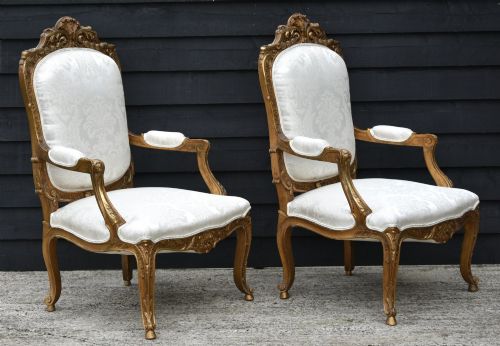
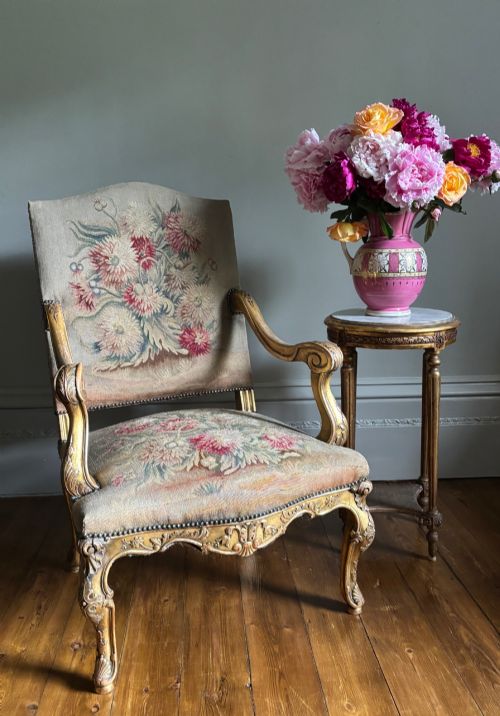
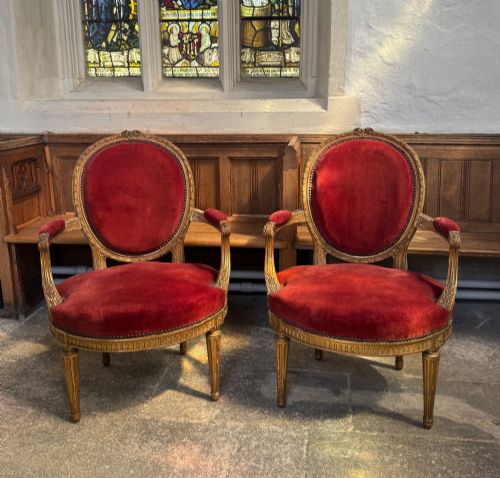
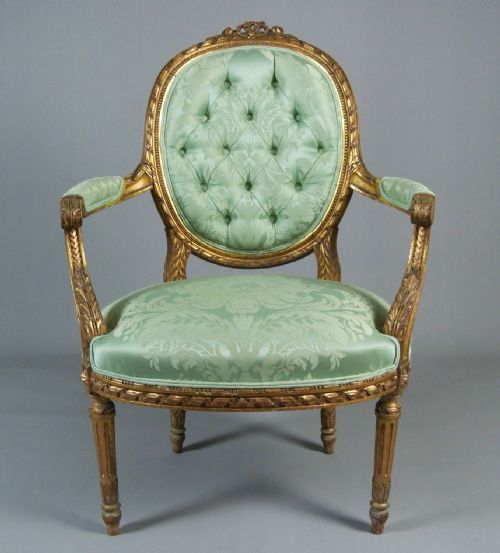
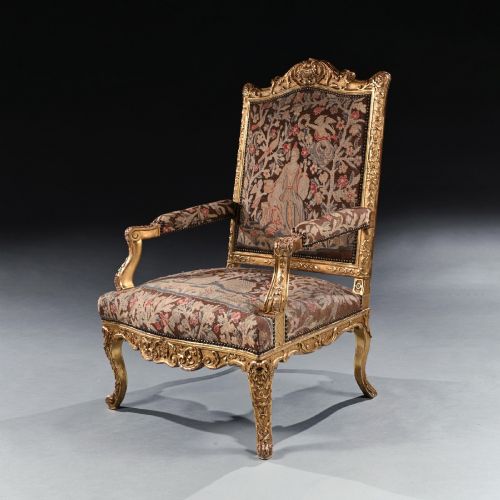
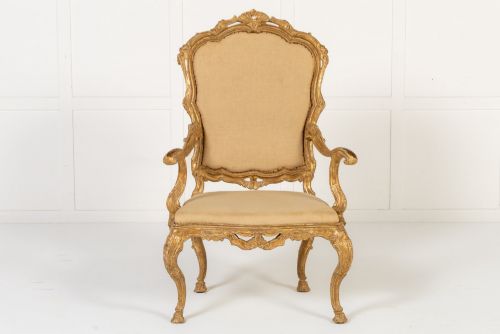
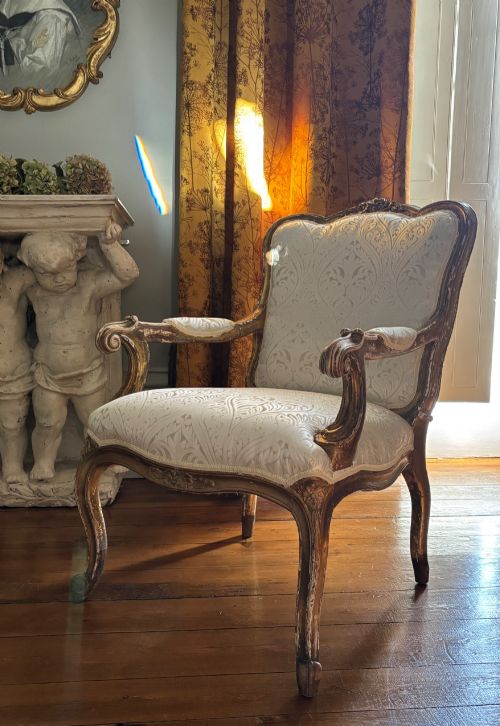
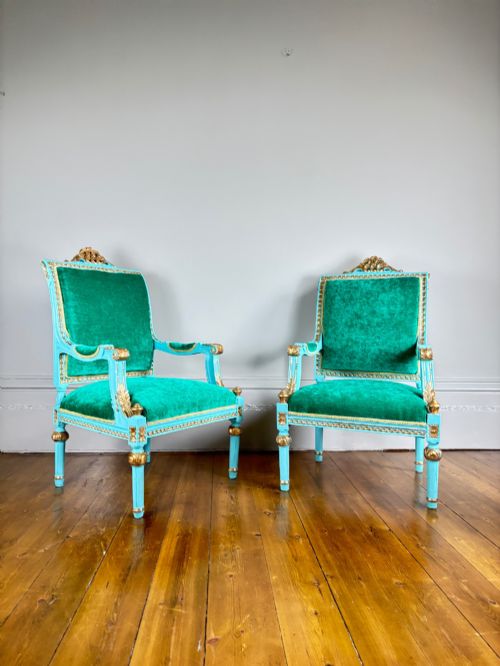
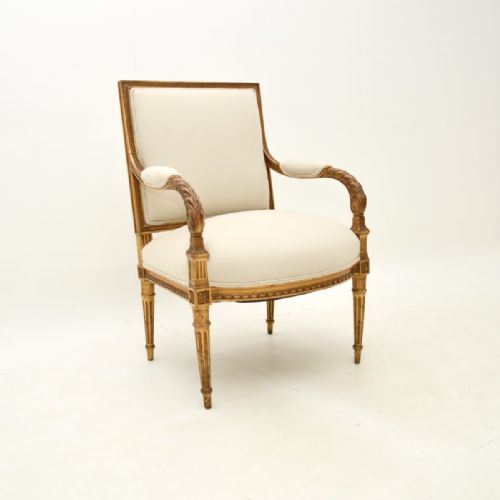
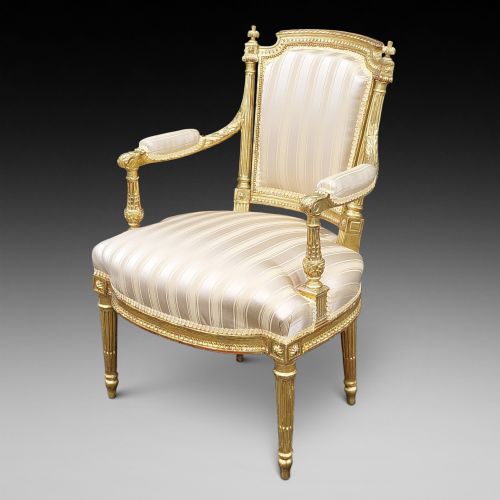
Giltwood Fauteuil Armchair
A giltwood fauteuil armchair brings classical elegance to a room through carved wood and gilded surfaces.
Giltwood Fauteuil Armchair
A giltwood fauteuil armchair is an open-armed seating form designed for formal salons, drawing upon historical French and Italian design vocabulary. When searching for a giltwood fauteuil armchair, buyers encounter pieces originating predominantly from the eighteenth and nineteenth centuries, alongside revival interpretations from later decades.
The selections span authentic period items from French chateaux and Italian estates to nineteenth-century revival suites created in the Louis XVI or Régence manner. Upholstery varies widely, incorporating period-appropriate tapestry, velvet, silk, or modern fabric replacements.
How they were made
These chairs rely upon structural frames shaped from timber such as beech, carved by hand to form scrolling arms, cabriole legs, or fluted neoclassical columns. Craftsmen applied thin sheets of gold leaf over a prepared gesso and bole ground to achieve the characteristic giltwood finish.
Textiles including silk, velvet, and historical tapestries were secured to the frames using traditional upholstery methods, often finished with decorative gimp braid or brass nailheads.
Listings feature beech frames finished in giltwood, paired with textiles ranging from antique tapestries to modern silk velvet.
What varies in quality
The depth and crispness of the wood carving distinguish superior examples from simpler production, separating fluid hand-cut acanthus leaves from shallow or mechanically smoothed moulding. The integrity of the original gilding layer, showing burnished highlights against matte recesses, dictates the visual presence of the piece.
Proportion and scale also determine distinction, as larger library or salon models command greater presence than smaller bedroom or occasional variants.
Jacob Desmalter·Thomas Chippendale·Blaise Maucuy·Holland and Sons
The Giltwood Fauteuil Armchair Glossary
- Giltwood
- Wood that has been coated with thin gold leaf applied over a prepared gesso ground. This finish provides a warm, reflective surface characteristic of formal European seating.
- Fauteuil
- An open-armed upholstered armchair originating in France, typically featuring exposed wooden framing around the back and seat. It contrasts with the fully upholstered bergère.
- Régence
- A transitional stylistic period bridging seventeenth-century baroque and eighteenth-century rococo, noted for dynamic curves and symmetrical carved ornamentation. Pieces from this era display early asymmetric flourishes.
- Louis XVI Style
- A neoclassical design movement characterised by straight tapered legs, geometric restraint, and classical motifs such as fluting and paterae. Chairs in this manner reject rococo curves in favour of architectural symmetry.
- Bole
- A prepared layer of fine clay applied beneath gold leaf to provide a receptive bed for burnishing. The red or yellow tone of the clay subtly influences the warmth of the gold above it.
Giltwood Fauteuil Armchair: Frequently Asked Questions
How do I identify a Louis XVI style armchair?
Louis XVI style armchairs feature straight, fluted legs and geometric shapes such as round or oval backs. They reflect neoclassical restraint rather than curving rococo lines.
Carved details on these chairs typically include classical motifs like ribbons, acanthus leaves, and beaded moulding. The frames are frequently painted and parcel gilt or finished in full giltwood.
Were these chairs used at dining tables?
Most antique fauteuils were designed for parlours, drawing rooms, and salons rather than formal dining. Their open arms required space and suited conversation or reading.
Dining chairs of the period generally lacked arms to allow guests to sit closer to the table while wearing voluminous historical garments.
How should I care for historic gilding?
Historic gilding requires gentle dusting with a soft, dry brush to prevent damage to the delicate gold leaf layer. Moisture and chemical polishes will strip or discolour the finish.
Keep these chairs away from direct sunlight and strong heat sources to protect both the underlying wood and the antique upholstery.