

French Gilt Accent Chairs
French gilt accent chairs bring gilded frames and upholstered seating into a room, offering decorative presence alongside functional comfort.
French Gilt Accent Chairs
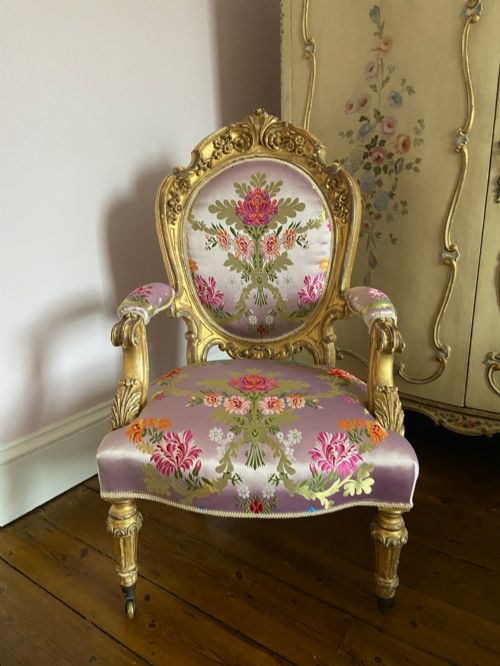
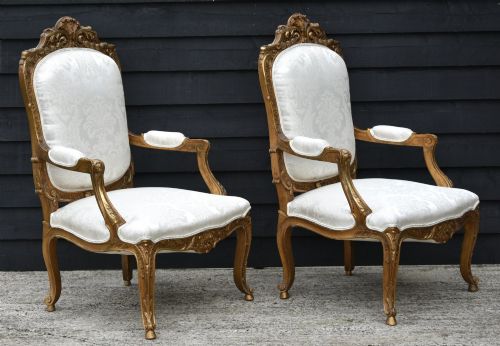
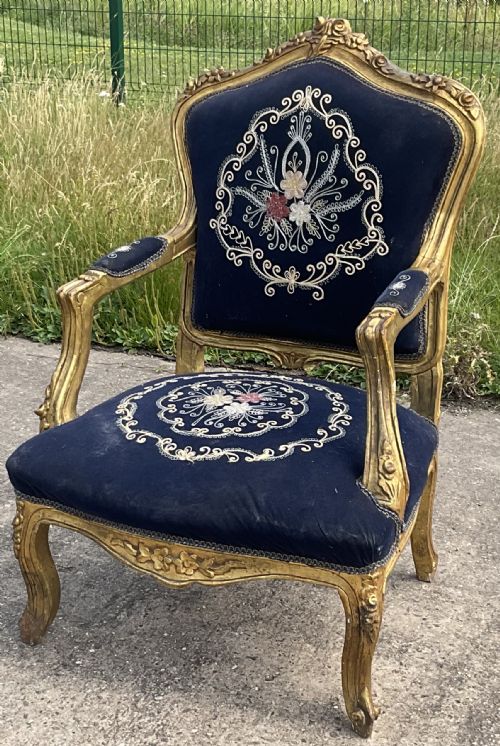
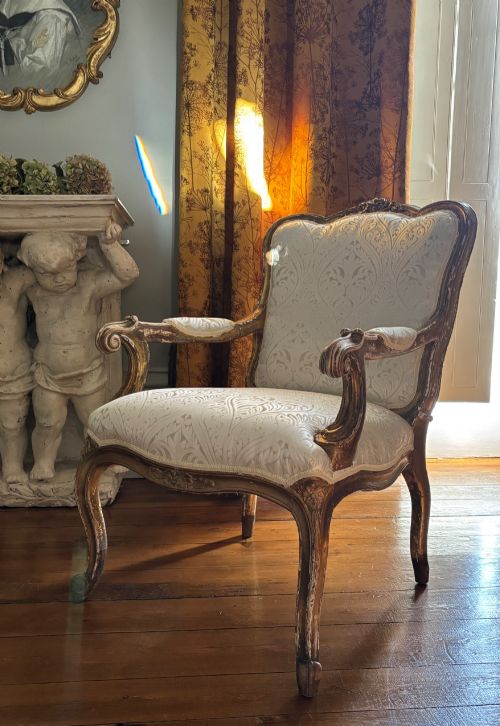
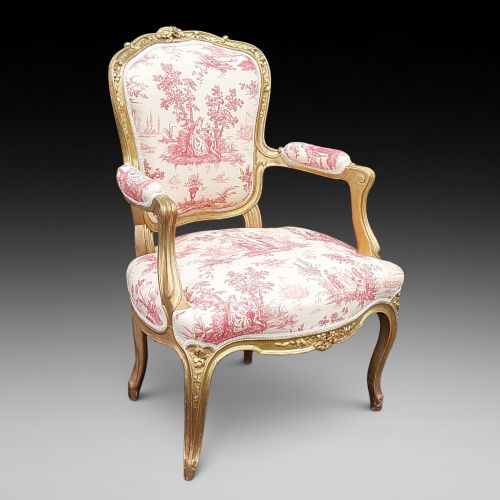
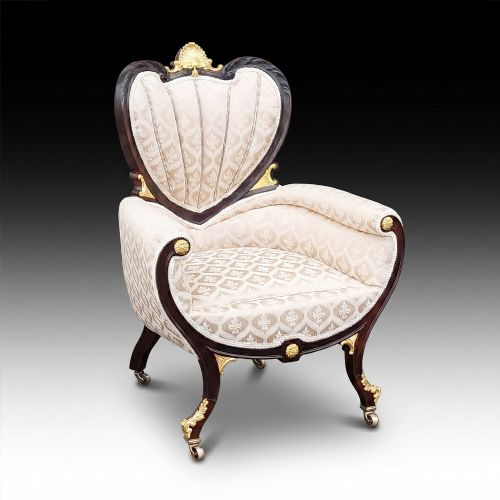
French gilt accent chairs encompass a variety of seating forms designed for salons, parlours, and bedrooms. The selection on this page centres primarily upon 19th-century examples alongside pieces from the 18th and early 20th centuries.
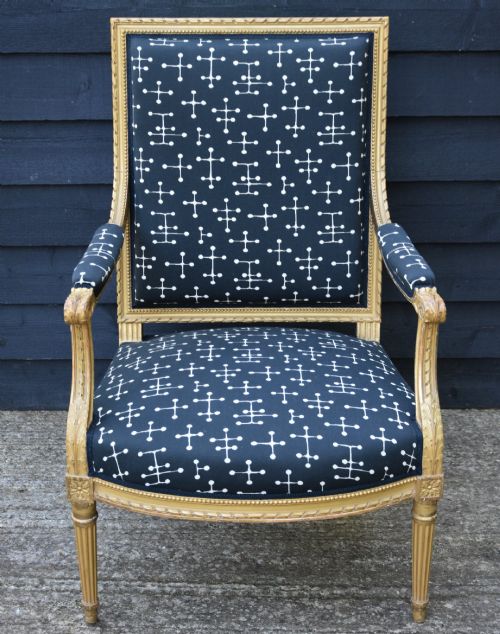
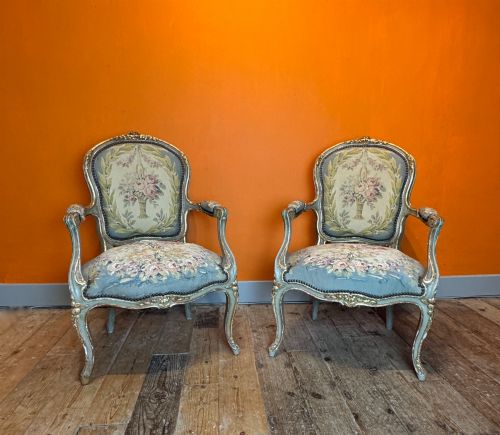
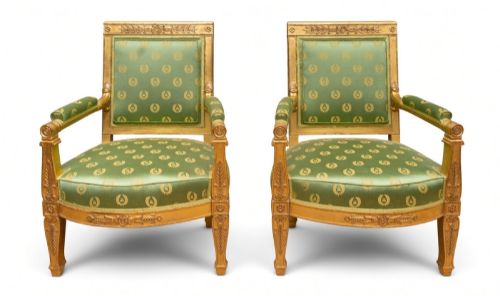
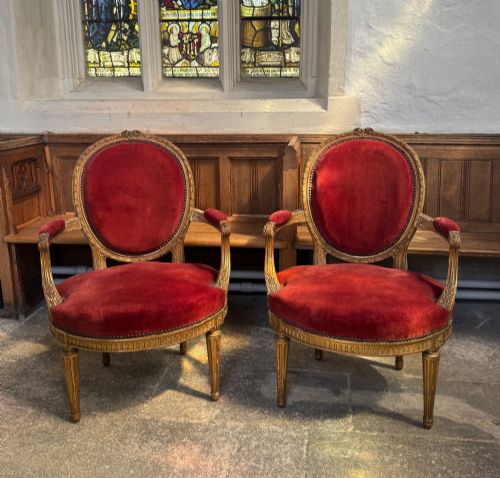
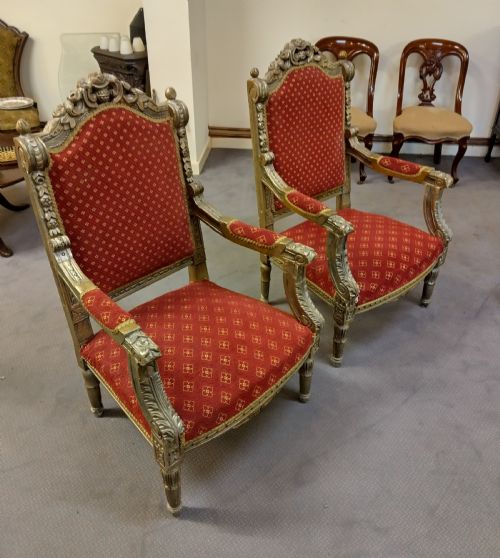
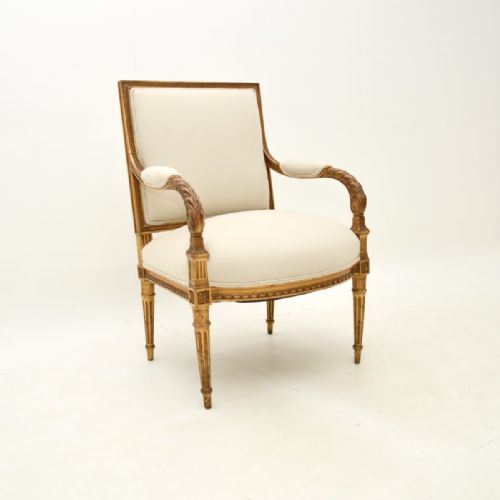
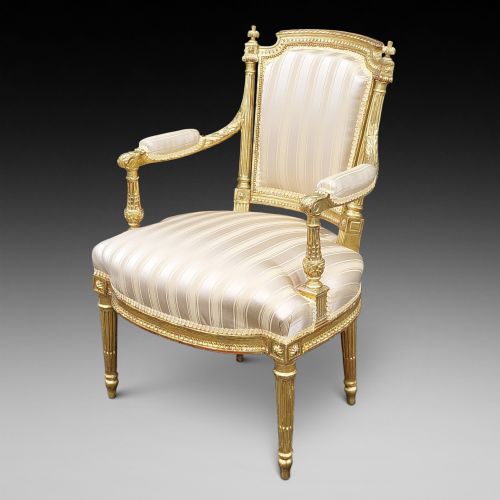
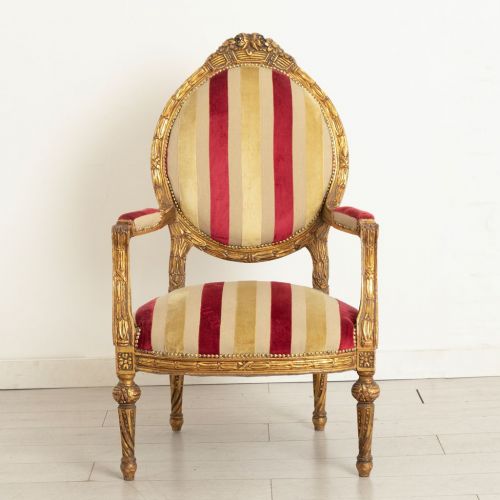
Armchairs, salon chairs, and bergères dominate the selection, often appearing in pairs or sets. Styles trace historical revivals, most notably Louis XVI and French Rococo, reflecting classical ornamentation and proportion.
Frames take the shape of open armchairs, fauteuils, and smaller occasional chairs intended for lighter domestic use. These seating types bridge decorative display with practical interior placement.
Materials and construction
Carved wooden frames, frequently fashioned from beech or walnut, form the structural foundation of these pieces. Artisans applied gold leaf, gilt finishes, or paint and parcel gilt to these timber bases to achieve the characteristic metallic sheen.
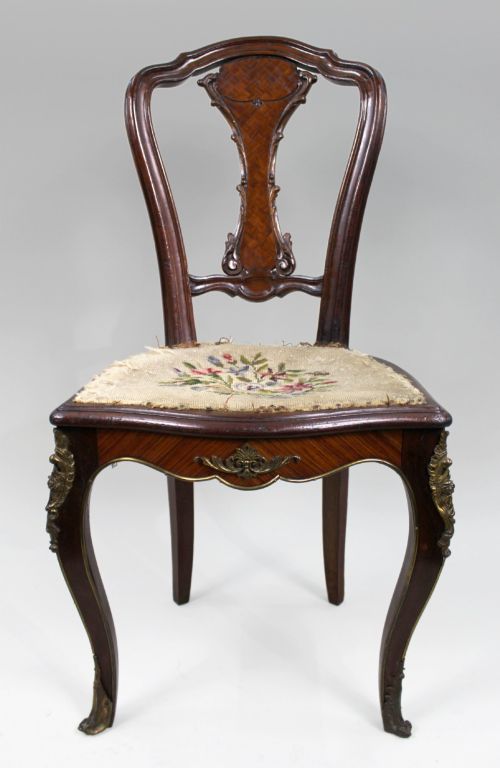
Upholstery materials range from silk fabric and velvet to tapestry and contemporary textiles. Internal support and decorative detailing sometimes incorporate brass elements, ormolu mounts, and intricate wood carvings.
The selection records diverse seating forms including bergères, fauteuils, slipper chairs, and salon chairs spanning multiple revival styles.
Evaluating the craftsmanship
Quality rests in the crispness and depth of the wood carving upon the frame. Skilled hands produce fluid foliage, scroll arms, and balanced proportions that distinguish finer workshop output from simpler production.
The integrity of the gilding and the preservation of the underlying timber define the upper tier of pieces. Selection of upholstery materials, whether period-appropriate silk or heavy velvet, complements the structural execution of each chair.
Jacob Desmalter·Blaise Maucuy·Lamb of Manchester
The French Gilt Accent Chairs Glossary
- Giltwood
- Timber coated with gold leaf or a metallic finish. This surface treatment gives the carved frames their characteristic reflective appearance.
- Fauteuil
- An open-framed armchair with upholstered armrests. These pieces typically feature exposed wooden frames and originated in French interior design.
- Bergère
- An enclosed upholstered armchair with sides filled in with upholstery or canework. They offer a deeper, more substantial seat than standard open armchairs.
- Ormolu
- Gilded bronze mounts applied to furniture for decoration. Artisans cast and chased these metal elements to accent wood and gilt surfaces.
- Louis XVI Style
- A neoclassical design aesthetic characterised by straight tapered legs, rectilinear framing, and classical motifs. This style heavily influences many 19th-century revival pieces.
French Gilt Accent Chairs: Frequently Asked Questions
What is a bergere armchair?
A bergère is a closed armchair featuring upholstered sides integrated into the wooden frame. They provide a deeper and wider seat than standard open armchairs.
These chairs were designed for relaxed lounging in formal rooms. Their enclosed sides offer additional comfort and distinctive visual weight.
How do I identify Louis XVI style?
Louis XVI style is defined by straight tapered legs, geometric framing, and classical architectural motifs. Furniture from this design period moves away from curved rococo lines.
Revival pieces from the 19th century frequently adopt these straight lines and restrained ornamentation. Look for fluted legs and classical rosette carvings on the frame corners.
Were these chairs used for dining?
While the selection includes specific dining chairs, most items function as salon, accent, or occasional seating. These pieces were built for drawing rooms and parlours rather than heavy daily dining.
Armchairs and side chairs served decorative roles and provided movable seating for guests. Their gilt finishes suited formal reception spaces.
What distinguishes giltwood from painted finishes?
Giltwood involves applying metallic leaf directly to a prepared wooden surface, creating a reflective gold finish. Painted and parcel gilt pieces combine painted timber with selective gilded highlights.
Both treatments were used to catch candlelight and daylight in grand interiors. The choice depends on the specific aesthetic of the revival period.