

Gilded Upholstered Chairs
Gilded upholstered chairs bring formal French and English elegance to a room, offering ornate carved frames and comfortable fabric seats.
Gilded Upholstered Chairs
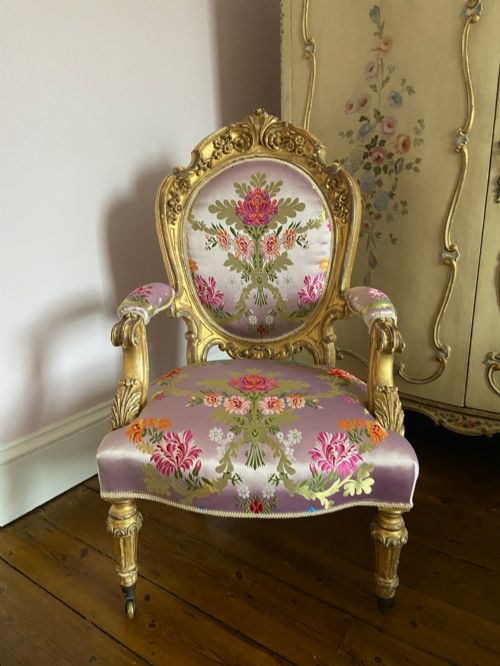
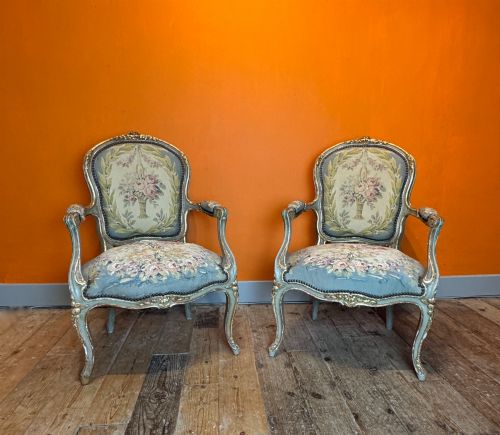
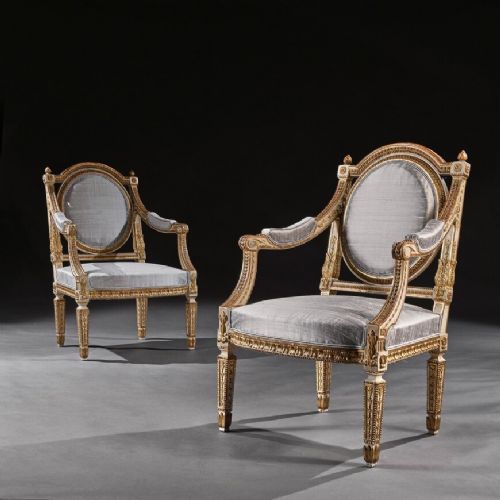
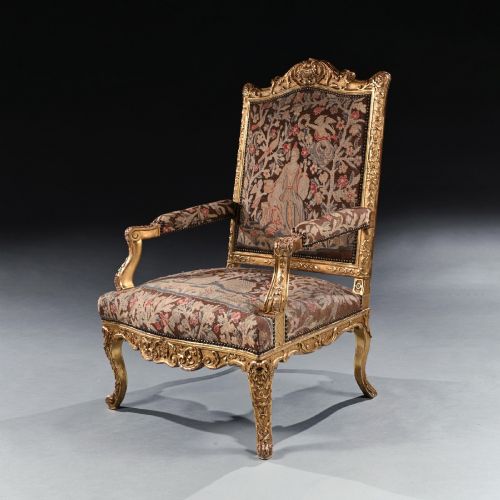
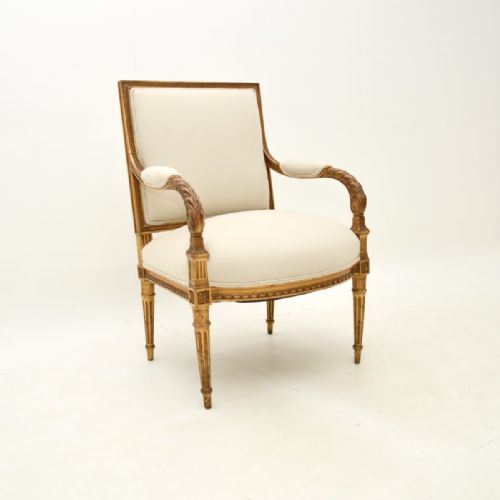
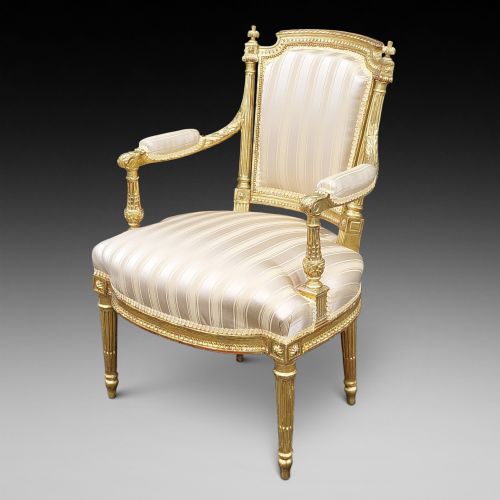
Gilded upholstered chairs encompass a wide variety of seating forms, including armchairs, bergères, salon chairs, and dining suites originating from the eighteenth, nineteenth, and early twentieth centuries. The most common versions met on this page are nineteenth-century French and English armchairs, often created in the Louis XVI style or the later revivals.
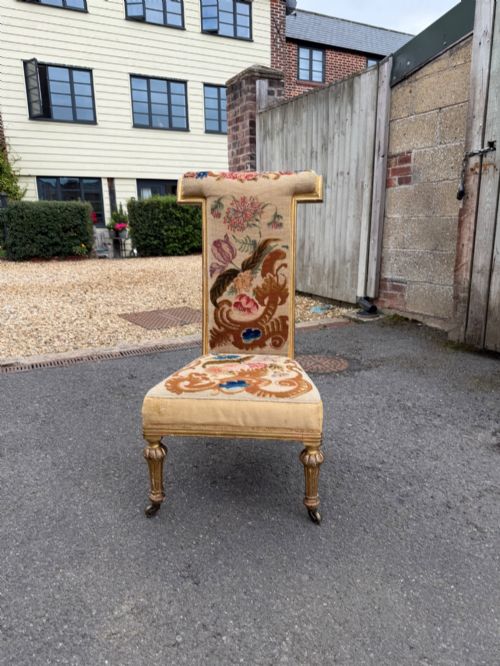
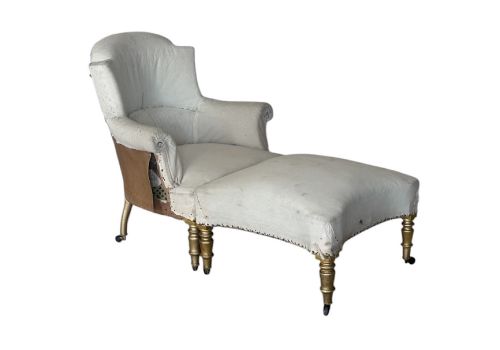
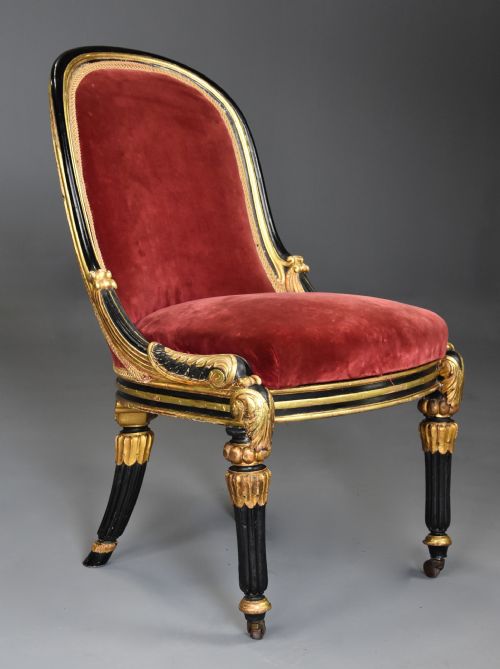
Makers and workshops across Europe produced these seating options in distinct regional designs, ranging from Italian neoclassical armchairs to English Regency side chairs and French salon chairs. Buyers encounter forms designed for specific domestic uses, such as fireside chairs, day beds, and nursing chairs, alongside larger sets intended for formal dining rooms.
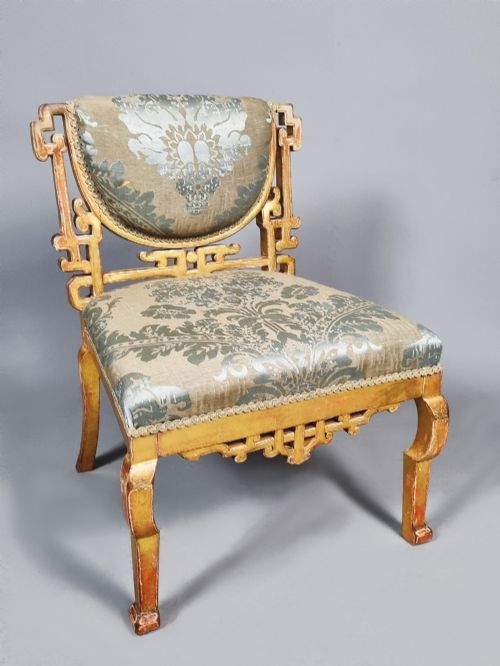
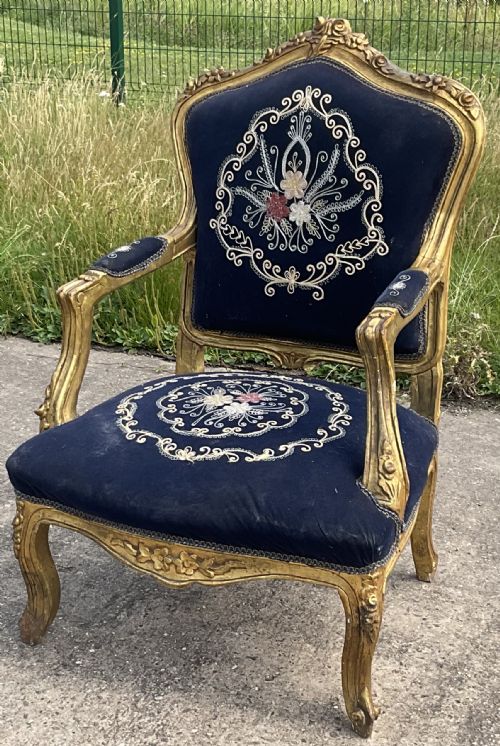
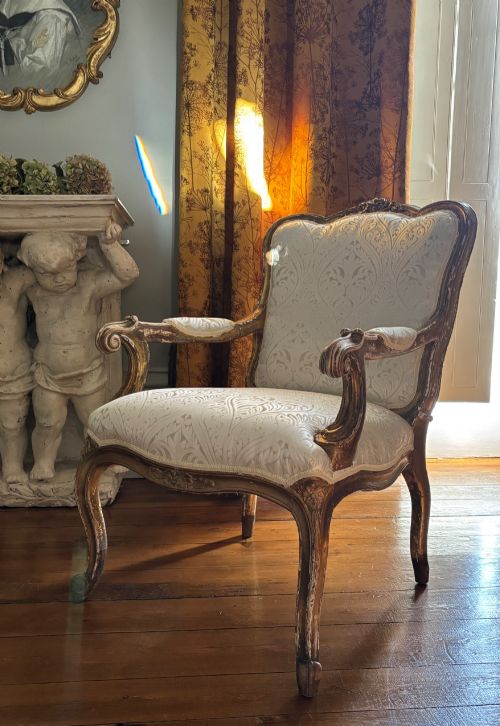
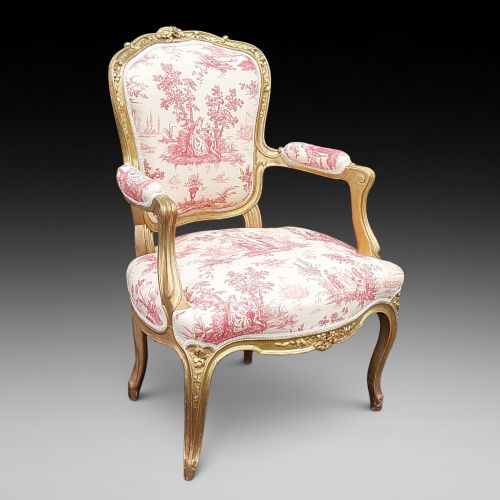
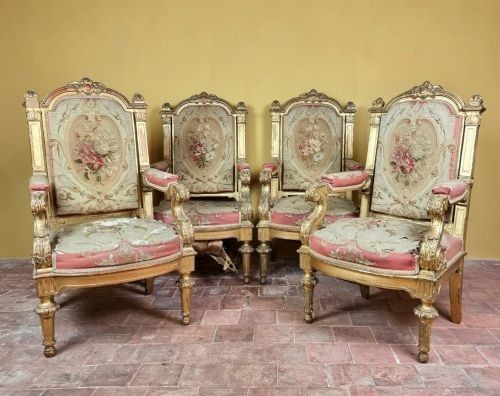
The aesthetic vocabulary draws heavily upon historical revivals, including French Rococo and Chinese Chippendale influences, executed in giltwood or parcel-gilt finishes. These seating pieces combine carved wooden frames with contemporary or historic textile upholstery like silk damask, needlework, and tapestry.
Materials and construction
Frames are constructed from solid timbers such as beech, walnut, and oak, carved by hand with detailed scroll arms, floral motifs, and classical ornamentation. Joinery methods rely on traditional pegged and mortise-and-tenon construction to ensure structural rigidity in load-bearing chair frames.
The decorative gilt surface is achieved by applying thin sheets of gold leaf or gilt composition over a prepared bole and gesso ground, sometimes combined with painted or ebonised elements. Upholstery techniques involve securing fabric over supportive internal stuffing and webbing, often finished with decorative brass or gilt tacks.
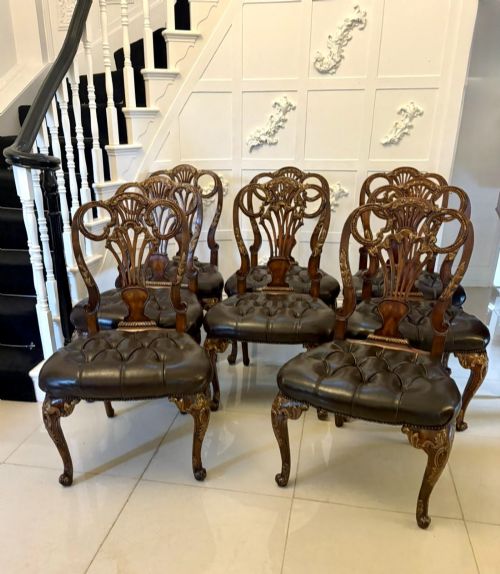
Several dining sets on offer provide enough matching seats for a royal banquet, should your dinner guests happen to arrive in full crinoline.
Evaluating craftsmanship
The depth and crispness of the wood carving distinguish superior examples from standard production, as master carvers achieved greater dimension and naturalism in floral and scroll details. The integrity of the original gilt surface also dictates standard, with hand-applied gold leaf showing finer ageing and lighter wear than coarser metallic paints.
Structural robustness depends upon the quality of the underlying timber frame and the precision of the joinery, which supports the weight of the upholstered seat over generations. Cohesion between the historic frame and the chosen textile upholstery influences the overall visual harmony of the piece.
Waugh & Son·Blaise Maucuy·Holland & Sons·Lamb of Manchester
The Gilded Upholstered Chairs Glossary
- Bergère
- An enclosed upholstered armchair with wooden framing around the sides and back. This French form typically incorporates an exposed carved wooden frame and a loose seat cushion.
- Giltwood
- Timber that has been coated with gold leaf or gold dust for decorative effect. This finish requires careful handling to preserve the delicate metallic surface over time.
- Fauteuil
- An open-framed upholstered armchair originating in France, characterised by upholstered armrests and an exposed wooden structure. These chairs were designed for formal reception rooms.
- Parcel Gilt
- A decorative treatment where only specific portions of a wooden object are highlighted with gold leaf, while the remaining areas are painted or left as natural wood. This technique provides contrast on carved details.
- Regency
- An English design period spanning the early nineteenth century, known for neoclassical lines and influences from classical antiquity. Furniture from this era often incorporates ebonised finishes alongside gilt highlights.
Gilded Upholstered Chairs: Frequently Asked Questions
How do I identify a Louis XVI style chair?
Louis XVI style chairs are distinguished by straight, tapered legs, often fluted to resemble classical columns, and generally feature geometric oval, square, or shield-shaped backrests. The ornamentation relies heavily on classical motifs such as acanthus leaves, bead-reels, and ribbons rather than the asymmetric curves of earlier Rococo designs.
Carved woodwork on these pieces is typically gilded or painted in muted tones, and the frames connect directly to the seat rail without the flowing cabriole lines seen in older French seating.
What is the difference between a bergere and a fauteuil?
A fauteuil is an open armchair featuring exposed wooden arms that are partially or fully padded, designed primarily for formal seating in eighteenth-century French salons. The sides are open beneath the armrests, allowing space for wide court dresses.
In contrast, a bergere is a closed armchair with solid upholstered sides enclosed by the wooden frame, often fitted with a loose down seat cushion for greater comfort. Both types appear frequently in giltwood finishes across nineteenth-century revival periods.
Can I use antique gilded chairs daily?
Antique gilded chairs can be used in daily domestic settings provided they are handled with care and placed away from direct sunlight and excessive moisture. The underlying timber frame and traditional joinery are sturdy, but the historic gilt surface and delicate carved details require protection from heavy knocks.
Upholstery can be renewed or maintained to suit modern comfort levels while preserving the structural integrity of the historic frame. Rotating chairs used in high-traffic areas helps distribute wear evenly across the antique materials.