

Gold Gilded Armchairs
Gold gilded armchairs bring formal seating into domestic rooms with carved timber frames and bright metallic leaf.
Gold Gilded Armchairs
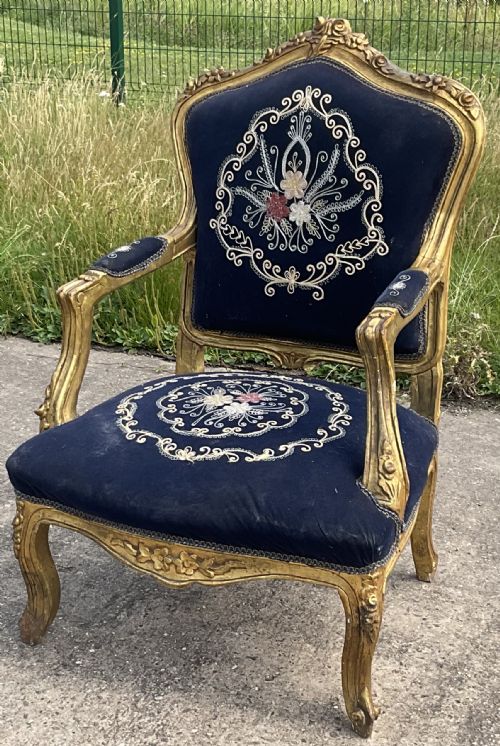
Gold gilded armchairs combine structural timber frames with applied metallic leaf to create opulent seating designed for formal reception rooms. These pieces originate primarily from French and English workshops across the eighteenth, nineteenth, and early twentieth centuries.
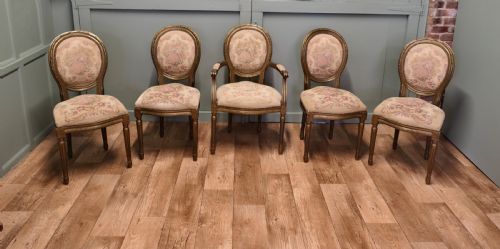
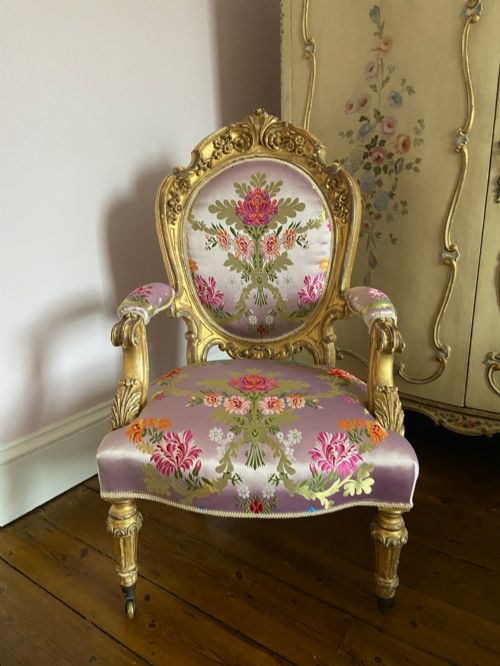
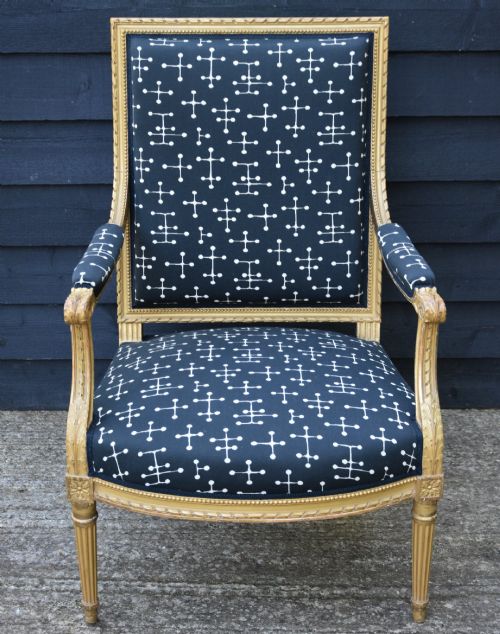
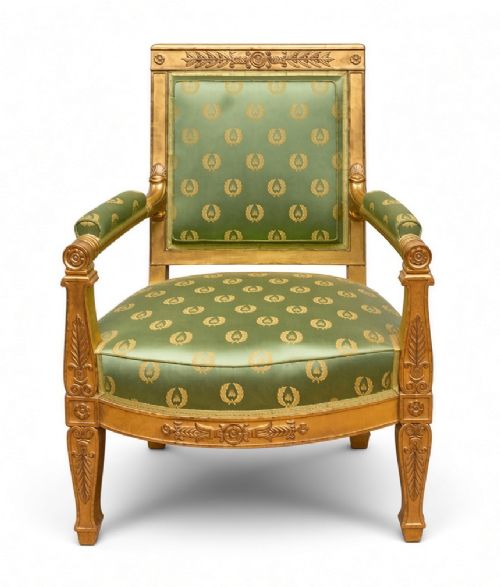
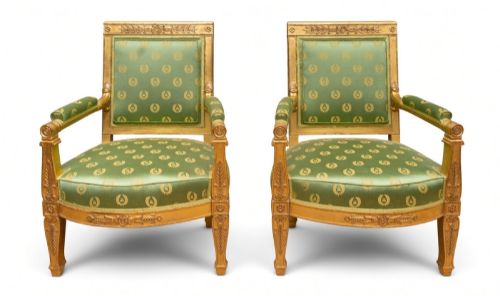
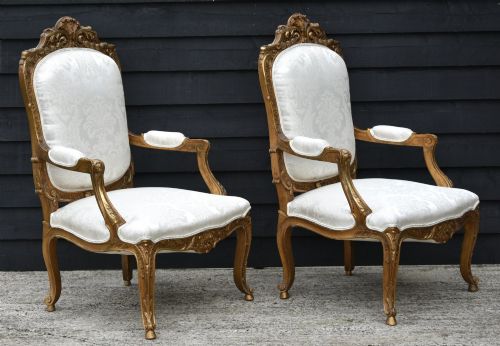
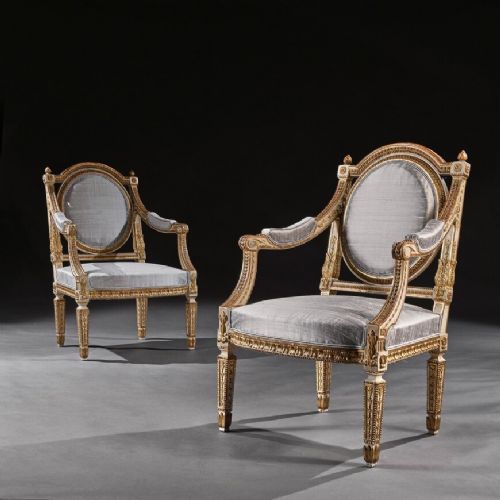
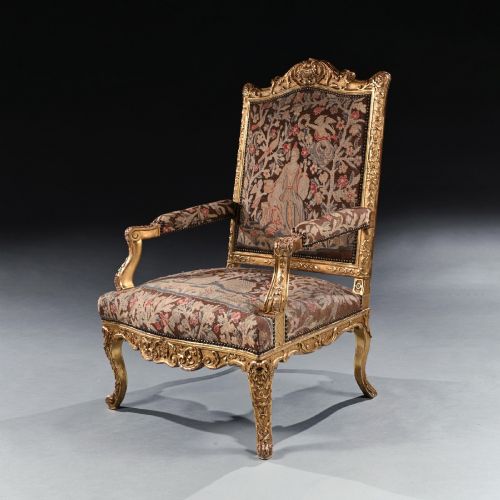
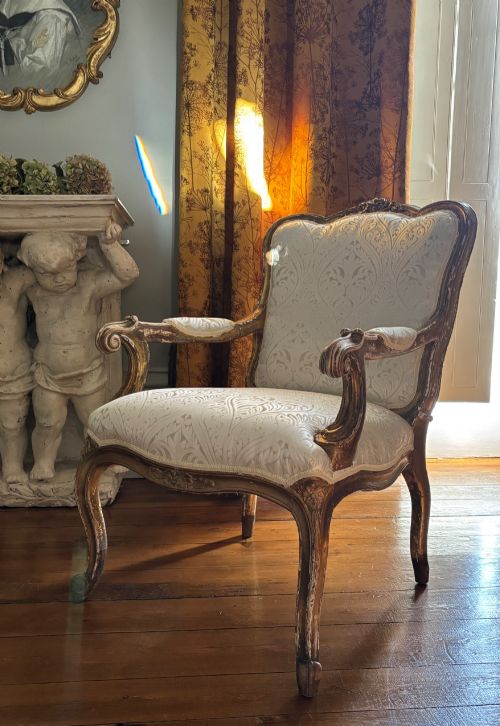
The selections available here lean heavily toward French design vocabularies, particularly Louis XVI style, Rococo Revival, and Napoleon III salon pieces. Buyers frequently encounter open armchairs, bergères, and matching suites shaped for display and entertaining.
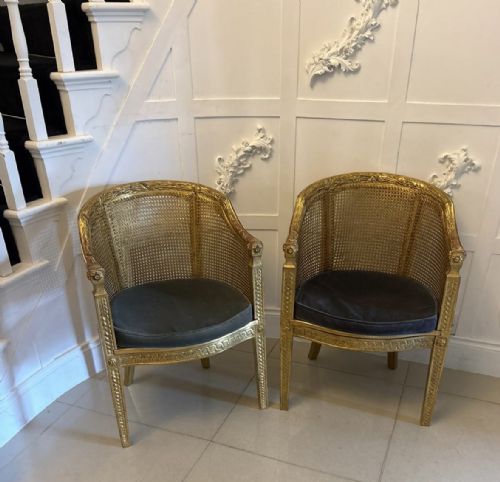
Beyond single statement seats, the category encompasses pairs and larger salon suites upholstered in silk, velvet, and tapestry. These seating forms served as focal points in drawing rooms and galleries, reflecting the shifting revival tastes of nineteenth-century makers.
Materials and construction methods
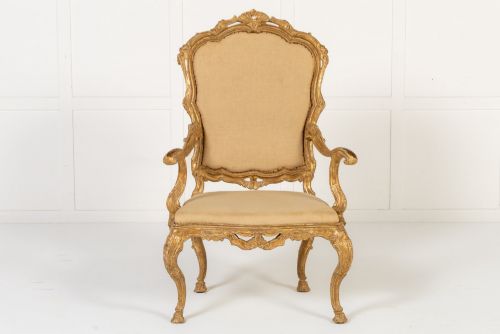
Makers built these frames using dense timbers such as beech, walnut, and general hardwoods capable of supporting deep hand-carving. Craftsmen shaped cabriole legs, scroll arms, and crest rails directly into the solid wood before surface treatment.
Application of the finish relied on laying ultra-thin gold leaf over a prepared gesso and bole ground upon the timber substrate. Upholstery followed traditional stuffing methods using horsehair, webbed foundations, and coverings of silk fabric, velvet, or woven tapestry.
The inventory includes single open armchairs, bergères, children's salon chairs, and multi-piece salon suites.
Judging quality and execution
Quality rests primarily in the crispness of the wood carving and the depth of the original gilding application. Hand-carved details on beech or walnut frames display sharp undercut foliage and scrollwork, whereas inferior examples rely on moulded composition or shallow tool marks.
The integrity of the structural joinery and the authenticity of the surface finish dictate long-term worth. Pieces retaining their original gilding without heavy over-painting demonstrate superior preservation and craftsmanship from the workshop.
Jacob-Desmalter·Holland & Sons·Blaise Maucuy
The Gold Gilded Armchairs Glossary
- Giltwood
- Timber coated with a thin layer of gold leaf over a prepared gesso base. This finish provides the characteristic metallic brilliance seen on formal antique seating.
- Bergère
- An enclosed upholstered armchair with solid upholstered sides resting on a wooden frame. This French form offers deeper comfort than open-arm variants.
- Fauteuil
- An open-arm armchair featuring exposed wooden framing around the back and armrests. The style originated in France for formal salon use.
- Gesso
- A plaster mixture applied to wood frames to create a smooth surface for gilding. Craftsmen carved intricate details directly into this layered foundation.
- Rococo Revival
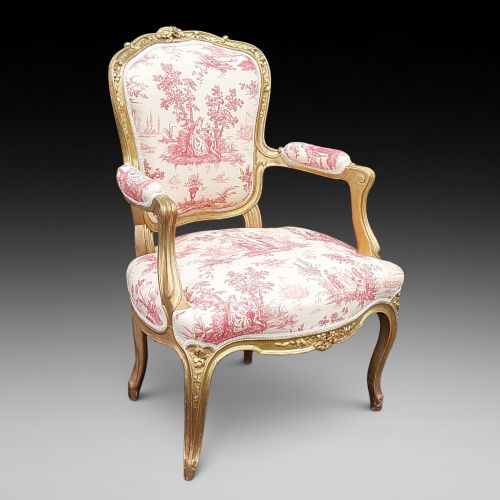
- A nineteenth-century design movement copying eighteenth-century asymmetry and C-scroll motifs. Pieces from this era display exuberant floral carving and curved outlines.
Gold Gilded Armchairs: Frequently Asked Questions
What is a gold gilded armchair?
A gold gilded armchair is a wooden seat covered in thin metallic leaf for decorative display. These chairs were built for formal reception rooms and parlours.
Craftsmen carved the timber frames with floral and scroll motifs before applying the gold leaf finish. Upholstery typically includes silk, velvet, or tapestry fabrics.
How do I identify Louis XVI style?
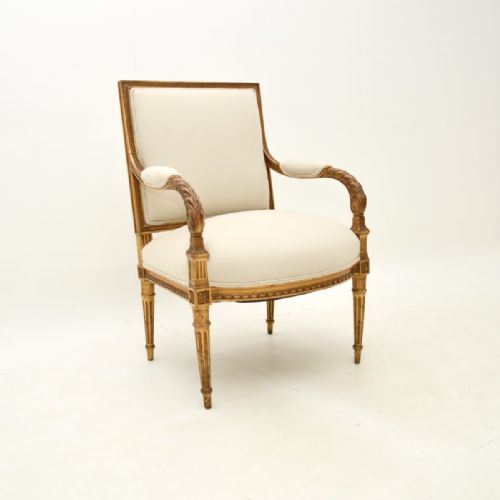
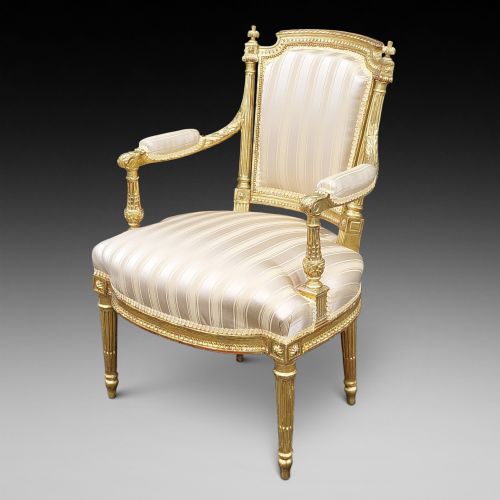
Louis XVI style pieces feature straight tapering legs, rectilinear frames, and classical ornamentation. Carvings often include acanthus leaves, bead reels, and architectural mouldings.
This aesthetic contrasts with the curving asymmetry of earlier Rococo designs. Makers revived these clean lines frequently during the nineteenth century.
Where were these armchairs used?
These armchairs served as formal seating in nineteenth-century drawing rooms, salons, and reception halls. They were positioned to demonstrate status and taste to visiting guests.
Pairs and larger suites furnished grand estates and urban townhouses alike. Today, they function as statement pieces in modern residential interiors.
How do I care for giltwood?
Giltwood requires gentle dusting with a soft, dry cloth to protect the delicate metallic surface. Avoid liquid cleaners and modern solvents that strip gold leaf.
Keep pieces away from direct sunlight and moisture to prevent the underlying gesso from cracking. Professional handling is recommended for structural repairs.