





Victorian Giltwood Armchairs
Victorian giltwood armchairs bring rich nineteenth century gilding and varied revival styles into a room, offering substantial seating with distinct historical presence.
Victorian Giltwood Armchairs
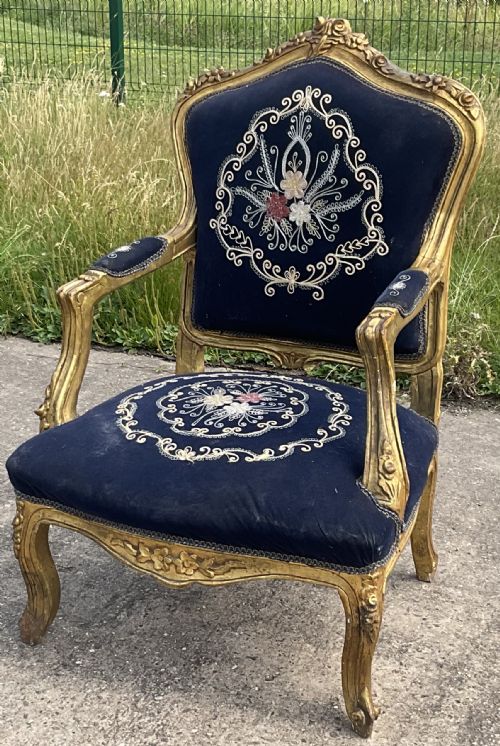
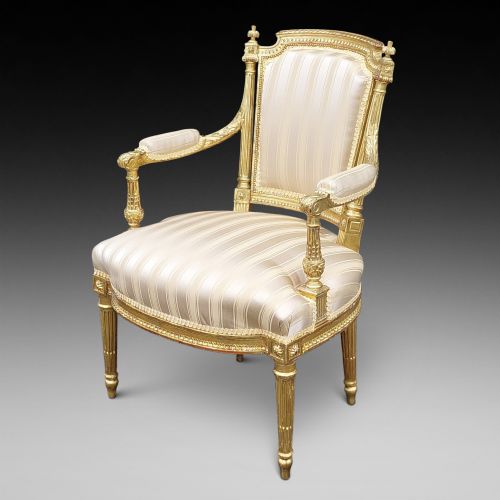
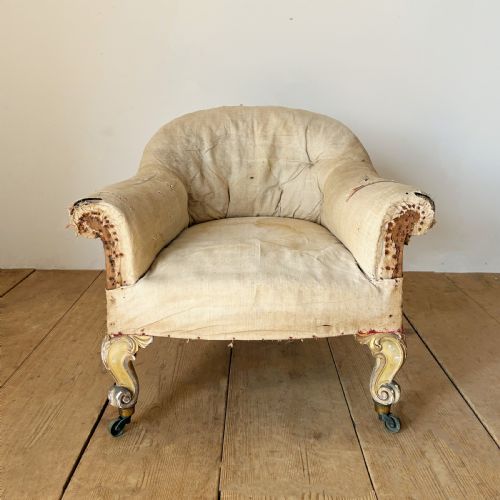
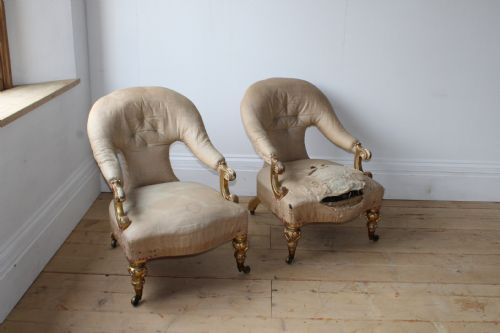
Victorian giltwood armchairs comprise nineteenth century seating carved from wood and finished with a gold surface, encompassing fireside chairs, tub chairs, and salon chairs. These pieces often follow revival aesthetics such as Louis XVI, French Baroque, Rococo, and William and Mary styles, alongside French Chateau and English designs.
Buyers encountering this group will most frequently find nineteenth century pairs and single pieces upholstered in materials like silk, velvet, tapestry, and calico. The selection spans standard nineteenth century dates as well as specific years like 1860 and 1880, alongside earlier Regency influences.
Materials and construction
These armchairs rely on wood frameworks that receive a gilt finish, creating the characteristic metallic surface seen across the pieces. Structural additions include brass elements alongside the primary wooden frames.
Upholstery techniques utilise textiles such as silk, velvet, tapestry, and calico to cover the seats and backs, pairing soft fabrics with the rigid carved giltwood structure.
Victorian Giltwood Armchairs Retail Price Guide 2026
Typical asking prices for victorian giltwood armchairs among the pieces listed under this phrase on Sellingantiques today, from the lower quarter to the upper quarter. They describe what is for sale here now, not the wider market.
Listings incorporate nineteenth century dates spanning specific years like 1860 and 1880, alongside broader nineteenth century and Regency periods.
Assessing quality in giltwood seating
The standard of carving across the wooden frame dictates much of the distinction between pieces, with intricate sculptural detail separating refined work from simpler forms. Maker attribution also shapes the standing of a chair, as demonstrated by pieces associated with Holland & Sons.
The integrity of the gilding and the harmony of the chosen textile, whether silk, velvet, or tapestry, contribute to the overall execution of the seating.
Holland & Sons
The Victorian Giltwood Armchairs Glossary
- Giltwood
- Wood coated with a thin layer of gold leaf or powder. This finish gives the frame its characteristic reflective metallic appearance.
- Regency
- An English design period preceding the Victorian era. Pieces from this style influence nineteenth century seating design.
- Tapestry
- A heavy hand-woven or machine-woven textile featuring pictorial designs. It serves as a durable upholstery fabric for period chairs.
- Salon chair
- A light decorative chair intended for formal reception rooms. These pieces often feature gilded woodwork and fine fabric coverings.
Victorian Giltwood Armchairs: Frequently Asked Questions
How do I clean giltwood frames?
Dust the gilded wooden surfaces gently with a soft, dry cloth to prevent accumulation. Avoid commercial polishes and water, which can damage the delicate gold leaf finish.
Take care around carved details where the metallic layer may be thin. Professional conservation is recommended for deep cleaning.
What styles do these armchairs follow?
The pieces span various revival aesthetics including Louis XVI, French Baroque, Rococo, and William and Mary styles. English and French Chateau influences also appear frequently.
These diverse designs reflect nineteenth century interest in historical decorative arts. Each style dictates the specific carving and proportion of the frame.
Are these chairs suitable for daily use?
Nineteenth century armchairs function well as occasional seating in low traffic areas. Their antique frames require thoughtful placement to preserve the historic woodwork and gilding.
Consider the supportive condition of the internal upholstery before making a chair a primary seat. Lighter salon chairs suit decorative placement rather than heavy lounging.
What fabrics upholster these chairs?
Upholstery materials recorded on these pieces include silk, velvet, tapestry, and calico. These textiles provide both patterned visual interest and varied tactile textures against the gilded wood.
Some chairs retain period fabric choices while others feature later coverings. Fabric durability depends on the specific textile chosen for the upholstery.