



Neoclassical Gilt Armchairs
Neoclassical gilt armchairs combine classical restraint with gilded warmth, offering formal seating rooted in eighteenth and nineteenth-century design.
Neoclassical Gilt Armchairs
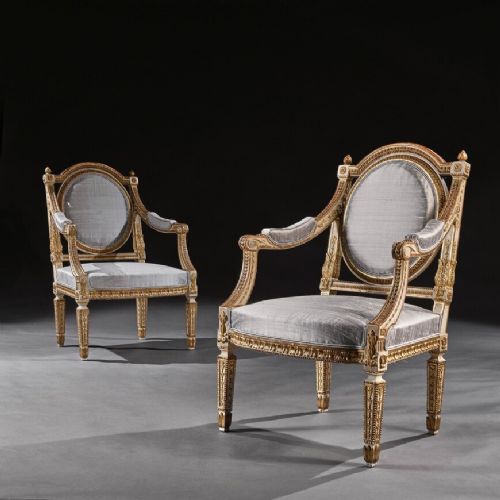
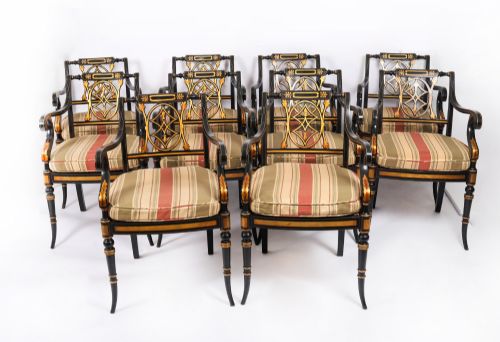
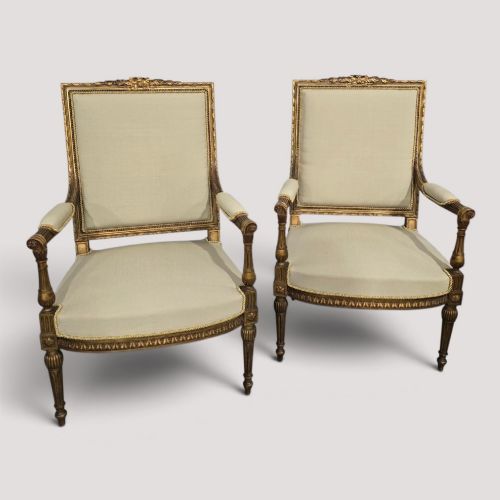
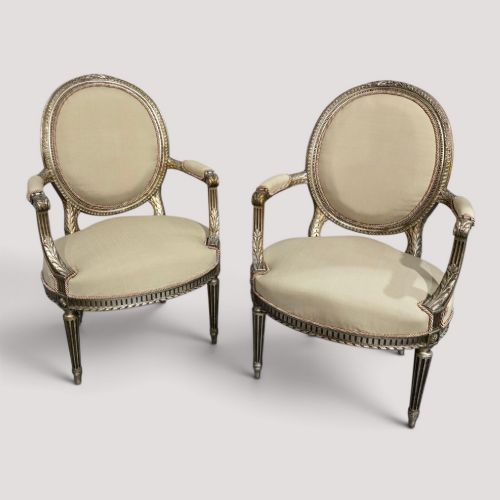
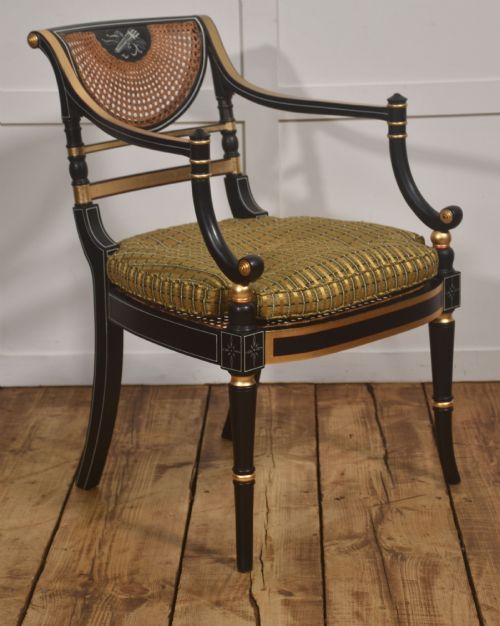
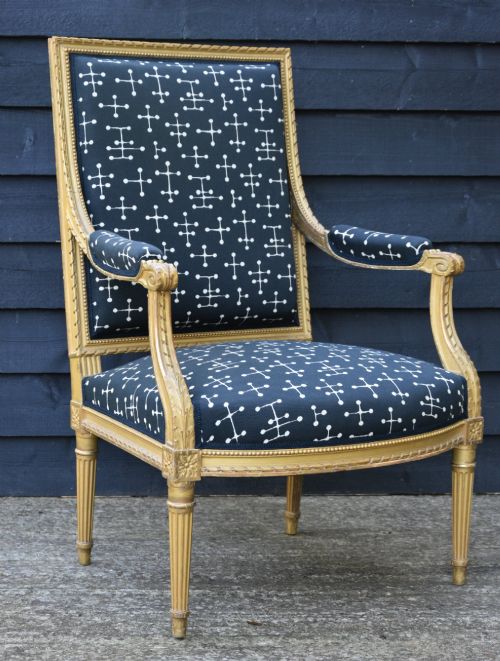
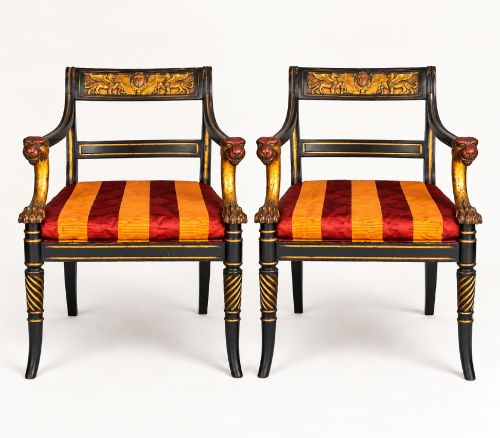
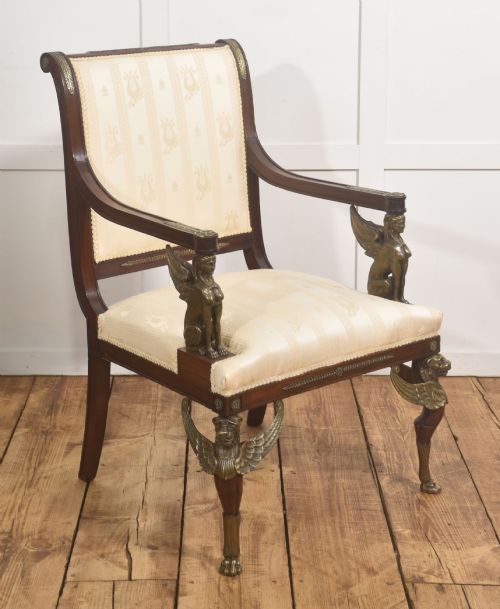
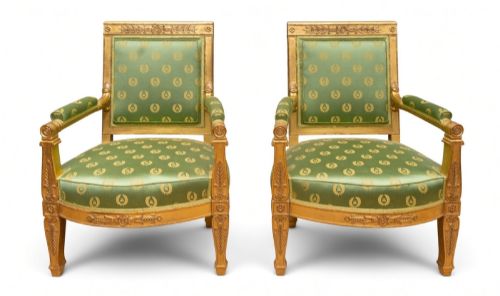
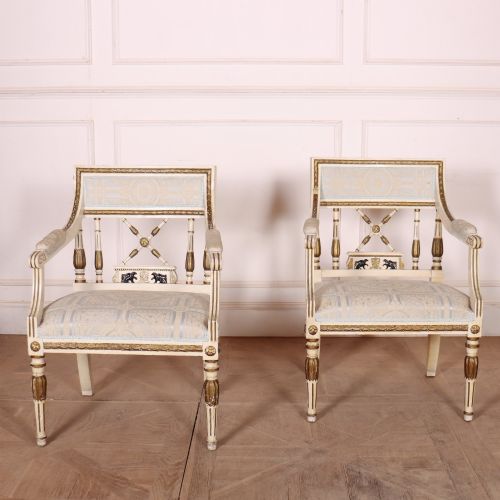
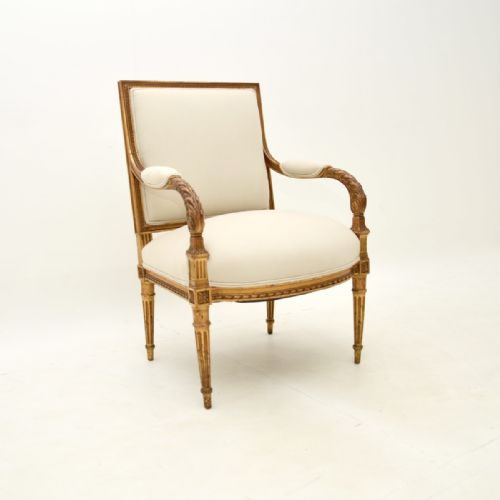
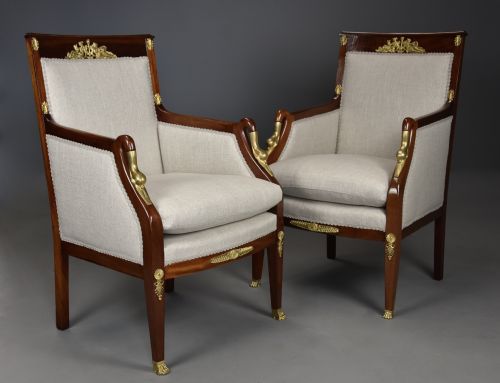
Neoclassical gilt armchairs are seating pieces defined by classical architectural motifs, gilded surfaces, and upright upholstered forms originating across various European workshops. When exploring neoclassical gilt armchairs, buyers frequently encounter French and Swedish revival models from the nineteenth and early twentieth centuries alongside earlier Regency and Empire examples.
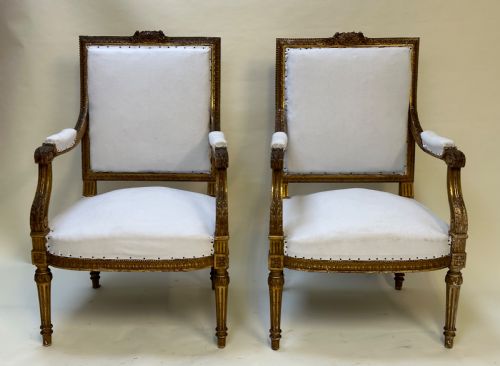
The selections span standard open armchairs, known as fauteuils, as well as desk chairs, salon chairs, and larger matching dining suites. French and Italian interpretations dominate the listings, frequently displaying carved wooden frames finished in gold leaf or parcel gilt paint.
Period dates stretch from the late eighteenth century through the 1920s, capturing both original classical eras and subsequent revival movements. These chairs function primarily as statement pieces in formal drawing rooms or libraries, bringing historical gravitas and reflective metallic warmth to an interior.
Materials and Construction
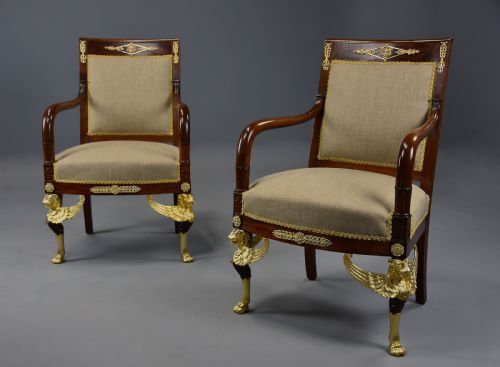
Makers constructed these frames from solid timbers such as mahogany, walnut, and painted wood, which provided the structural rigidity required for carved ornamentation. Giltwood surfaces were created by applying thin sheets of gold leaf to a prepared gesso ground over the carved wood.
Ormolu mounts, brass details, and silk damask or velvet upholstery complete the construction of finer examples. Joinery relied on traditional pinned mortise and tenon techniques, ensuring stability across centuries of use.
Neoclassical Gilt Armchairs Retail Price Guide 2026
Typical asking prices for neoclassical gilt armchairs among the pieces listed under this phrase on Sellingantiques today, from the lower quarter to the upper quarter. They describe what is for sale here now, not the wider market.
Listings feature periods spanning from the 18th century through the 1920s, encompassing original neoclassical eras and subsequent revival movements.
Assessing Quality
Quality rests in the crispness of the hand-carved architectural details, such as acanthus leaves, fluted columns, and classical urns. Superior examples exhibit deep, clean carving where the underlying wood grain or gesso preparation remains sharp rather than softened by excessive wear or poor restoration.
The application of the gilding distinguishes workshop output, with genuine gold leaf ageing with a soft, warm lustre compared to modern metallic paints. Additionally, the integrity of the underlying timber frame and the authenticity of period mounts determine the standing of an individual chair.
Jacob-Desmalter·Gillows
The Neoclassical Gilt Armchairs Glossary
- Giltwood
- Wood that has been decorated with gold leaf applied over a prepared gesso surface. This finish provides the characteristic metallic sheen seen on formal period seating.
- Fauteuil
- An open-framed upholstered armchair originating in France, typically featuring exposed wooden arms. These chairs were designed for formal domestic interiors.
- Ormolu
- Gilded bronze or brass mounts applied to furniture for decorative enrichment. These metallic elements are cast and chased to highlight neoclassical motifs.
- Parcel Gilt
- A finishing technique where only specific carved details or highlights are gilded while the remainder of the piece is painted or polished wood. This creates a subtle contrast between the timber and the gold leaf.
- Empire Style
- A neoclassical design movement spanning the late eighteenth and early nineteenth centuries, characterised by military and classical Roman motifs. Furniture from this period emphasises bold lines and rich ornamentation.
Neoclassical Gilt Armchairs: Frequently Asked Questions
How do I date an antique armchair?
Dating relies on examining the construction methods, tool marks, timber species, and stylistic vocabulary present in the carved frame. Comparing these details against known period production helps establish the likely decade of manufacture.
Revival pieces from the late nineteenth and early twentieth centuries often incorporate machine-cut elements or later upholstery techniques that distinguish them from eighteenth-century originals.
Are gilt armchairs comfortable for daily use?
These chairs were engineered for formal posture during the eighteenth and nineteenth centuries rather than deep lounging. Their upright backs and rigid frames suit reception rooms and studies.
Daily comfort depends largely on the internal webbing and padding installed during upholstery restoration, which can be tailored to modern preferences while retaining historical appearance.
How should I care for giltwood finishes?
Giltwood requires gentle maintenance to protect the delicate gold leaf layer from abrasion and moisture. Dusting should be performed with a dry, soft-bristled brush without chemical cleaners.
Placing these chairs away from direct sunlight and fluctuating humidity prevents the gesso foundation from drying and cracking beneath the gold leaf.